

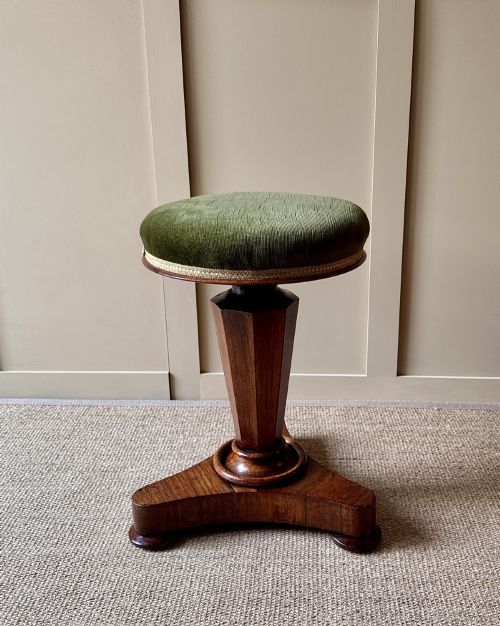
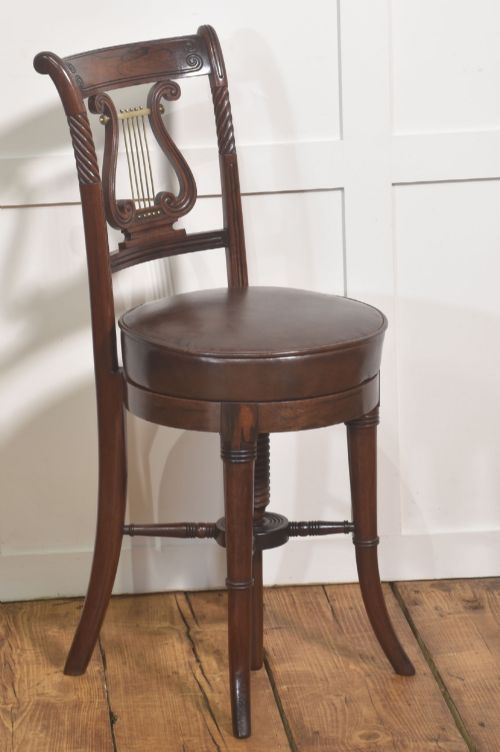
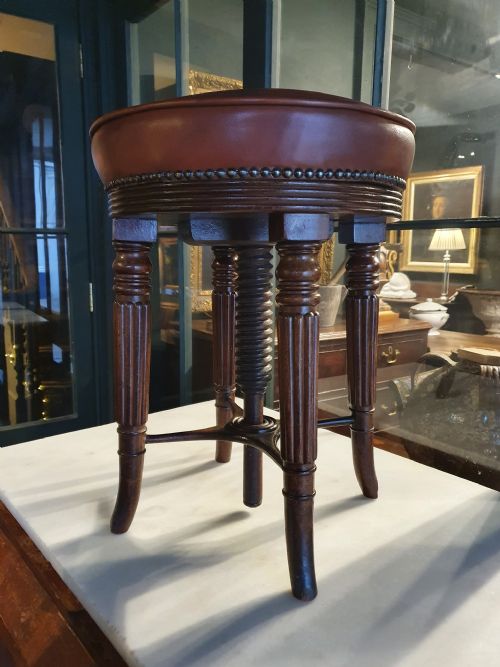


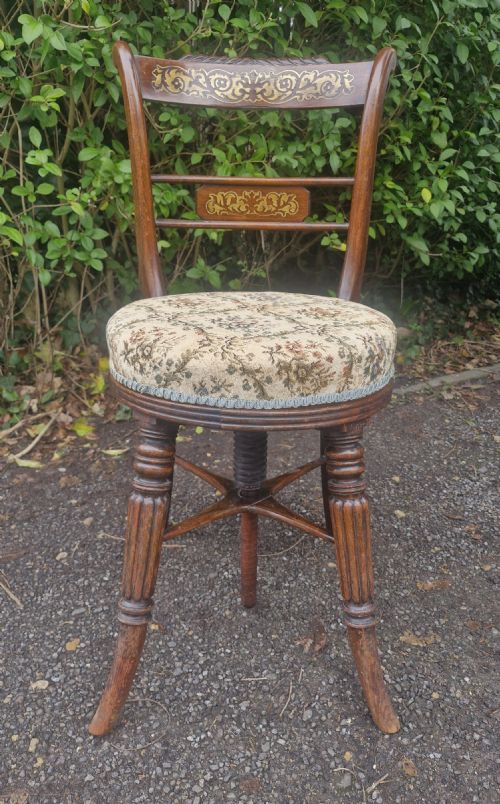


Regency Swivel Stool
A regency swivel stool is a clever pivoting seat designed for the piano or dressing table, offering both elegance and adjustable height.

Regency Swivel Stool
A regency swivel stool is primarily encountered in the form of a piano stool, music chair, or dressing table chair originating from the nineteenth century. These seats feature revolving tops or adjustable screw mechanisms that reflect the functional demands of musicians and households of the period.
The materials and styles span the Georgian, Regency, and William IV eras, with later Victorian and Sheraton Revival examples also appearing. Pieces frequently take the form of piano stools or music chairs designed with swivel tops for ease of movement.
Makers such as Gillows contributed to this category, producing sophisticated seating in mahogany and rosewood. Buyers searching for a regency swivel stool will find variations incorporating brass inlay, simulated rosewood, and upholstery in velvet, leather, or tapestry.
How they were made
Cabinet makers utilised dense hardwoods such as mahogany and rosewood, alongside simulated rosewood and satinwood, to construct the frames of these rotating seats. These timbers were often enriched with brass inlay or gilt paint to achieve the refined aesthetic of the period.
Mechanical ingenuity defined the construction, integrating adjustable screw tops and revolving mechanisms that allowed the seat height or orientation to shift smoothly. Traditional upholstery methods finished the pieces, applying fabric, leather, velvet, or tapestry over the seat structures.
Regency Swivel Stool Retail Price Guide 2026
Typical asking prices for regency swivel stool among the pieces listed under this phrase on Sellingantiques today, from the lower quarter to the upper quarter. They describe what is for sale here now, not the wider market.
Recorded periods and styles include Georgian, Regency, William IV, Victorian, Empire, and Sheraton Revival.
What varies in quality
The sophistication of the timber selection and the precision of the brass inlay distinguish standard examples from exceptional ones. Premium pieces demonstrate superior joinery in the revolving mechanism and finer execution in decorative details such as gilt painting.
Attribution to known workshops like Gillows elevates a piece, as does the survival of original upholstery materials like tapestry or leather. The harmony between the turning mechanism and the solid mahogany or rosewood frame dictates the overall standing of the furniture.
Gillows
The Regency Swivel Stool Glossary
- Swivel top
- A rotating seat mechanism that allows the user to turn in various directions without moving the base. This feature was especially useful for musicians seated at a piano.
- Adjustable screw
- A threaded central shaft that raises or lowers the seat height when turned. It represents the primary mechanical innovation found in period music stools.
- Simulated rosewood
- A painted or stained finish applied to a secondary timber to imitate the rich grain and colour of genuine rosewood. This technique provided a luxury appearance at a different cost.
- Brass inlay
- Thin strips or motifs of brass embedded flush into the wooden surface for decoration. It is characteristic of high-end Regency cabinet making.
- William IV
- A design period spanning the 1830s, known for robust proportions and revived classical motifs. Pieces from this era often feature heavy mahogany construction.
Regency Swivel Stool: Frequently Asked Questions
What is a regency swivel stool used for?
These seats were primarily created as piano stools or music chairs to allow musicians to turn easily while playing. They also served as dressing table chairs in refined bedrooms.
The rotating top and adjustable height provided practical comfort during long periods of sitting at keyboard instruments.
How do I identify a period swivel mechanism?
Period mechanisms rely on hand-cut wooden or metal screw threads hidden beneath the seat. They operate smoothly through manual rotation of the upper cushion.
Looking beneath the upholstery platform reveals the forged iron or heavy brass components typical of nineteenth-century engineering.
Which woods are most common?
Mahogany and rosewood dominate this category, often showcasing rich natural grain and deep patination. Satinwood and simulated rosewood also appear across various regional workshops.
These dense timbers provided the structural strength required to support the central pivoting mechanism.
How do I style these in a modern room?
A music stool functions well as an occasional seat beside a desk, in a hallway, or next to a piano. Its compact footprint makes it adaptable for smaller spaces.
The rich tones of mahogany or rosewood complement both traditional interiors and contemporary rooms seeking a touch of period character.