


Antique Circular Stool
An antique circular stool brings compact form and rich period timber into a room, offering practical seating with enduring presence.
Antique Circular Stool
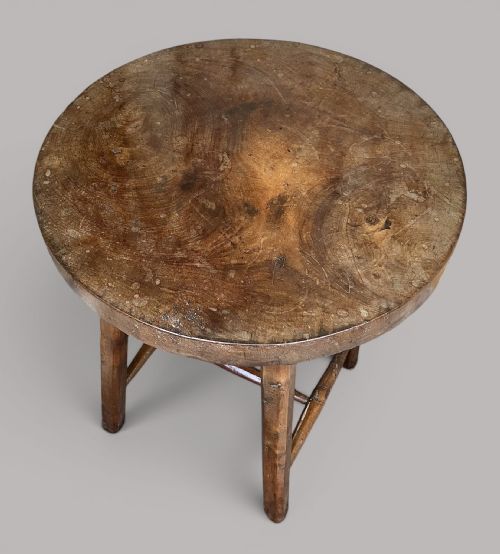
When searching for an antique circular stool, buyers encounter a diverse selection ranging from Georgian primitive tables and George III tall seats to Victorian adjustable piano stools and Art Deco bar designs. These pieces span centuries of domestic use, appearing in forms such as footstools, boudoir stools, and piano stools with varying heights and mechanical adjustments.
The materials and styles reflect the periods of their creation, from Regency mahogany and brass inlay to Victorian walnut, carved oak, and European bentwood. Buyers are most likely to meet Victorian and 19th-century mahogany or walnut piano stools, often featuring upholstered tops or screw mechanisms, alongside country elm and hardwood examples.
Origin and maker signatures further define these items, with pieces originating from English workshops, French studios, and Anglo-Indian provinces. Whether seeking a simple elm vernacular stool or an ormolu-mounted Empire style piano stool, the selection covers functional seating and decorative occasional tables alike.
How they were made
Cabinetmakers utilised dense timbers such as mahogany, walnut, rosewood, oak, and elm, often turning solid wood on a lathe to form the rounded tops and legs. Joinery methods included traditional turning, jointing, and carving, supplemented by brass mechanisms for adjustable height piano stools.
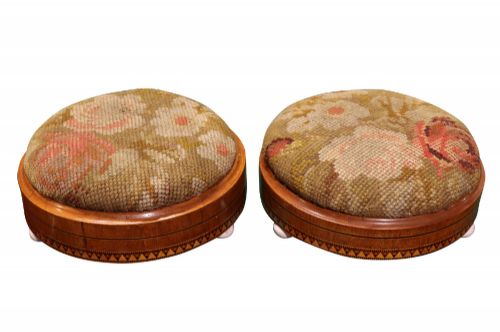
Upholstered versions combined webbing, stuffing, and textile coverings including leather, tapestry, petit point, and kelim. Decorative detailing involved hand carving, inlay, ormolu mounts, and painted or ebonised finishes applied to the hardwood frames.
Some Victorian piano stools retain tiny concealed compartments beneath their revolving tops, once used for storing forgotten melodies.
What varies in quality
The distinction between tiers rests upon the choice of timber and the precision of the turning and joinery. Finer examples display select grains of walnut or mahogany, crisp hand-carved ornamentation, and robust mechanical components for height adjustment.
Upholstery execution and secondary materials also dictate standard, where original needlework, leather, or specific textile coverings remain intact alongside solid secondary woods. Ormolu mounts, brass inlay, and documented workshop attribution elevate specific pieces above standard domestic utility items.
James Shoolbred·Gillows·H. Brooks and Co
The Antique Circular Stool Glossary
- Rise and fall
- A mechanism allowing the seat height to be adjusted by rotating the top. This feature is commonly found on piano stools from the nineteenth century.
- Vernacular
- An object made by local artisans for regional use, often employing native timbers like elm or oak without high-style academic design conventions.
- Ormolu
- Gilded bronze applied as decorative mounts to furniture frames. This technique appears on high-status Empire style pieces.
- Petit point
- A fine, highly detailed needlepoint stitch used on canvas. It frequently covers the upholstered tops of Victorian footstools.
- Bentwood
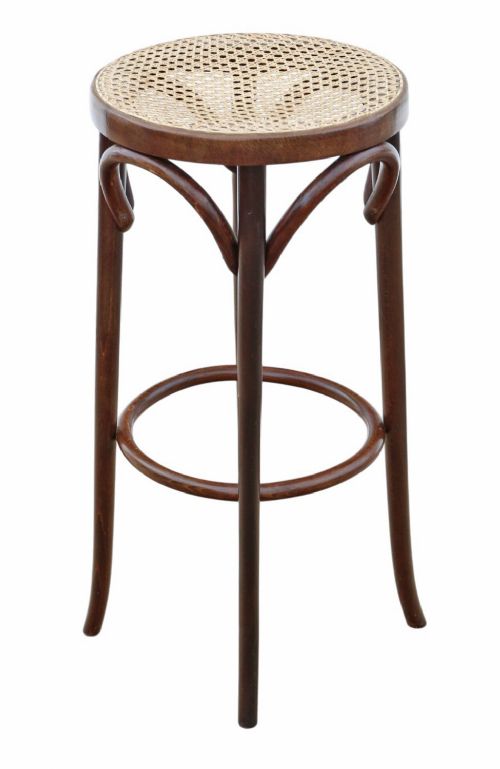
- Wood heated and bent into curved shapes to form structural elements. This technique characterises certain tall cafe and bar stools from later periods.
Antique Circular Stool: Frequently Asked Questions
How do I adjust the height on an antique piano stool?
Many nineteenth-century piano stools utilise a central wooden or metal screw mechanism hidden beneath the upholstered top. Turning the seat clockwise or anti-clockwise raises or lowers the platform.
Users should operate these mechanisms gently to protect the internal screw threads from excessive wear or binding.
What is the difference between a footstool and a piano stool?
Footstools are generally low to the ground and designed to support seated feet, often featuring decorative upholstery like tapestry, leather, or kelim. Piano stools stand taller and were engineered for musicians at keyboard instruments.
Piano stools frequently incorporate swivelling tops, rise-and-fall screws, or internal storage compartments for sheet music.
Where were circular stools placed in historic homes?
These versatile seats found places beside pianos, in dressing rooms as boudoir seating, or tucked near fireplaces as compact footrests. Smaller circular tables and low stools also served as occasional surfaces in parlours.
Their small footprint allowed them to move easily between rooms according to domestic needs.
How do I identify a Georgian circular stool?
Georgian pieces typically display heavy structural timbers like solid walnut or mahogany with restrained carving and vernacular joinery. The proportions reflect eighteenth-century cabinetmaking traditions.
Comparing the turning style and timber grain against dated examples helps confirm the Georgian origin.