




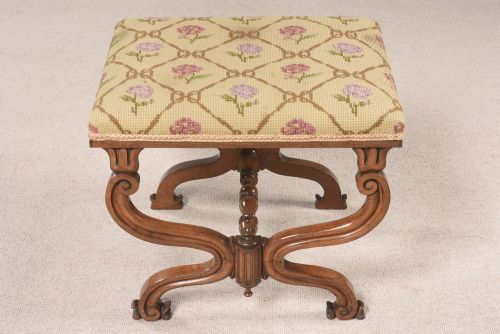
Regency Period Stool
These regency period stool examples bring refined classical seating to a room, offering low profiles and rich timber frames that collectors prize.

Regency Period Stool
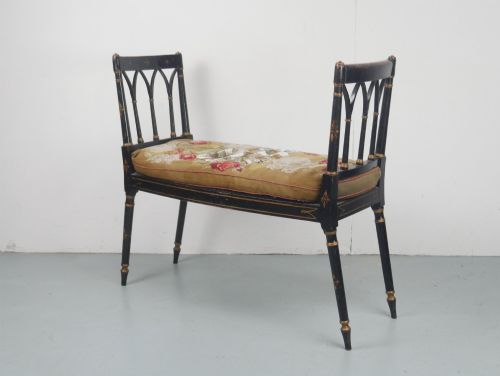
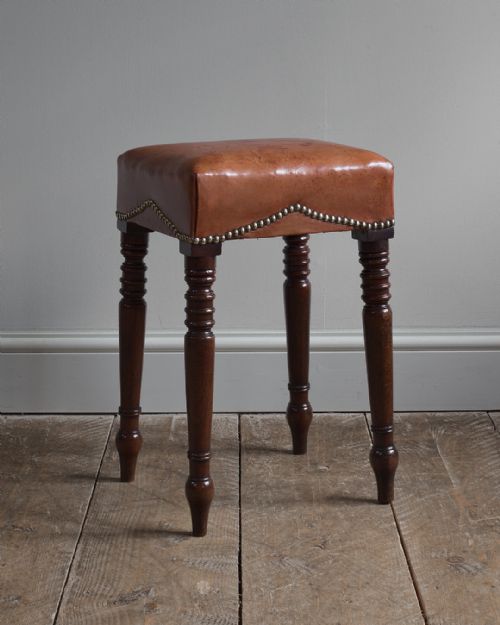
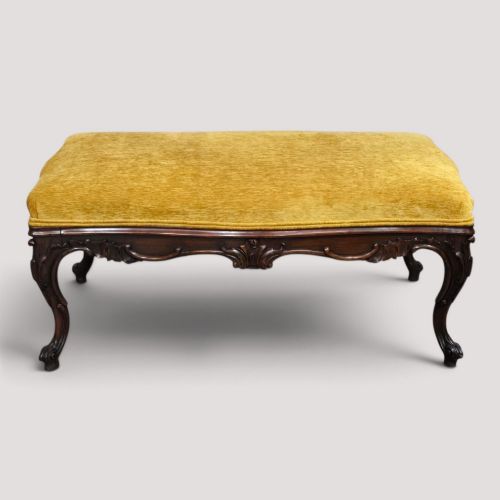
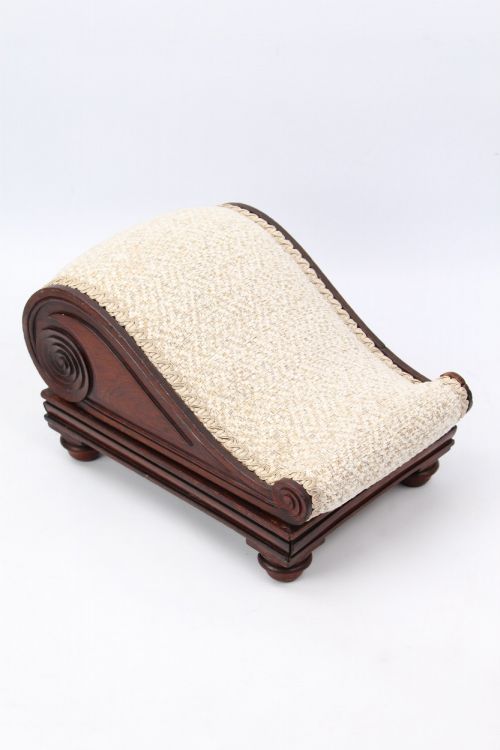
A regency period stool encompasses a variety of low seating forms designed during the early nineteenth century, featuring distinct classical lines. The selection includes compact footstools, larger ottomans, piano stools, and window seats that served practical and decorative functions in period interiors.
Rosewood and mahogany form the core of the timber choices across these listings, often paired with upholstered seats in fabric, leather, or tapestry. Pieces range from simple rectangular frames to sophisticated X-frame designs and sarcophagus shapes reflecting the neoclassical taste of the era.
How they were made
Cabinetmakers utilised dense tropical timbers such as rosewood and mahogany, frequently enhancing the dark grains with brass inlay, or simulation techniques. Frames were constructed using traditional joinery methods to support upholstered surfaces finished in needlework tapestry, leather, or woven textiles.
Mechanisms were integrated into specialised forms like piano stools and revolving seats, permitting height adjustments through threaded screws. Metal mounts in ormolu and turned wooden elements completed the structural ornamentation of the legs and frames.
Regency Period Stool Retail Price Guide 2026
Typical asking prices for regency period stool among the pieces listed under this phrase on Sellingantiques today, from the lower quarter to the upper quarter. They describe what is for sale here now, not the wider market.
The listings show rosewood and mahogany as the dominant timbers, appearing alongside brass inlay and leather upholstery.
What varies in quality
The sophistication of the timber selection and secondary embellishments dictate the standing of a piece, with figured rosewood and intricate brass inlay marking superior examples. Finer items exhibit precise carving on scroll tops and reeded legs, alongside balanced proportions in complex X-frame configurations.
Upholstery execution and the retention of original mechanisms, such as adjustable screws on piano stools, influence desirability. Master cabinetmaking attribution elevates certain items, distinguishing workshop production from standard commercial output.
Gillows·Mathew Gregson
The Regency Period Stool Glossary
- X-frame
- A form of stool construction where two curved or straight members cross in the middle to support the seat. This ancient structural layout gained renewed popularity during the Regency era for its architectural silhouette.
- Sarcophagus shaped
- A box-like furniture profile tapering towards the base, reminiscent of classical stone coffins. Makers applied this bold, flared contour to large footstools and ottomans.
- Tabouret
- A formal upholstered stool historically denoting a seat of status at court. In nineteenth-century contexts, the term describes compact upholstered occasional seating.
- Reeded
- A decorative surface treatment consisting of parallel convex mouldings carved into wood. This classical motif frequently appears on the legs of Regency seating.
- Ormolu
- Gilded bronze mounts applied to furniture for decorative contrast. Makers used these metallic accents to highlight the corners and frames of select high-status pieces.
Regency Period Stool: Frequently Asked Questions
Where were regency period stools placed?
These seats sat in formal drawing rooms, libraries, and parlours, often positioned near windows or pianos.
Smaller footstools moved around the room to accompany armchairs and sofas as needed for comfort.
How do I identify a piano stool?
Piano stools usually feature central wooden columns or swivel mechanisms allowing height adjustment for the musician.
They often appear with revolving circular tops rather than fixed rectangular frames.
Are X-frame stools stable?
X-frame constructions distribute weight evenly across intersecting diagonal timbers, providing robust support despite their slender appearance.
Original examples rely on precise joinery at the central pivot to maintain structural integrity.
What fabrics were used originally?
Original seating surfaces utilised durable leather, woven textiles, and floral trellis tapestry needlework.
Many surviving pieces retain later upholstery while keeping their antique timber frames intact.