

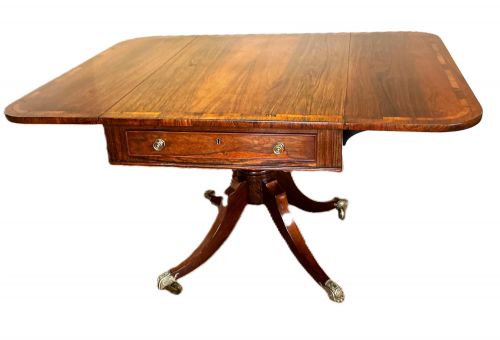
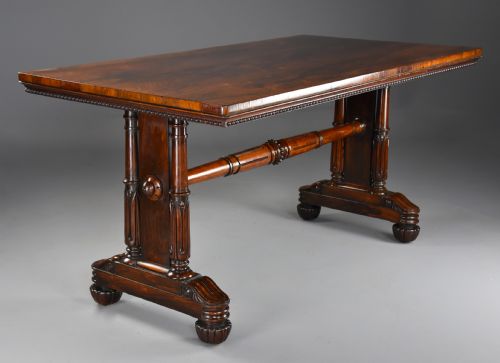


Regency Style Sofa Table
A regency style sofa table brings double-flap elegance and rich timber tones into a room, offering both freestanding versatility and period character.
Regency Style Sofa Table
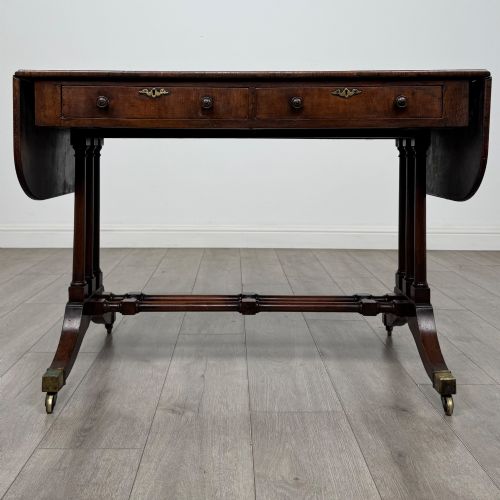
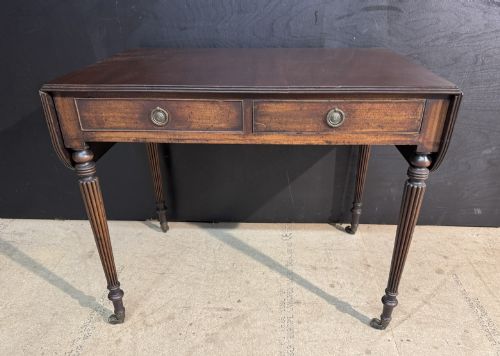
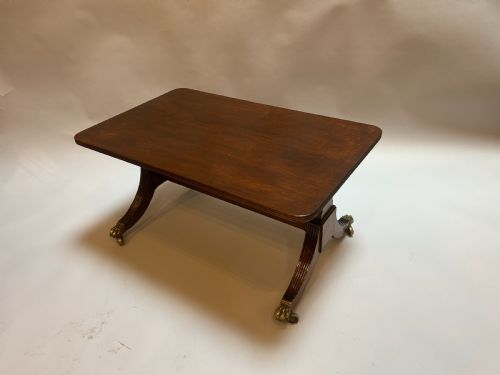
When you search for a regency style sofa table, you encounter freestanding pieces designed originally to stand before a sofa or in the centre of a room. The tables appearing here span genuine 19th Century and Regency periods alongside later revivals from the Edwardian era and the 1920s and 1930s.
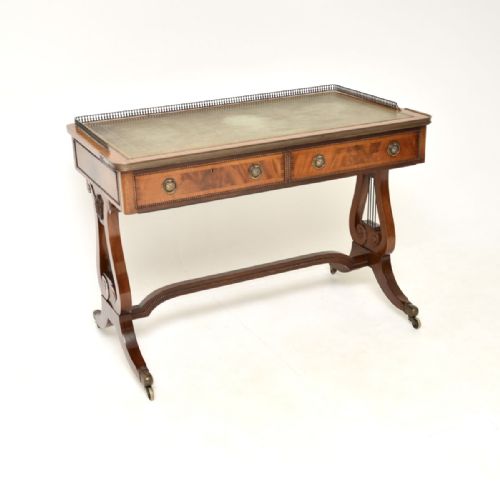
Most examples found on this page are constructed in mahogany or rosewood, often featuring drop leaves and twin pedestals or end supports. Alongside traditional sofa tables, the selections include related forms such as library tables, writing desks, and occasional side tables.
The physical evidence shows substantial variety in the execution, ranging from plain mahogany pieces to elaborate designs incorporating satinwood, yew wood, boxwood, and brass inlay. Buyers select these tables for their compact proportions and functional drop-leaf design.
How they were made
Cabinet makers utilised dense hardwoods like mahogany and rosewood as the primary structural and visual timbers, frequently pairing them with contrasting veneers of satinwood, yew, and birds-eye maple. Wood inlay and boxwood stringing defined the decorative borders on top surfaces and drawer fronts.
Metal components played a structural and decorative role, with cast brass paws, castors, and intricate brass stringing or inlay integrated into the cabinet work. Leather inserts often formed the writing surfaces on bureau plat and desk variants.
Regency Style Sofa Table Retail Price Guide 2026
Typical asking prices for regency style sofa table among the pieces listed under this phrase on Sellingantiques today, from the lower quarter to the upper quarter. They describe what is for sale here now, not the wider market.
Some tables include dummy drawers designed to balance the visual symmetry while keeping card-playing accessories hidden away.
What varies in quality
The standard of timber selection and figure sets the finest pieces apart, visible in heavily figured mahogany and rich rosewood grains matched across the drop leaves. Superior execution shows in the crispness of wood inlay and the precision of brass stringing.
Underpinning the visual appeal is the structural joinery of the end supports, pedestals, and drawer construction, where solid secondary woods and dovetailed joints indicate superior workshop origin.
Gillows·George Bullock·George Smith
The Regency Style Sofa Table Glossary
- Drop flap
- A hinged leaf on either side of the table top that raises to extend the surface area. These flaps drop down when space is required.
- Satinwood
- A pale, highly reflective timber native to Ceylon and India used for contrasting banding and inlay. It provides a bright golden visual accent against dark mahogany.
- Library table
- A large freestanding table designed for books and papers, often sharing the twin-pedestal or end-frame format of a sofa table. These pieces frequently feature drawers on both sides.
- Brass inlay
- The technique of recessing thin strips or motifs of brass into the wood surface. It characterises higher-end Regency pieces.
- Freestanding
- A descriptor for furniture finished on all sides so it can sit away from the wall in the centre of a room. Sofa tables were built specifically for this placement.
Regency Style Sofa Table: Frequently Asked Questions
What is a sofa table used for?
Originally placed directly behind a sofa in the middle of a drawing room, these tables served various domestic functions including writing, sewing, and serving.
Today, buyers utilise them as narrow console tables, desks, or occasional tables behind seating arrangements where floor space is limited.
How do I tell an original from a revival piece?
Distinguishing period pieces from later revivals requires examining the construction methods, secondary timbers inside the drawer boxes, and the natural ageing of the mahogany or rosewood.
Revival pieces from the Edwardian period or the 1930s often display machine-cut elements and different timber preparation compared to early 19th Century examples.
Are the leaves on a sofa table stable?
The drop leaves are supported by pivoting wooden brackets known as fly brackets or rule joints that swing out from under the main top.
When properly adjusted, these brackets provide steady support for lamps, books, and everyday items, though heavy downward pressure should be avoided.
What woods were used on these tables?
Mahogany and rosewood dominate the surviving inventory, complemented by decorative timbers such as satinwood, yew wood, birds-eye maple, and occasional painted beech.
Inlays incorporate contrasting woods like boxwood alongside brass stringing to accentuate the geometric lines of the table top and frieze drawers.