

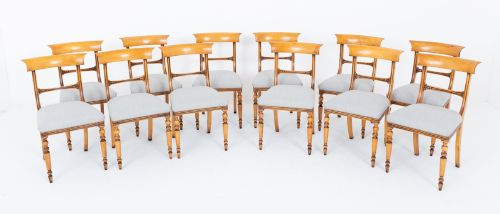
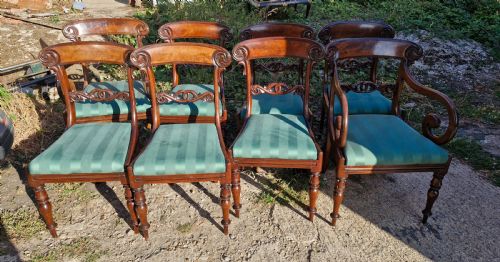
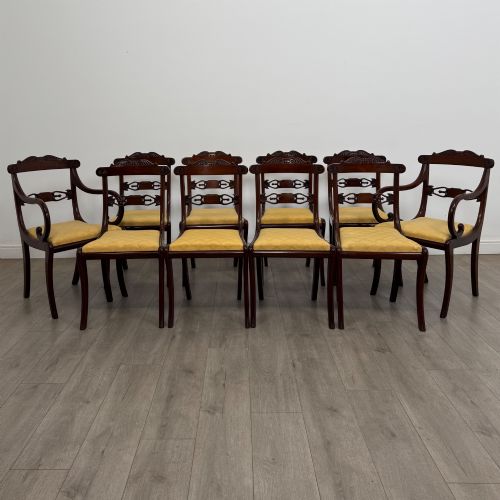
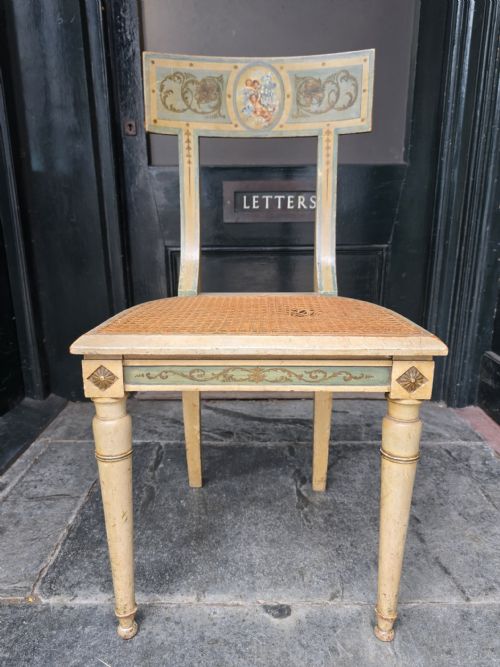
Regency Style Dining Seats
Regency style dining seats bring classical grace to a room, offering sturdy mahogany frames and elegant silhouettes that anchor a traditional dining space.
Regency Style Dining Seats
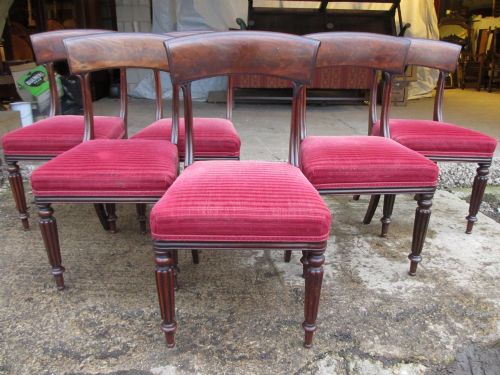
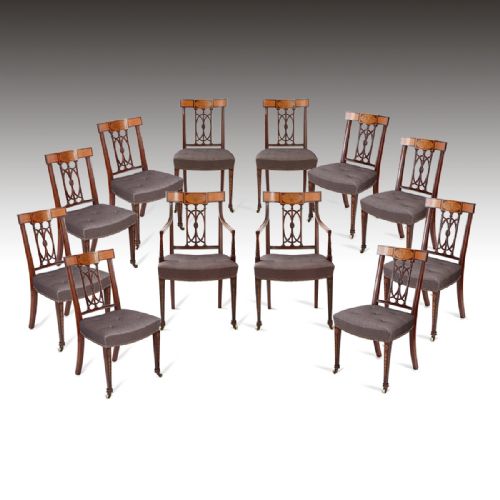
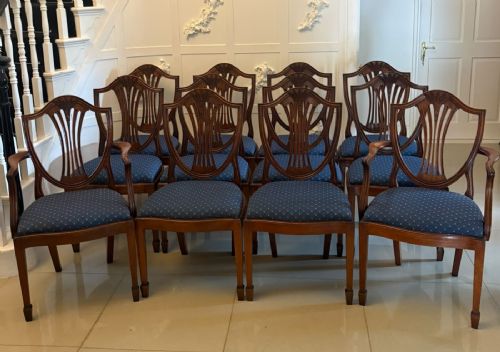
When searching for regency style dining seats, buyers encounter a mix of original period seating and later revivals from the nineteenth and twentieth centuries. The selection spans dining chairs, side chairs, carver chairs, and occasional armchairs designed to accompany large tables.
How they were made
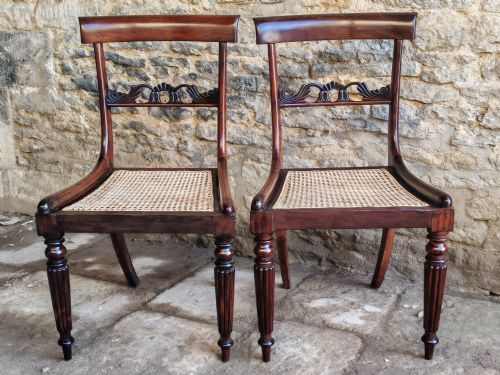
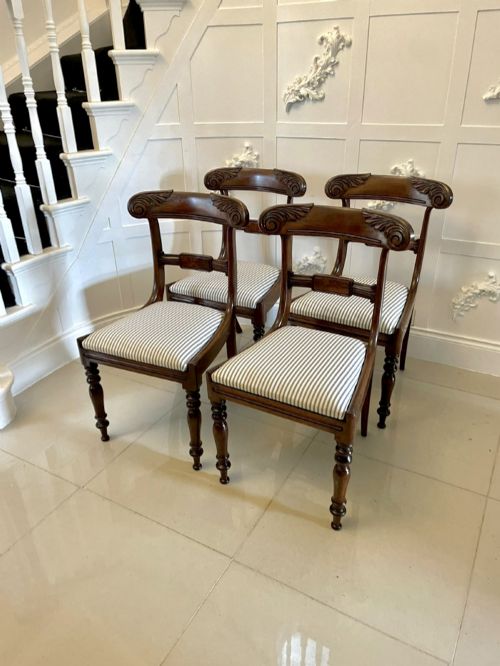
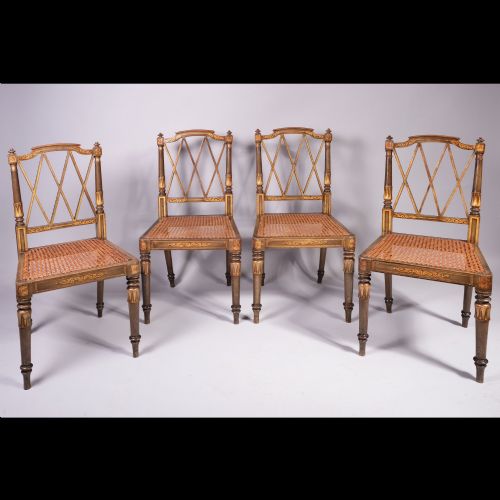
Cabinetmakers constructed these frames primarily using solid mahogany, alongside alternative timbers like satin birch and decorated faux birds eye maple. Workshops applied brass inlays, hand-painted finishes, and carved details to embellish the wood structures.
Seating portions utilised diverse materials including woven cane, leather, and various upholstery fabrics, sometimes complemented by textile squab cushions. Joinery techniques relied on traditional framing methods to ensure stability across both single chairs and larger sets.
Several sets feature faux birds eye maple finishes, proving that eighteenth century taste occasionally enjoyed a clever painted illusion.
What varies in quality
The degree of refinement in the carved woodwork and the uniformity of a large set dictate the standing of individual chairs. Cohesion across a group of ten or twelve seats requires careful matching of timber grain and structural proportions.
Exhibition quality examples display superior detailing in brass work, painted surfaces, or specialised joinery. Lesser examples show simpler execution in secondary timbers while retaining the expected silhouette of the period.
Gillows
The Regency Style Dining Seats Glossary
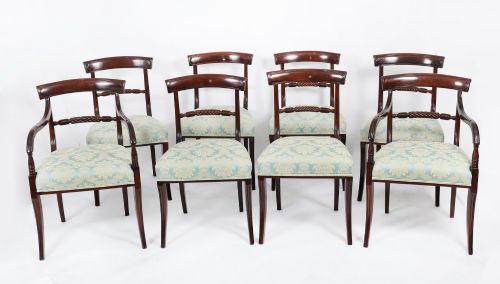
- Carver chair
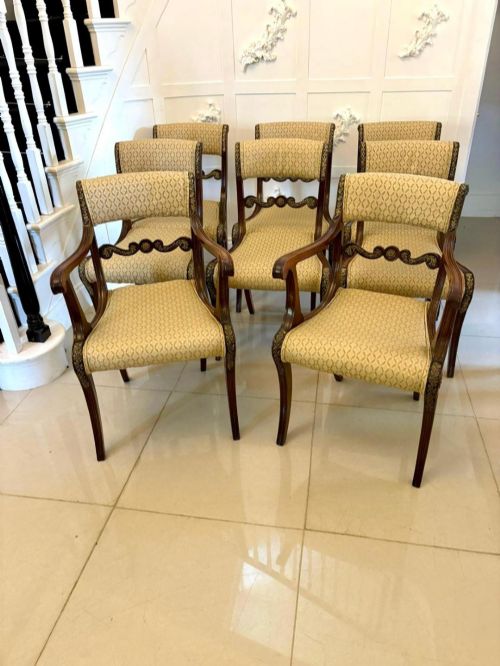
- An armchair designed to sit at the head of a dining table, often matching the smaller single chairs in a set.
- Bar back
- A chair design featuring a horizontal wooden crossrail across the backrest, commonly seen on William IV examples.
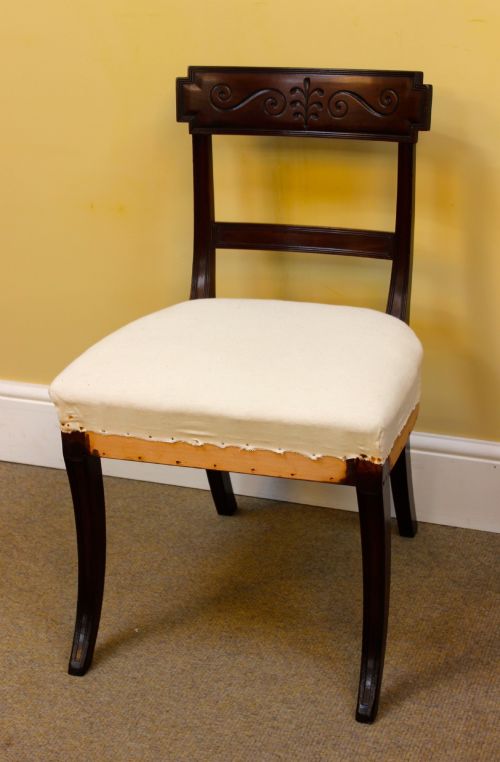
- Sabre leg
- A curved, outwardly tapering chair leg that mimics the sweep of a cavalry sword, frequent in Regency designs.
- Shield back
- A heart-shaped or shield-shaped chair back design associated with Georgian seating forms.
- Cane
- Woven rattan material utilised for chair seats and back panels to provide a lightweight, flexible surface.
Regency Style Dining Seats: Frequently Asked Questions
What defines regency style dining seats?
These seats draw inspiration from early nineteenth century classical design, featuring curved lines, sabre legs, and dark wood frames.
They appear in both original period production and later twentieth century revivals.
Are carver chairs included in sets?
Many larger sets incorporate a pair of carver chairs alongside a larger number of standard single chairs.
This combination served traditional dining arrangements at the head and sides of the table.
How do I identify a revival piece?
Twentieth century revival sets often duplicate earlier Regency or Georgian silhouettes using similar mahogany or satin birch timbers.
Examination of the timber age, construction joints, and finish helps distinguish original nineteenth century work from later interpretations.
What upholstery materials are used?
Original and revival seating utilises leather, woven cane, and diverse upholstery fabrics for the seat pads.
Some examples also feature loose textile cushions placed over caned frames.