

Regency Style Dining Chairs
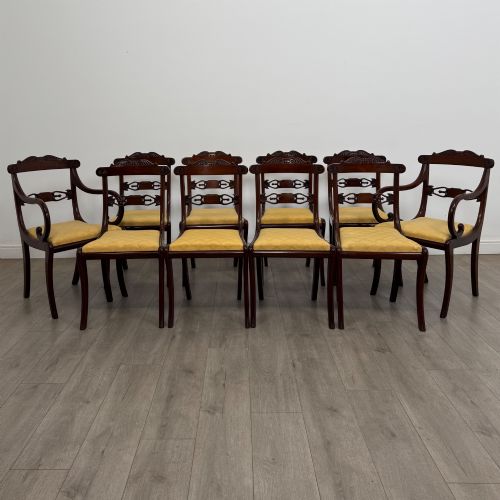
Regency style dining chairs bring classical symmetry and refined timberwork to the dining table, offering both single chairs and carvers for formal seating.
Regency Style Dining Chairs
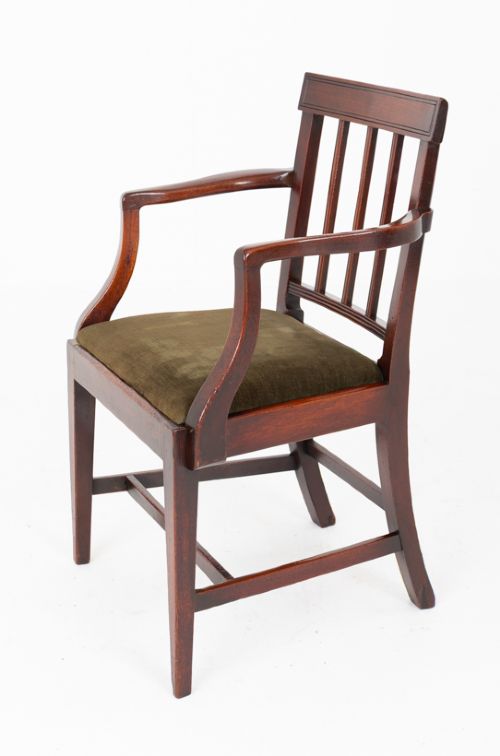
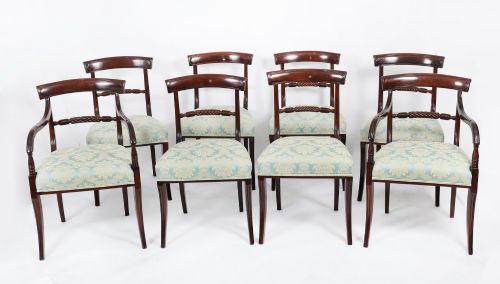
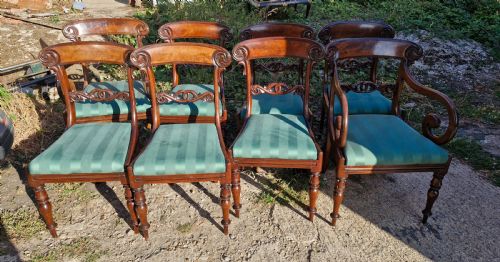
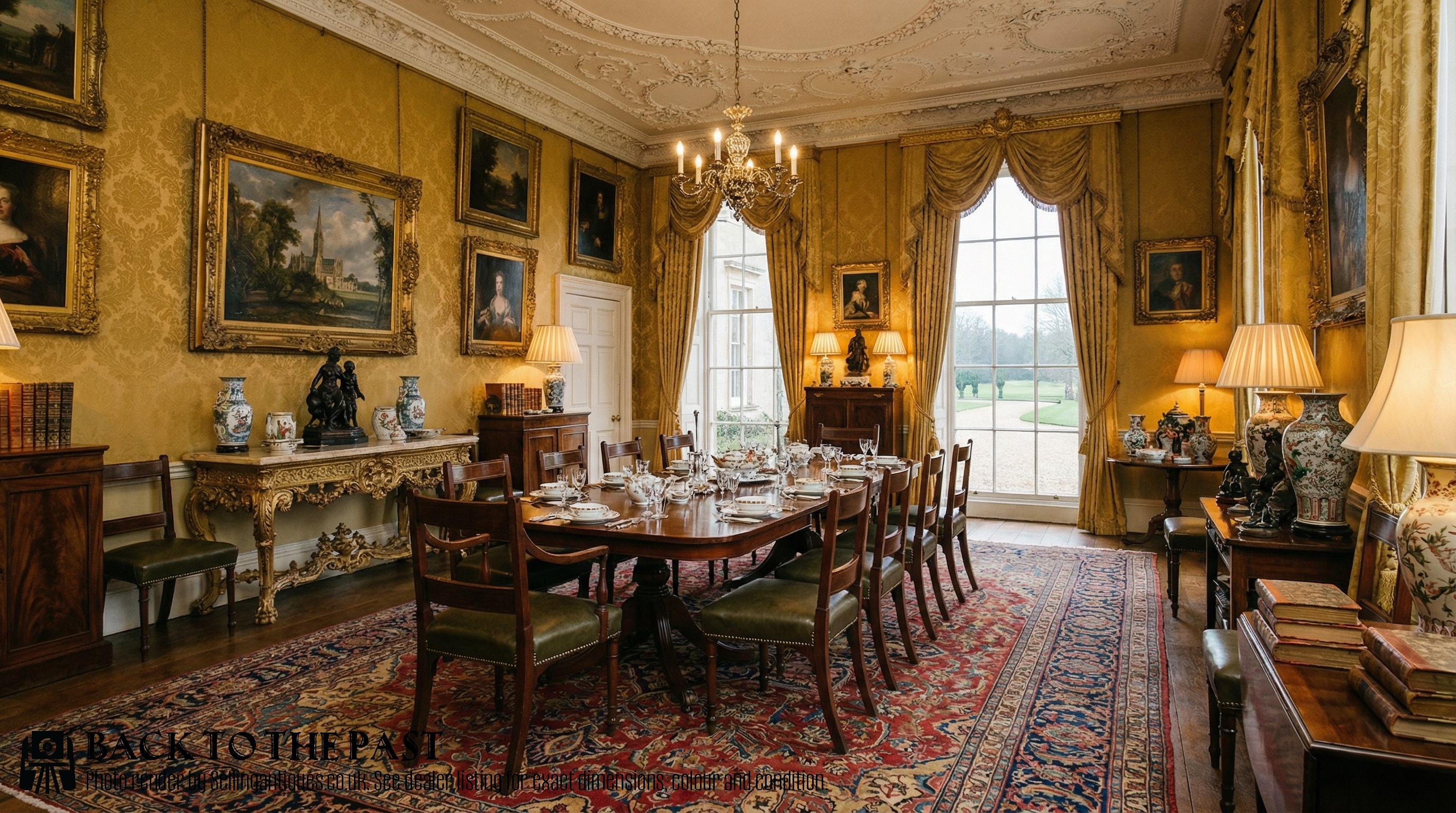
Regency style dining chairs encompass formal seating pieces designed in the classical taste of the early nineteenth century, alongside later revivals from the Edwardian era and the twentieth century. These pieces appear most frequently as matched sets of dining chairs, often accompanied by carvers or armchairs for the heads of the table.
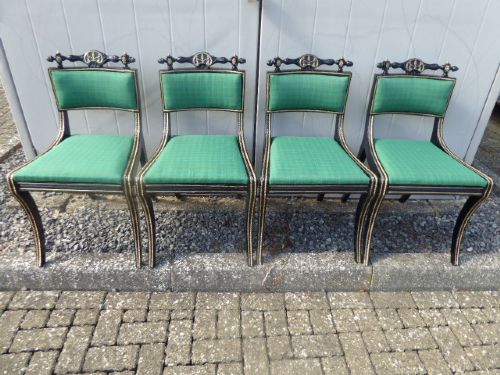
The form draws heavily on ancient Greek and Roman precedents, interpreted through periods spanning the Georgian era, the Regency itself, and later Victorian and Edwardian revivals. Makers constructed these chairs to suit formal dining rooms, utilising diverse woods such as mahogany, rosewood, and satin birch.
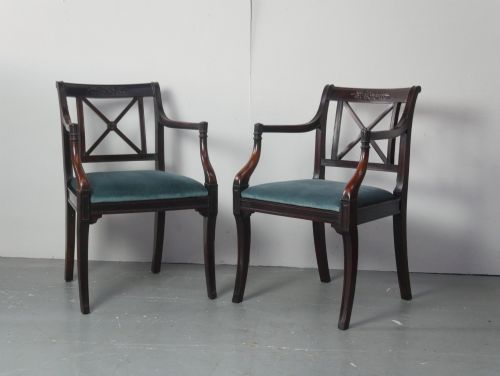
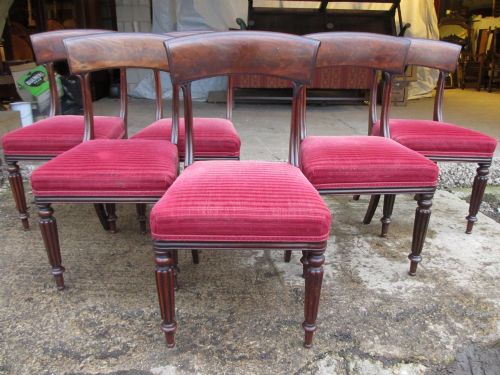
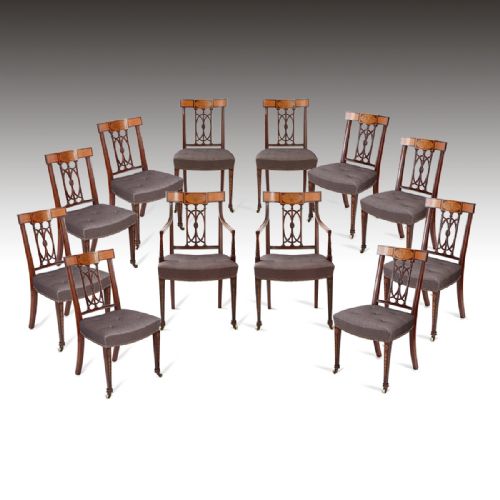
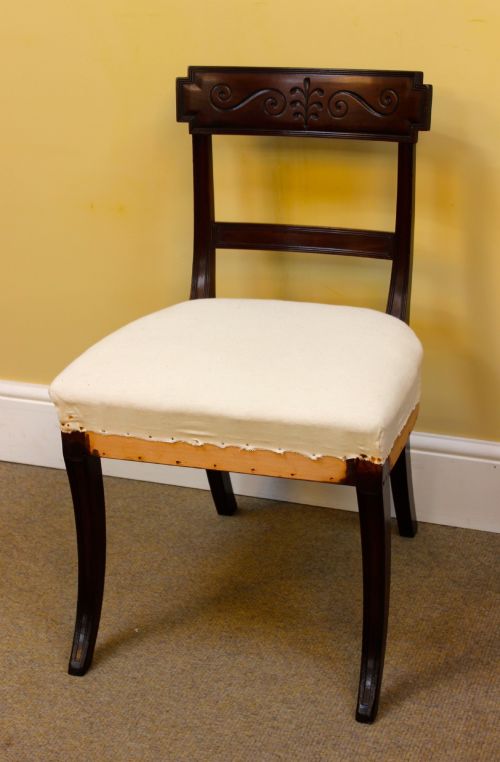
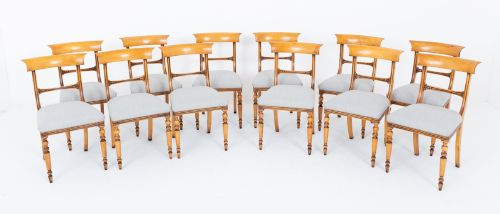
Buyers encounter single chairs alongside large sets numbering up to sixteen pieces, sometimes paired with dining tables. The lineage ranges from period originals to twentieth-century interpretations echoing the distinctive horizontal cross-rails and sabre legs.
How they were made
Makers relied principally upon solid mahogany, rosewood, and satin birch for frames, occasionally turning to elm, teak, or beech for painted or decorated finishes. Timber selection dictated the strength of slender members like curved back rails and rear-swept legs.
Surface embellishment involved hand-painting, ebonisation, faux bird's-eye maple finishes, and brass inlay to accentuate the classical vocabulary. Upholstery fabrics, leather, and cane provided the seating surfaces, secured over webbed frames and squab cushions.
Regency Style Dining Chairs Retail Price Guide 2026
Typical asking prices for regency style dining chairs among the pieces listed under this phrase on Sellingantiques today, from the lower quarter to the upper quarter. They describe what is for sale here now, not the wider market.
Listings feature mahogany, rosewood, and satin birch alongside painted and caned finishes across multiple centuries.
What varies in quality
Quality rests upon the selection of timber figures and the structural integrity of joints connecting slender uprights and curved top rails. Denser mahogany grain and solid rosewood construction separate standard production from exhibition pieces.
Refinement in carving, hand-painting, and brass inlay distinguishes superior examples. The consistency across large sets also governs worth, as uniform matching in timber tone and design across ten or twelve chairs requires exceptional initial selection.
Gillows
The Regency Style Dining Chairs Glossary
- Carver
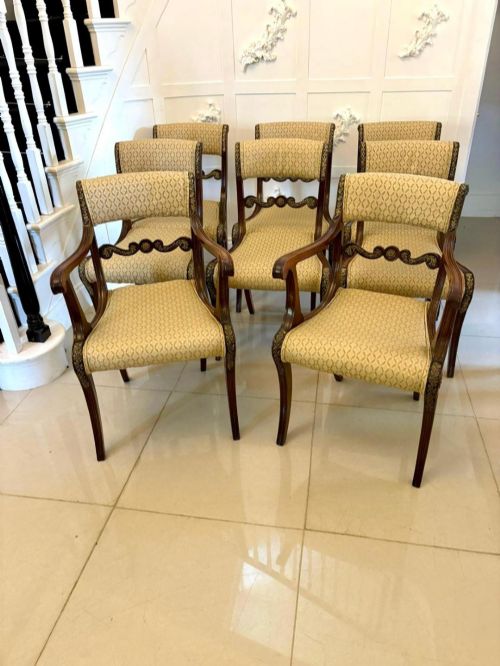
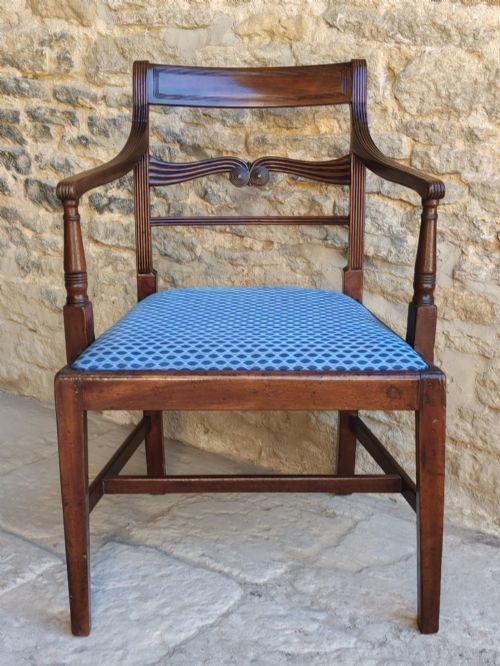
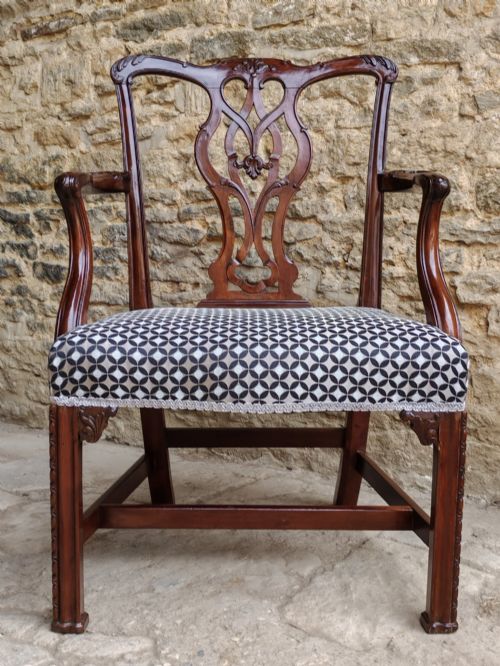
- An armchair designed with elbow rests, traditionally placed at the head of a dining table to match a set of single chairs. These pieces often feature scrolling arms or enclosed bar backs.
- Bar Back
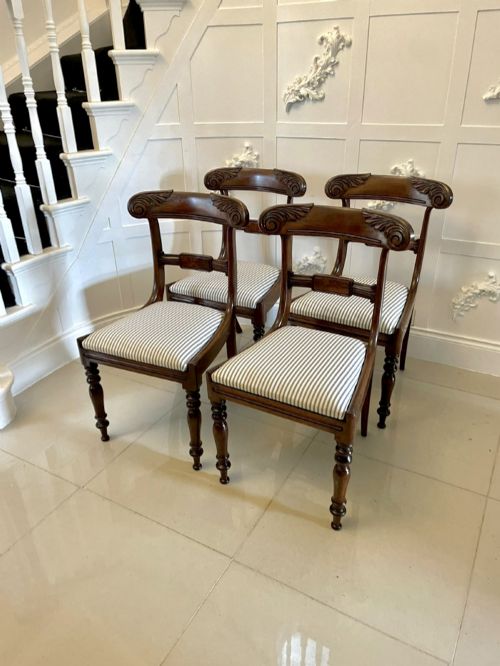
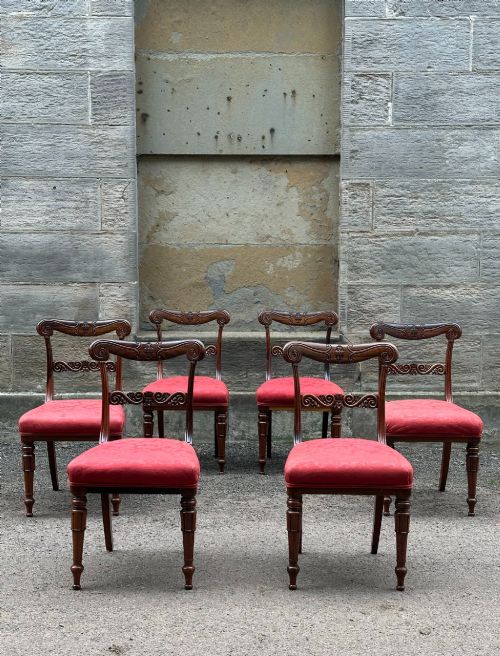
- A horizontal wooden rail forming the upper portion of the chair back, frequently curved to fit the spine. This feature defines many Regency and William IV dining seats.
- Sabre Leg
- A chair leg that curves outward and backward in a concave sweep, emulating ancient Greek klismos furniture. It provides stability while lightening the visual weight of the frame.
- Caning
- A woven mesh made from rattan strips, utilised for resilient and airy seat panels. It appears frequently on Anglo-Indian and revival pieces.
- Squab Cushion
- A loose, upholstered pad placed over a rigid or caned seat base for comfort. These cushions are often removable and tailored to fit the precise profile of the chair frame.
Regency Style Dining Chairs: Frequently Asked Questions
How do I spot a true period chair?
Examine the timber grain, joinery methods, and wear patterns beneath the seat frame to determine age. Period pieces often exhibit hand-cut joints and patination native to early nineteenth-century workshop practices.
Compare the proportions and structural detailing against documented examples from the Regency and Georgian eras. Later revivals from the Edwardian period or the twentieth century display different machining marks and timber preparation.
Can I mix single chairs with carvers?
Traditional dining arrangements routinely pair a majority of single chairs with two matching carvers positioned at the table ends. This configuration balances formal symmetry with practical seating for hosts.
Ensure the timber tones and backrest heights align between the armchairs and side chairs when assembling a set from disparate pieces.
How should I care for mahogany frames?
Maintain timber surfaces by applying appropriate beeswax or polish sparingly to nourish the grain without building up residue. Keep chairs away from direct heat sources and strong sunlight to prevent wood splitting and fading.
Inspect the joints periodically to ensure structural stability remains sound under daily use.