


Georgian Wooden Dining Chairs
Georgian wooden dining chairs bring enduring proportion and solid timber construction to the modern table.
Georgian Wooden Dining Chairs
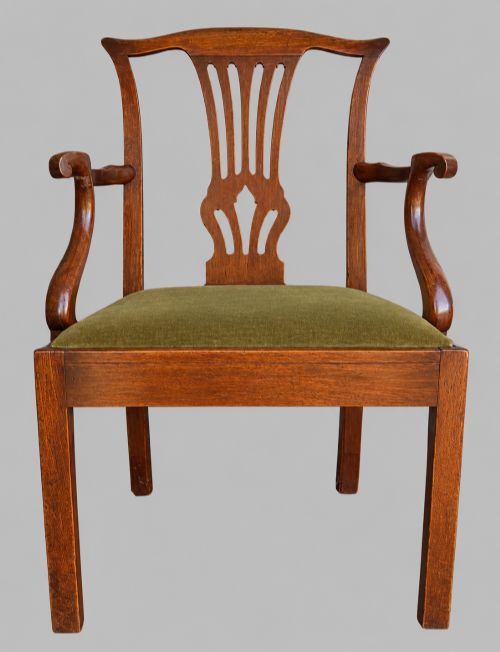
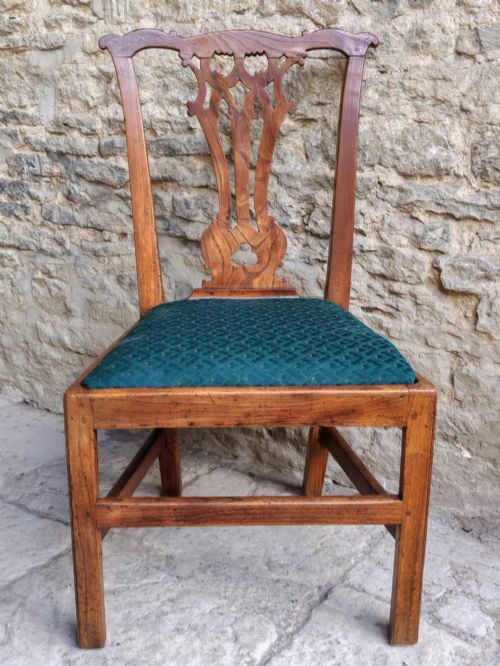
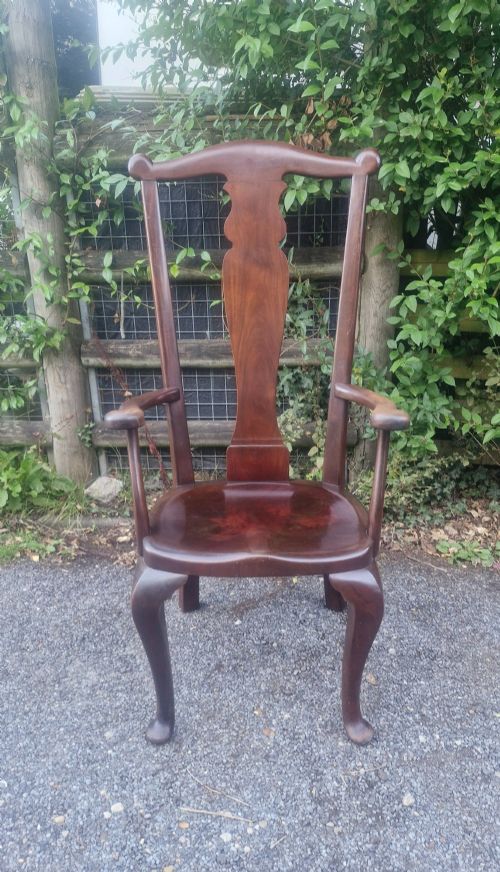
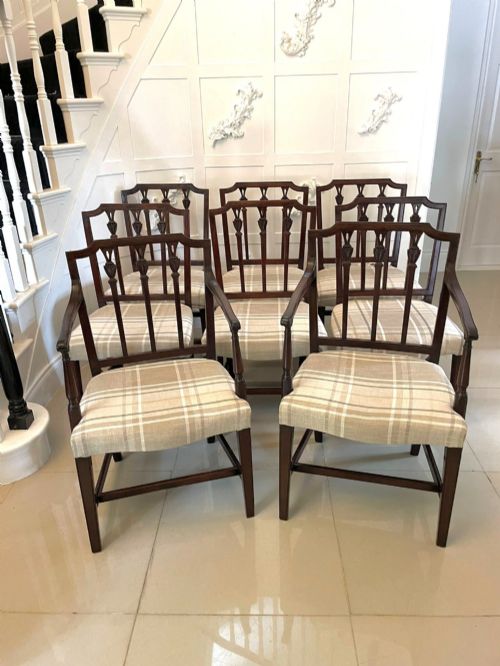
When you search for georgian wooden dining chairs, you encounter seating built across the eighteenth and nineteenth centuries, spanning single chairs, carvers, and larger matched sets. The material evidence shows heavy reliance on mahogany alongside regional timbers like elm, fruitwood, and oak.
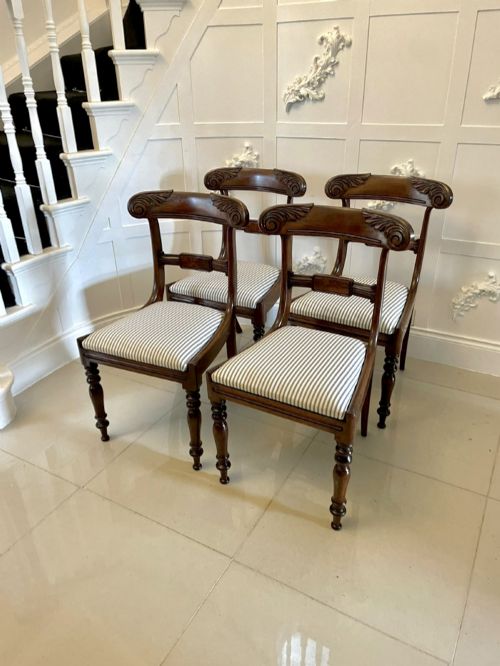
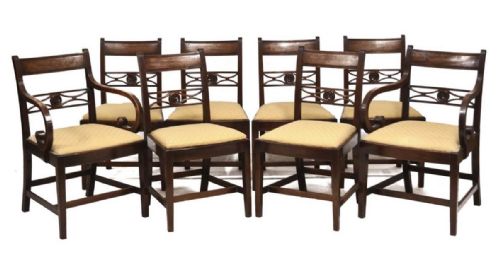
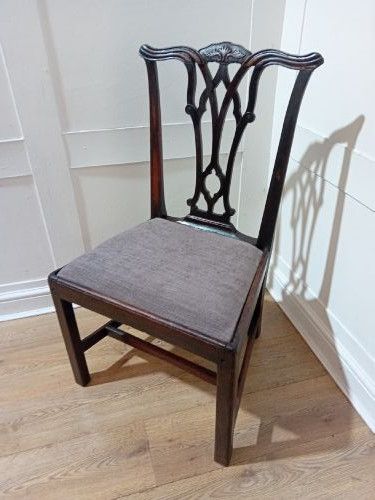
Most examples you meet on this page date from the George III period through the Regency and William IV eras, capturing stylistic evolutions from Chippendale and Hepplewhite designs to simpler bar back and country kitchen forms.
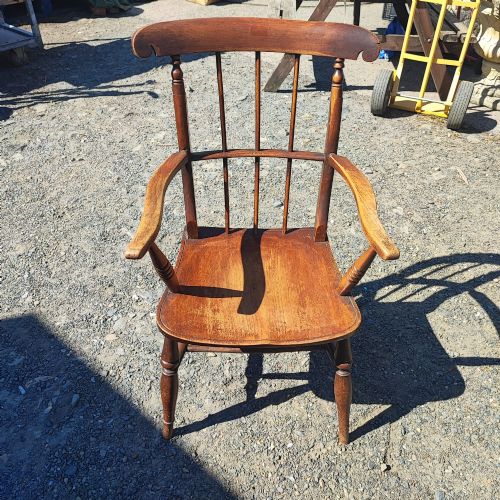
Makers produced these chairs for formal dining rooms and country houses alike, resulting in variations from carved mahogany showpieces to sturdy vernacular Windsors.
How they were made
Joiners and cabinet makers built these frames primarily using solid mahogany, elm, and oak, often turning to fruitwood or yew for regional variations. Timber selection dictated whether a chair received crisp interlaced splats or steam-bent Windsor bows.
Secondary materials included brass inlay, rosewood details, and traditional upholstery components such as fabric, velvet, and leather fixed over webbing or squab pads.
Listings for georgian wooden dining chairs span multiple centuries, incorporating eighteenth-century George III designs alongside nineteenth-century Regency and William IV mahogany forms.
What varies in quality
The standard of carving and timber selection dictates where a chair sits in the hierarchy, separating standard workshop output from pieces with finely pierced splats and well-figured grain. The integrity of the frame construction and the survival of original timber surfaces rather than heavy refinishing mark the finer examples.
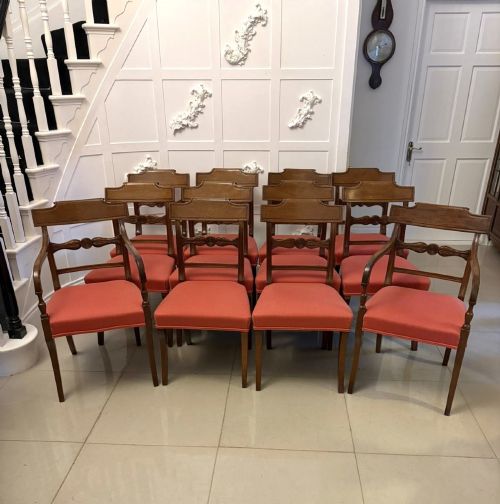
Consistency across larger sets heavily influences desirability, as matching sets of six, eight, or twelve require uniform timber patination and balanced proportions across every individual frame.
Gillows
The Georgian Wooden Dining Chairs Glossary
- Carver
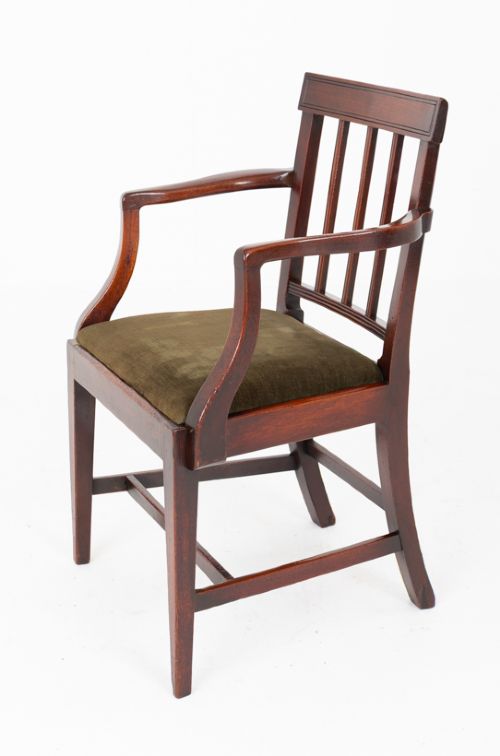
- An armchair designed to match a set of single dining chairs, typically placed at the head of the table. These often feature open elbows and wider proportions.
- Bar back
- A chair design featuring a horizontal wooden slat across the upper backrest, frequently seen in Regency and William IV examples. This form replaced the pierced splats of earlier decades.
- Splat
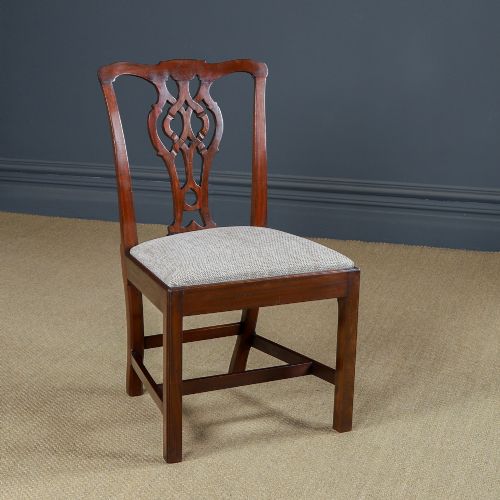
- The vertical wooden strip set in the middle of a chair back, connecting the top rail to the seat. Cabinet makers carved, pierced, or shaped these elements to define the prevailing style.
- Windsor
- A traditional wooden chair constructed with turned legs and spindles socketed directly into a solid sculpted seat. Regional variations include high backs and comb-back designs in elm or yew.
- Elbow chair
- A term frequently used in historical listings to describe an armchair with open wooden arms. They often accompanied dining sets for use by the host.
Georgian Wooden Dining Chairs: Frequently Asked Questions
How do I mix antique chairs with a modern table?
Georgian dining chairs bring visual warmth and varied timber tones that contrast effectively against modern glass, metal, or contemporary wooden tables. Their traditional proportions allow them to sit comfortably in mixed-period interior schemes.
When combining singles and carvers from different decades, focus on matching timber species and seat heights to maintain a balanced look around the dining room.
Are these chairs sturdy enough for daily use?
Most eighteenth and nineteenth-century dining chairs were built for heavy domestic use using dense timbers like mahogany and oak. Sound joinery ensures they remain functional for everyday dining today.
Routine checks of the leg joints and under-framing will keep stable frames secure over decades of regular sitting.
What is the difference between a carver and a side chair?
Side chairs are narrower dining chairs built without armrests designed to fit neatly along the sides of a table. Carvers are larger armchairs traditionally reserved for the head and foot of the table.
In many historical sets, two carvers accompanied a larger group of single side chairs to complete the arrangement.
How do I identify a George III chair?
George III chairs typically display the classic proportions and mahogany framing associated with eighteenth-century cabinet making. Stylistic markers include carved splats, straight or moulded legs, and understated bracket supports.
Regional country versions from the same period often utilise local elm or fruitwood while maintaining similar structural layouts.