
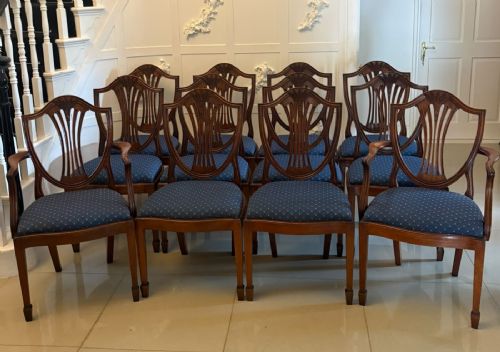
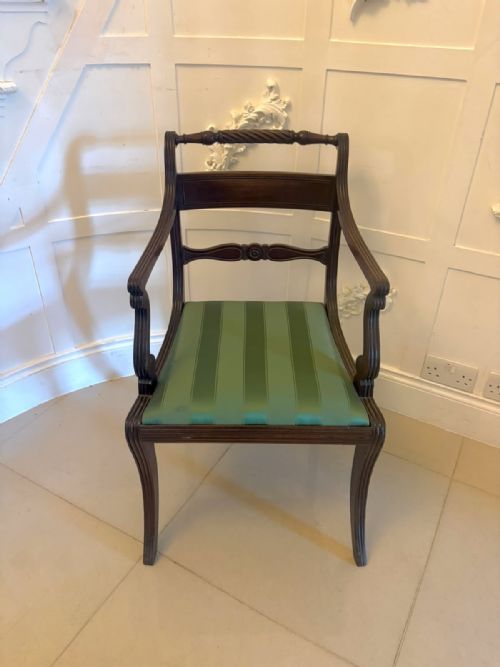
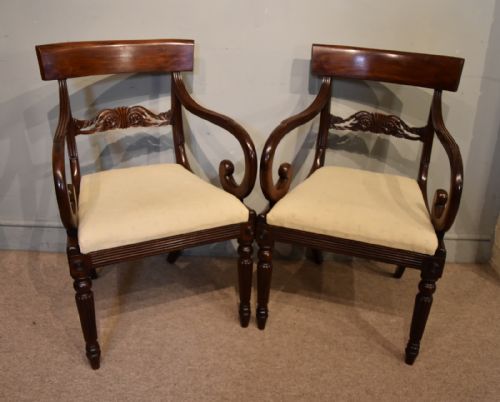
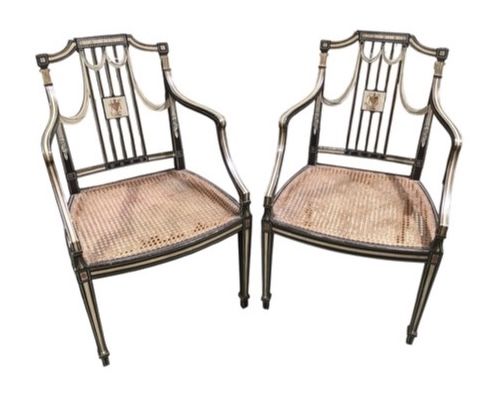
Regency Style Carvers
Regency style carvers bring classical lines and substantial arm support to a dining table or desk.
Regency Style Carvers
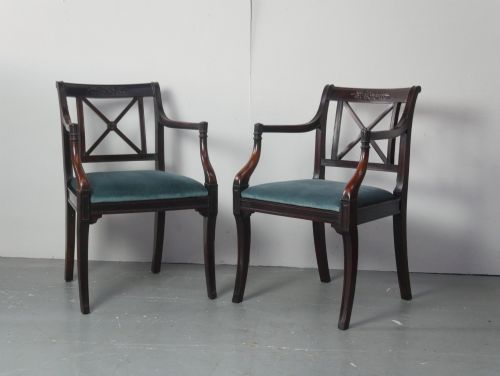
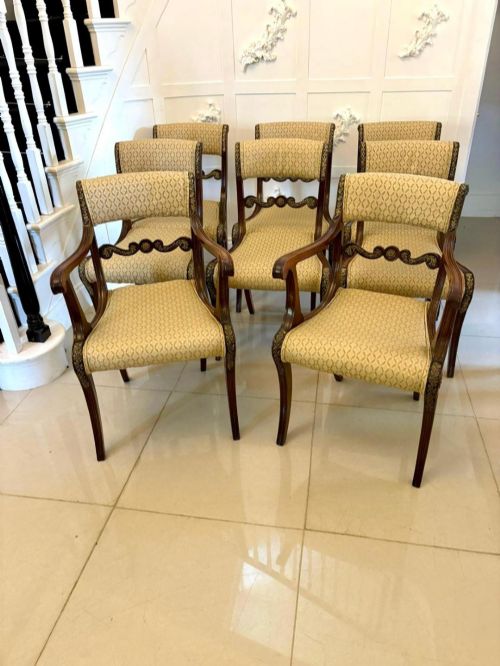
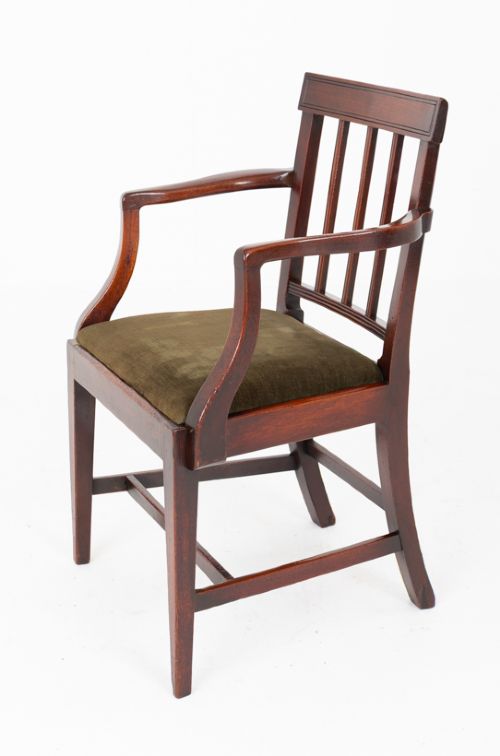
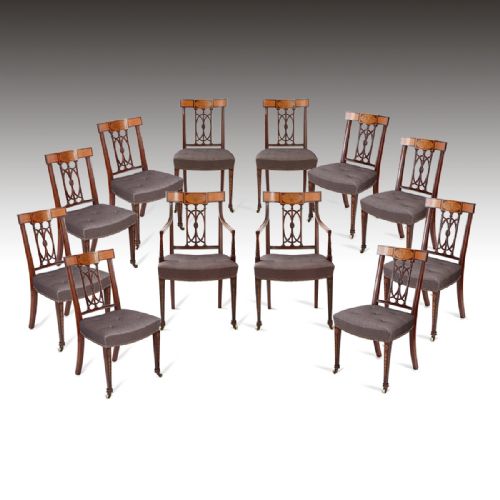
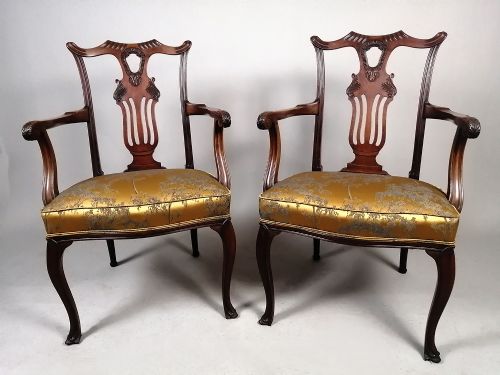
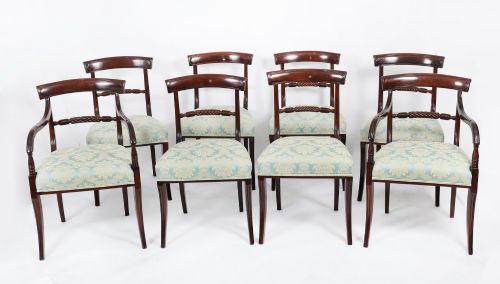
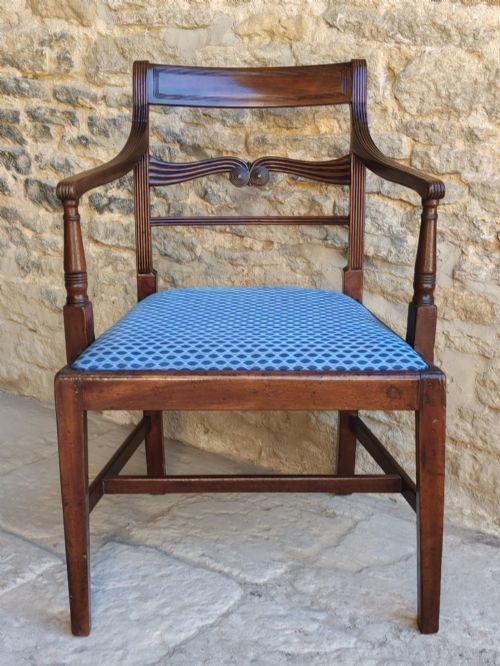
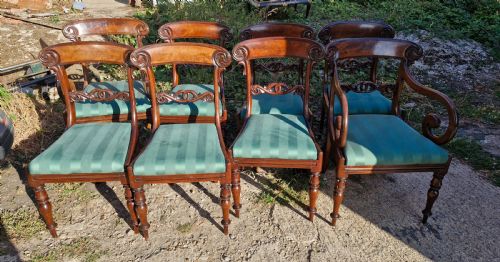
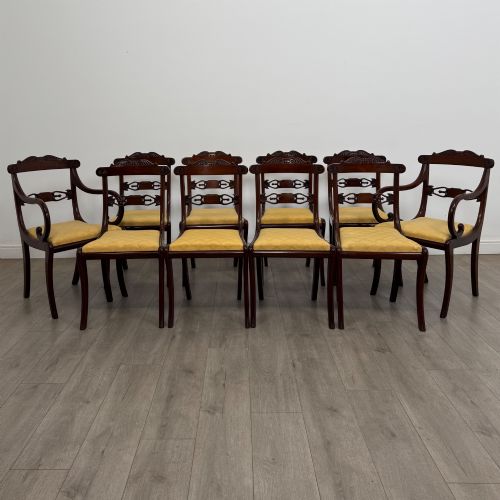
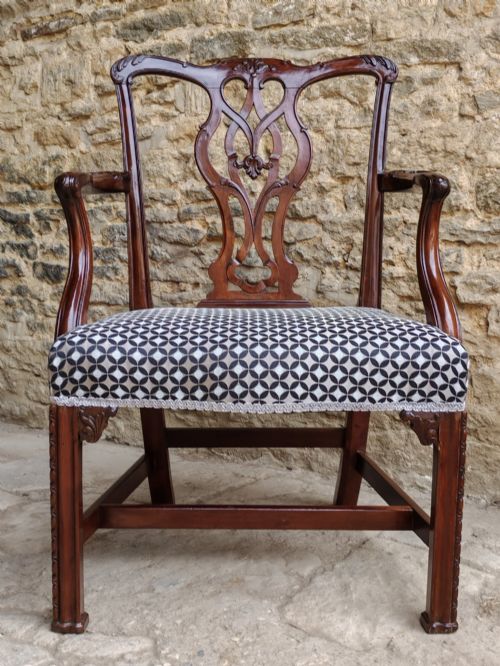
Regency style carvers are open armchairs designed to sit at the ends of a dining table or function as desk and library seating. When you search for regency style carvers, you encounter single armchairs, pairs, and larger matched sets originating from the nineteenth century or later revival periods.
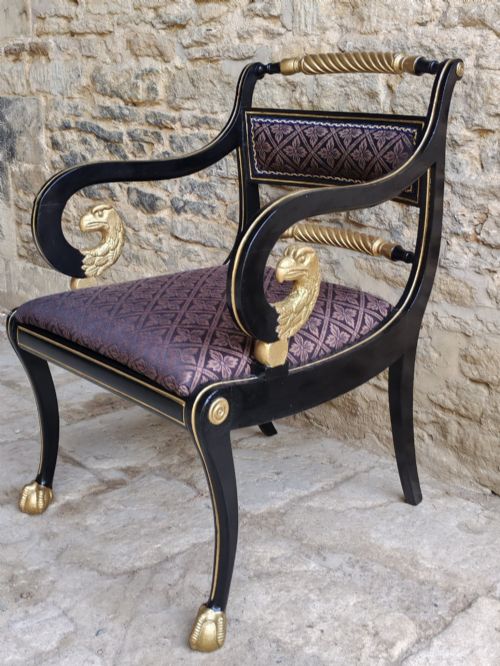
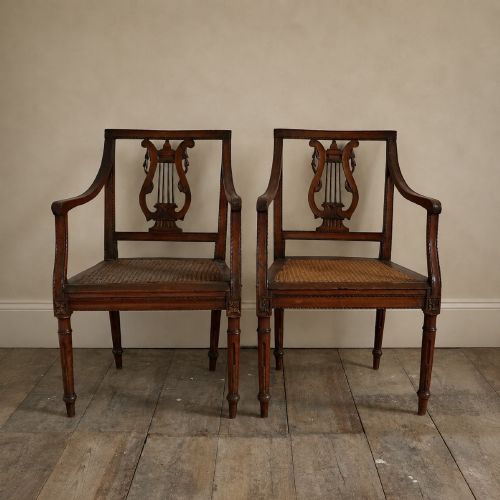
The silhouettes draw heavily on classical Greek and Roman forms, featuring scrolled arms, lyre backs, and reeded legs. Mahogany is the predominant wood, frequently paired with seats in leather, cane, fabric, or velvet.
Makers of these chairs worked across multiple eras, producing genuine period pieces during the Georgian and Regency reigns, alongside later Regency revival interpretations in the Edwardian period and twentieth century.
Materials and Construction Methods
Cabinetmakers relied on dense, well-figured mahogany as the primary timber, shaping solid stock for the curved crest rails and sweeping arm supports. Detail work often incorporated satinwood inlay, brass mounts, or giltwood highlights to enhance the classical aesthetic.
Seating construction combined traditional joinery with supportive drop-in or upholstered pads. Leather, cane, and woven fabrics were secured with upholstery tacks or cane-weaving techniques appropriate to the specific decade of manufacture.
The documented object types span armchairs, dining chairs, desk chairs, and carver chairs originating from Georgian, Regency, Edwardian, and later revival eras.
Distinctions in Execution and Materials
Quality separates chairs built with dense, highly figured timber and crisp hand-carving from those utilising simpler stock and softer mouldings. The precision of joinery in the complex joints of a scroll arm or lyre back dictates the long-term stability of the piece.
The refinement of brass inlay, turnings, and secondary woods reveals the original workshop standard. Finer examples maintain crisp detail in the carved motifs and balanced proportions across both single chairs and larger sets.
The Regency Style Carvers Glossary
- Carver chair
- An armchair designed to match a set of single dining chairs, traditionally placed at the table ends. These chairs feature open arms to accommodate formal clothing.
- Lyre back
- A chair backrest shaped to resemble an ancient Greek lyre instrument. This motif appears frequently in Regency and revival seating designs.
- Scroll arm
- An armrest curved outward in a continuous scroll form. This shape provides both ergonomic support and visual movement.
- Barback
- A chair back featuring a horizontal crossbar or slats spanning the uprights. This design is common in nineteenth-century dining seating.
- Reeded legs
- Chair legs carved with parallel convex mouldings that run vertically. The technique echoes classical architectural columns.
Regency Style Carvers: Frequently Asked Questions
What is a carver chair?
A carver chair is an armchair intended to sit at the head of a dining table alongside matching single chairs. The open arms provide additional support while allowing clearance for dining.
Historically, these chairs served multipurpose roles in libraries and drawing rooms before becoming standard elements of larger dining suites.
How do I date a Regency style chair?
Dating relies on examining the timber species, secondary woods, construction joints, and stylistic details such as brass inlay or leg turning. Original nineteenth-century pieces show distinct wear patterns and hand-cut joinery.
Revival pieces from the Edwardian era or the twentieth century often utilise cleaner internal construction methods while copying earlier Regency forms.
Are these chairs comfortable for daily use?
Most carver chairs provide firm upright support suited for dining or desk work. The open arms offer a resting place without restricting movement.
Upholstered leather, fabric, or cane seats vary in cushioning depending on whether the padding has been restored to historical specifications.
Can I mix carvers with different chairs?
Carvers often function as standalone desk chairs or accent pieces in a room. When paired with a dining table, they coordinate best with chairs sharing similar timber tones and classical proportions.
Matching sets remain desirable, but single carvers integrate easily into mixed seating arrangements.