





Oriental Export Armchairs
Oriental export armchairs bring solid woods and deep carving together for rooms that need weight and presence.
Oriental Export Armchairs
Oriental export armchairs combine regional craftsmanship with forms destined for Western markets, spanning the eighteenth and nineteenth centuries. These pieces arrive in heavy woods, frequently shaped as single armchairs, pairs, or larger seating suites.
The nineteenth century yields the highest number of examples on this page, often showing Chinese export and Qing dynasty influences. Buyers encounter corner armchairs, hall chairs, and wide benches alongside standard armchairs.
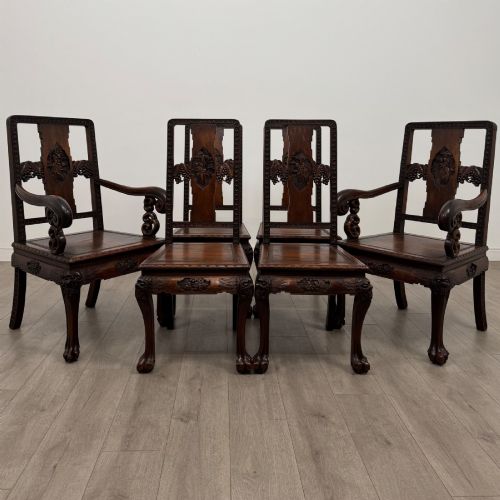
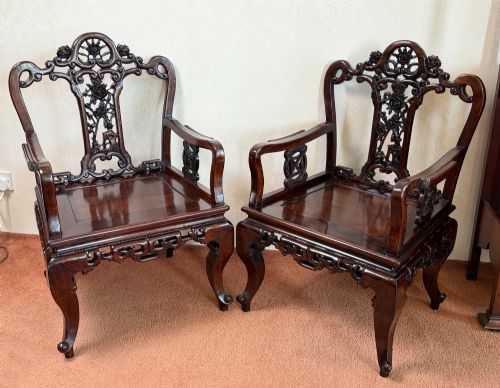
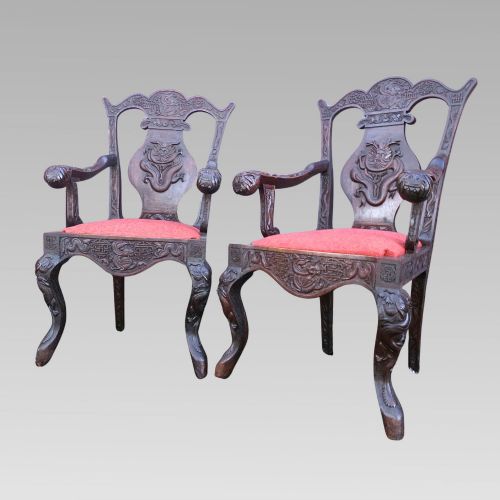
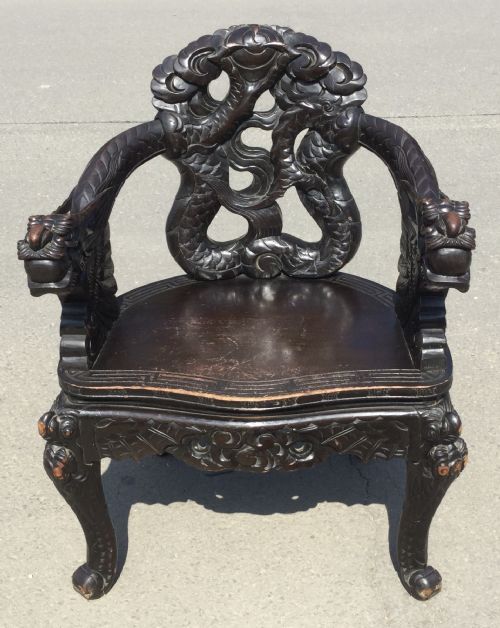
Rosewood, teak, elm, and generic hardwoods dominate the construction. Many incorporate mother of pearl inlay or elaborate dragon carvings that set them apart from domestic European seating.
How oriental export armchairs were made
Joiners and carvers utilised dense regional timbers including rosewood, teak, and elm to ensure structural integrity. These heavy woods were shaped into sturdy frames capable of supporting intricate surface decoration without warping.
Artisans applied deep relief carving directly into the timber, depicting dragons and floral motifs. Other workshops set mother of pearl into the dark hardwood surfaces to create contrasting geometric and organic patterns.
Oriental Export Armchairs Retail Price Guide 2026
Typical asking prices for oriental export armchairs among the pieces listed under this phrase on Sellingantiques today, from the lower quarter to the upper quarter. They describe what is for sale here now, not the wider market.
Listings feature hard woods including rosewood, teak, elm, and mother of pearl across the nineteenth century and the Regency period.
What varies in quality
The depth and crispness of the carving determine the visual standard of the piece, as sharp relief work requires high skill. Shallow or softened carving suggests a more hurried production.
The selection of the timber grain and the precision of the joinery separate standard seating from exceptional examples. Integrated mother of pearl inlay must sit flush with the surrounding hardwood for a polished finish.
The Oriental Export Armchairs Glossary
- Hardwood
- Dense timber derived from deciduous trees, used to build durable furniture frames. It provides the heavy foundation needed for deep carving.
- Qing Dynasty
- The final imperial dynasty of China, spanning from the seventeenth to the early twentieth century. Pieces from this era often feature traditional motifs and formal proportions.
- Mother of Pearl
- The iridescent inner layer of mollusc shells, utilised for inlay work. Craftsmen cut thin sections to insert into dark wood surfaces.
- Corner Armchair
- A chair designed to fit into the corner of a room, featuring a continuous curved backrest supported by multiple posts. This form offers a distinct alternative to standard rectilinear seating.
Oriental Export Armchairs: Frequently Asked Questions
How do I care for oriental export armchairs?
Keep these timber chairs away from direct heat sources and sudden humidity changes to prevent the wood from splitting. Dust them regularly with a soft, dry cloth rather than applying heavy liquid polishes.
Check the joints periodically to ensure the heavy hardwood components remain stable. Avoid placing them in areas of intense sunlight that might fade the polished finish.
Were these chairs made for export?
Yes, workshops produced these pieces specifically for international buyers who desired Eastern craftsmanship combined with Western furniture forms. This trade influenced the proportions and stylistic details found across the surviving examples.
The resulting seating blends traditional regional construction methods with the practical demands of foreign drawing rooms and halls. This dual identity defines the export category.
How do I date a Chinese hardwood armchair?
Examine the timber selection, construction methods, and the style of the carving to establish a period. Nineteenth-century examples frequently employ dense teak, rosewood, or elm with deep relief work.
Earlier pieces from the eighteenth century often display more eccentric or restrained proportions, such as corner armchair designs. Documentation or family provenance can also support the timeline.
What woods were commonly used?
Workshops relied on dense regional timbers such as rosewood, teak, and elm to build these sturdy frames. These materials provided the necessary strength for intricate carving and heavy daily use.
Dark hardwoods are particularly common across the surviving pieces on this page. Some chairs also incorporate contrasting elements like mother of pearl inlay.