

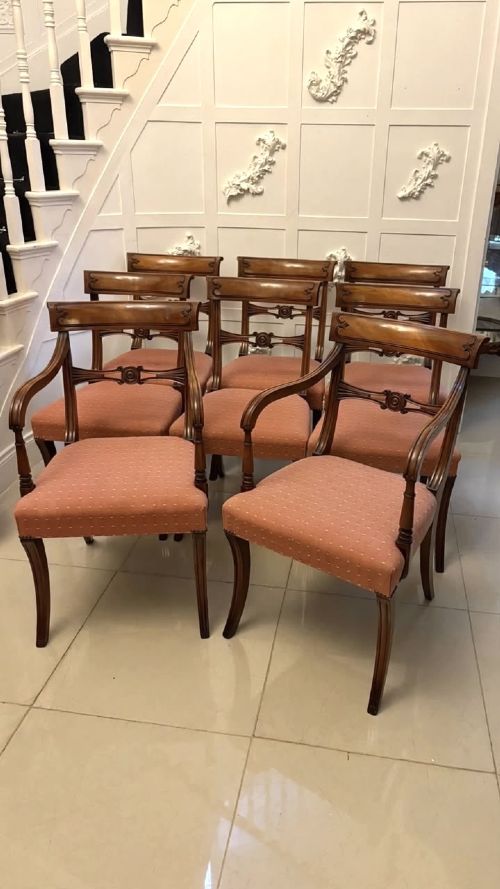
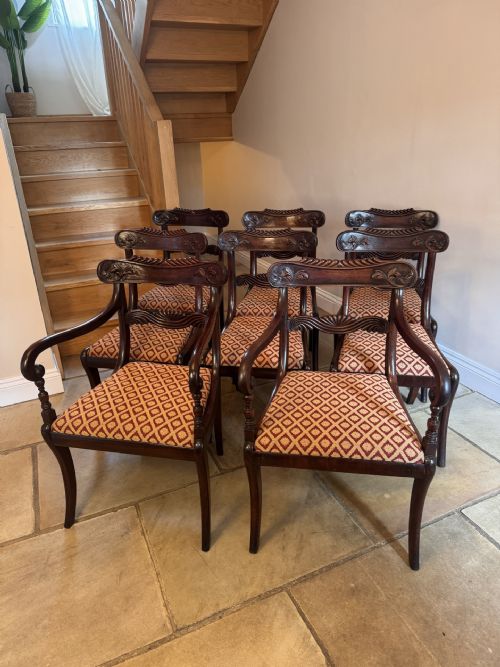
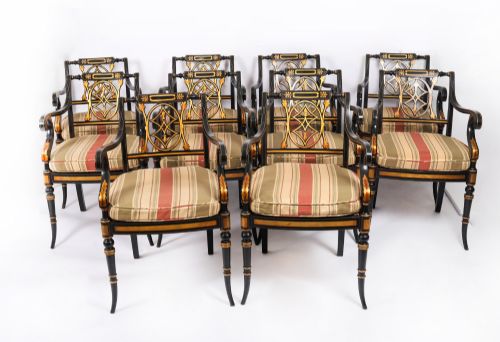
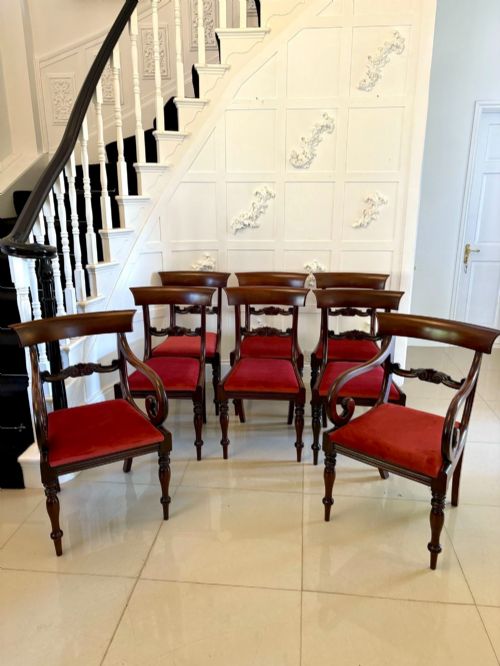
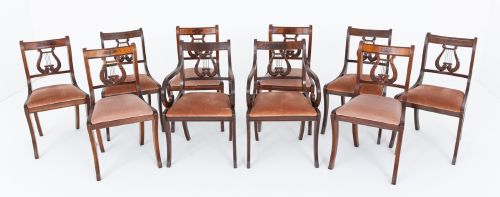
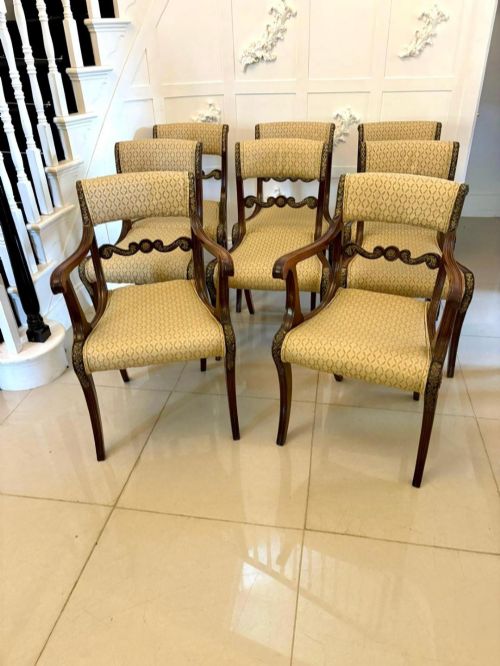
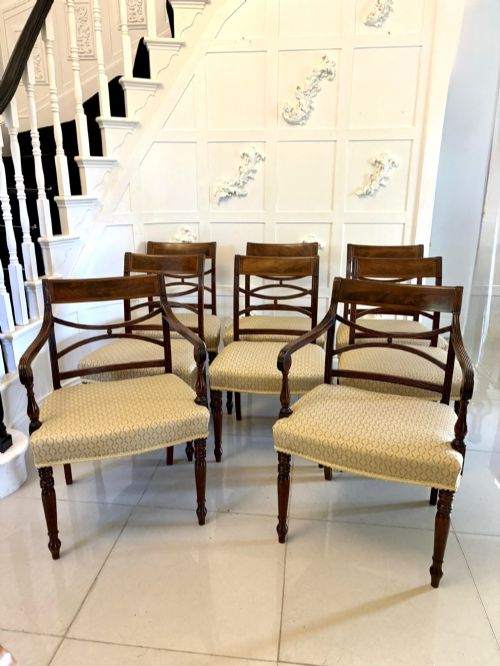
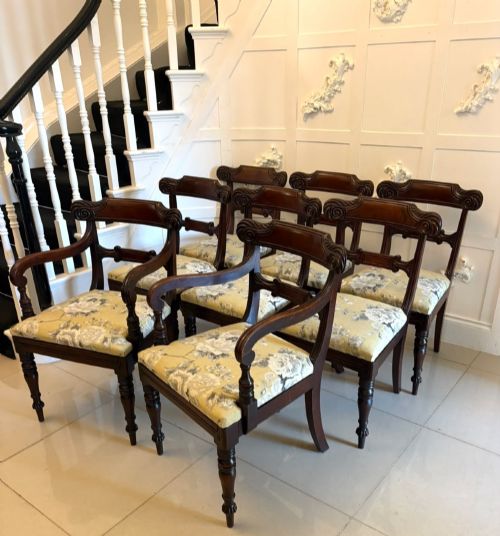
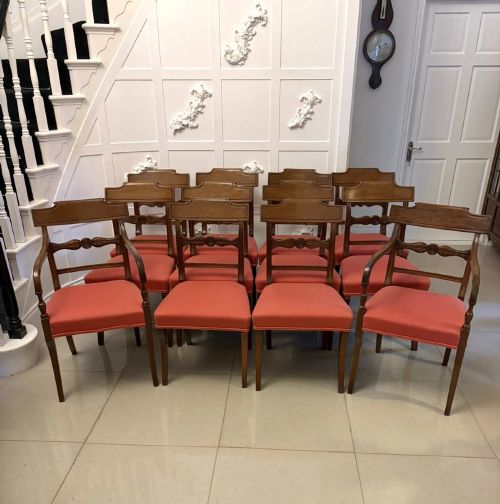
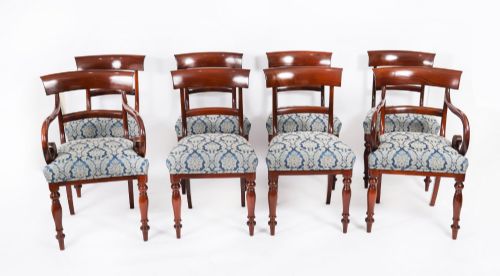
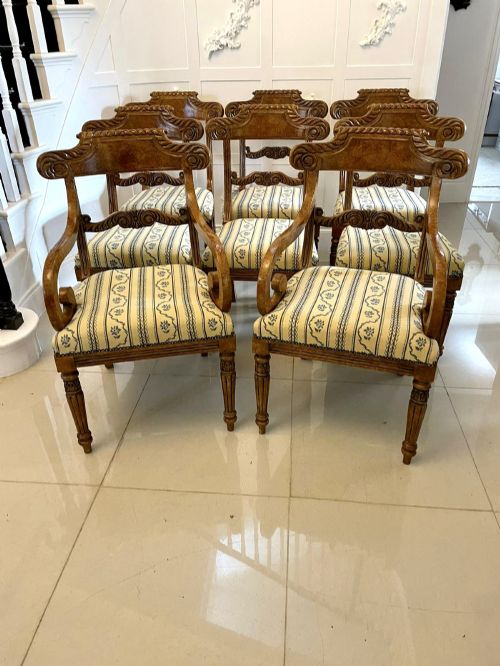
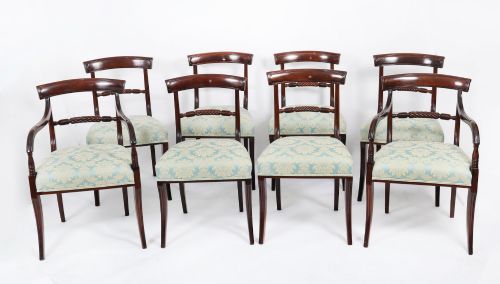
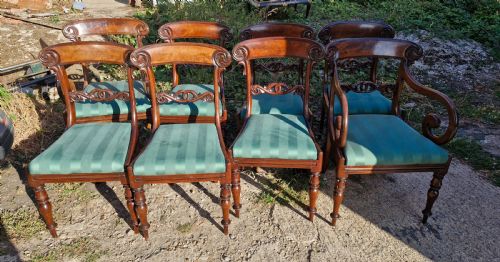
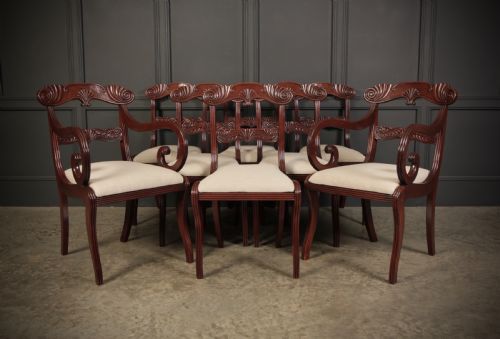

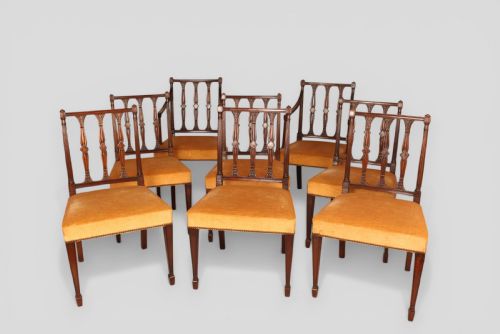
Regency Style Carver Set
A regency style carver set brings balanced proportions and architectural elegance to the dining room, offering commanding armchairs alongside matching seating.
Regency Style Carver Set
A regency style carver set brings together sturdy armchairs and matching side chairs built for formal dining rooms. You will frequently encounter sets spanning the nineteenth century alongside twentieth century revivals.
The configurations vary from modest groups of six up to grand gatherings of twelve or more. Most sets combine a pair of elbow chairs with several single chairs sharing identical design motifs.
Originating from periods including the Georgian era, Regency, and William IV, these groupings showcase enduring architectural lines. Twentieth century revivals also appear frequently across the listings.
Materials and construction methods
Cabinetmakers relied heavily on solid mahogany and satinwood, often embellishing surfaces with delicate brass inlay. Selected examples feature decorated faux birds eye maple or ebonised finishes.
Seating portions incorporate traditional upholstery over supportive webbing and frames, finished in leather, velvet, or woven fabric. Joinery prioritises sturdy mortise and tenon construction to withstand daily dining use.
Regency Style Carver Set Retail Price Guide 2026
Typical asking prices for regency style carver set among the pieces listed under this phrase on Sellingantiques today, from the lower quarter to the upper quarter. They describe what is for sale here now, not the wider market.
Listings feature mahogany, satinwood, and elm alongside brass inlay and leather upholstery across nineteenth and twentieth century periods.
Distinctions in craftsmanship and form
The finest examples display crisp carving and precise brass marquetry that remains firmly seated within the timber. Timber selection dictates visual depth, with well-figured mahogany showing rich grain variation across the entire set.
Uniformity across a large group separates standard production from exceptional work. Matching grain patterns and consistent colour tone across all chairs indicate careful timber selection by the maker.
Gillows
The Regency Style Carver Set Glossary
- Carver
- An armchair designed with elbow rests, traditionally placed at the head of a dining table. These seating pieces match the simpler single chairs in a set.
- Barback
- A chair back featuring a horizontal crossbar, often curved for lumbar support. This form frequently appears in William IV designs.
- Shield back
- A chair back shaped in the outline of a heraldic shield, popular during the Georgian period. Such designs provide broad support while maintaining a delicate profile.
- Marquetry
- Decorative patterns created by fitting thin pieces of contrasting veneer into a prepared timber surface. Brass inlay serves a similar ornamental purpose in Regency pieces.
Regency Style Carver Set: Frequently Asked Questions
How do I care for antique upholstery?
Protect the fabric from direct sunlight to prevent fading and degradation of natural fibres over time. Vacuum gently using a soft brush attachment to remove dust without stressing the underlying webbing.
Condition leather components periodically with appropriate specialist creams to maintain suppleness. Professional cleaning is recommended for antique velvet and woven textiles.
Can I mix carvers with different chairs?
Matching a carver to single chairs requires careful attention to timber tone, leg height, and back style. Sets listed together ensure visual harmony around the dining table.
Acquiring mismatched pieces alters the formal balance established by period cabinetmakers. Sticking to unified sets preserves the intended aesthetic of the dining space.
Are these chairs suitable for daily dining?
Period dining chairs are engineered for regular domestic use provided the structural joinery remains sound. Routine checks of the leg joints prevent loosening from everyday movement.
Modern users should verify seat heights and arm clearances against contemporary dining tables. Comfortable proportions ensure these pieces function practically in a modern home.
How do I identify Regency revival pieces?
Twentieth century revival pieces often exhibit cleaner interior timber surfaces and machine-assisted joinery alongside traditional hand techniques. Examining the underneath of the seat frames reveals the age of the wood and fixings.
Design proportions and decorative motifs emulate the earlier Regency period closely. Comparing specific details against dated examples clarifies the manufacturing era.