


Regency Silver Coasters
Regency silver coasters protect the dining table and carry the bottle with absolute grace, drawing the eye down the length of the mahogany.
Regency Silver Coasters
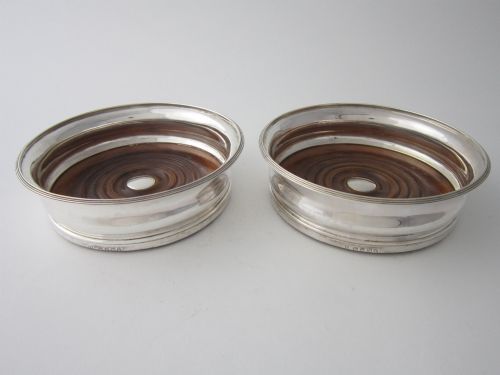
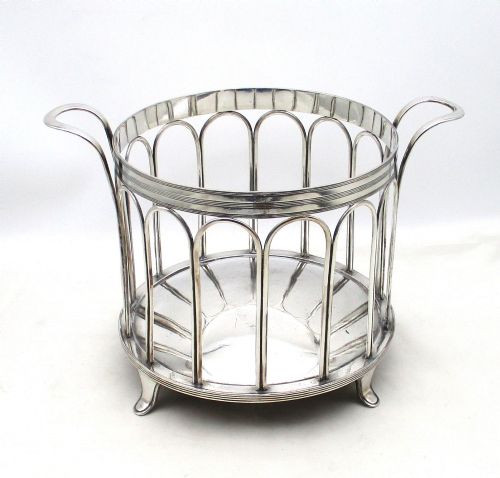
When you search for regency silver coasters, you are looking at wine accessories and decanter coasters designed to sit on the dining table during the Georgian and Regency periods. The forms encountered here span the nineteenth century, including items made in the year 1800 and the William IV era, taking the shape of deep bottle coasters and table stands.
The version you are most likely to meet on this page is the Old Sheffield plated wine bottle coaster, frequently found in pairs or small sets dating from around 1800 through 1830. Solid sterling silver examples with wooden bases or silver bases also appear, though Old Sheffield plate and turned wood combinations dominate the selection.
How they were made
Makers utilised a fusion of silver and copper known as Old Sheffield plate, alongside solid sterling silver, copper, and turned wood such as mahogany. The technique of fusing a thin sheet of silver to a thicker copper ingot allowed silversmiths to create sturdy wine accessories that held the weight of a glass bottle.
The wooden bases of these wine coasters were typically turned from rich mahogany, often fitted with a central silver button or mounted with silver borders. Plated wire rims and applied gadrooned or pierced silver mounts completed the edges, soldered securely to the plated body.
Listings feature 19th Century and Georgian periods, utilising silver plate, wood, copper, mahogany, and turned wood.
What varies in quality
The distinction between standard items and the top of the range rests on the crispness of the applied ornament and the depth of the metalwork. Pieces with armorial engravings or heavy, chased floral borders command greater attention than plain, unadorned mounts.
Coasters that survive as matching pairs or sets of three or four retain higher desirability than single examples. The preservation of the original turned wooden base and the integrity of the silver plating over the underlying copper also define the standing of each piece.
Matthew Boulton·John and Thomas Settle·William Eaton
The Regency Silver Coasters Glossary
- Old Sheffield plate
- A fused metal composite made by sandwiching a layer of copper between thin sheets of silver and rolling them together. This early plating method produces a warm, distinct lustre that differs from later electroplate.
- Decanter coaster
- A low, circular tray designed to hold a wine bottle or decanter and slide smoothly across the dining table. They protect polished wood surfaces from moisture rings and spills.
- Armorial
- A heraldic design or coat of arms engraved onto the silver mount or central wooden button. Such crests indicate the original owning family.
- Gadroon
- A decorative, ornamental banded edge consisting of curved or convex ridges. This classical motif frequently edges the rim of Regency wine coasters.
Regency Silver Coasters: Frequently Asked Questions
How were regency silver coasters used?
These pieces were placed on the dining table to hold wine bottles and decanters during and after meals. Guests slid them along the polished mahogany surface to pass the bottle from one end of the table to the other.
The raised sides kept the bottles secure while the turned wooden or silver bases caught any drips, protecting the wood from staining.
What is Old Sheffield plate?
Old Sheffield plate is an early nineteenth-century material created by fusing a thin layer of silver to a thick copper base. This technique was used before the invention of electroplating.
Items made this way show a subtle hint of copper where the silver layer has worn thin at the extreme high points over generations of cleaning.
Do coasters usually come in pairs?
Many survive as pairs or small sets because dining tables of the period required multiple bottles to circulate among guests. Single examples do appear from earlier Georgian services.
Matching sets of three or four are uncommon and represent more elaborate dining arrangements from the Regency era.
How do you clean silver coasters?
Maintenance requires a soft cloth and a mild, non-abrasive silver polish to preserve the delicate plating and the engraved details. Vigorous scrubbing must be avoided, particularly on Old Sheffield plate where excessive pressure can reveal the copper beneath.
The turned wooden bases should be treated with furniture wax rather than liquid polish to keep the mahogany nourished.