


Regency Sheet Music Holder
These pieces for a regency sheet music holder offer refined timber work and practical tiering for domestic performance rooms.
Regency Sheet Music Holder
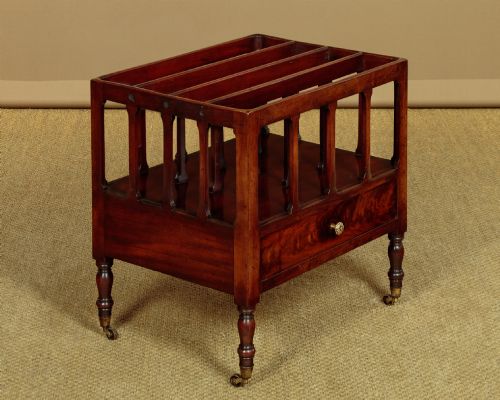
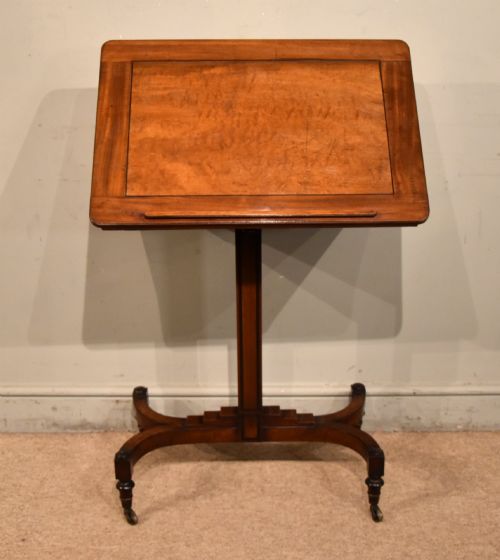
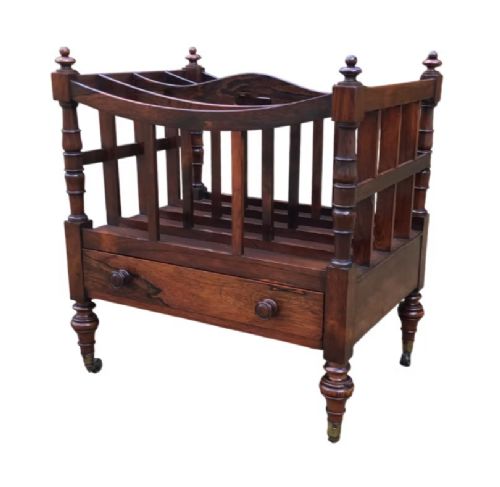
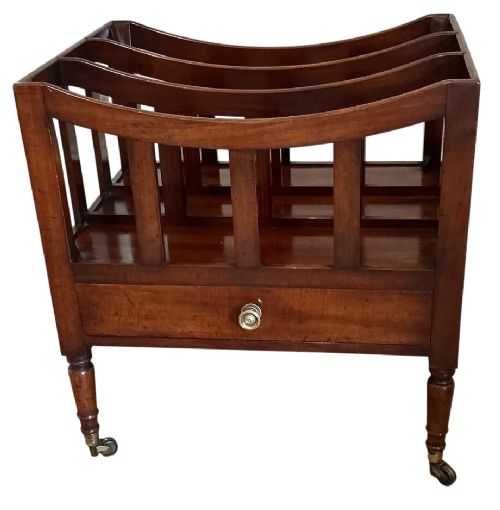
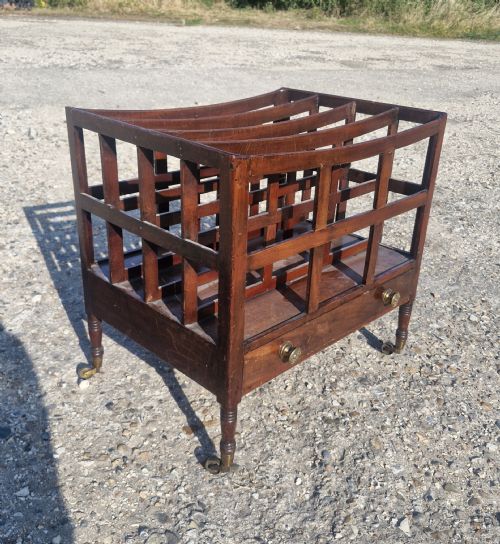
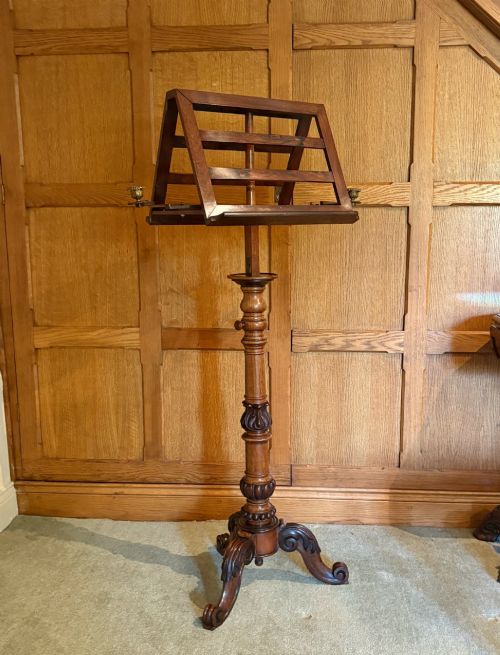
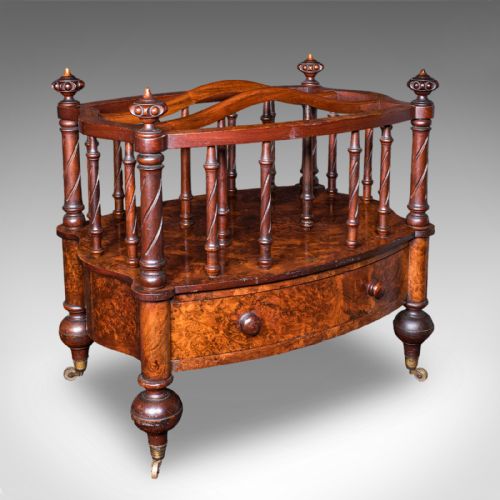
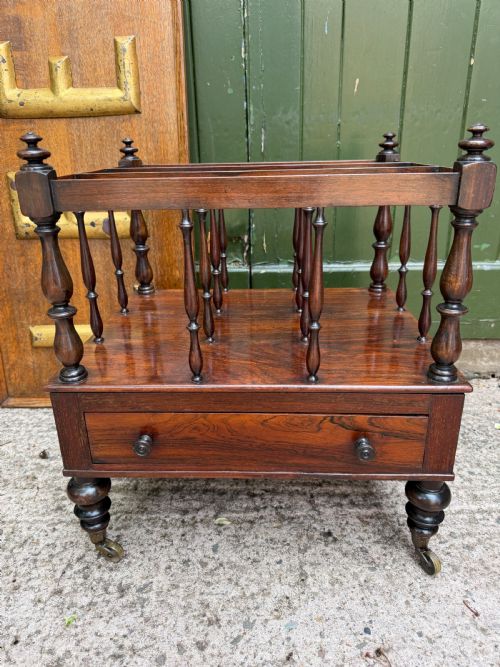
A regency sheet music holder combines low compartmentalised divisions for folios with occasional drawers or castors, fulfilling the domestic need for tidy score storage. Buyers encounter multiple forms including canterburys, magazine tidies and adjustable music stands.
Most examples originate in the Regency, William IV and Georgian periods, utilising rich timbers like mahogany, rosewood and burr walnut. These pieces functioned in parlours and drawing rooms to keep scores close to the piano or harp.
How they were made
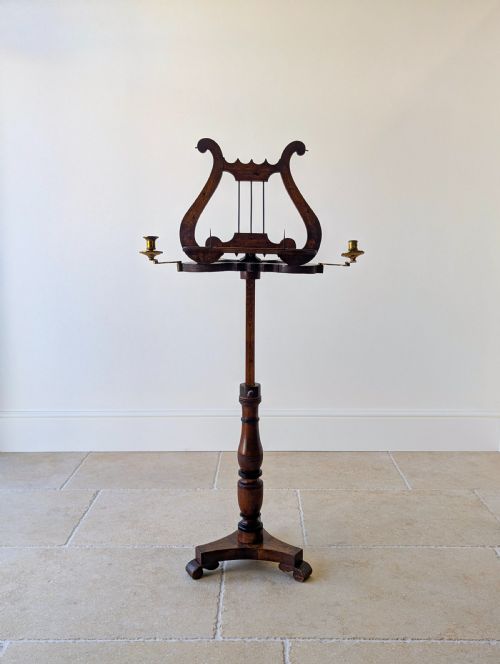
Cabinet makers utilised dense native and imported timbers, notably Cuban mahogany, rosewood and burr walnut, often applying satinwood inlay or brass accents to elevate the surface. Structural elements rely on turned legs, fitted castors and fretted or lyre-shaped wooden supports.
Joinery involved precise division partitions for the tiered racks alongside adjustable reading mechanisms on music stands. Selected pieces incorporate carved details such as Prince of Wales feathers or turned columns.
Listings feature canterburys, music stands and magazine racks spanning the Georgian, Regency, William IV and Victorian eras.
What varies in quality
Quality rests on timber selection, such as figured rosewood or dense Cuban mahogany, paired with crispness in turned legs and carved details. The integration of functional elements like smooth mechanical adjustment on music stands and integrated drawers differentiates standard work from finer pieces.
Proportion and structural balance dictate the visual success of each canterbury or stand, with cleaner lines and restrained inlay showing greater design discipline.
The Regency Sheet Music Holder Glossary
- Canterbury
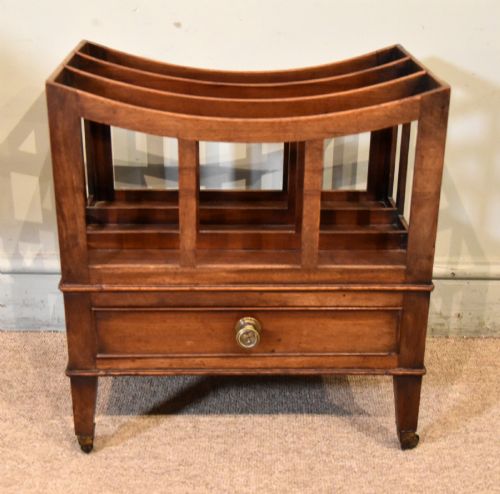
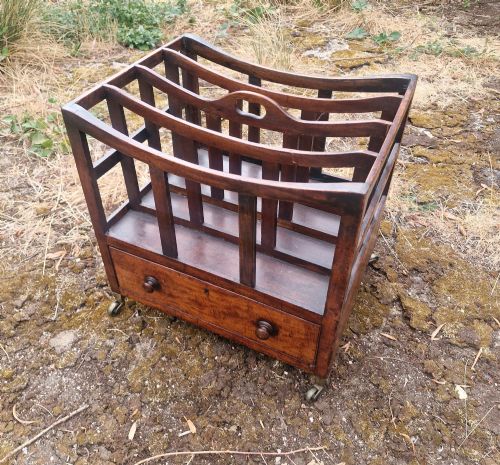
- A low stand with partitioned upright sections designed for holding sheet music, folios or periodicals. It frequently includes a low drawer beneath the divisions and rests on castors.
- Duet stand
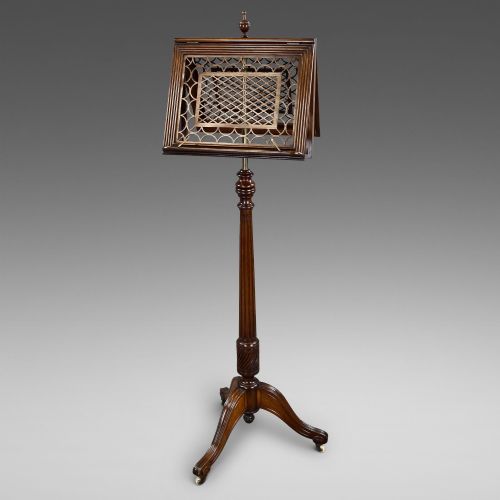
- A music stand configured to hold two open scores side by side for shared performance. These often feature adjustable height columns and reading ledges.
- Lyre-form
- A decorative motif shaped like a lyre, frequently utilised in the vertical central support of music stands and reading tables. It reflects classical design influences of the period.
- Boat-shaped
- A descriptor for canterburys possessing outward curving or concave sides along the top rails. This silhouette is characteristic of refined Regency cabinet work.
- Gonçalo Alves
- A dense exotic hardwood with striking figuring, utilised in select nineteenth-century furniture pieces. It provides a distinct contrasting grain pattern compared to standard mahogany.
Regency Sheet Music Holder: Frequently Asked Questions
What is a canterbury used for?
A canterbury serves as a compartmentalised rack for organising sheet music, folios and periodicals near a piano or seating area.
Period examples often feature low drawers at the base for smaller accessories and castors for mobility across floor coverings.
How do I identify a Regency music stand?
Regency stands display classical proportions, often incorporating turned columns, brass fittings and lyre-shaped wooden supports.
Materials typically include dark polished mahogany or rosewood with adjustable mechanisms for reading height.
Are music stands adjustable?
Many period music stands incorporate screw mechanisms or ratchets to alter the height and angle of the reading desk.
This adjustability accommodated musicians performing either while seated or standing.
What woods were used for these stands?
Cabinet makers predominantly selected dense hardwoods such as mahogany, rosewood and burr walnut for their strength and rich grain.
Selected items incorporate satinwood inlay, brass accents or exotic timbers like gonçalo Alves.