
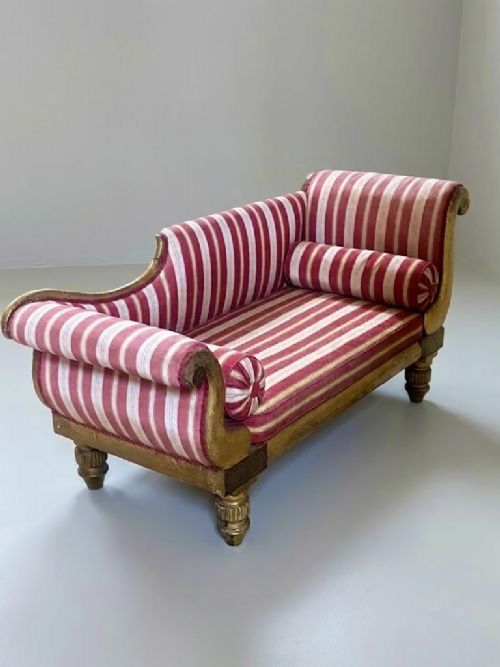
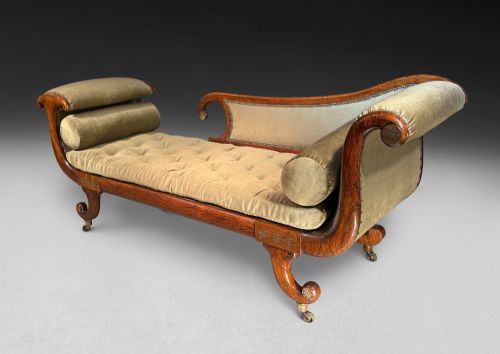
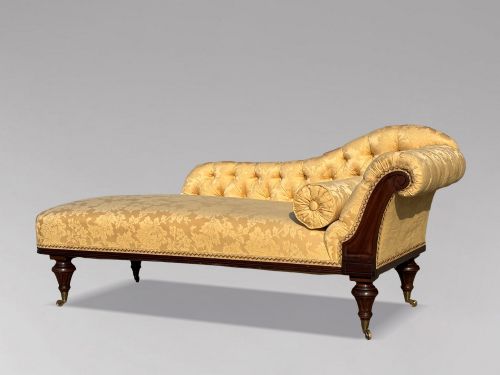
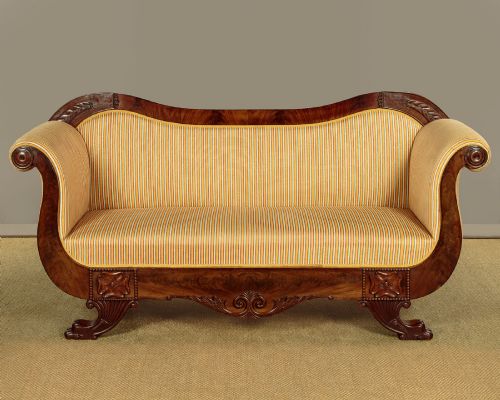
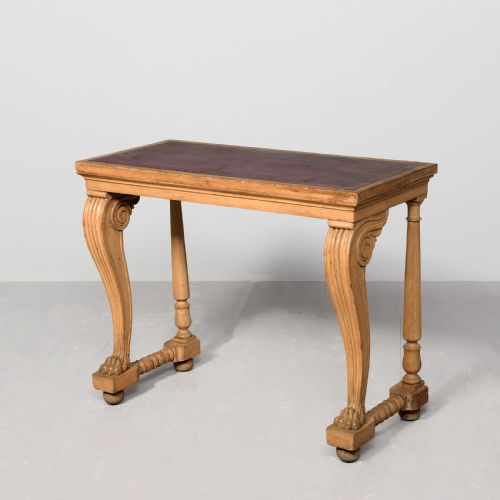
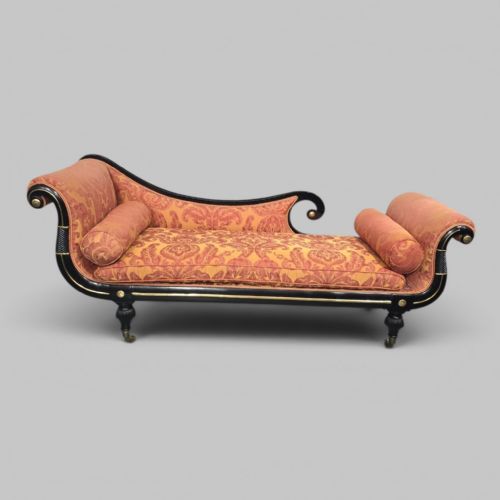
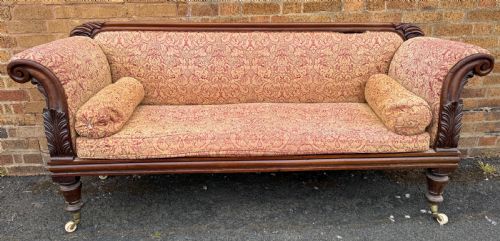
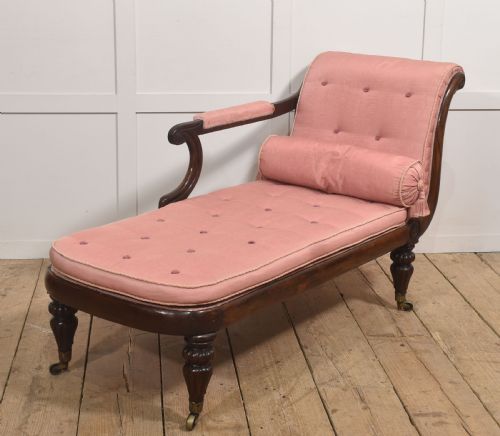




Regency Scroll Sofa
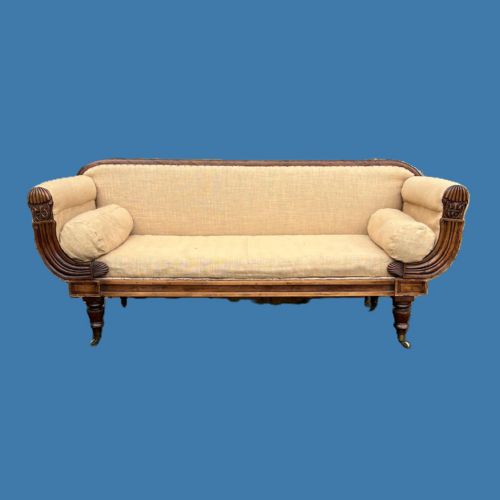
A regency scroll sofa brings neoclassical symmetry and sweeping, scrolled wooden arms to a formal room.
Regency Scroll Sofa
Makers working in the neoclassical tradition shaped these seats to mimic ancient Greek and Roman forms, often incorporating lyre shapes or double-ended designs. Examples range from compact mahogany frames to grand, brass-inlaid rosewood couches meant for prominent placement in a drawing room.
How they were made
Cabinetmakers constructed the structural frames primarily from solid mahogany and rosewood, sometimes employing simulated rosewood finishes or ebonised surfaces to achieve a uniform, dark tone. Brass inlay, finely carved foliage, and giltwood highlights frequently decorated the show wood frames.
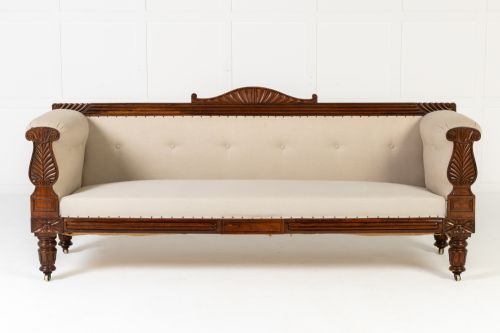
Upholstery techniques involved traditional stuffing over webbed bases, covered in silk, leather, hessian, or patterned fabric. Show wood frames exposed the polished timber along the crest rails and scrolling ends, framing the upholstered seating area.
Listings feature mahogany, rosewood, and simulated rosewood timbers across the nineteenth century, including specific dates from 1800 to 1930.
What varies in quality
The sophistication of the timber grain and the crispness of the carved scrollwork dictate the relative standing of individual examples. Dense, figured rosewood or finely grained mahogany frames with precise brass inlay represent superior craftsmanship compared to plain or heavily restored timbers.
Proportion and scale also separate standard domestic seating from grand country house versions. Pieces displaying balanced neoclassical lines, original show wood finishes, and thoughtful detailing command greater attention.
James Mein of Kelso·Thomas Hope·Gillows·John Taylor·George Smith
The Regency Scroll Sofa Glossary
- Chaise longue
- An upholstered sofa in the form of a chair with a long seat large enough to support the user's legs. It functions as a daybed for reclining.
- Show wood
- The exposed, polished wooden framing of an upholstered piece of furniture. It highlights the grain and carved details of the timber.
- Double-ended sofa
- A couch featuring symmetrical scrolling ends of equal height at both sides. This balanced design allows a person to recline against either end.
- Simulated rosewood
- A painted or grained surface treatment applied to a cheaper timber to imitate the appearance of genuine rosewood. Craftsmen utilised this method during the regency era.
- Giltwood
- Timber that has been coated with a thin layer of gold leaf or gilt paint. It adds a bright, reflective finish to decorative carved frames.
Regency Scroll Sofa: Frequently Asked Questions
Where did people place a regency scroll sofa?
These large pieces historically occupied the principal drawing rooms, libraries, and parlours of large country houses. Their finished backs and symmetrical ends meant they could sit freestanding within a spacious room rather than strictly against a wall.
Today, they serve a similar focal purpose in large living spaces, functioning both as statement seating and as comfortable daybeds for reading or resting.
How do I distinguish a regency sofa from a William IV one?
Regency pieces, generally produced around 1800 to 1820, tend to exhibit lighter, more restrained neoclassical lines with delicate brass inlay or slender mahogany frames. The subsequent William IV period introduced heavier proportions, bolder carved mahogany or rosewood show wood, and a more robust architectural presence.
Examining the turning of the legs and the heft of the scroll arms helps reveal whether a piece belongs to the earlier neoclassical phase or the later transition towards Victorian tastes.
What is the difference between a sofa and a chaise longue here?
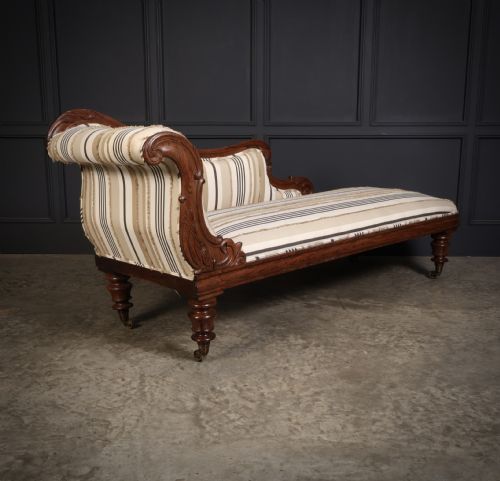
A standard sofa provides a balanced, double-ended or single-backed seat designed for multiple people to sit upright or lounge across. A chaise longue typically incorporates an elongated seat with a raised backrest at one end only, intended for solitary reclining.
Both forms utilise the characteristic scrolling wooden ends and show wood frames seen throughout this period's seating design.
How do I care for the show wood and upholstery?
Maintain the polished mahogany and rosewood frames by dusting regularly with a soft cloth and applying appropriate wax polish sparingly to preserve the timber. Keep antique upholstered surfaces protected from direct sunlight to prevent fading in delicate silks or leathers.
Consult a specialist restorer if the internal webbing or traditional stuffing requires attention to ensure the structural integrity remains undisturbed.