



Regency Rosewood Sideboard
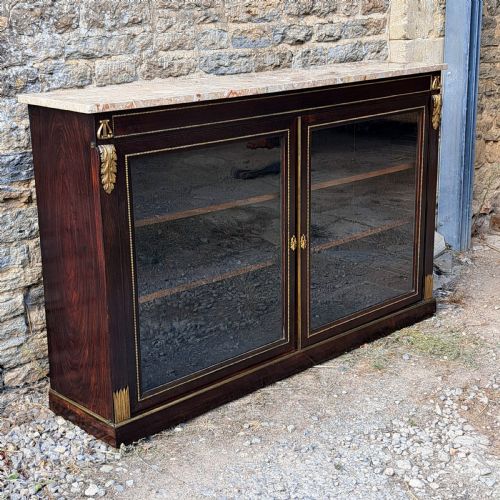
A regency rosewood sideboard brings dense tropical grain and polished brass into a room, offering both display space and concealed storage.
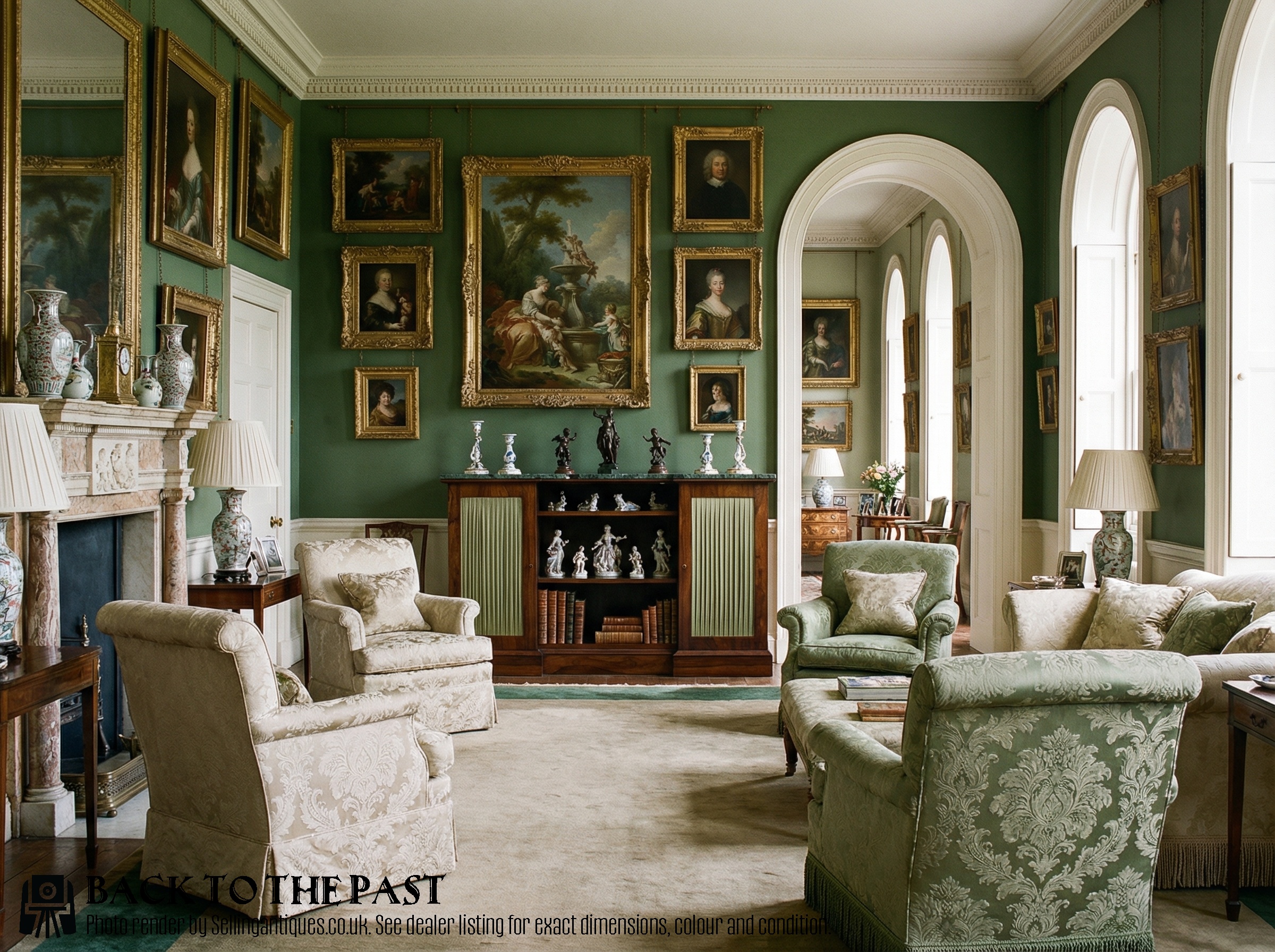
Regency Rosewood Sideboard
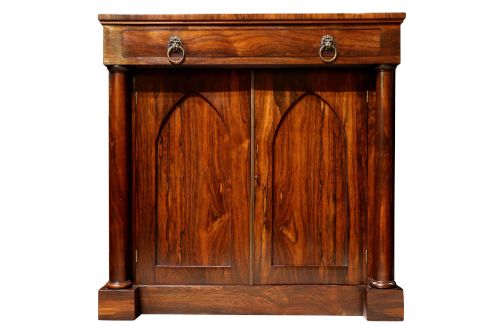
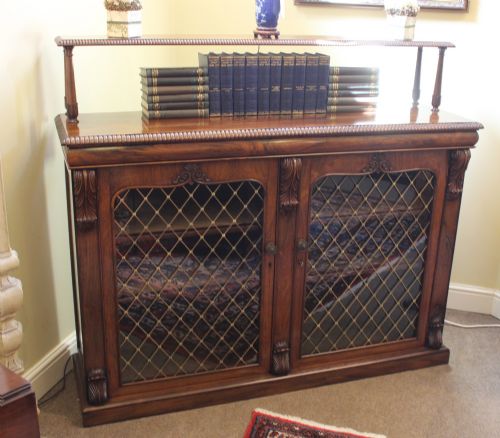
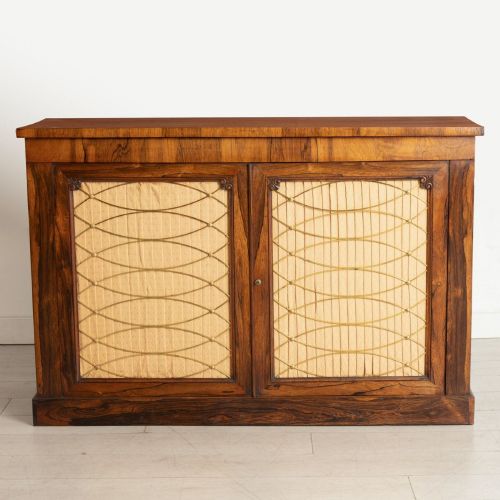
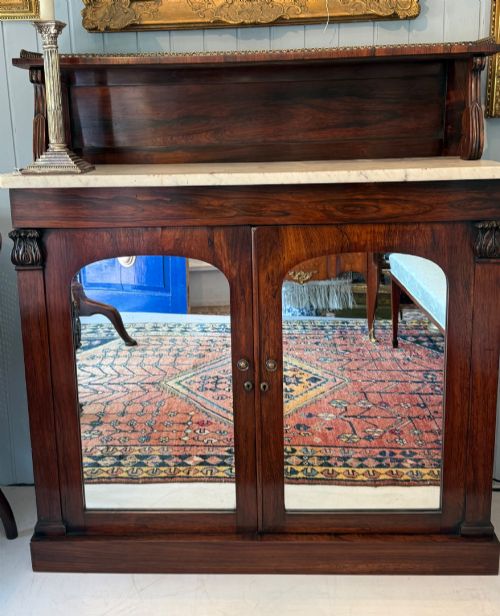
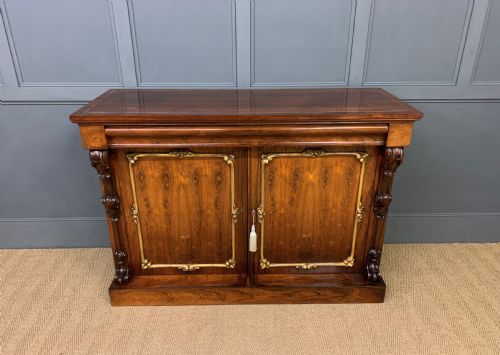
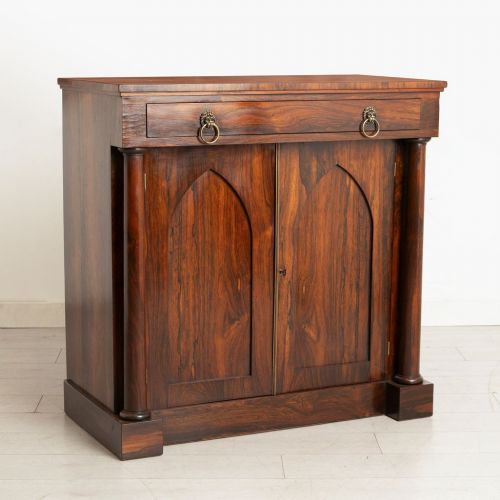
A regency rosewood sideboard encompasses low side cabinets, chiffoniers, and credenzas built primarily during the Regency and William IV periods, alongside later nineteenth-century interpretations. These pieces function as low storage units, often featuring shelving or fabric-backed panels behind doors designed for the dining room or parlour.
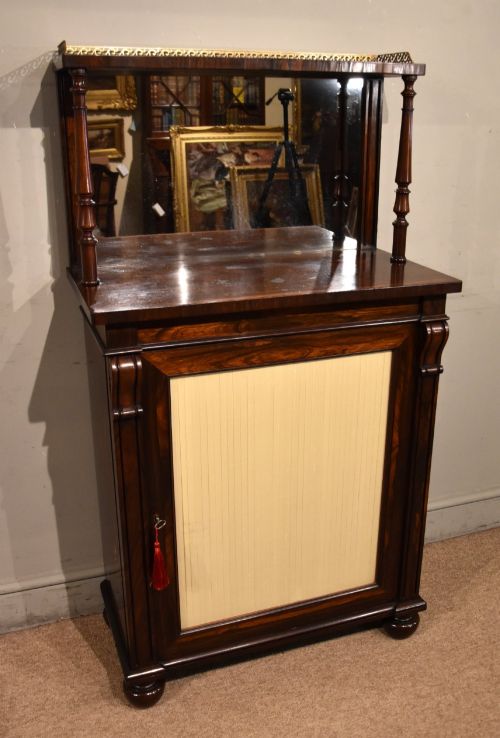
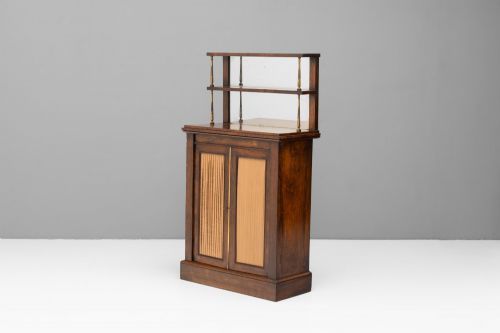
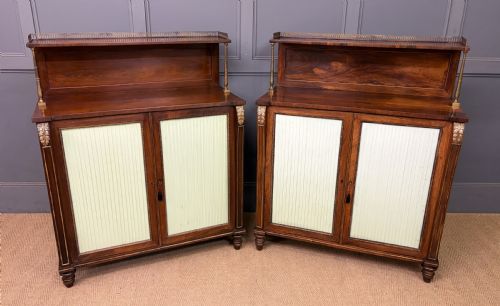
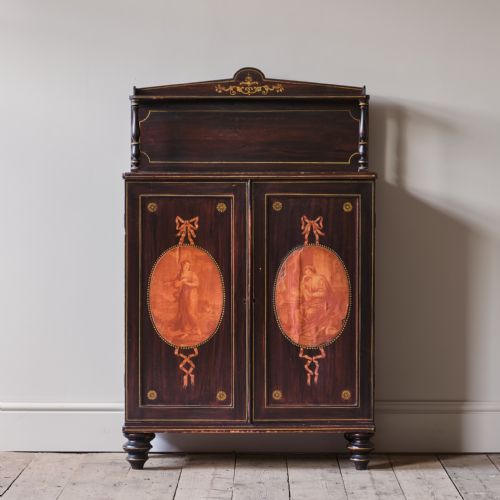
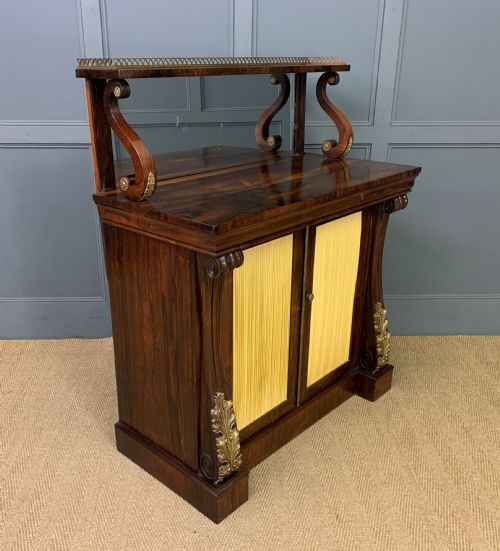
The version most commonly encountered on this page is the compact chiffonier, frequently fitted with a raised shelf back, brass grilles, or panelled doors. Alongside these, buyers find breakfront cabinets and occasional simulated rosewood pieces utilising painted pine to mimic the dense grain.
Origins span the early nineteenth century, dominated by Georgian and Regency cabinet-making traditions, with occasional twentieth-century revival pieces entering the mix. Construction frequently pairs a rosewood veneer over secondary timbers such as mahogany or pine.
Materials and construction methods
Cabinet-makers applied finely cut rosewood veneers over stable secondary woods like mahogany and pine, exploiting the rich, dark grain patterns for decorative effect. Workshops enhanced these surfaces with intricate brass inlay, brass mounts, and fine boxwood stringing.
Interiors often incorporate mahogany linings within drawers and compartments, while specialised elements include pleated silk or fabric panels behind glazed or grilled doors. Tops frequently feature white or grey marble slabs, adding weight and a contrasting cool surface to the warm timber.
Regency Rosewood Sideboard Retail Price Guide 2026
Typical asking prices for regency rosewood sideboard among the pieces listed under this phrase on Sellingantiques today, from the lower quarter to the upper quarter. They describe what is for sale here now, not the wider market.
Miniature tea caddies masquerade as full-sized sideboards among the smaller surviving items.
Judging the standard of execution
Quality rests upon the selection and matching of the rosewood veneers, where continuous, symmetrical grain patterns distinguish superior pieces from utilitarian work. The precision of brass inlay and the crispness of carved wooden details reveal the competence of the original workshop.
Structural integrity depends on the retention of original secondary timbers, untouched marble tops, and functional internal shelving without excessive timber shrinkage or warping in the carcass.
Gillow·John McClean
The Regency Rosewood Sideboard Glossary
- Chiffonier
- A low cabinet equipped with doors enclosing shelves, frequently surmounted by a raised back with small display shelves. This form became a staple of Regency and Victorian interiors.
- Breakfront
- A cabinet design where the central section projects forward from the flanking outer sections. This architectural arrangement creates depth and breaks up the linear mass of a sideboard.
- Goncalo Alves
- A dense exotic hardwood resembling rosewood, occasionally utilised in place of true dalbergia timbers during the period. Its distinct contrasting grain appears in specific cabinet variations.
- Grille
- A fine lattice of brass wire fitted into door frames in place of wood panels or glass. This allows ventilation while partially obscuring the contents within.
Regency Rosewood Sideboard: Frequently Asked Questions
What is a regency rosewood sideboard used for?
These pieces served primarily in dining rooms and living spaces to store tableware, linens, and documents while providing a surface for serving food or displaying decorative objects.
The enclosed cupboards and upper shelves allowed households to keep dining accessories close at hand while maintaining a tidy, formal interior.
How do I distinguish a chiffonier from a sideboard?
A chiffonier is typically smaller and more compact, frequently featuring a raised tier or shelf attached to the backboard above the main surface.
Traditional sideboards tend to be longer and heavier, designed specifically for heavy dining service rather than the general parlour storage associated with chiffoniers.
How should I care for antique rosewood furniture?
Rosewood requires stable indoor humidity and protection from direct sunlight to prevent the dense natural oils from drying out and the veneer from lifting.
Regular dusting with a dry, soft cloth preserves the polished finish without the need for heavy modern silicone polishes or waxes.
How can I tell the Regency period from later copies?
Regency pieces rely on hand-cut dovetails, traditional timber linings like mahogany, and subtle hand-applied brass inlay rather than mass-produced stamped mounts.
Examining the construction methods inside drawers and behind backboards reveals the hand-joinery characteristic of the early nineteenth century.