

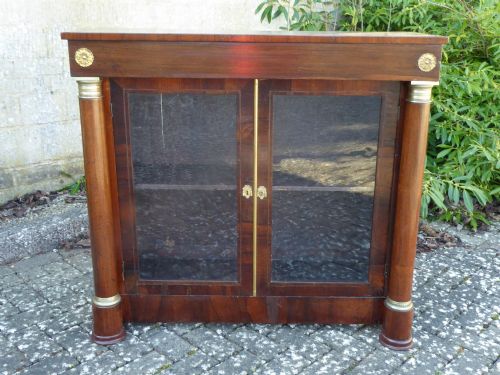
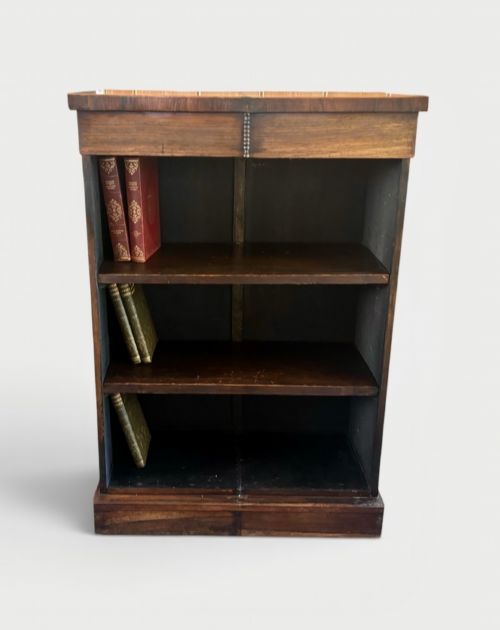
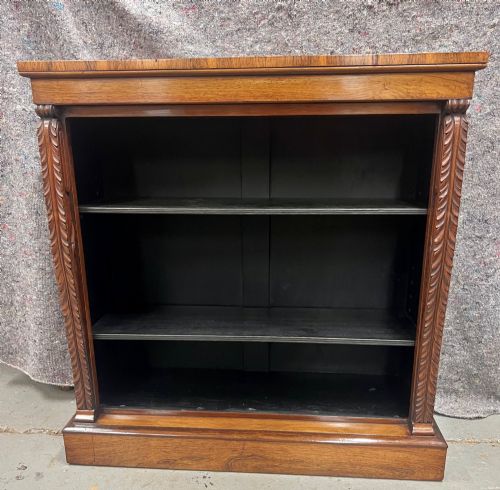
Regency Rosewood Bookcase
A regency rosewood bookcase brings warmth and rich grain to a room, offering adaptable open or enclosed shelving formed during the nineteenth century.
Regency Rosewood Bookcase
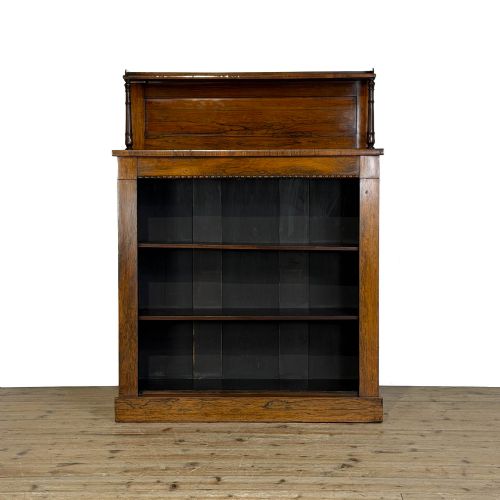
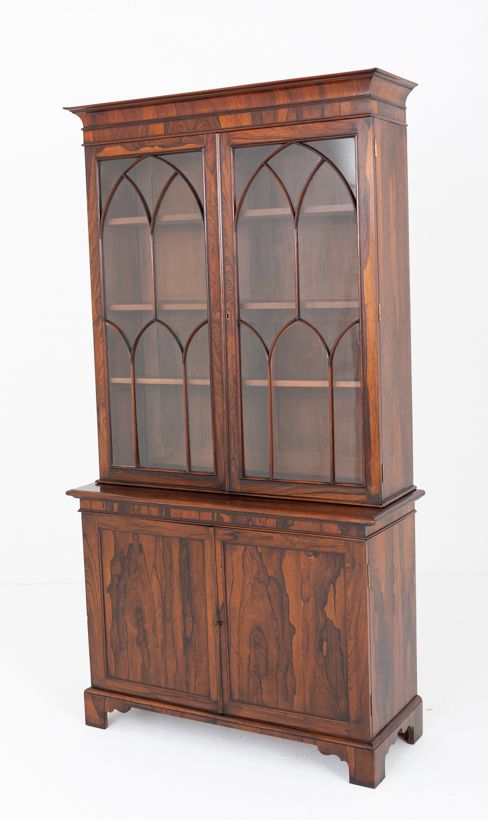
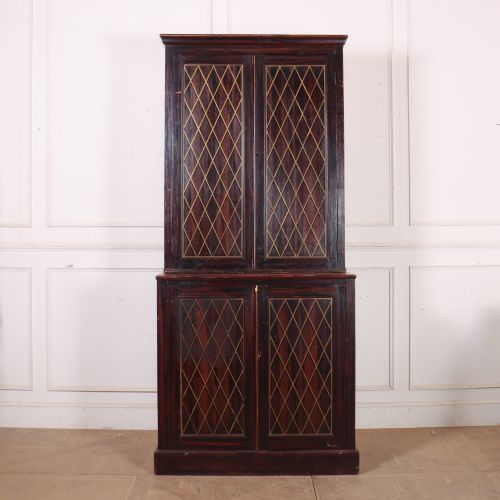
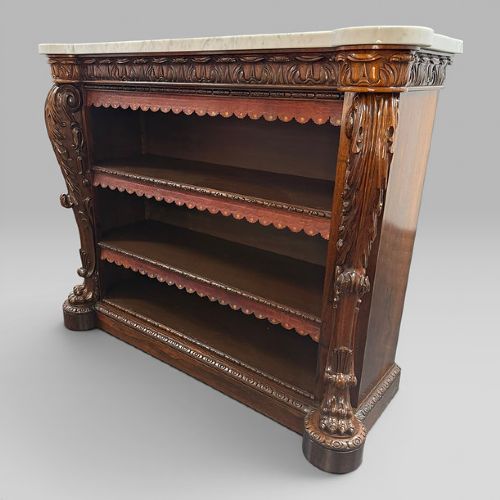
A regency rosewood bookcase serves as a refined storage solution, appearing across this page in forms ranging from compact dwarf bookcases to large breakfront library pieces and side cabinets.
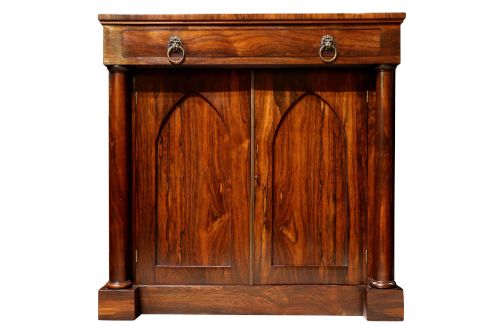
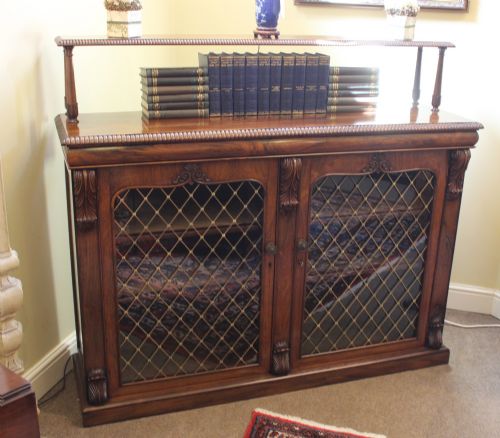
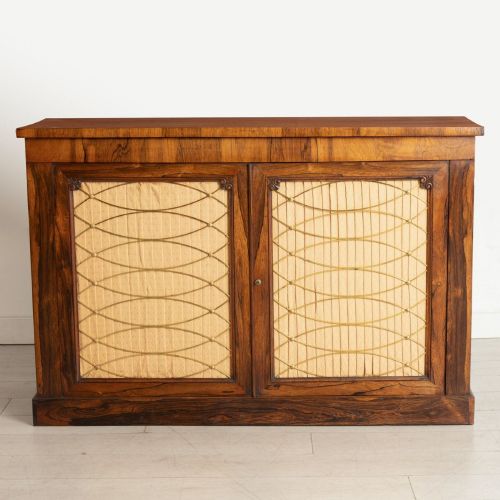
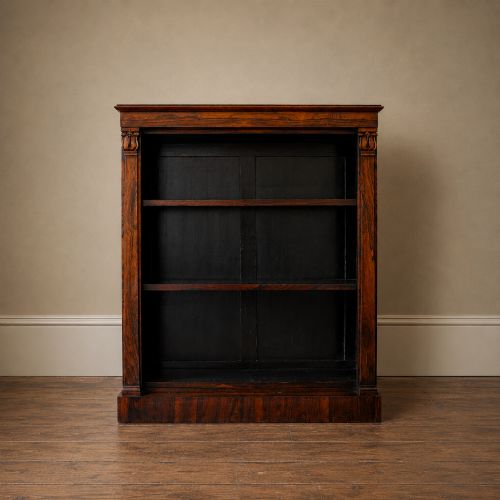
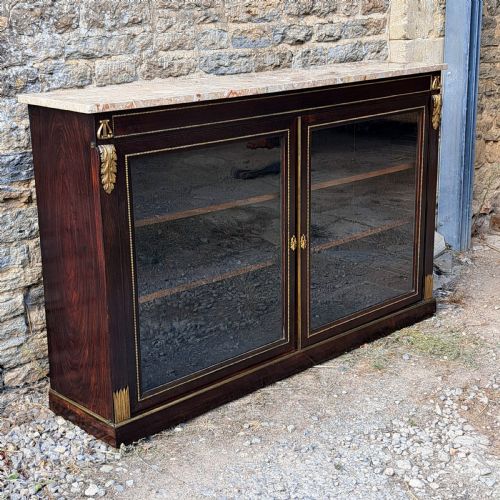
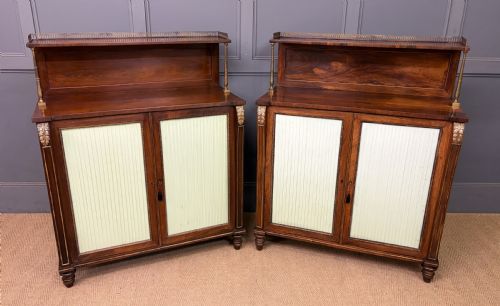
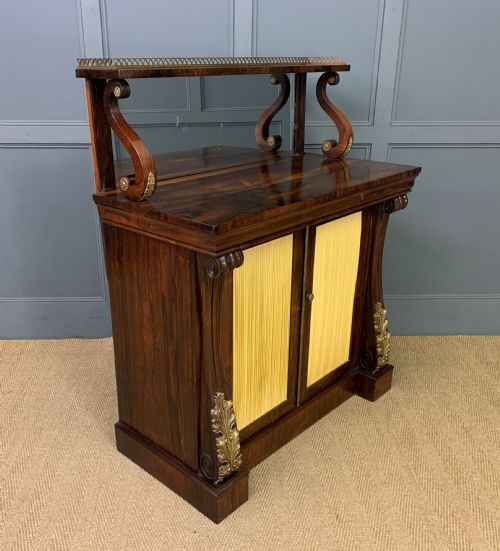
Buyers will most frequently encounter open bookcases alongside enclosed chiffoniers and side cabinets fitted with glass doors or pleated fabric panels.
Originating predominantly from the Regency, Georgian, and William IV periods, these examples showcase the architectural proportions and refined cabinet-making characteristic of the early nineteenth century.
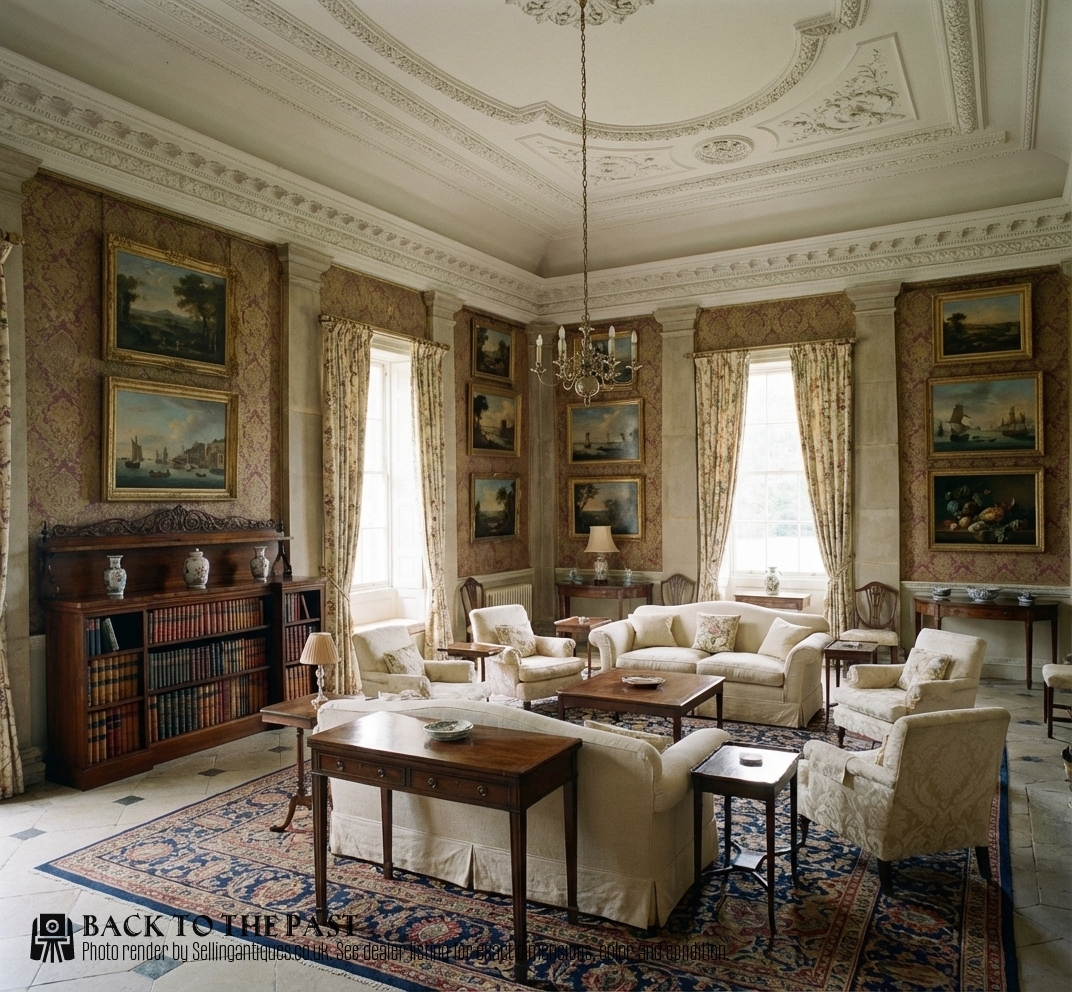
How They Were Made
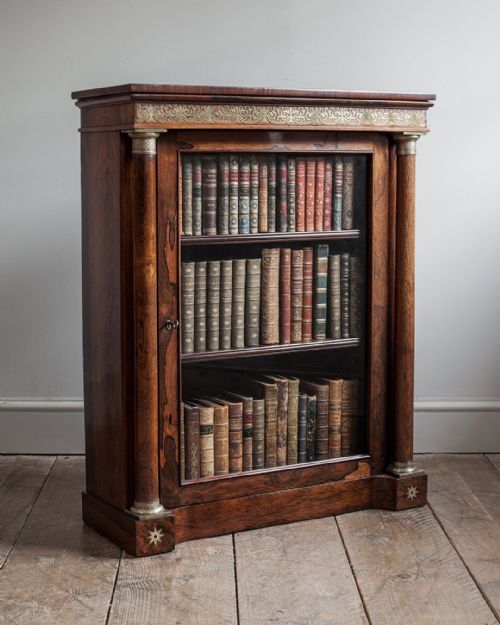
Cabinet-makers constructed these pieces primarily using pine carcases finished with finely figured rosewood veneers, accented frequently by intricate brass inlay and brass mounts.
Interiors often incorporated adjustable shelving supported by wooden racks or brass pins, while select pieces featured white marble tops and brass galleries.
Lower doors frequently displayed brass grilles backed by pleated fabric or gothic wooden panelling, combining ventilation with concealed storage.
Regency Rosewood Bookcase Retail Price Guide 2026
Typical asking prices for regency rosewood bookcase among the pieces listed under this phrase on Sellingantiques today, from the lower quarter to the upper quarter. They describe what is for sale here now, not the wider market.
Pleated fabric behind brass grilles kept library dust off precious volumes while hiding unread novels from polite society.
What Varies in Quality
The standard of a piece rests heavily upon the selection and matching of the rosewood veneer across the main facade and shelves.
Refinement of detail, such as the precision of brass inlay and the elegance of original turned feet or carved elements, separates standard workshop production from finer cabinet-making.
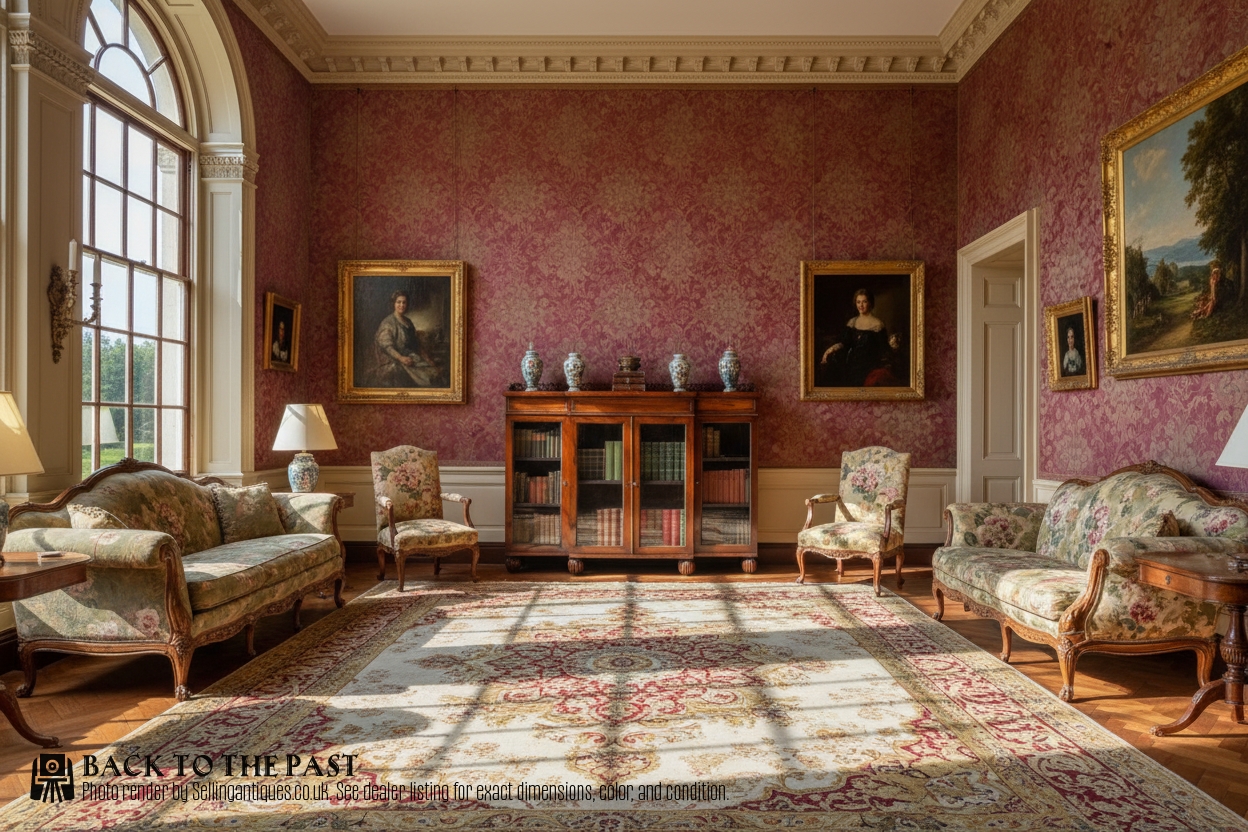
Gillows
The Regency Rosewood Bookcase Glossary
- Breakfront
- A cabinet design where the central section projects forward from the flanking wings. This architectural layout creates depth and visual interest across larger library pieces.
- Chiffonier
- A low sideboard or cabinet featuring enclosed cupboards below, sometimes topped with a raised shelf or brass gallery. These pieces emerged as popular multi-functional furniture during the Regency period.
- Pier cabinet
- A narrow cabinet designed specifically to fit the wall space between windows. They often feature glass doors to display collections.
- Whatnot
- A set of open tiered shelves used for displaying ornaments and books. They stand upon slender vertical supports.
- Simulated rosewood
- Timber painted or stained to imitate the rich grain and deep colour of genuine rosewood. This decorative technique was utilised during periods when exotic hardwoods were scarce or expensive.
Regency Rosewood Bookcase: Frequently Asked Questions
What is a dwarf bookcase?
A dwarf bookcase is a low-standing shelving unit designed to sit beneath dado height, making it practical for smaller rooms.
These pieces typically feature open shelves or small enclosed lower cupboards, preserving wall space above for artwork.
How were brass grilles used?
Fine brass wire grilles were fitted into cabinet doors to protect delicate volumes while allowing visibility of the bindings within.
They were frequently backed with pleated silk or fabric to conceal the contents of the cabinet.
Did these bookcases have adjustable shelves?
Many nineteenth-century examples incorporate adjustable shelving systems using wooden ratchets or brass strip supports.
This adaptability allowed owners to alter shelf heights to accommodate volumes of varying sizes.
Where should I place a side cabinet?
Side cabinets suit living spaces, dining rooms, or hallways where surface display space and enclosed storage are both required.
Their compact proportions allow them to sit neatly against walls without dominating the room.