
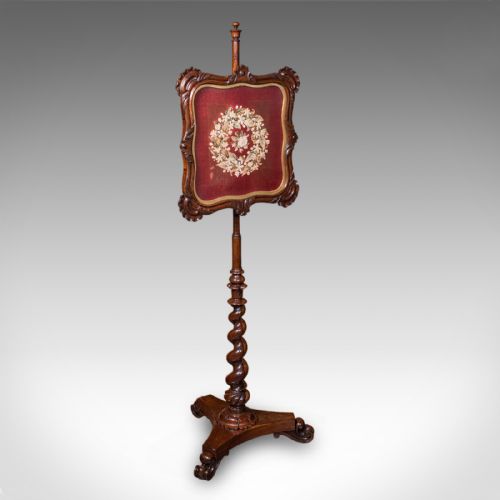


Regency Pole Screen
A regency pole screen stands upright beside a hearth to shield a face from open flames.
Regency Pole Screen
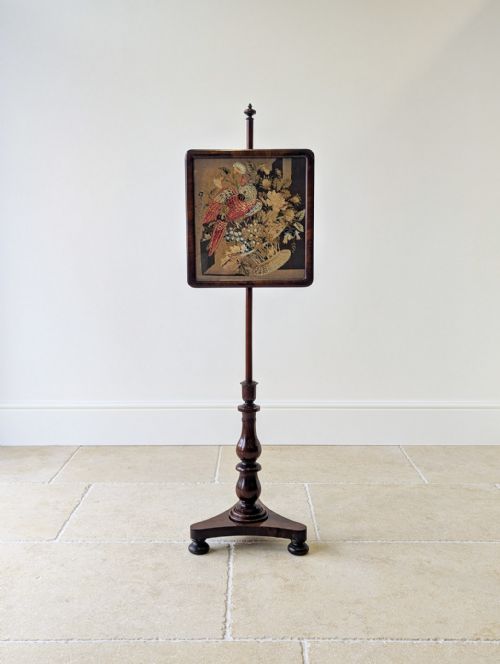
A regency pole screen combines a vertical turned column with a sliding panel mounted on a weighted base. These furnishings direct radiant heat away from sitting occupants while serving as decorative display stands in period interiors.
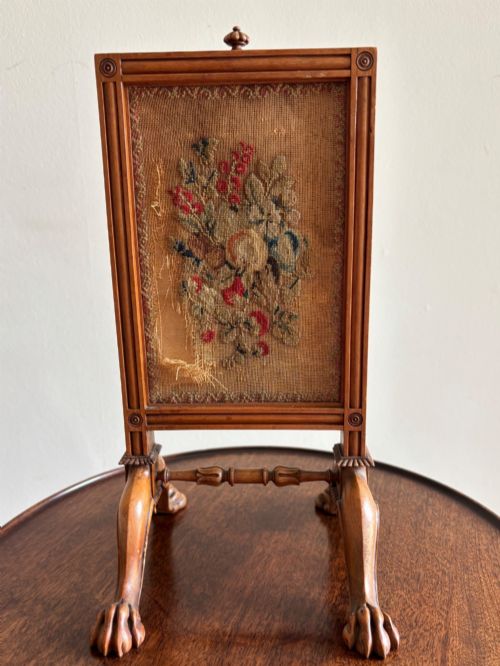
Most examples found on this page date from the regency, george iii, and william iv eras through to the mid nineteenth century. Common timber forms include rosewood, mahogany, and walnut pedestals supporting framed needlework panels or glass reflectors.
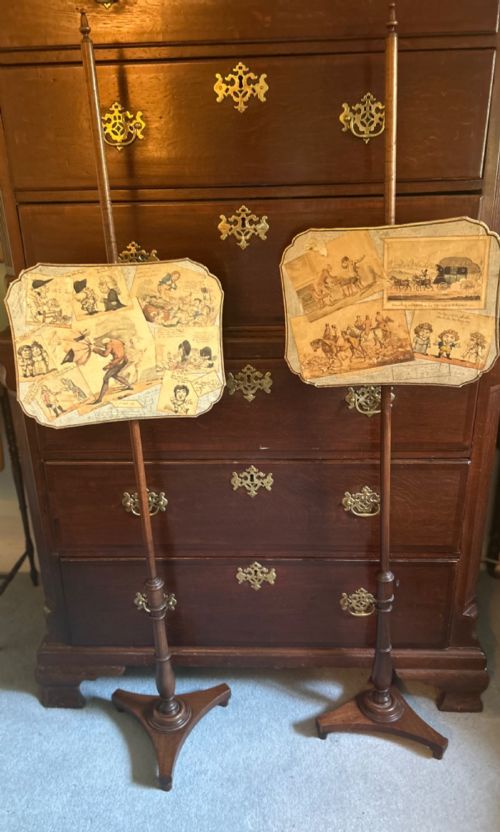
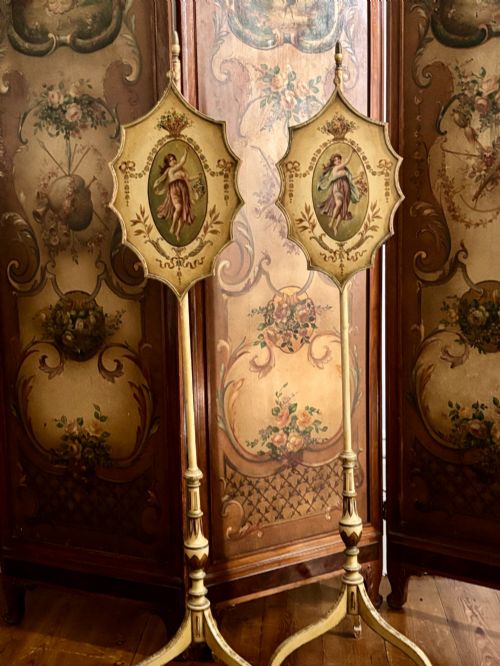
Buyers encounter single stands and symmetrical pairs alongside specialised variants such as candle shields and converted lamp tables. The adjustable screen mechanism moves vertically along the brass or wooden shaft to control warmth.
Quality and craftsmanship
Superior execution shows in the stability of the weighted base and the smooth operation of the adjustable collar. Finely turned columns with crisp reeding or carved detail separate better workshops from simpler production pieces.
The integrity and tightness of the needlework panel or glass insert dictate the visual standard of the object. Original matching pairs display uniform timber grain and consistent patination across both stands.
Regency Pole Screen Retail Price Guide 2026
Typical asking prices for regency pole screen among the pieces listed under this phrase on Sellingantiques today, from the lower quarter to the upper quarter. They describe what is for sale here now, not the wider market.
Listings feature mahogany, rosewood, walnut, and brass materials across regency and william iv periods.
The Regency Pole Screen Glossary
- Pole screen
- A freestanding fireside accessory with an adjustable vertical shield mounted on a central pillar.
- Needlepoint
- Stitched yarn worked over a canvas mesh ground to create pictorial panels for the screen frame.
- Spade foot
- A square tapering foot terminating in a flat rectangular pad, common on eighteenth and nineteenth century furniture bases.
- Goncalo Alves
- A dense exotic hardwood with distinct dark figuring utilised for turned columns and decorative stands.
- Chinoiserie
- European decorative motifs imitating Chinese artistic styles, often featuring painted or gilded figures and landscapes.
Regency Pole Screen: Frequently Asked Questions
How do you adjust a pole screen height?
A brass thumb screw or internal friction collar secures the sliding frame to the vertical wooden pole. Loosening this mechanism allows the panel to slide up or down before tightening into position.
Original brass hardware moves smoothly along the shaft without slipping under the weight of the needlework frame.
Where were pole screens placed in a room?
These screens stood between seating areas and open fireplaces to deflect intense heat from the occupants' faces. They occupied prominent positions near hearths in principal drawing rooms.
When fires were not lit, the decorative tapestry panel served as a visual focal point within the interior space.
Can pole screens hold modern lighting?
Some historical examples feature conversion wiring where the central pole or top fitting accommodates electrical lamp fittings. These adaptations repurpose the stand as a decorative floor lamp while retaining the original timber column.
Converted pieces combine nineteenth century woodwork with functional modern illumination for contemporary interiors.