

Regency Period Storage
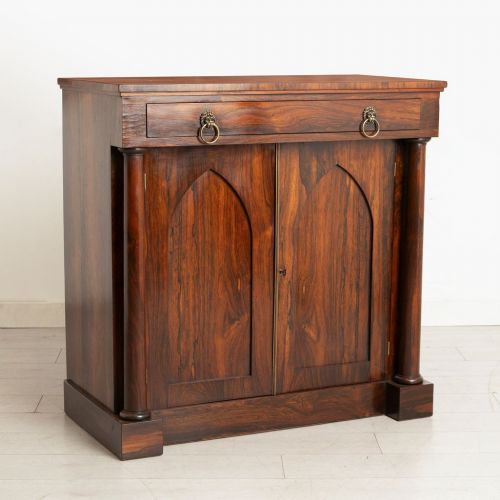
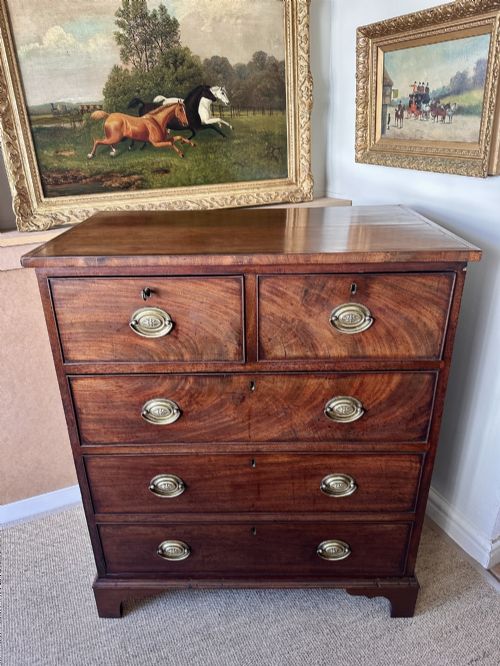
Regency period storage provides practical household organisation through elegant mahogany chests of drawers, rosewood chiffoniers, and side cabinets.
Regency Period Storage
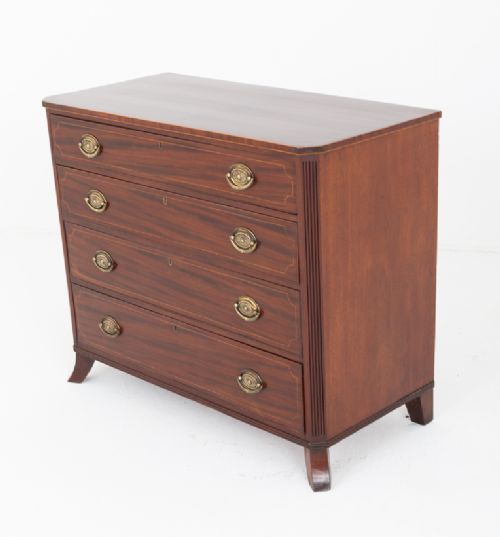
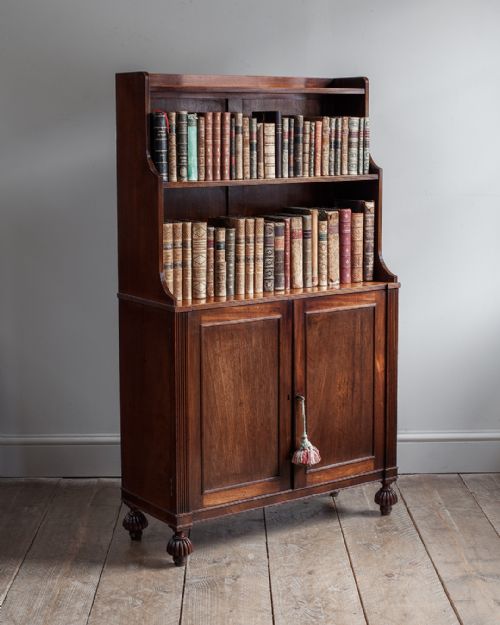
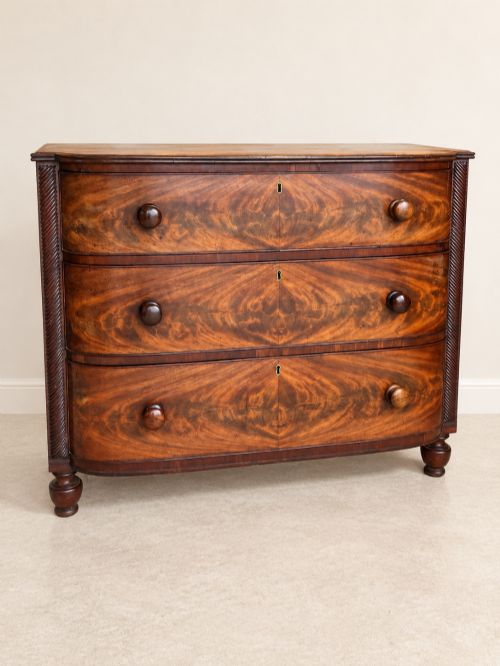
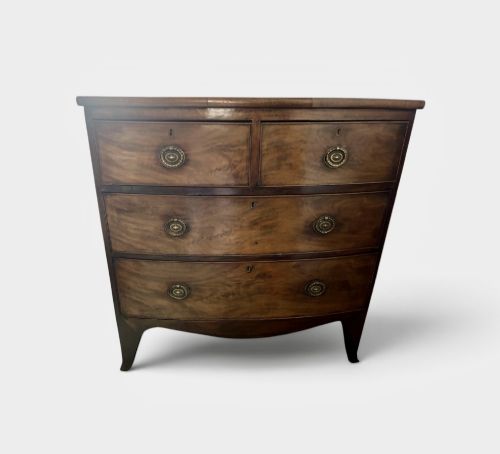
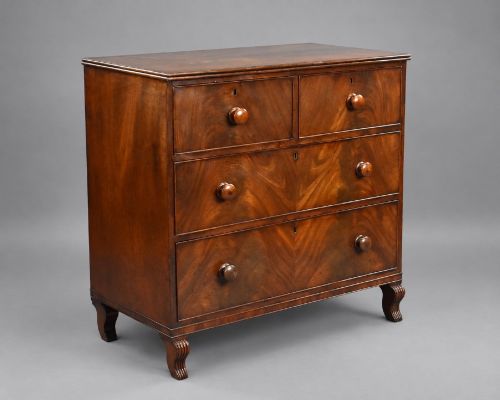
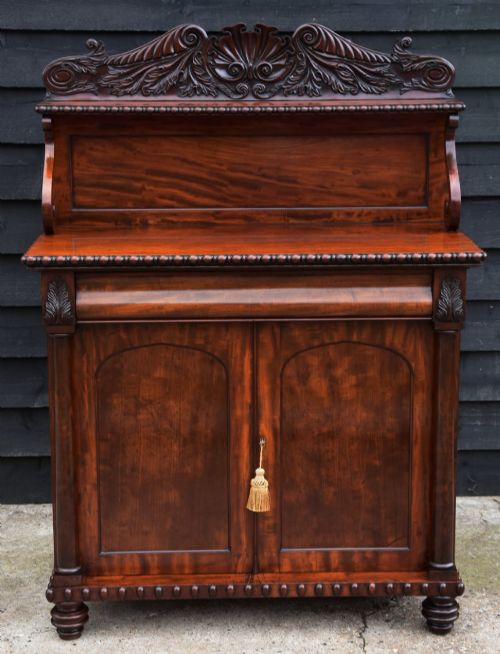
Regency period storage encompasses various utility furniture designed to organise domestic spaces, with chests of drawers appearing most frequently across these listings. Alongside these drawer chests, buyers encounter side cabinets, chiffoniers, linen presses, bookcases, and low cupboards suited to period interiors.
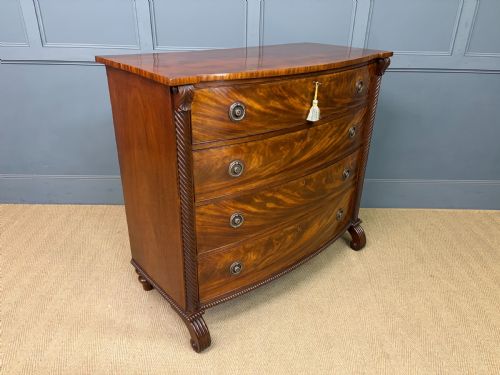
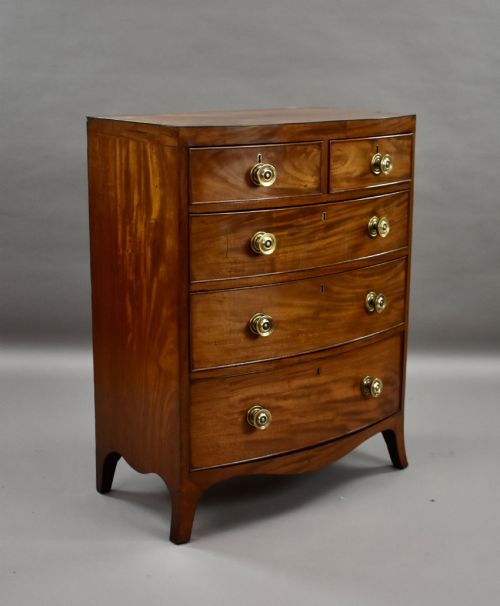
The inventory spans pieces catalogued under Regency, George IV, Georgian, and William IV styles, alongside 19th-century interpretations. Chests of drawers typically feature bow fronts or straight lines, whilst smaller examples and narrow formats serve specific spatial requirements.
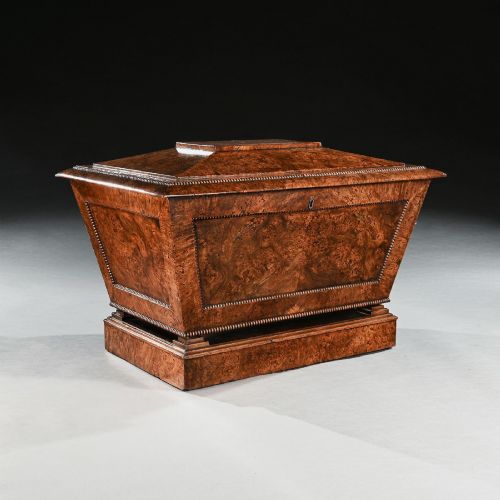
Specialist storage forms also emerge, including wine cooler cellarettes, tea caddies, and open bookshelves. Rosewood and mahogany dominate the available forms, accompanied by specific variations like flame mahogany veneer and pollard oak.
Materials and Construction
Cabinet makers utilised solid timber alongside figured veneers, relying principally on mahogany and rosewood for primary surfaces. Flame mahogany veneer, plum pudding mahogany, and figured mahogany provide decorative grain patterns across drawer fronts and cabinet doors.
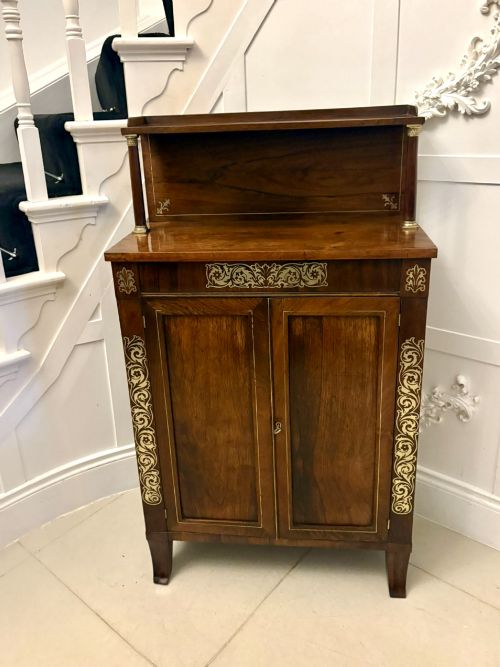
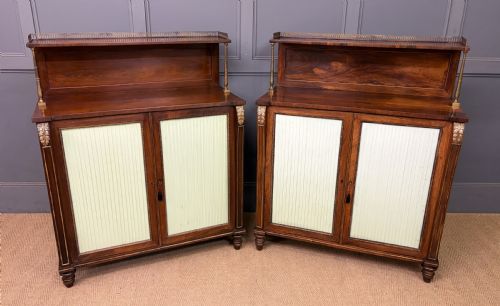
Accents of brass and ebony appear across these pieces, with brass inlay and brass grilles decorating specific cabinet doors. Pollard oak, walnut, and amboyna also contribute to the material palette of these storage items.
Listings feature mahogany, rosewood, walnut, and amboyna woods, alongside brass inlay and glass elements.
Evaluating Regency Storage
The refinement of timber selection and veneer matching defines the visual presence of better examples. Figured grain patterns, carefully chosen flame mahogany, and rich rosewood display superior cabinet making intentions.
Integration of brass details, such as grille work and inlay, alongside working locks and key mechanisms, elevates the construction standard. Subtle touches like ebony stringing and bracket feet reflect the hand of skilled workshops.
The Regency Period Storage Glossary
- Chiffonier
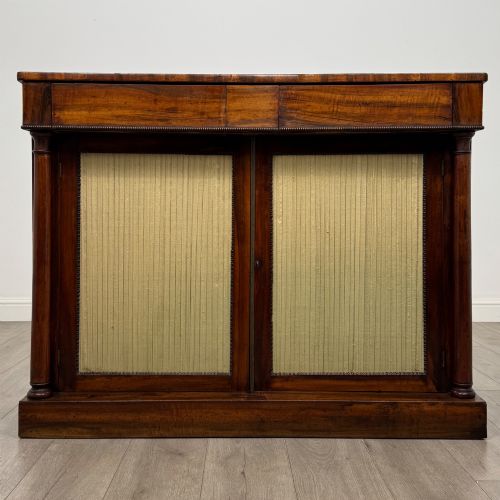
- A low cabinet or sideboard featuring shelving or enclosed storage below. These pieces often incorporate fabric panels or glass doors.
- Cellarette
- A lockable container designed to hold bottles of wine. These portable or fitted cellars often utilise pollard oak.
- Linen Press
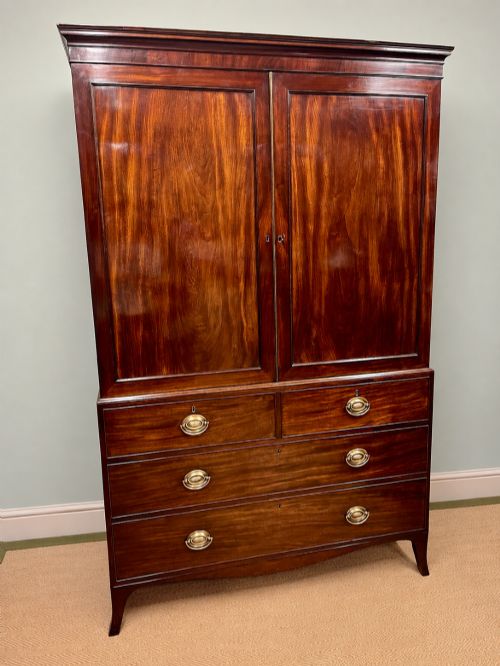
- A tall piece of furniture featuring upper doors enclosing sliding trays for textiles, positioned above lower storage drawers. These serve to protect household linen.
- Bow Front
- A convex curved cabinet front popular during the Regency era. This curved profile softens the geometry of chests of drawers.
Regency Period Storage: Frequently Asked Questions
Where were Regency chests placed?
Chests of drawers served primarily in bedrooms and private chambers to hold garments and personal linens. Their structured drawer arrangements kept clothing accessible.
Larger variations also stood in dressing rooms and hallways, providing substantial domestic storage before fitted wardrobes became common.
What is a chiffonier used for?
Chiffoniers functioned as side storage units in dining rooms and drawing rooms for serving items and books. Enclosed lower cupboards kept tableware out of sight.
Many examples feature upper shelves or display spaces, combining utilitarian storage with a surface for decorative objects.
How do I identify a Regency bookcase?
Regency bookcases employ architectural proportions with classical restrained ornament, frequently constructed in mahogany or rosewood. Open bookshelves or glazed doors define the upper section.
Lower cabinet storage often supports the upper shelving unit, creating a multifunctional piece for private libraries and parlours.
What is a linen press?
A linen press is a tall storage cabinet designed specifically to store household textiles and bed linens flat. Sliding internal trays prevent heavy fabrics from creasing.
Lower drawer banks provide additional capacity for smaller garments, making these pieces essential for period domestic organisation.