


Rosewood Library Furniture
Rosewood library furniture brings rich dark grain and warm timber tones into studies and living spaces through tables, bookcases, and chairs.
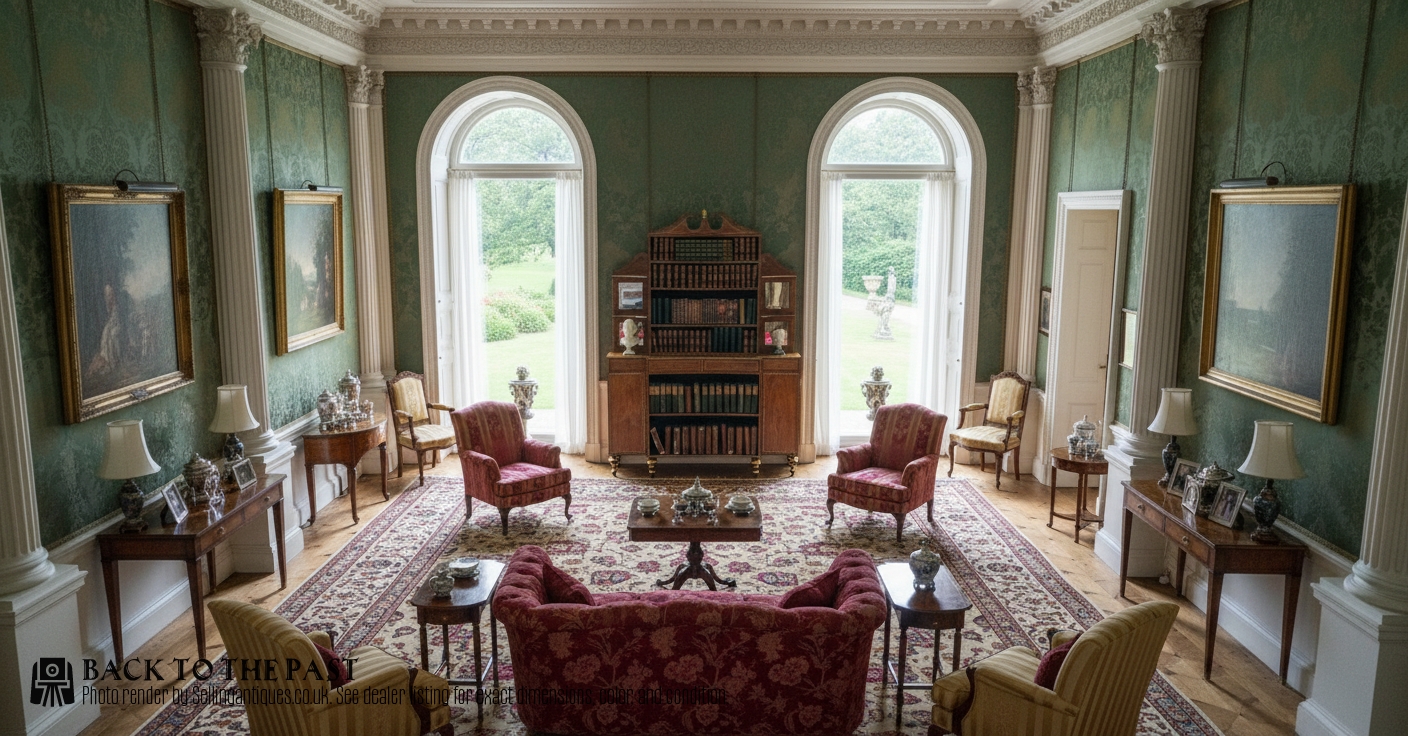
Rosewood Library Furniture
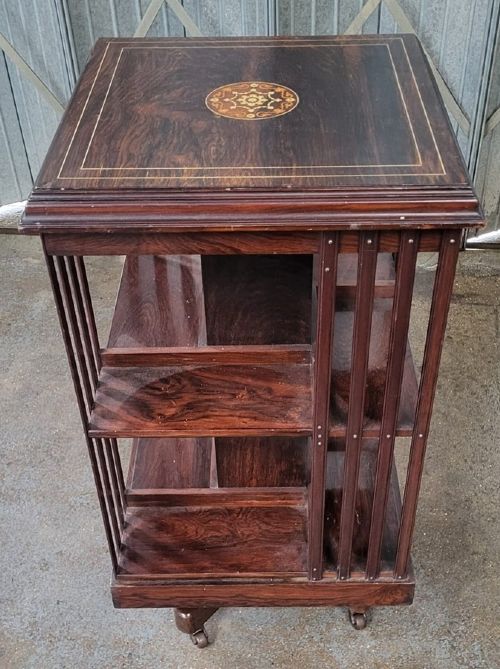
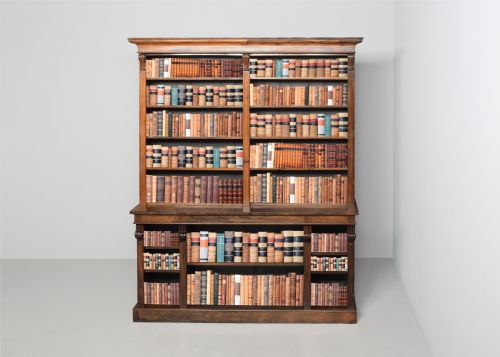
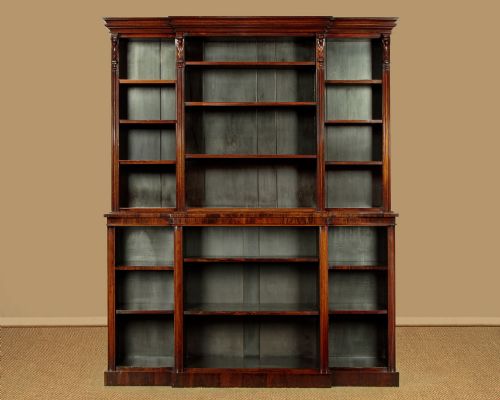
Rosewood library furniture encompasses open bookcases, writing tables, centre tables, and armchairs spanning the Georgian, Regency, William IV, and Victorian periods. Pieces frequently display architectural breakfront shapes or freestanding pedestal designs intended for the centre of a room.
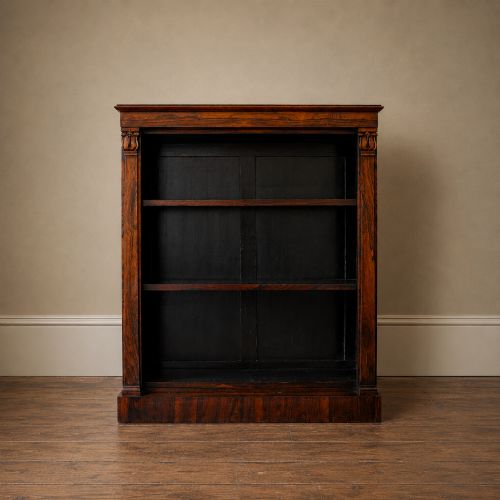
Bookcases appear most commonly as open shelves with adjustable tiers, while tables serve double duty for writing or display. Makers utilised dense exotic timbers to project status and refinement in domestic studies and reading rooms.
The inventory ranges from small revolving bookcases of the Edwardian era to substantial George IV library tables and Anglo-Indian seating. Buyers encounter both solid construction and elaborate veneers applied to secondary woods.
Materials and Construction
Craftsmen built these pieces using dense rosewood timbers, often applied as fine veneers over stable secondary woods like oak, or utilising simulated rosewood on softer timber. Brass inlay, parcel gilding, and brass mounts frequently accent the dark surfaces.
Writing tables and desks integrate inset leather writing surfaces, sometimes framed by intricate brass stringing or cut brass marquetry. Structural joinery relies on solid timber frames to support heavy rows of books and regular daily use.
Materials recorded across the inventory include rosewood, brass, leather, glass, oak, teak, timber, and velvet.
Qualities of Execution
The distinction between standard utility items and exceptional pieces lies in the choice of grain patterns and the precision of brass inlay. Tables and bookcases attributed to workshops like Gillows demonstrate superior proportion, heavier gauge brass mounts, and refined secondary wood choices.
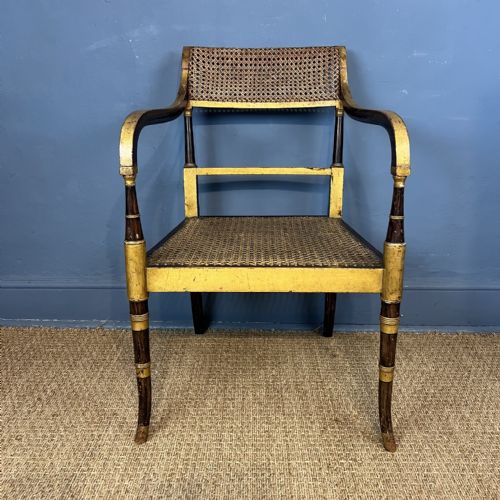
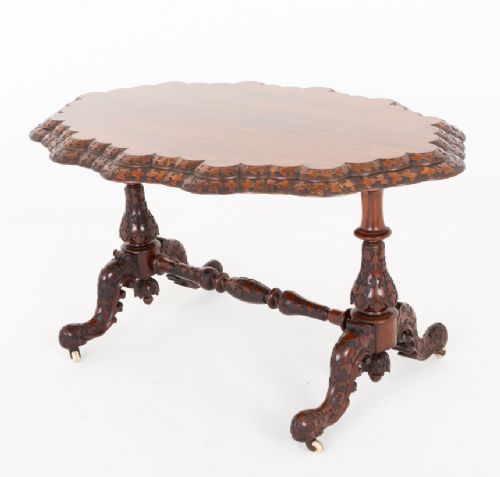
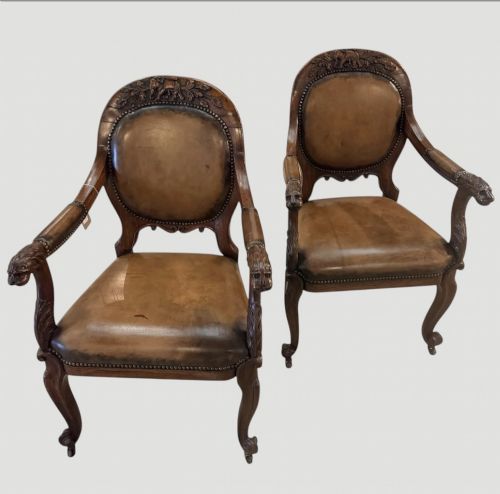
Carved details, such as the foliate work on Irish centre tables or the crispness of parcel gilding on armchairs, separate standard regional output from high-status metropolitan commissions. The depth of the timber's natural finish and the integrity of the veneer determine visual impact.
Gillows·Donald Ross
The Rosewood Library Furniture Glossary
- Breakfront
- A cabinet or bookcase whose central section projects forward from the flanking wings. This architectural layout creates visual depth in large library rooms.
- Centre table
- A freestanding table finished on all sides designed to stand in the middle of a room rather than against a wall. These often served dual purposes for writing or display.
- Parquetry
- Geometric mosaic woodwork arranged in patterns such as cubes or herringbones. Artisans applied these decorative veneers to table tops and cabinet doors.
- Sofa table
- A small rectangular table traditionally placed in front of a sofa, featuring drop leaves at either end. They typically incorporate double pedestals or trestle supports.
Rosewood Library Furniture: Frequently Asked Questions
How do I care for rosewood furniture?
Keep wooden surfaces away from direct sunlight and excessive heat sources to prevent the timber from drying out or splitting. Dust regularly with a dry soft cloth and avoid commercial silicone polishes.
Maintain consistent room humidity to protect delicate veneers and leather writing inserts. Apply professional wax sparingly only when the timber appears dry.
Were these tables used for writing or display?
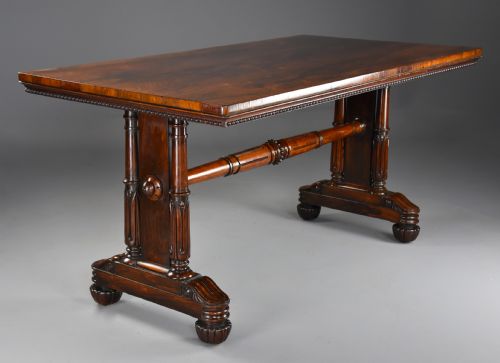
Library and centre tables served multiple functions depending on the room layout and the owner's daily requirements. Many feature inset leather panels specifically designed for correspondence and reading.
Freestanding centre tables also provided a stable surface for holding lamps, decorative objects, and large folio volumes. Their finished backs allowed them to sit prominently in the middle of the room.
How can I tell a Regency piece from a Victorian one?
Regency items generally exhibit restrained classical proportions, architectural brass inlay, and cleaner lines inspired by antiquity. They frequently employ dark rosewood contrasted with bright brass stringing.
Victorian examples often display heavier carving, more exuberant revival styles such as Rococo, and bulkier pedestal constructions. Timber selection also shifts towards denser solid applications and elaborate parquetry work.
What is simulated rosewood?
Simulated rosewood is a painted or stained finish applied to a more common secondary timber, such as beech or birch, to imitate the distinctive grain of exotic rosewood. Cabinetmakers utilised this technique when solid rosewood was too costly or heavy for specific forms.
This practice appears on items like waterfall bookcases from the early nineteenth century. Close inspection reveals brushwork or graining applied over a lighter base wood rather than natural timber figures.