
Open Library Shelving
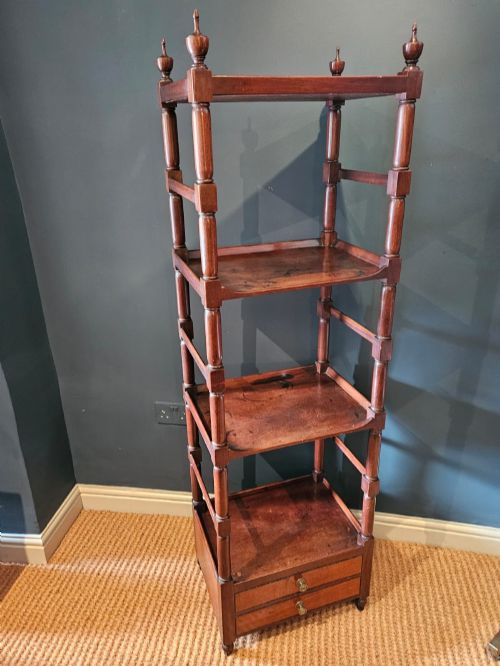
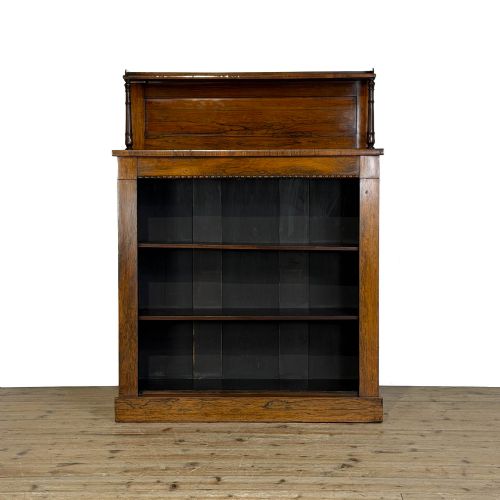
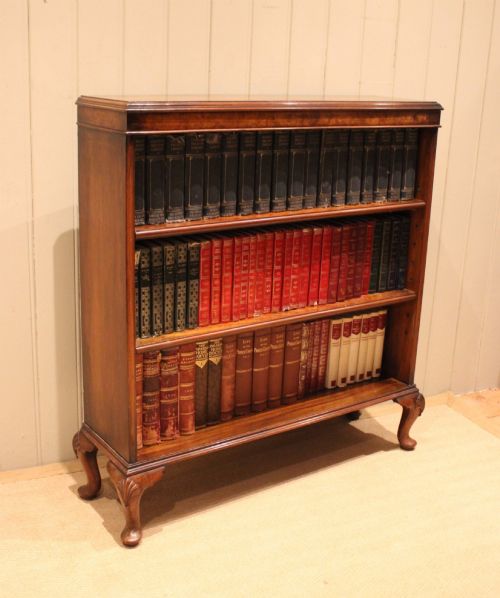
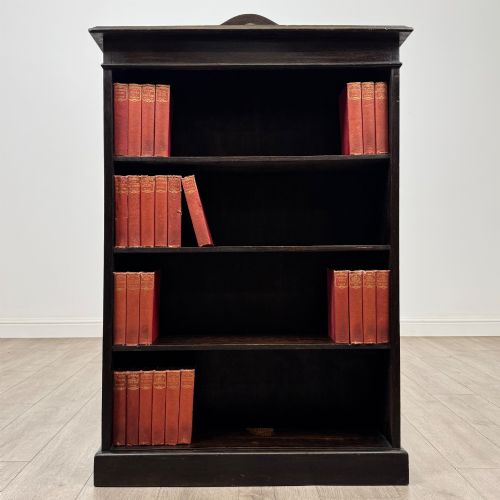
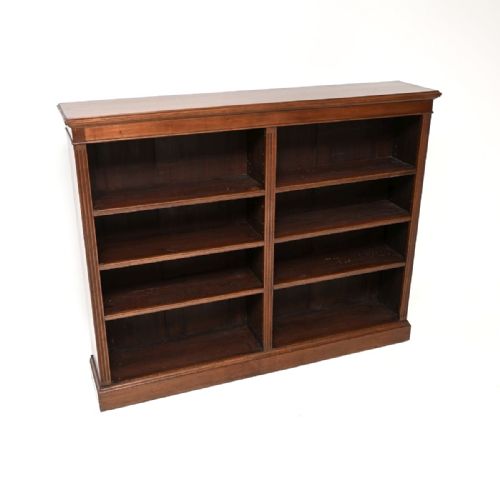
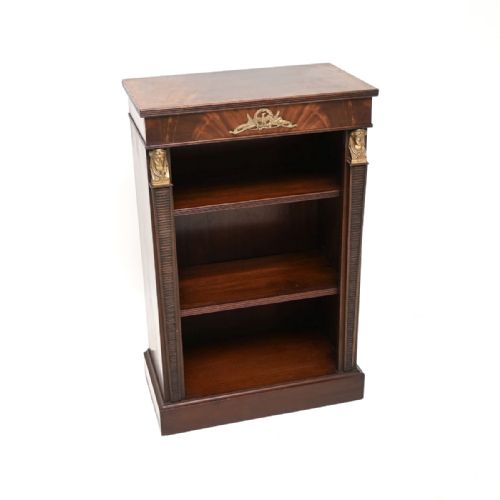
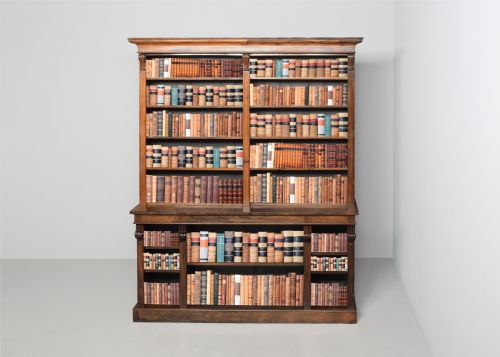
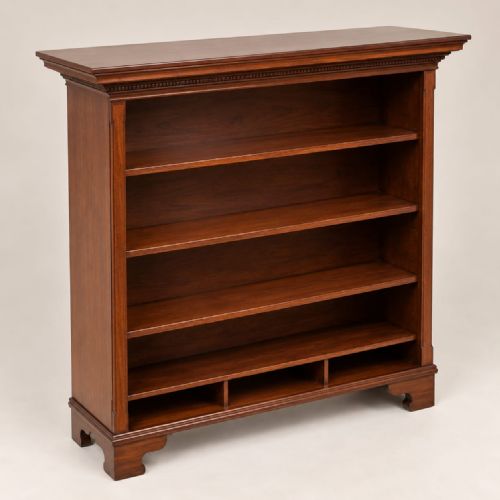
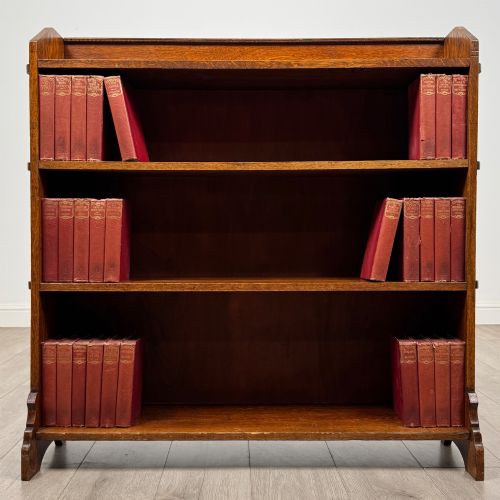
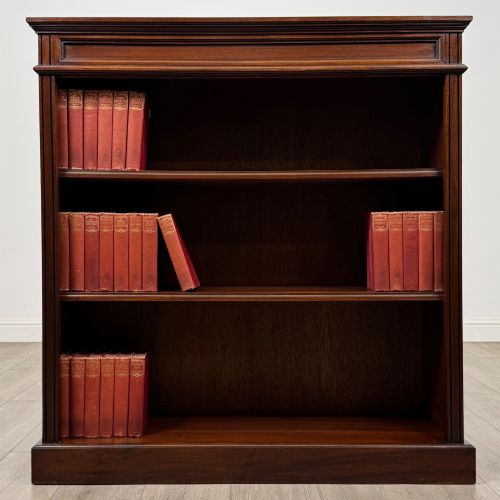
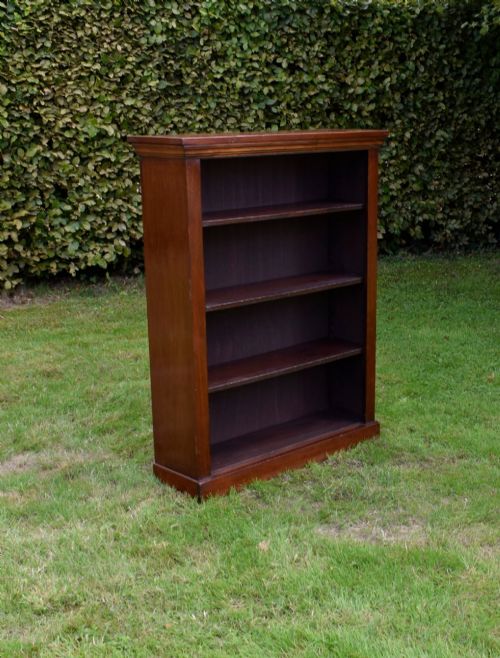
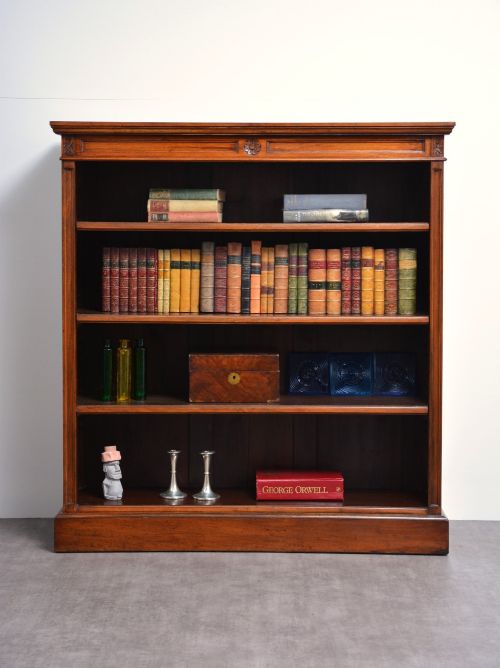
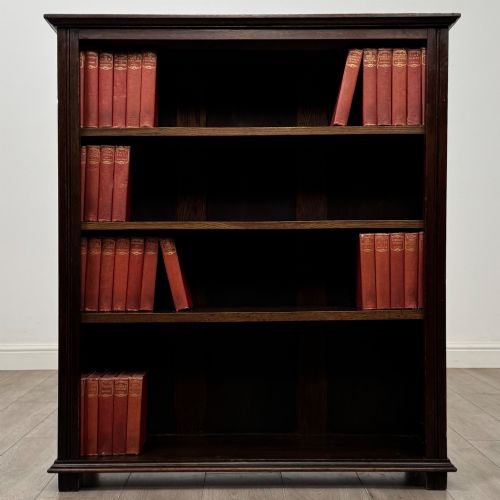
Open library shelving brings together timber bookcases and four tier what-not bookcases designed to hold volumes.
Open Library Shelving
Open library shelving covers bookcases and open bookshelves spanning the Victorian, Edwardian, and Regency periods. You will regularly encounter mahogany and oak pieces featuring adjustable shelves and tier arrangements designed for accessible book storage.
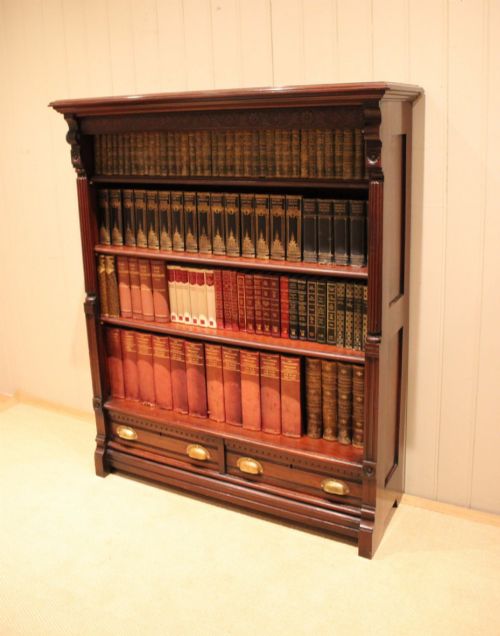
The selection ranges from large late Victorian library bookcases down to compact Edwardian examples and low dwarf bookcases. Many pieces date through the nineteenth and early twentieth centuries, reflecting changing domestic library requirements.
Materials and construction methods
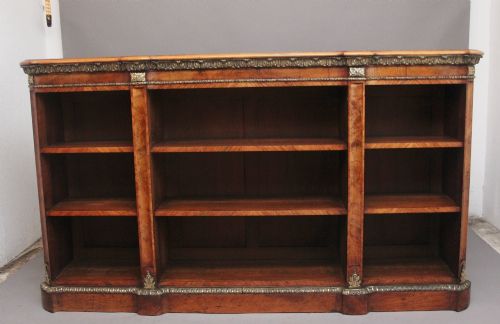
Cabinet makers built open library shelving predominantly in timber such as mahogany, oak, walnut, burr walnut, rosewood, and satinwood. Brass mounts and ormolu details occasionally accent the woodwork on grander examples.
Construction relies on solid timber boards joined to form upright carcasses, fitted with adjustable shelving mechanisms to support varying book heights. Carved ornamentation, ebonised finishes, and leather-edged shelves appear on specific Victorian and stylistic variants.
The listings feature mahogany, oak, walnut, burr walnut, rosewood, satinwood, pine, and brass across Victorian, Edwardian, and Regency periods.
Quality and craftsmanship distinctions
Quality in open library shelving rests on timber selection and the refinement of the cabinet work. Highly figured burr walnut, rich rosewood, and carefully matched mahogany elevate a piece far above standard pine or basic utility builds.
Detailing distinguishes finer workshop production from standard output. Carved elements, decorative brass work, and well-executed adjustable shelving systems indicate superior execution by period makers.
Johnstone and Jeanes·Gillows
The Open Library Shelving Glossary
- What-Not
- A set of open shelves, typically with three or four tiers, used for displaying or storing books and small objects.
- Adjustable Shelves
- Shelving supported by moveable brackets or rack strips allowing the height between shelves to be altered.
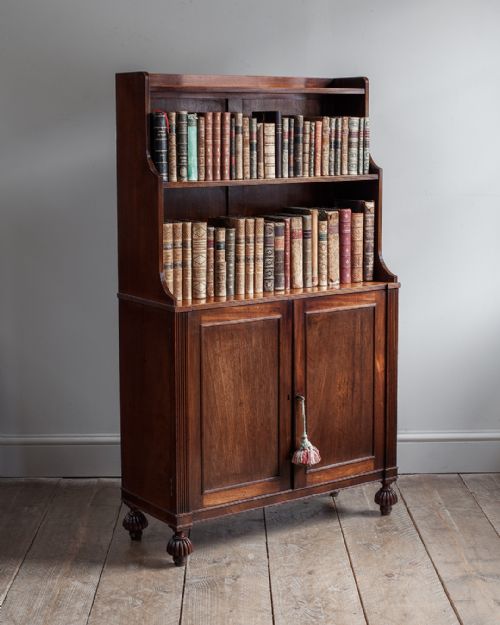
- Waterfall Bookcase
- A tiered set of open shelves where each upper shelf is narrower and set back from the one below it.
- Dwarf Bookcase
- A low open bookcase designed to sit beneath window height or against a wall without dominating the room.
- Ormolu
- Gilded bronze mounting applied as a decorative highlight to cabinet furniture.
Open Library Shelving: Frequently Asked Questions
How do I adjust the shelves?
Period open library shelving typically utilises wooden ratchets, metal pins, or side grooves to support the adjustable shelves.
Lift each shelf slightly to release it from the support mechanism and reposition the pins or brackets into the desired slots.
Where should I place an open bookcase?
These timber bookcases suit studies, living rooms, and libraries where direct access to books is desired.
Keep them away from direct sunlight and strong heat sources to protect the mahogany, walnut, or oak finishes from drying out.
What is a dwarf bookcase?
A dwarf bookcase is a low open bookcase built to a reduced height, often featuring adjustable shelves for everyday volumes.
They offer practical book storage while keeping wall space open above for pictures or mirrors.
How do I care for the timber?
Dust the mahogany, walnut, or oak surfaces regularly with a soft, dry cloth to prevent dirt build-up.
Apply a traditional beeswax occasionally to nourish the wood and maintain a natural sheen without using modern silicone sprays.