
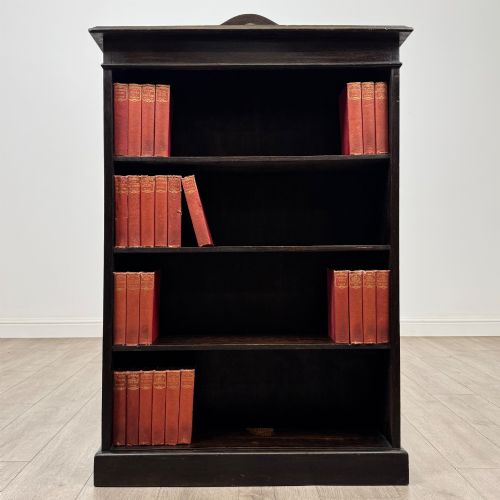
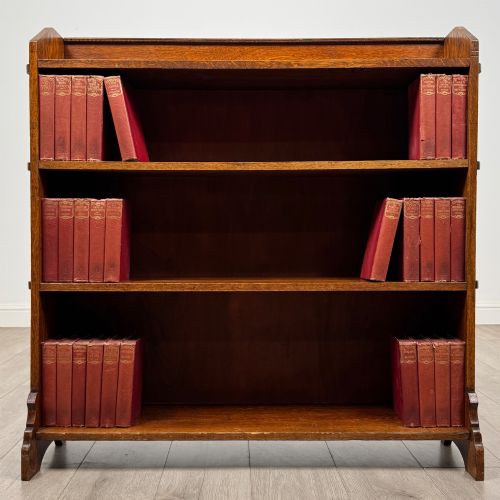
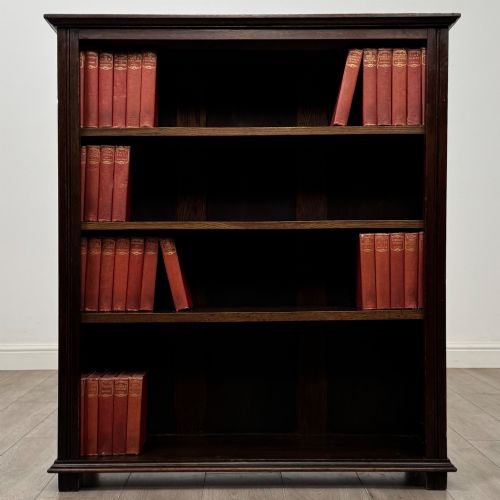
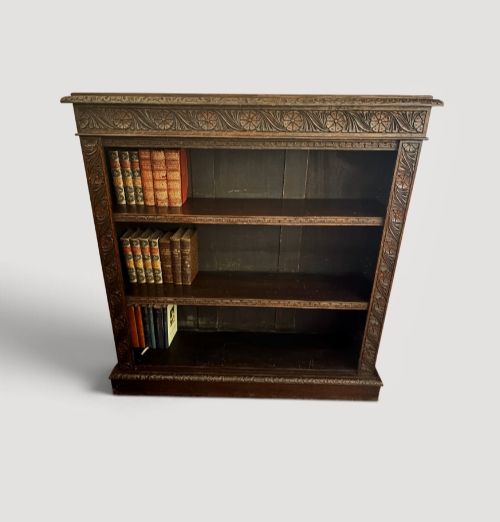
Oak Library Shelving
Oak library shelving brings architectural gravity and orderly warmth to a room, offering sturdy open bays designed to hold substantial collections.
Oak Library Shelving
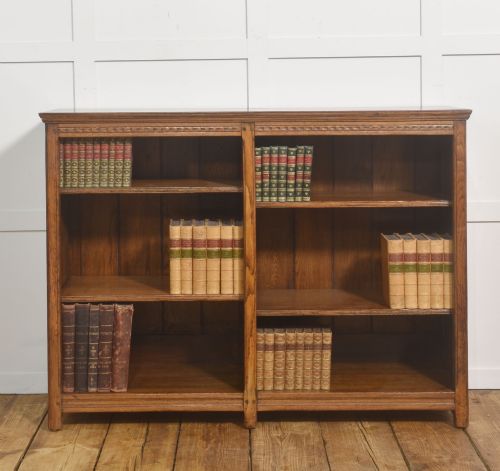
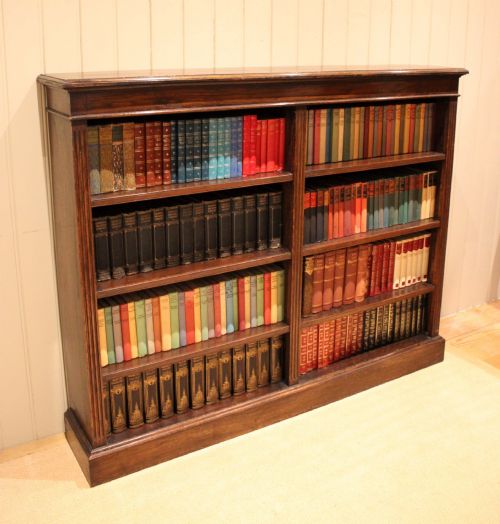
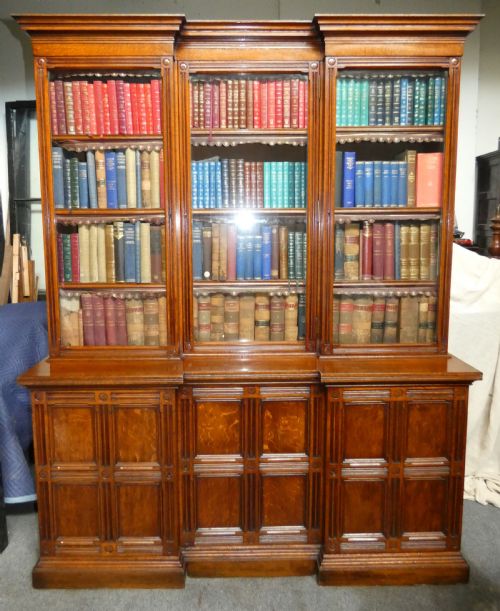
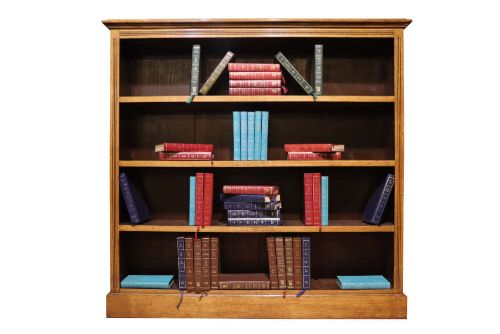
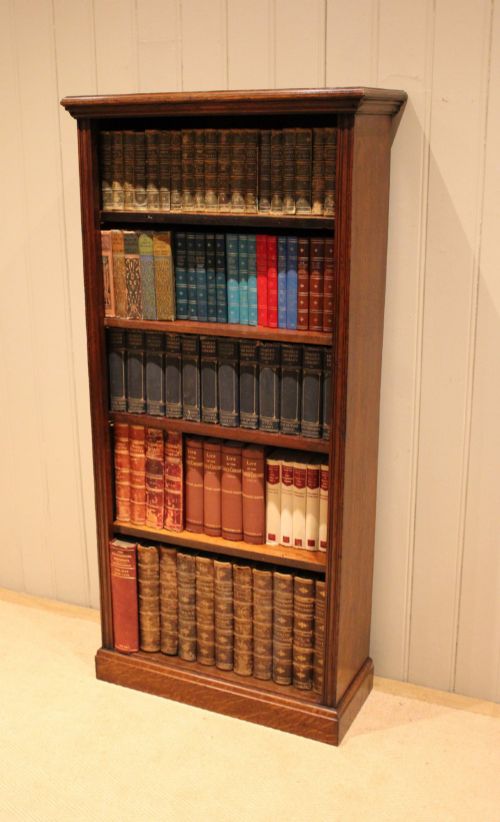
When you search for oak library shelving, you encounter robust open bookcases and adjustable storage units designed for heavy volumes. These pieces span the nineteenth century through the early twentieth century, taking forms such as tall breakfront bookcases, dwarf low units, and stacking office sections.
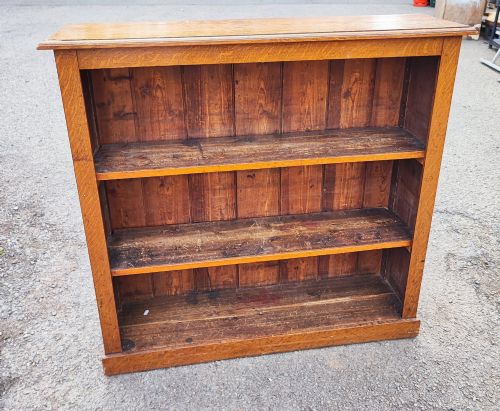
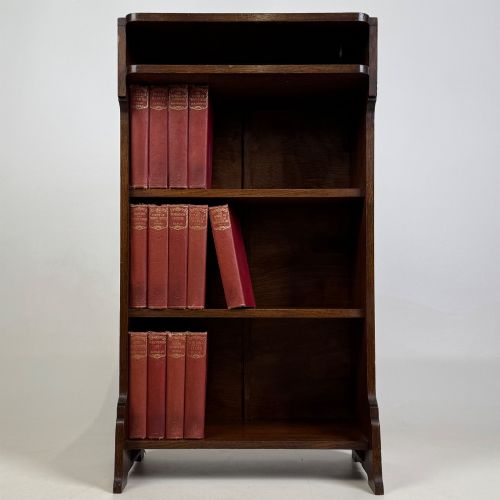
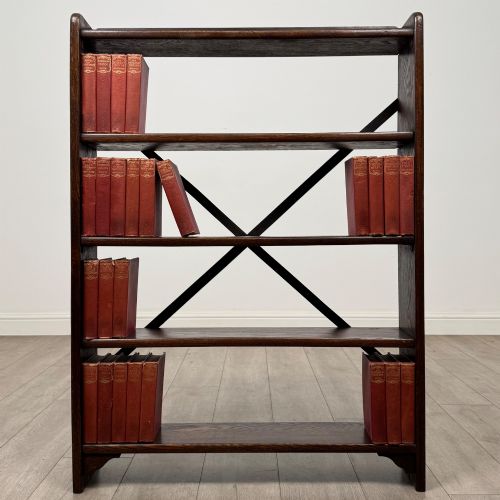
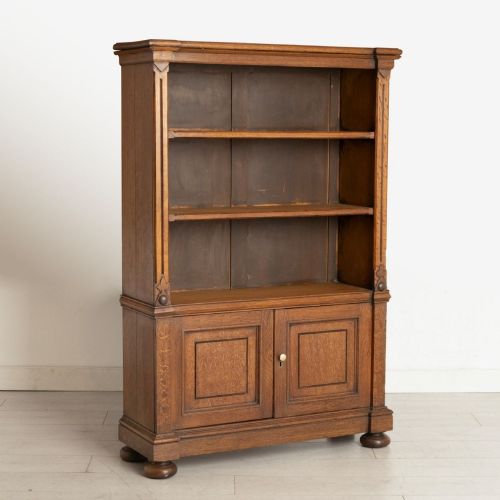
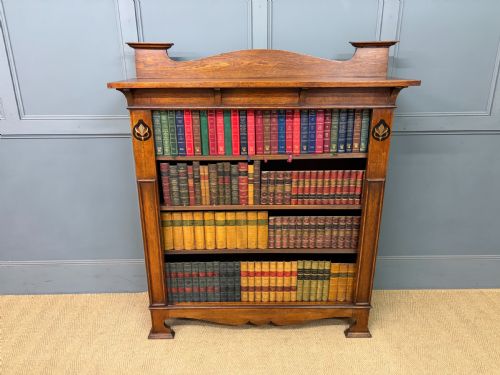
The most common versions on this page are Edwardian and Victorian open bookcases constructed in solid or golden oak. Many incorporate adjustable wooden shelves, allowing the interior bays to accommodate varying book heights.
Originating primarily from British workshops, these utilitarian and architectural items also include Continental examples such as French provincial tall open cases. They served originally in private studies, institutions, and offices, prioritizing practical access to large libraries.
Materials and construction methods
Construction relies heavily on solid oak and golden oak, sometimes enhanced with ebonised details, marquetry, or brass and iron hardware. Cabinetmakers utilised sturdy tongue-and-groove backing and solid side panels to support the immense weight of bound volumes.
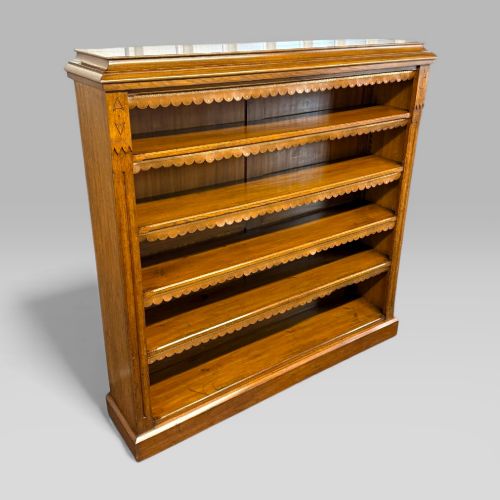
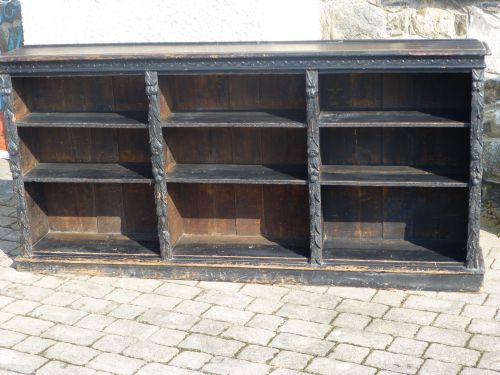
Carving techniques define the decorative vocabulary, featuring Gothic revival motifs, Renaissance revival panels, and distinct carved elements like green man masks. Adjustable shelf mechanisms utilise wooden tooth-and-rack supports or brass pins fitted into vertical slots.
Surfaces are finished to highlight the natural grain of the timber, ranging from deep dark Victorian polish to lighter Edwardian golden tones. Structural framing often incorporates breakfront cornices, beaded edges, and plinth bases for stability.
Listings feature oak, walnut, and mahogany across styles from Gothic Revival to Arts and Crafts.
Distinctions in quality and execution
The upper tier of these pieces displays meticulous hand-carving, well-figured timber selection, and integrated architectural details such as breakfront proportions and fluted pilasters. Simpler pieces rely on clean functional lines with minimal moulding, suiting utilitarian office or school environments.
Mechanism design separates standard production from finer library furniture, particularly in the precision of adjustable shelf supports and the smoothness of stacking modular sections. Timber thickness and the integrity of the joints dictate longevity under heavy book loads.
The Oak Library Shelving Glossary
- Breakfront
- A cabinet design where the central section projects forward from the flanking wings, creating a strong architectural rhythm.
- Dwarf bookcase
- A low open bookcase, typically standing under table height, designed to fit beneath windows or in smaller rooms.
- Adjustable shelves
- Shelves that can be moved to different heights using internal racks, slots, or pins to fit books of various sizes.
- Ebonised oak
- Timber treated with a chemical stain or black finish to imitate ebony, popular during the Victorian aesthetic movement.
Oak Library Shelving: Frequently Asked Questions
How do I install heavy shelves safely?
Ensure the bookcase stands on a level floor and anchor tall units securely to the wall to prevent tipping under the weight of books. Distribute heavy folios across the lower fixed shelves while placing lighter octavos on the adjustable upper tiers.
Check that all shelf pins or rack supports are seated evenly before loading volumes. Overloading a single adjustable wooden shelf can cause bowing over time.
Are these shelves suitable for modern paperbacks?
These units accommodate modern paperbacks easily, provided the shelf depth and height are suitable for smaller formats. Adjustable shelf systems allow you to tighten the vertical spacing so you can fit multiple rows of smaller books.
Keep in mind that library shelving is generally deeper than standard domestic bookcases, giving you plenty of surface area for stacking or double-rowing paperbacks.
How do I care for antique oak timber?
Dust the wood regularly with a dry, soft cloth and avoid placing bookcases in direct sunlight or near heat sources that cause timber to dry out. Apply a quality beeswax polish sparingly once or twice a year to maintain the sheen and nourish the grain.
Avoid silicone-based sprays, as they build up a residue over time and attract dust. Maintain a stable indoor humidity to protect joints and prevent the wood from warping.
Can I adjust the shelf heights myself?
Most antique library shelving featuring adjustable bays uses either wooden tooth-and-rack strips or brass support pins. You simply lift the shelf, reposition the supports into the desired slots, and set the board back down level.
Take care when sliding shelves out of older uprights to avoid catching the corners against the interior veneered or solid oak walls.