



Regency Period Picture Framed
Regency period picture framed works bring together delicate watercolours, needlework samplers and giltwood silhouettes from the early nineteenth century.
Regency Period Picture Framed
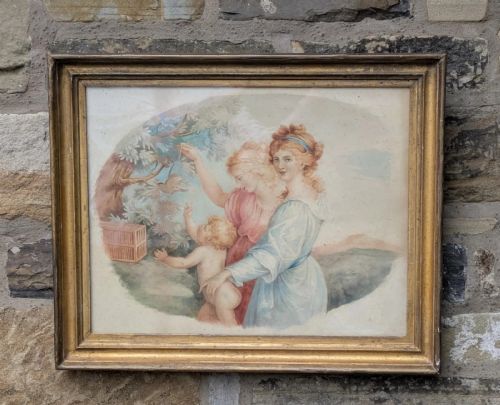
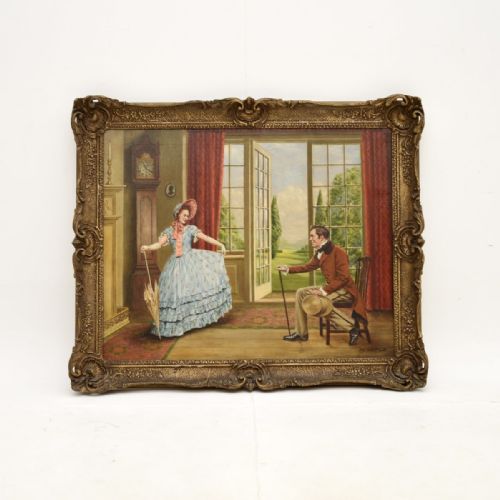
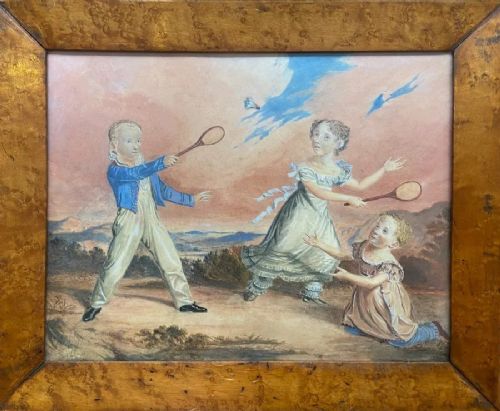
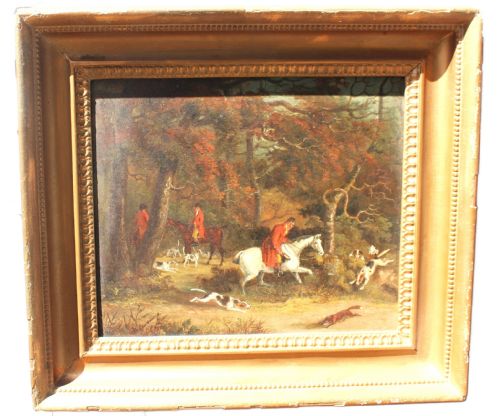
A regency period picture framed piece encompasses a variety of historical wall art, from hand-coloured engravings and watercolours to oil paintings on canvas or wood panel. The selection most frequently encountered on this page spans the early nineteenth century, alongside related Georgian and Victorian examples.
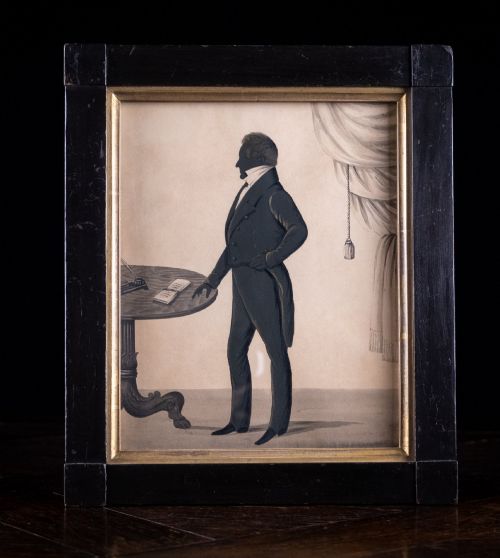
Buyers look for these framed works to add authentic period character to domestic interiors. The assortment ranges from portrait silhouettes on glass and enamel plaques to needlework samplers and genre paintings.
The framing itself forms an integral part of the object, utilising period mouldings such as Hogarth frames and giltwood surrounds to house paper, canvas and panel works.
Materials and Techniques
The construction of these pieces relies upon traditional materials like wood, glass, paper, canvas and gesso, finished with gold leaf or gilding. Artists worked in watercolour, pastel, oil paint and stipple engraving, often applying delicate hand-tinting to printed plates.
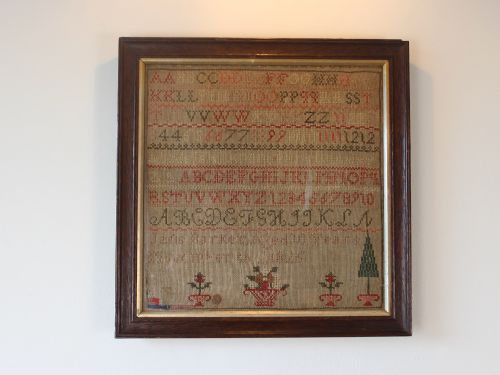
Frames were constructed from wood and gesso, then gilded or painted to complement the artwork within. Needlework items utilise silk embroidery threads on linen grounds, secured within period frames.
Listings include oil paintings, watercolours, engravings, needlework samplers, and enamel plaques spanning the Regency, Georgian, and Victorian periods.
Assessing Quality
Quality in these framed works depends upon the crispness of the original impression in engravings, the subtlety of brushwork in watercolours and oils, and the preservation of the surface materials. Finer examples display superior draughtsmanship and retain their original gilding or framing components without significant disruption.
The distinction between standard decorative items and finer works lies in the execution of the artist's hand, whether in the detailed painting of a portrait miniature or the intricate stitching of a needlework sampler.
Alfred Lyndon Grace·George Kilburne·George Romney·John Raphael Smith·Thomas Woolnoth·Walter Dendy Sadler·Adam Buck
The Regency Period Picture Framed Glossary
- Hogarth frame
- A narrow, dark wooden frame with a distinct profile, often associated with eighteenth and early nineteenth-century prints and portraits. This style provides a restrained border that complements monochromatic engravings.
- Stipple engraving
- A printmaking technique using dots of varying density to create tonal gradations and softer forms. This method was widely used for reproducing portraits and genre scenes during the Regency era.
- Mezzotint
- A printmaking process of the tonal method, allowing smooth gradations of light and shade. It produces rich, dark tones suited to romantic and domestic subject matter.
- Gesso
- A plaster-like material applied to wood frames as a base for gilding. It is carved or moulded to create decorative relief details before the application of gold leaf.
- Silhouette
- A portrait profile filled in with a solid colour, often painted on glass, paper or card. These were popular for domestic likenesses before the widespread use of photography.
Regency Period Picture Framed: Frequently Asked Questions
What periods do these framed pictures cover?
The selection primarily encompasses the Regency and Georgian eras of the early nineteenth century, alongside occasional Victorian pieces.
Dates span from the late eighteenth century through to the late nineteenth century, reflecting the prevailing artistic styles of those decades.
Are the frames original to the artworks?
Many pieces retain period frames such as giltwood surrounds or Hogarth mouldings that match the age of the artwork.
Some items may feature later framing chosen to protect the delicate paper, silk or canvas within.
How should I care for a framed watercolour or print?
These works require placement away from direct sunlight to prevent the fading of watercolours, paper and textile dyes.
Maintaining stable indoor humidity protects the wooden frames, gesso, and the paper or canvas supports from environmental damage.
What subjects are common in these artworks?
Common subjects include domestic genre scenes, classical watercolours, hunting landscapes, and detailed portrait silhouettes.
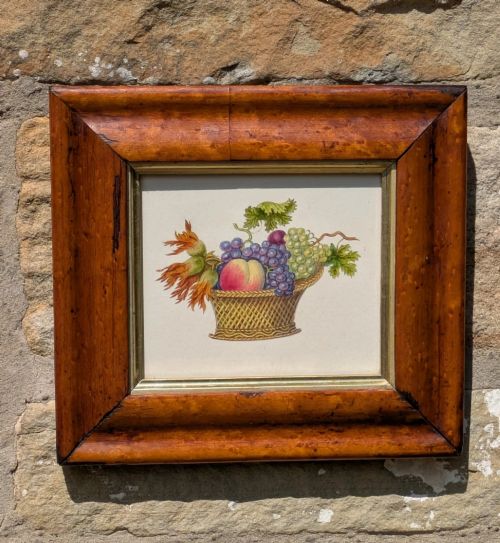
Needlework samplers and botanical prints also feature frequently among the available wall art.