


Regency Period Miniature Art
Regency period miniature art captures likenesses in brass, glass and watercolour with a quiet intimacy that larger canvases miss entirely.
Regency Period Miniature Art
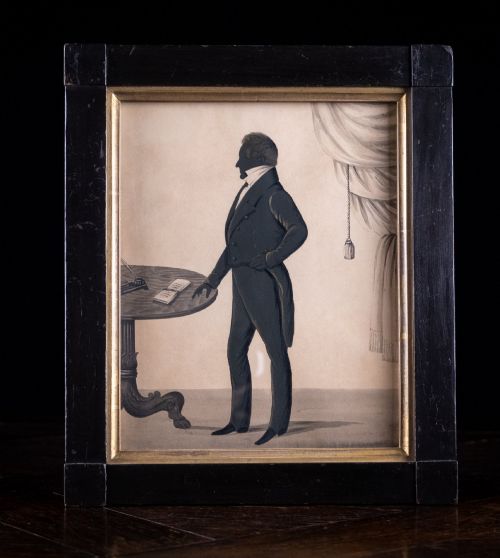
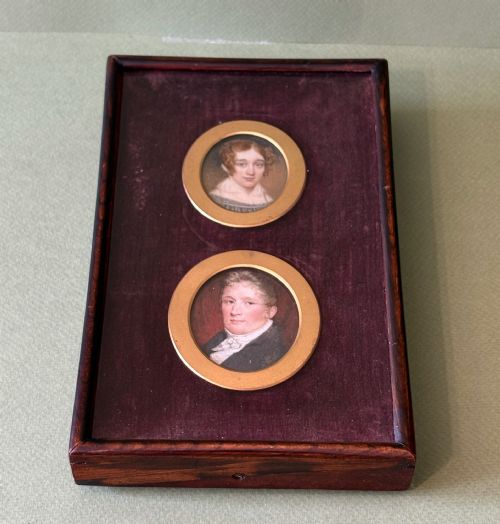
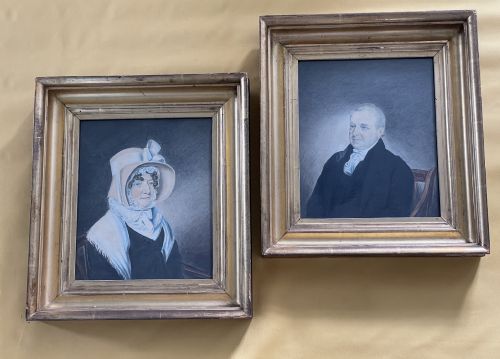
When you examine regency period miniature art, you encounter small-scale works designed for personal remembrance and intimate display rather than grand salon walls. These pieces capture sitters with remarkable precision, preserving the faces of gentlemen, ladies and children from the early nineteenth century in delicate detail.
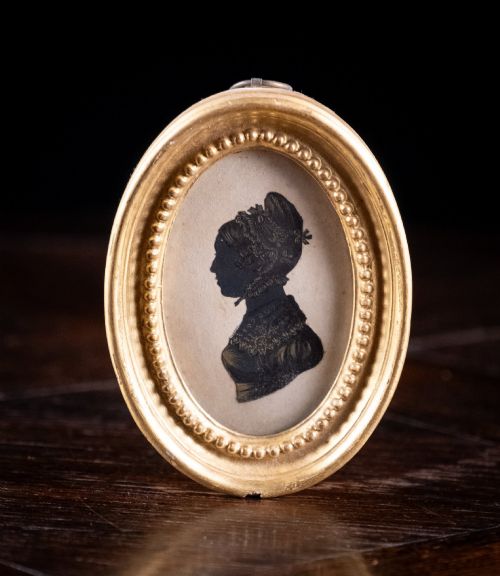
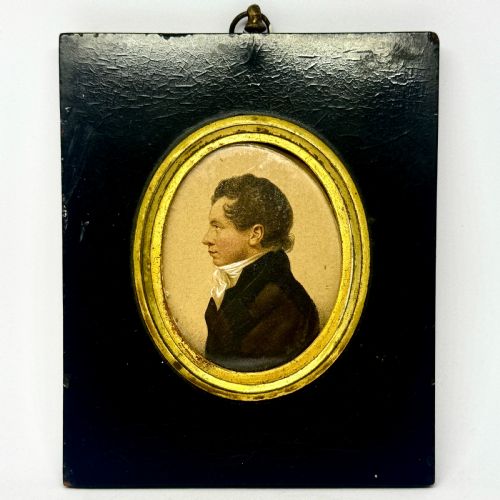
The selections available here lean heavily towards watercolour portraits and painted or gilded silhouettes. Many retain their original ebonised wood frames, often accented with brass or gilt metal mounts that maintain their period character.
Materials and construction methods
Artists working within regency period miniature art applied watercolour and ink to paper or painted directly onto glass and enamel plaques. These substrates required a steady hand and immense patience to achieve such fine detail on a surface measuring only a few inches.
Framing was integral to the construction, utilising dark wood such as ebony paired with gold leaf and brass fittings. Such materials protected the fragile painted surfaces while enhancing the visual contrast of the silhouette or portrait.
Listings feature works executed in watercolour, ink and gouache, alongside painted silhouettes on glass and enamel plaques.
Distinctions in quality and execution
Preservation also dictates standing, as works retaining their original frames, untouched glass and vibrant pigments command greater regard. Pigment fading or replacement frames alter the integrity of the piece.
Thomas London·Thomas Woolnoth·Emma Kendrick
The Regency Period Miniature Art Glossary
- Silhouette
- A solid black profile portrait, often cut from paper or painted on glass or card. This form gained immense popularity during the Regency era for its clean and immediate likeness.
- Ebonised
- Wood stained or finished to resemble true ebony. This dark, polished framing material was standard for mounting miniature watercolours and silhouettes.
- Gouache
- An opaque watercolour medium used by artists to add highlights and body to miniature paintings. It provides a dense, matte finish distinct from translucent watercolour.
- Miniature
- A small-scale portrait or painting executed with microscopic precision. These items were frequently worn as jewellery, kept in travel cases or hung in intimate clusters.
Regency Period Miniature Art: Frequently Asked Questions
How were these miniature portraits originally displayed?
These intimate works were typically hung in small clusters on private drawing room walls or kept inside fitted leather cases. Their modest scale allowed owners to carry likenesses of family members during travel.
Over time, many found a permanent home mounted on walls within their original ebonised frames, often grouped together to create a visual family history.
What materials make up a silhouette on glass?
Artists created glass silhouettes by painting the profile in black pigment or ink directly onto the reverse side of the glass. This reverse-painting technique protected the delicate medium from dust and damage.
A contrasting background sheet of pale paper or foil was then placed behind the glass to make the dark profile stand out with crisp definition.
How do I distinguish a Georgian piece from a Regency one?
Georgian and Regency pieces share overlapping timelines, but stylistic cues in dress and framing often clarify the date. Regency items typically display the distinct hairstyles, high-waisted fashions and turban caps characteristic of the early nineteenth century.
Frames also offer clues, with Regency examples frequently favouring slim ebonised profiles complemented by decorative brass hangers or acorn motifs.