
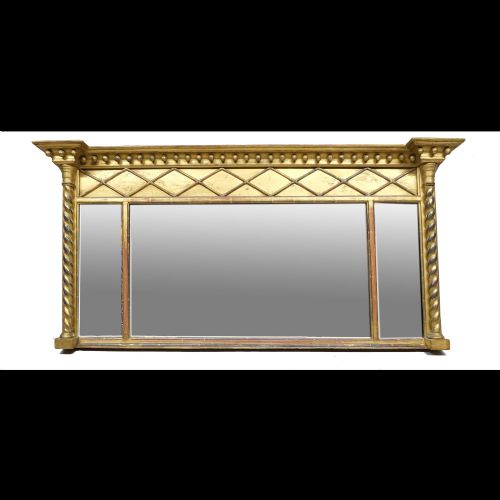
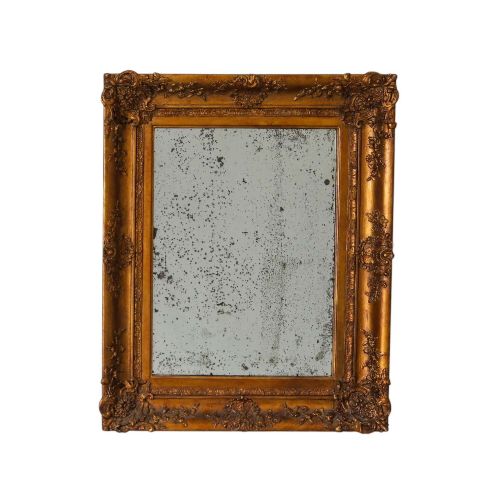
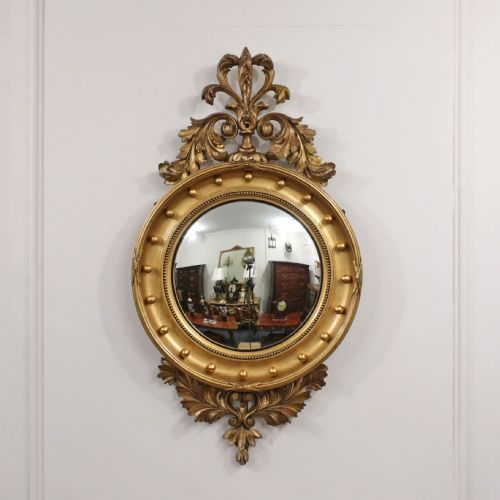
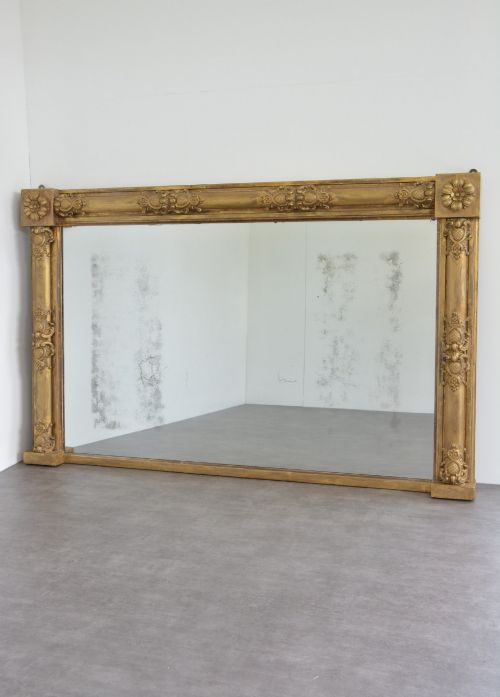

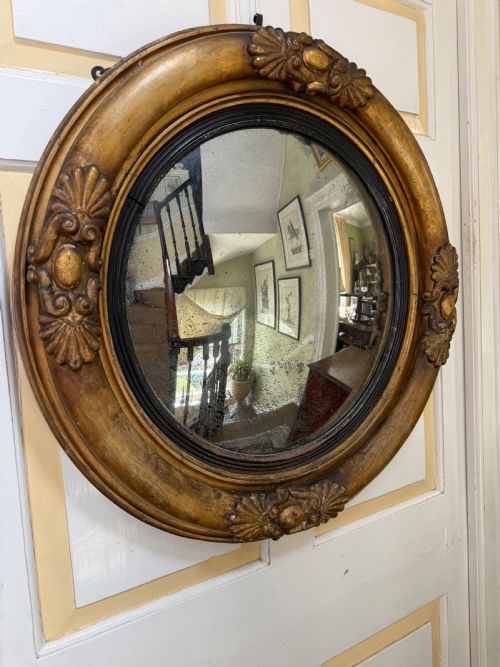


Regency Period Gilt Mirror
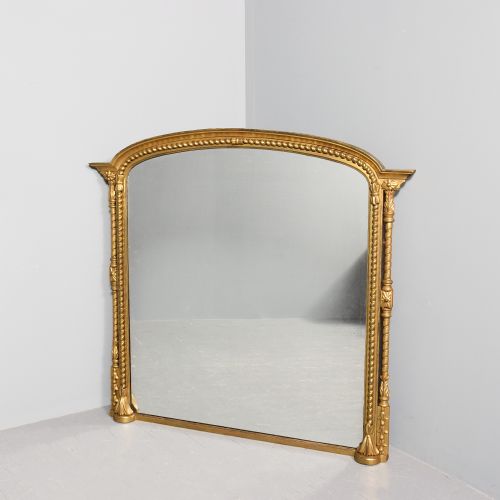
A regency period gilt mirror brings dramatic focal points and reflective depth into a room, spanning grand convex plates and wide overmantel designs.
Regency Period Gilt Mirror
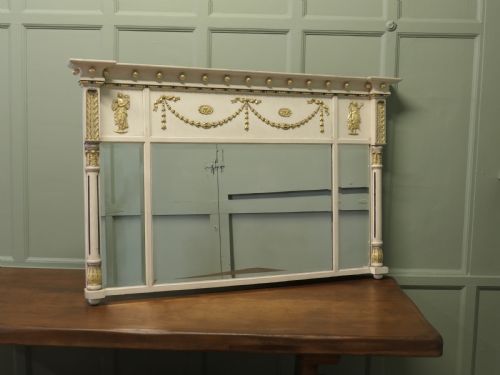
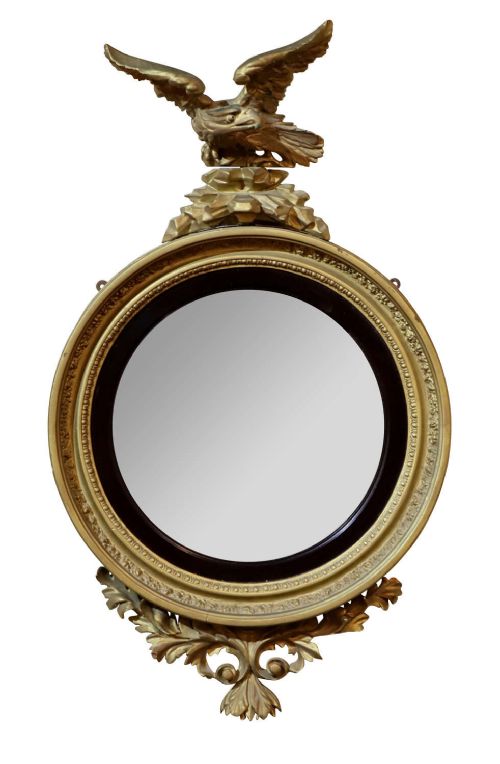
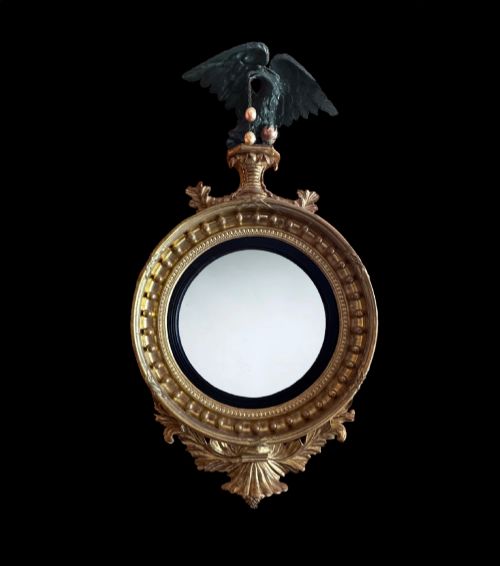
A regency period gilt mirror embodies the decorative ambition of the early nineteenth century, combining architectural presence with reflective brilliance. Buyers find these pieces surfacing primarily as circular convex wall mirrors or wide horizontal overmantels designed to sit above fireplace openings.
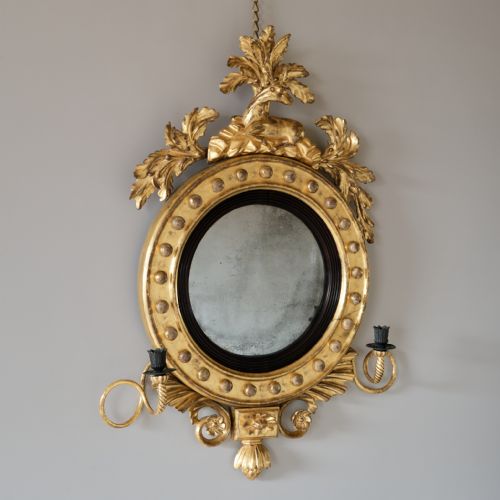
The selection ranges from compact pier mirrors and girandoles to massive triple plate landscape glasses framed in gleaming gold. Variations include specific regional tastes such as French Restauration examples and English country house variants featuring ebonised details or classical motifs.
How they were made
Carvers shaped underlying frames from timber such as pine or mahogany, applying layers of gesso to build up high-relief ornaments like acanthus leaves and classical friezes. Artisans then laid fine gold leaf over bole or applied oil gilding to achieve the characteristic luminous finish.
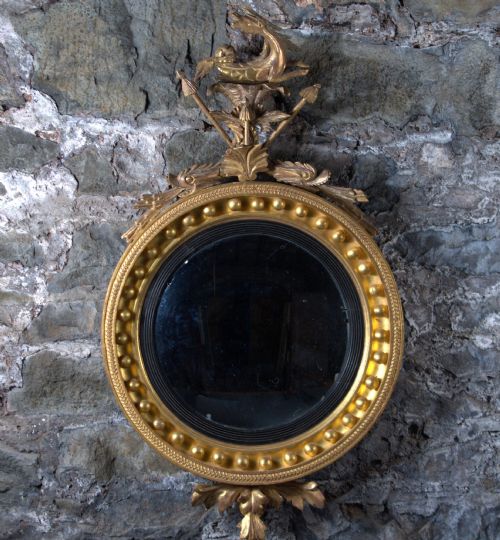
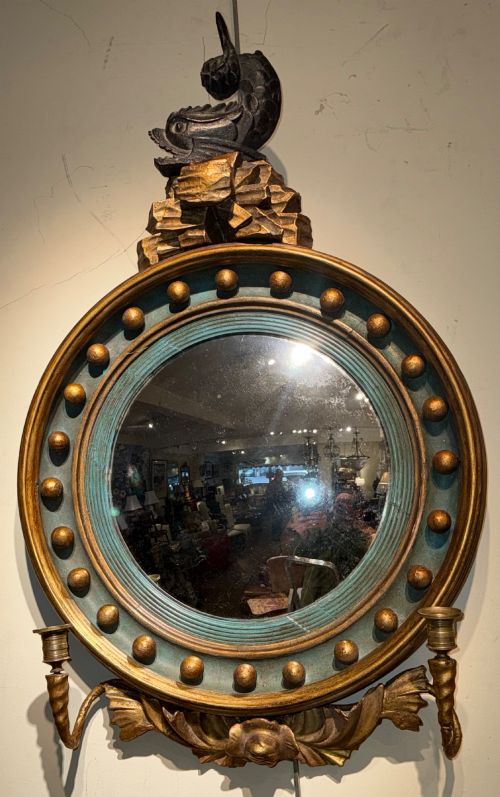
Makers set curved or flat mirror plates into the prepared rebates, frequently utilising mercury glass or early sheet glass that yields natural foxing over time. Structural elements often integrated brass candle arms on girandoles or carved wooden eagles perched above convex circles.
Several convex mirrors keep watch over rooms beneath the fierce gaze of carved wooden eagles.
What varies in quality
The distinction between ordinary and exceptional examples rests upon the crispness of the original wood carving and the depth of the gesso mouldings. Pierced details on eagle surmounts, griffins, and laurel wreaths demonstrate the sculptor's mastery rather than rushed production.
Surface treatment further defines the hierarchy, distinguishing hand-applied oil gilding and well-preserved gold leaf from later opaque repainting. Original mirror plates retaining authentic foxing and silvering contribute significantly to the historical integrity of the piece.
The Regency Period Gilt Mirror Glossary
- Convex mirror
- A circular glass formed with an outward curve that projects a wide, panoramic reflection of the interior space. These pieces often feature spherical ball drops embedded in the surrounding frame.
- Overmantel mirror
- A wide horizontal glass constructed to hang specifically upon the wall space directly above a mantelpiece. Many incorporate triple plates divided by slender colonnettes.
- Gesso
- A dense mixture of chalk and binder applied to wooden frames to create a smooth surface for gilding. It accepts deep carving and intricate detailing before the gold leaf goes on.
- Girandole
- A wall-mounted looking glass equipped with attached candle sconces that project light into the room. The polished metal or glass arms multiply the illumination from flickering flames.
- Foxed plate
- A mirror glass showing speckled degradation and dark spots caused by the breakdown of the backing over decades. Collectors value this natural ageing for the gentle atmospheric blur it creates.
Regency Period Gilt Mirror: Frequently Asked Questions
Where should I hang an overmantel mirror?
These wide landscape mirrors anchor themselves naturally above a chimney breast, reflecting light across the main living space. Their horizontal proportions balance the architectural weight of a fireplace.
Ensure the wall fixings engage securely with structural studs or masonry to support the considerable weight of the timber and heavy glass plate.
How do convex mirrors affect room lighting?
The curved surface gathers light from every angle of an interior, projecting a miniature, fish-eye perspective of the entire room. Placing one opposite a window maximises this bright, illuminating effect.
Historically, sailors and merchants used smaller versions to monitor entire shop floors or parlours from a single stationary vantage point.
How do I identify a genuine Regency giltwood frame?
Examine the layers beneath the gold surface using a magnifying glass to check for traditional gesso over carved timber rather than modern synthetic resin. Period pieces exhibit hand-tooled depth and minor wear consistent with early nineteenth-century use.
Hardware on the reverse, including hand-forged screws and aged pine backing boards, provides further confirmation of age.