

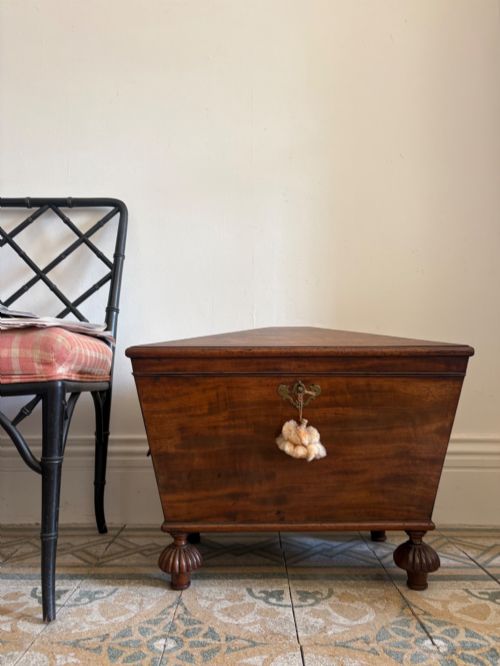


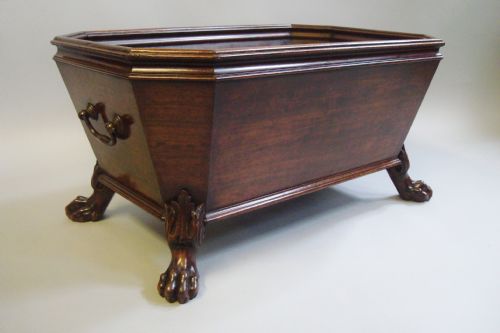


Regency Period Cellarette
A regency period cellarette is a grand receptacle for cooling wine, bringing architectural dignity and polished timber to a dining room.
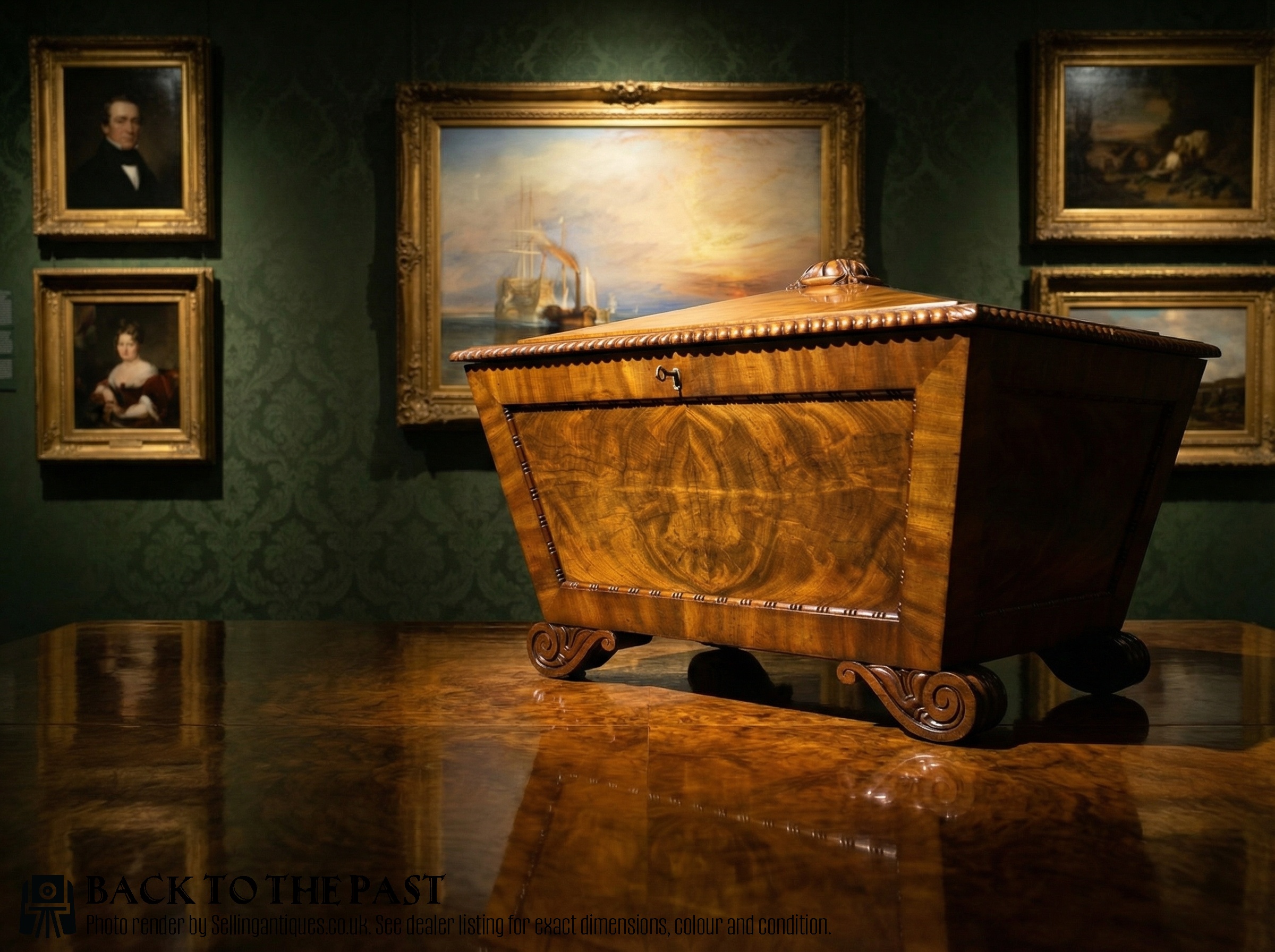
Regency Period Cellarette
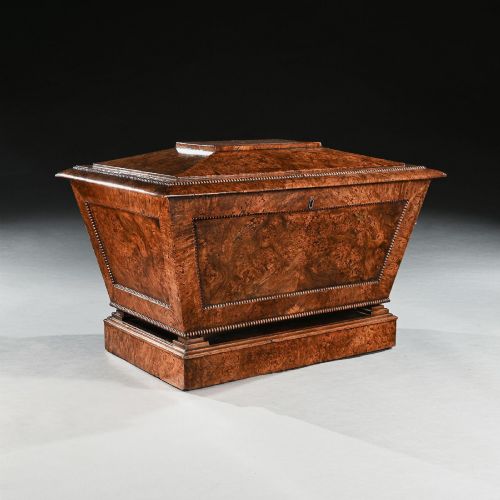
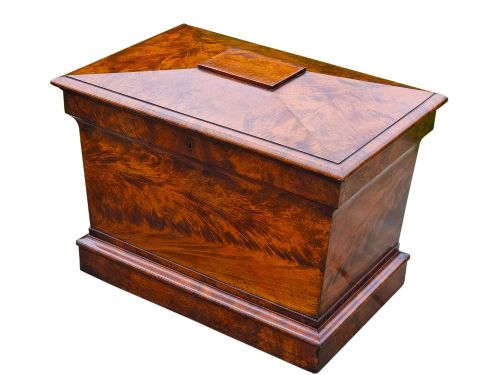
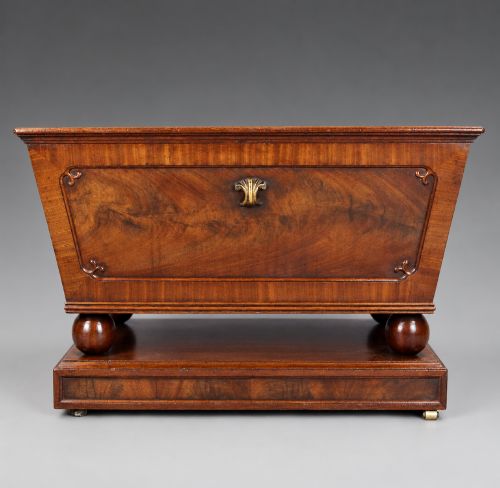
A regency period cellarette takes several distinct shapes on this page, most commonly appearing as a classical sarcophagus form designed to sit beneath a sideboard or in the corner of a formal dining room. These pieces date principally from the Regency era and the wider nineteenth century, capturing the neoclassical taste for robust architectural silhouettes. Buyers encounter examples structured as lidded boxes on paw feet, alongside open wine coolers and occasional hybrid sideboards adapted for the storage of bottles.
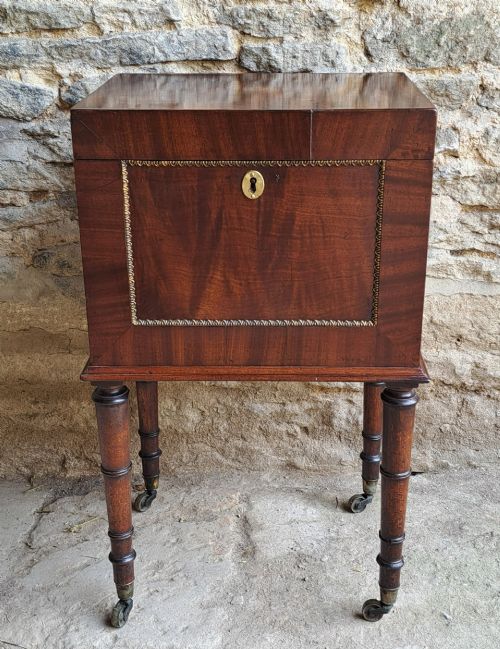
The construction of these vessels reflects the formal dining rituals of the early nineteenth century, where wine was chilled and dispensed directly from portable containers near the table. The records show variations from simple rectangular boxes to architectural forms with reeded legs or inlaid details. While many function strictly as wine coolers, others double as jardinieres or low serving furniture, displaying the versatility demanded by period households.
Measures of Quality
Construction methods further separate standard utility pieces from exceptional commissions. Fine examples show meticulous joinery in the sarcophagus curves, harmonious proportions, and integrated brass carrying handles or armorial details that demonstrate the hand of a skilled workshop.
Regency Period Cellarette Retail Price Guide 2026
Typical asking prices for regency period cellarette among the pieces listed under this phrase on Sellingantiques today, from the lower quarter to the upper quarter. They describe what is for sale here now, not the wider market.
Sarcophagus forms dominate the inventory, accompanied by open wine coolers, low serving buffers, and architectural sideboards.
Thomas Hope
The Regency Period Cellarette Glossary
- Cellarette
- A lockable container or chest designed to hold bottles of wine near the dining table. They frequently incorporate internal partitions and metal linings for ice.
- Sarcophagus
- A monumental container shape tapering slightly toward the base, modelled on ancient stone coffins and favoured by Regency designers for wine coolers.
- Flame mahogany
- Timber cut from the fork of the mahogany tree to produce a distinctive, flickering grain pattern. Cabinetmakers reserved this veneer for the most prominent exterior surfaces.
- Lead liner
- A heavy metal insert fitted inside the cellarette box to hold ice and chilled water without rotting the surrounding wood. Surviving original liners are uncommon.
- Paw feet
- Carved or cast supports shaped like the feet of an animal, often lions or bears, lifting the body of the cellarette off the floor.
Regency Period Cellarette: Frequently Asked Questions
What is a regency period cellarette?
A regency period cellarette is a specialised wooden container used during the early nineteenth century to cool and store wine bottles within the dining room.
These pieces typically feature lidded boxes or sarcophagus shapes, often lined with lead or zinc to hold ice alongside the glassware.
How were cellarettes used?
Servants filled the internal metal compartments with ice and water to chill wine before serving it to guests during formal meals.
They stood beneath sideboards or in room corners, keeping the bottles secure and accessible without requiring trips to the cellar.
What timber is most common?
Mahogany is the primary wood found across these listings, frequently utilised in its figured flame variety to create dramatic visual movement on the exterior.
Cabinetmakers also worked in pollard oak, burr elm, padouk, and walnut, sometimes adding boxwood inlay for contrast.
How do I spot an original liner?
Original metal liners are constructed from heavy sheet lead or zinc, often fitted with internal divisions to keep bottles separated from melting ice.
Because moisture caused decay over decades, many examples have lost their original linings or received modern replacements.