



Regency Period Buffet
A regency period buffet brings architectural dignity and formal dining utility to a room through rich mahogany timbers and restrained classical lines.

Regency Period Buffet
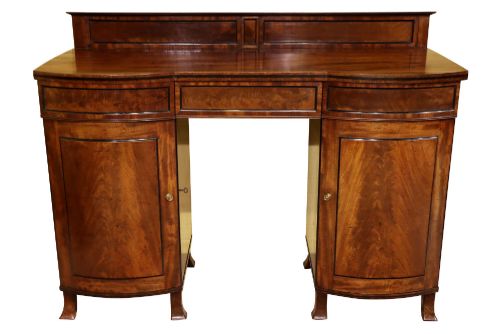
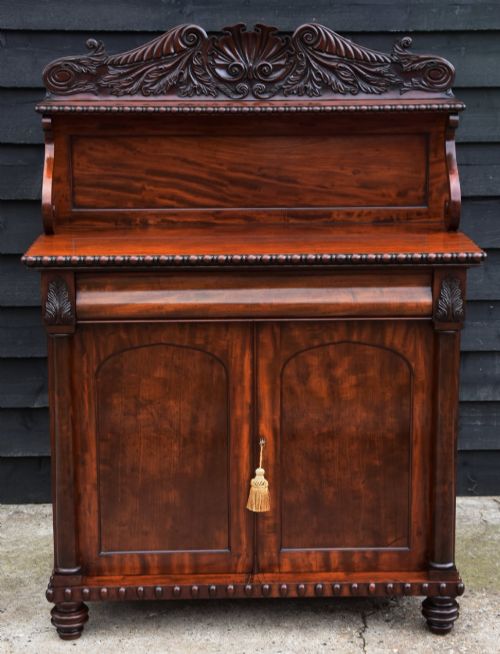
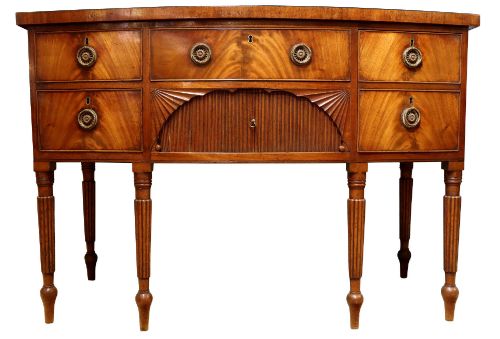
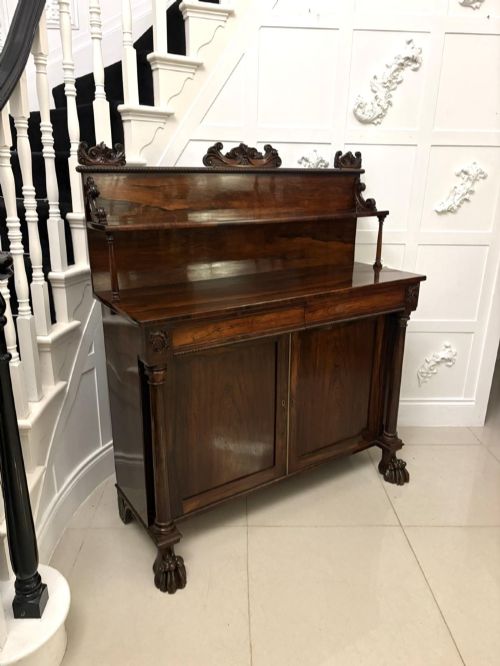
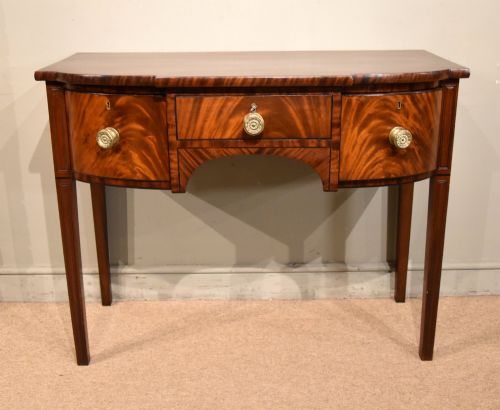
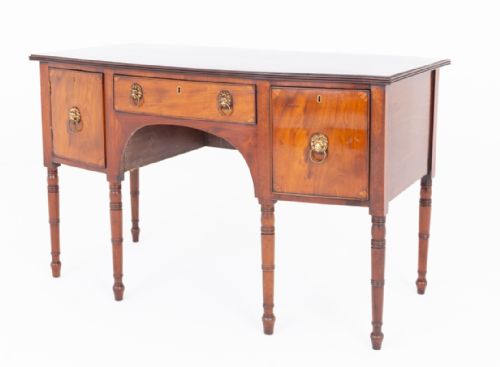
A regency period buffet serves as a formal dining room storage piece, encompassing sideboards, serving tables, side cabinets, and chiffoniers from the early nineteenth century. You are most likely to encounter mahogany sideboards featuring bow fronts or pedestal formats alongside smaller chiffoniers and multi-tiered serving tables.
The objects span periods from the Georgian era through the Regency and into George IV, William IV, and Victorian revivals. Makers constructed them primarily for dining spaces to hold silver, linen, and serving dishes during elaborate meals.
Forms vary from simple rectangular serving tables to large inlaid flame mahogany sideboards with brass galleries and drop well pedestals. The lineage connects closely to cabinet makers working within the classical revival idiom of the early eighteen hundreds.
What varies in quality
The selection of timber dictates much of the visual appeal, separating standard mahogany boards from deeply figured flame mahogany and richly grained rosewood veneers. Superior examples display careful book-matching across drawer fronts and doors, ensuring the grain patterns mirror each other symmetrically.
Construction methods and hardware refinement set finer pieces apart, seen in the precision of inlaid brass stringing and the weight of cast brass mounts. Well-executed pedestal formats and drop well designs require advanced joinery that maintains structural integrity while supporting heavy timber tops.
Regency Period Buffet Retail Price Guide 2026
Typical asking prices for regency period buffet among the pieces listed under this phrase on Sellingantiques today, from the lower quarter to the upper quarter. They describe what is for sale here now, not the wider market.
Listings feature mahogany, rosewood, and mirror glass across pieces dated from the Georgian era through to the Victorian period.
Gillows
The Regency Period Buffet Glossary
- Chiffonier
- A low cabinet featuring shelving or doors below, commonly utilised for storing tableware or displaying decorative items in the dining room or parlour.
- Pedestal sideboard
- A large dining room storage form featuring flanking pedestals connected by a central counter or recess, often detailed with brass galleries.
- Flame mahogany
- A highly figured veneer cut from the branch forks of the mahogany tree, prized for its swirling, flame-like grain patterns.
- Dumb waiter
- A multi-tiered serving stand with rotating or fixed shelves designed to hold dishes and glasses without requiring constant servant attendance.
- Drop well
- A depressed central section within the top surface of a sideboard designed to secure serving platters or prevent items from sliding.
Regency Period Buffet: Frequently Asked Questions
What is a regency period buffet used for?
These pieces function primarily as dining room servers for holding dishes, silverware, and linens during formal meals.
Today, they serve as substantial sideboards or display surfaces in living areas and hallways.
How do I identify a regency period buffet?
Look for classical proportions, mahogany or rosewood timbers, and decorative elements like brass galleries or flame veneer.
Periods span the early nineteenth century, drawing on Georgian architectural restraint and classical revival motifs.
Where should I place a buffet?
Dining rooms remain the traditional location, providing immediate access to serving ware and flatware.
Open hallways and large living spaces also accommodate the deeper pedestal formats and smaller chiffoniers.
What is the difference between a sideboard and a chiffonier?
Sideboards provide wide, long surfaces with extensive drawer and cupboard storage designed specifically for dining rooms.
Chiffoniers are typically more compact cabinets, sometimes featuring raised shelves or mirror glass for parlour use.