

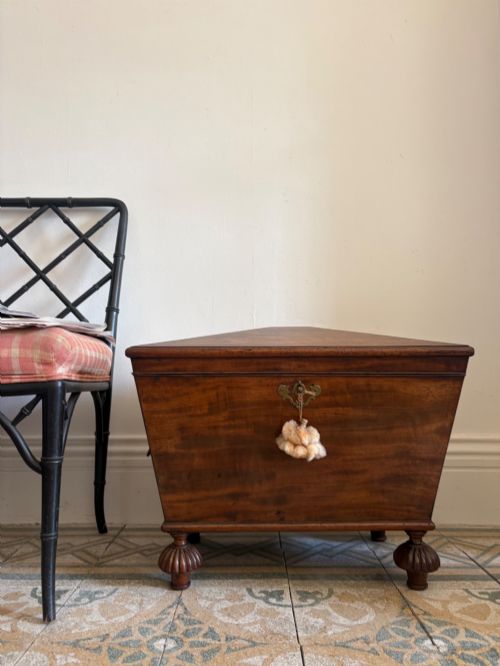


Regency Period Box
A regency period box brings architectural restraint and rich timbers like rosewood and flame mahogany straight into modern interiors.
Regency Period Box
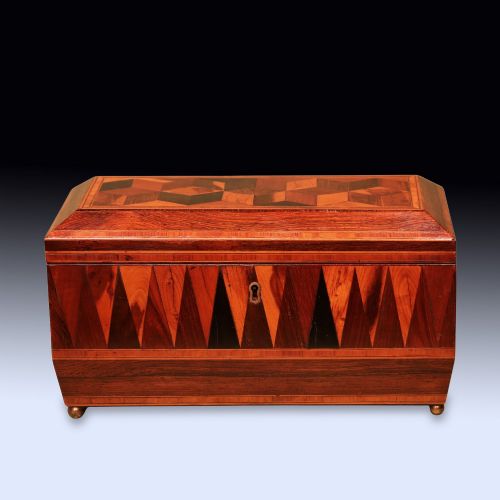
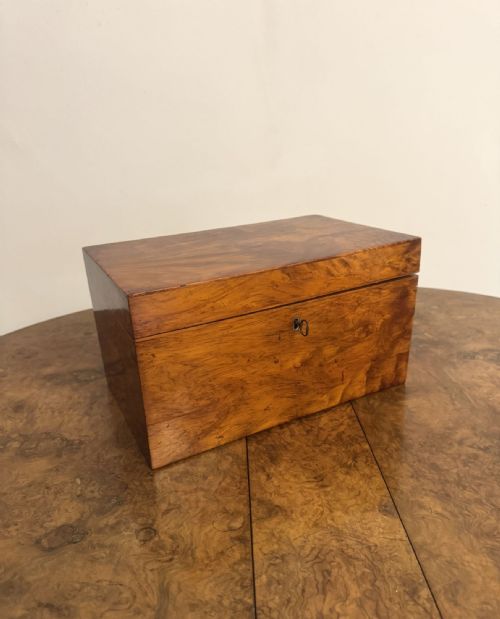
A regency period box encompasses small portable containers designed for writing, sewing, correspondence, and holding valuables during the early nineteenth century. When searching for a regency period box, buyers most frequently encounter rosewood or mahogany tea caddies, writing slopes, and work boxes finished with precise brass inlay. These pieces reflect the architectural forms popular during the Georgian, George IV, and Regency eras.
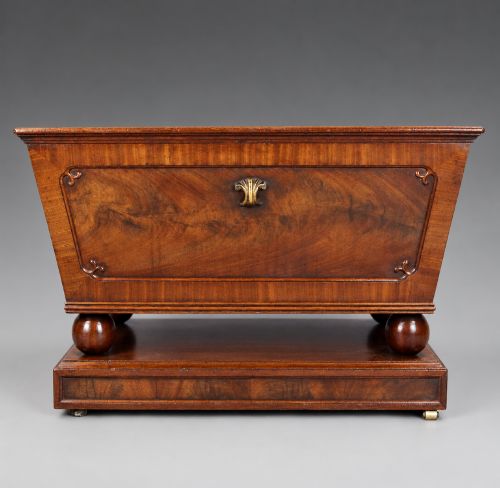
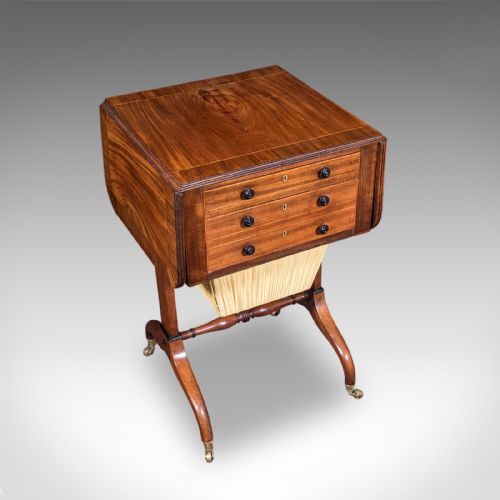
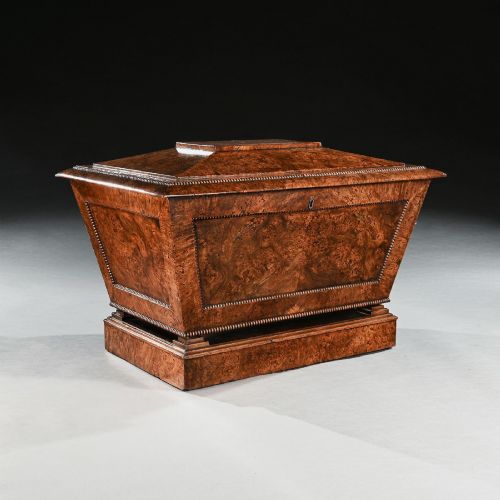
The objects range from compact desktop caskets and penwork games boxes to larger sarcophagus-shaped cellarettes and work tables. Many retain fitted interior compartments lined with fabric or bone, intended to organise domestic tasks or precious items. The design vocabulary draws on classical restraint, often incorporating clean lines and contrasting veneers.
How they were made
Cabinetmakers utilised dense native and exotic timbers, framing carcasses in mahogany, rosewood, satinwood, pollard oak, and burr elm. Artisans frequently selected figured flame veneers to create striking symmetrical patterns on lids and facades.
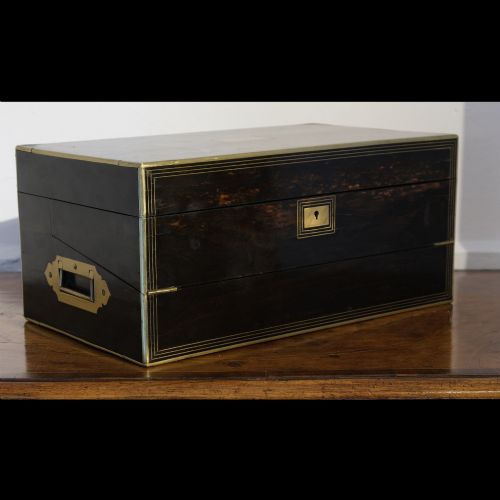
Surface decoration relied on precision metalwork and surface staining rather than heavy carving. Craftsmen inlaid brass stringing and cut-brass motifs into the wood, alongside delicate penwork illustrations and contrasting ebony edgings.
One desktop box contains the intricate apparatus of a medical cupping set, ready for nineteenth-century emergencies.
What varies in quality
The standard of a regency period box rests on the selection of timber and the precision of the cabinetwork. Superior examples display uninterrupted grain alignment across joints and meticulously fitted internal trays with intact compartments.
Execution of brass inlay and decorative banding dictates the tier of craftsmanship. Finer pieces maintain crisp, flush metalwork and original locking mechanisms with working keys, whereas lesser items show gaps in veneer and simplified interior fittings.
John Millikin·Thomas Hope·Gillows of Lancaster·Dollond
The Regency Period Box Glossary
- Writing slope
- A desktop box featuring a hinged sloping lid that opens to reveal a slanted surface for correspondence and hidden compartments for ink and pens.
- Sarcophagus
- A box or cellarette form characterised by a domed or tiered lid and a tapered body resembling a classical stone coffin.
- Tea caddy
- A small container originally built with internal lidded canisters to store loose tea leaves securely under lock and key.
- Penwork
- A decorative technique utilising fine ink drawing on light woods, often depicting classical scenes or geometric patterns before varnishing.
- Brass inlay
- The practice of recessing thin strips or cut designs of brass into the wooden surface of furniture and boxes to create linear contrast.
Regency Period Box: Frequently Asked Questions
What were tea caddies used for?
Tea caddies served as secure storage containers for expensive loose tea leaves during a period when tea was a luxury commodity. They typically featured internal partitions or separate canisters and were fitted with locks to prevent household servants from accessing the contents.
Over time, these boxes evolved in shape from simple straight-sided chests to sarcophagus and octagonal forms. They sat prominently on the sideboard or tea table during formal gatherings.
How do I identify a writing slope?
A writing slope opens along a central hinge to form a slanted writing desk, often covered in leather or velvet. The interior contains small compartments for inkwells, pens, and paper, frequently concealed beneath a removable writing surface.
Externally, these boxes present a rectangular profile with brass carrying handles and corner mounts. They were designed for portability, allowing travellers to maintain correspondence away from home.
What is a cellarette?
A cellarette functioned as a freestanding or desktop container for cooling and storing wine bottles in the dining room. Interiors often retained lead linings or compartmentalised inserts designed to hold bottles steady alongside ice.
These pieces mirror the heavy architectural styling of the era, frequently taking sarcophagus or rectangular shapes. They utilise dense timbers like mahogany and oak to maintain internal temperatures.
How do I care for rosewood boxes?
Rosewood boxes require stable environmental conditions away from direct sunlight and central heating sources to prevent timber shrinkage and veneer cracking. Regular dusting with a soft, dry cloth maintains the polished finish without the need for heavy modern polishes.
Waxing should be applied sparingly and only when the wood appears dry. Maintaining consistent humidity levels protects both the exterior veneers and the delicate internal fabric linings.