

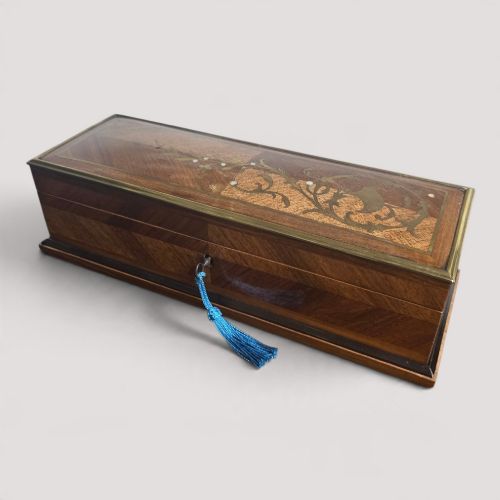
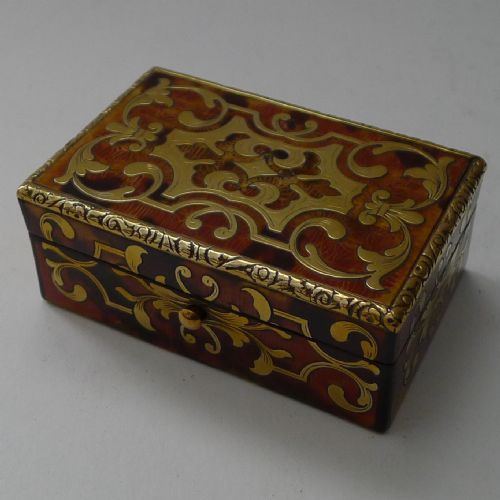


Brass Marquetry Casket
These brass marquetry caskets are timber boxes inlaid with intricate metalwork, prized for their refined surface decoration and period elegance.
Brass Marquetry Casket
A brass marquetry casket is a decorative wooden container embellished with metal inlay, frequently encountered in forms such as tea caddies, jewellery boxes, and document cases. These items date primarily from the Regency and Victorian periods, reflecting the fine cabinet-making skills of the nineteenth century.
The versions most commonly met on this page combine dark timbers like rosewood with gleaming brass or tortoiseshell work. They served practical domestic roles in affluent households before evolving into collectible display pieces.
Origin styles range from English Regency work to French Napoleon III pieces, including Boulle-work examples. Each piece demonstrates the period preference for combining utility with ornate surface artistry.
Materials and construction
Caskets of this type are constructed using dense foundation woods such as rosewood, walnut, or satinwood. Craftsmen then applied thin veneers to the exterior surfaces to provide a stable base for subsequent decoration.
The distinctive brass marquetry and cut brass inlay were precision-sawn and fitted flush into the wooden ground, often accompanied by tortoiseshell in the French Boulle tradition. Steel components frequently appear in internal locks, hinges, and fitted compartments.
Brass Marquetry Casket Retail Price Guide 2026
Typical asking prices for brass marquetry casket among the pieces listed under this phrase on Sellingantiques today, from the lower quarter to the upper quarter. They describe what is for sale here now, not the wider market.
Several boxes on this site are ballot boxes, proving that nineteenth-century voting could involve rosewood and brass.
Judging quality and execution
Superior examples display absolute precision in the cutting and fitting of the metal inlay against the wood or tortoiseshell ground, leaving no visible gaps. The complexity of the brass patterns and the depth of the timber grain dictate the upper tier of execution.
The integrity of the internal fittings, such as original velvet linings or compartments, distinguishes high-status boxes made for jewellery or tea. Furthermore, the crispness of the exterior brass engraving indicates the level of artisan skill invested in the piece.
Lund Of Cornhill
The Brass Marquetry Casket Glossary
- Boulle work
- A style of marquetry using brass and tortoiseshell developed in France. It creates a rich, contrasting surface pattern.
- Marquetry
- The art of applying pieces of veneer to a structure to form decorative patterns. It requires meticulous hand-cutting and fitting.
- Tea caddy
- A box designed specifically for storing dry tea leaves securely. They often featured internal lidded canisters and lockable lids.
- Veneer
- A thin layer of superior wood applied to a commoner wood base. This technique allowed makers to utilise highly figured timber efficiently.
Brass Marquetry Casket: Frequently Asked Questions
What is a brass marquetry casket?
A brass marquetry casket is a nineteenth-century wooden box decorated with precise metal inlay. These items were built to hold valuables, documents, or tea.
They represent the intersection of functional carpentry and decorative metalwork from the Regency and Victorian eras.
How were these boxes used?
Original owners used them to store jewellery, letters, sewing equipment, or tea leaves. Many included fitted interiors with compartments and small locks.
Today, they function primarily as decorative objects or secure desktop storage for small personal items.
How do I distinguish French and English styles?
English pieces often feature restrained cut brass inlay set directly into dark rosewood. French examples frequently employ Boulle work, incorporating tortoiseshell alongside the brass.
Cabinet-making techniques and proportions also shift between English Regency workshops and French Napoleon III productions.
How do I care for rosewood and brass?
Keep these boxes away from direct sunlight and sudden temperature changes to protect the timber veneer and metal inlay. Gentle dusting with a dry cloth is sufficient for maintenance.
Avoid using liquid polishes that might seep beneath the brass work or damage old finishes.