




Regency Period Accent Chairs
Regency period accent chairs combine classical lines with refined seating, bringing architectural grace and comfort to a room.
Regency Period Accent Chairs
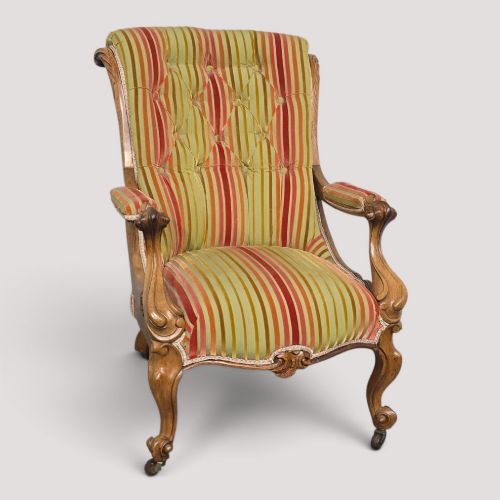
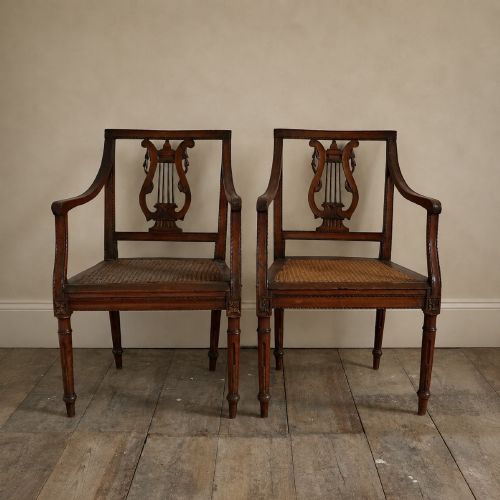
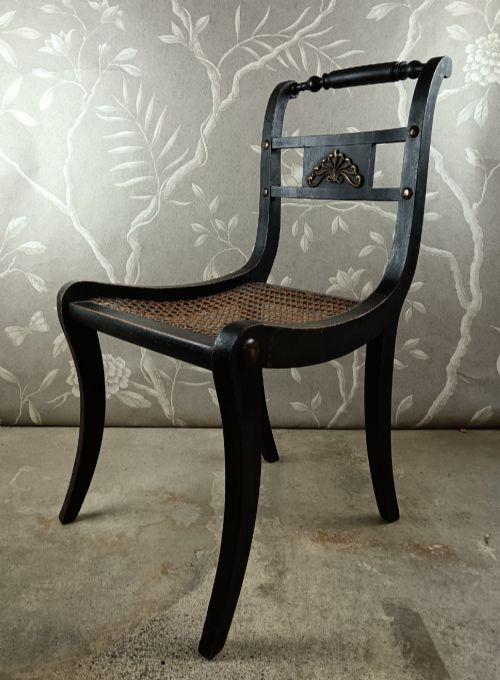
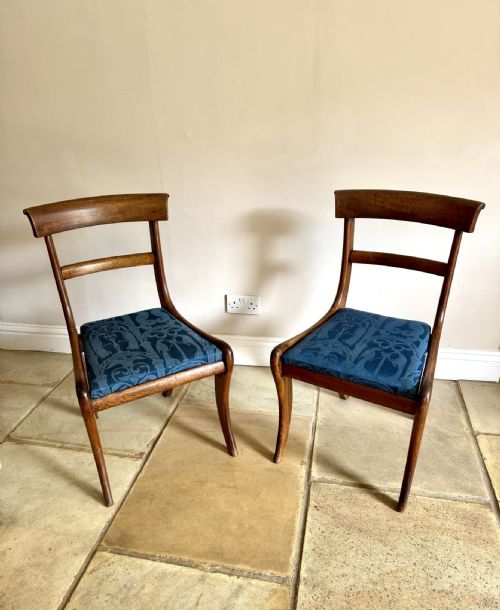
Regency period accent chairs encompass armchairs, side chairs, and occasional seating shaped by the neoclassical tastes of the early nineteenth century. When searching for regency period accent chairs, buyers meet mahogany, fruitwood, and ebonised frames paired with cane seats or upholstered pads.
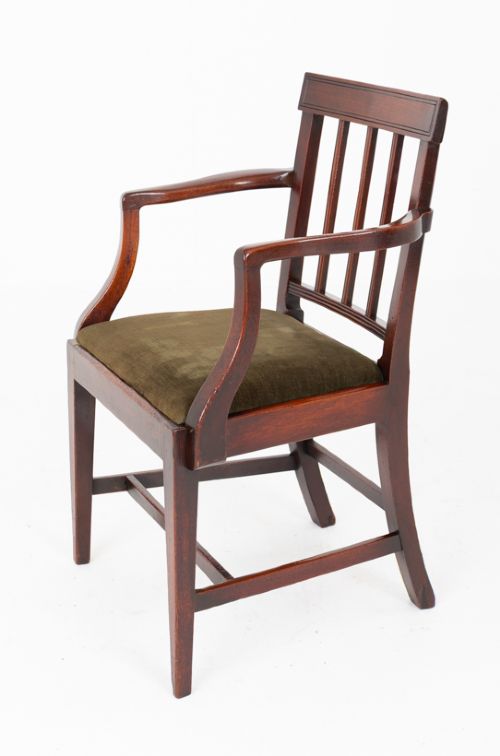
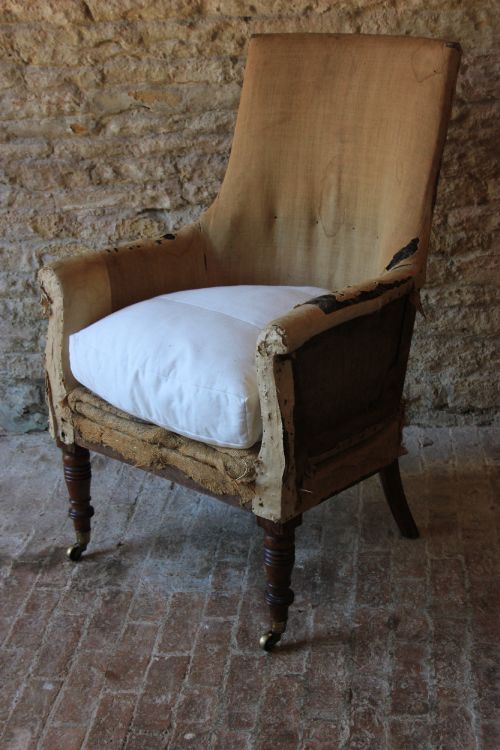
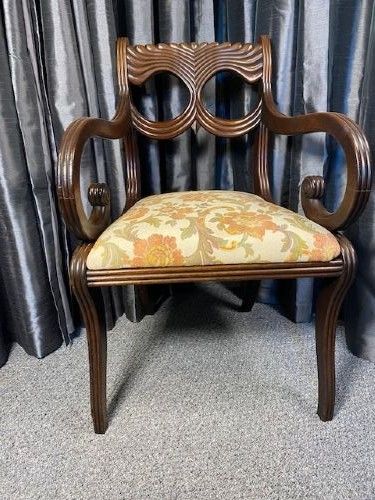
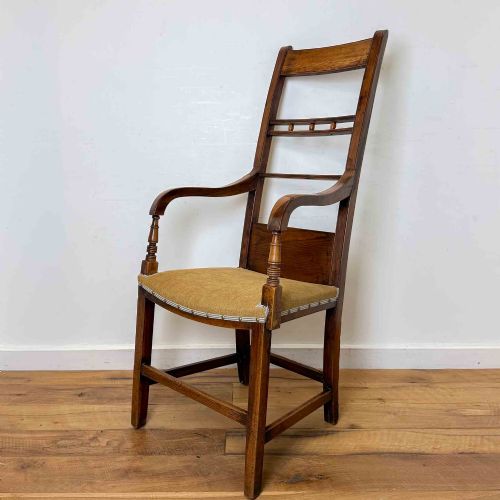
The selections span library armchairs, bergères, and hall chairs dating primarily from the Regency era alongside related Georgian and nineteenth-century pieces. Dining chairs and carvers also appear frequently, serving as versatile seating options for drawing rooms and studies.
Materials and construction methods
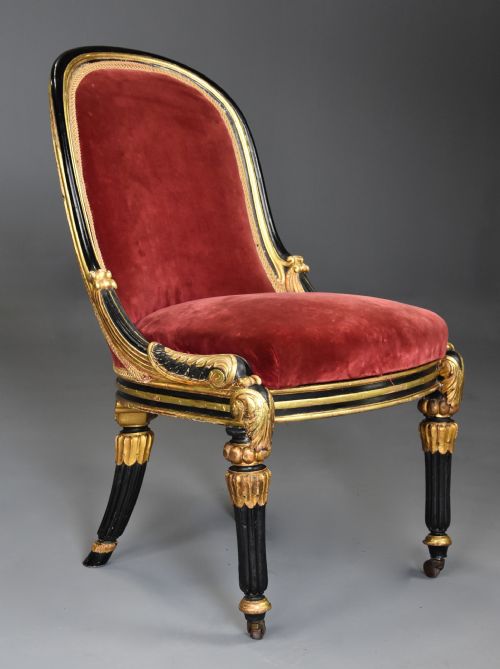
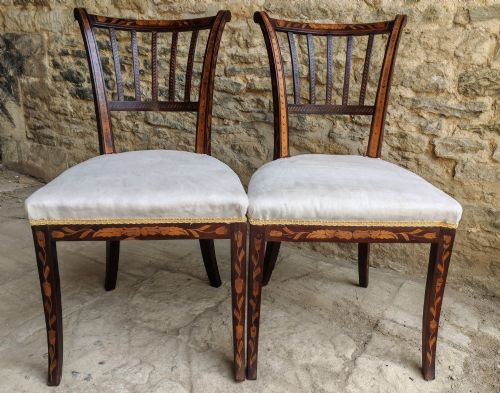
Cabinetmakers utilised dense timbers including mahogany, walnut, fruitwood, and oak, often applying paint, faux rosewood finishes, or gilding to the surfaces. Brass inlay and marquetry enrich many of the frames, reflecting the ornamental ambitions of the period.
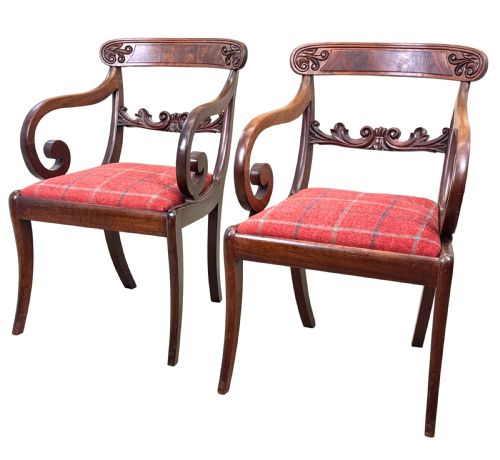
Seating constructions rely heavily on woven cane panels, alongside textile upholstery in velvet and needlepoint. Sabre legs, turned supports, and carved details such as lyre backs define the structural joinery of the form.
Some chairs incorporate painted bamboo, proving that early nineteenth-century designers embraced botanical novelty with genuine enthusiasm.
Distinctions in craftsmanship
The refinement of the carving and the precision of the brass inlay distinguish standard workshop production from finer cabinet work. Crisp ebonising and well-preserved giltwood surfaces indicate superior original execution.
The Regency Period Accent Chairs Glossary
- Sabre leg
- A concave sweeping leg that tapers toward the foot, characteristic of Regency seating design. This form borrows from ancient Greek klismos chairs.
- Bergère
- An enclosed upholstered armchair with closed sides, often featuring cane panels. These seats provided comfort in early nineteenth-century drawing rooms.
- Carver
- An armchair designed to match a set of dining chairs, typically positioned at the table ends. Such chairs feature supportive armrests integrated into the back design.
- Ebonised
- Timber finished to resemble ebony through staining or painting. This dark treatment highlights classical gilt decoration and brass mounts.
Regency Period Accent Chairs: Frequently Asked Questions
What defines a regency period accent chair?
These chairs display classical restraint, clean architectural lines, and decorative elements inspired by ancient Rome and Greece. Sabre legs, brass inlay, and reeded frames frequently distinguish the design.
They appear across various forms including library armchairs, hall chairs, and occasional seating tailored for drawing rooms and bedrooms.
How were these chairs originally used?
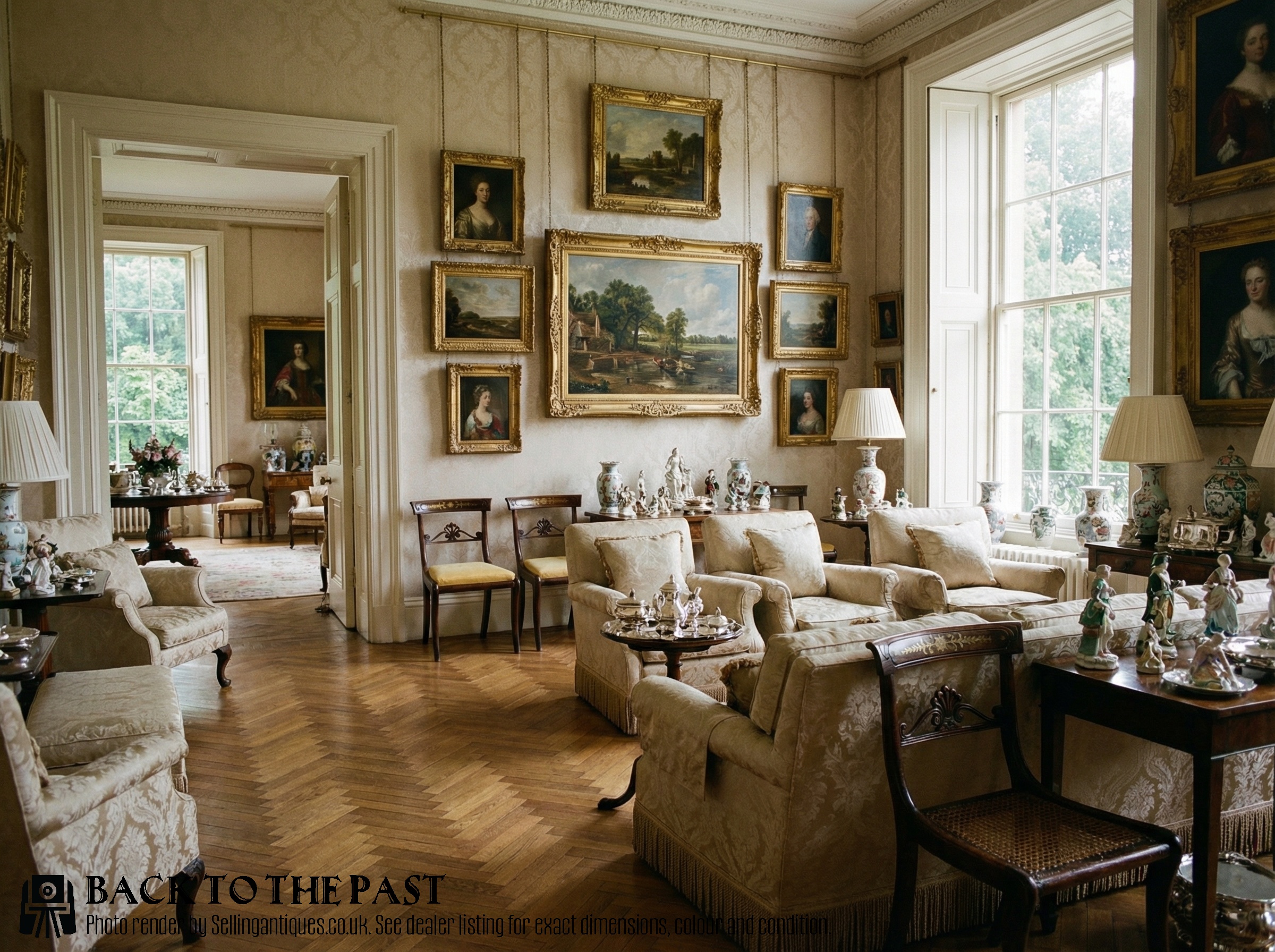
Homeowners placed them in libraries, drawing rooms, and hallways as functional seating that also signalled social standing. Lighter occasional and slipper chairs moved easily around domestic spaces for reading or conversation.
Heavier library armchairs remained stationary beside desks and bookshelves for extended study.
How do I care for antique wood and cane?
Keep the timber nourished with appropriate wax polishes and protect natural cane from excessive dryness to prevent snapping. Stable room temperatures preserve both the glue joints and the delicate painted surfaces.
Avoid placing antique seating near direct heat sources or in strong sunlight.
Are these chairs suitable for daily use?
Many sturdy mahogany and elm examples support regular daily sitting when structurally sound. Lighter painted, gilded, or delicate cane variants require more careful handling to preserve their historic surfaces.
Checking the joints and frame stability ensures safe integration into modern living spaces.