


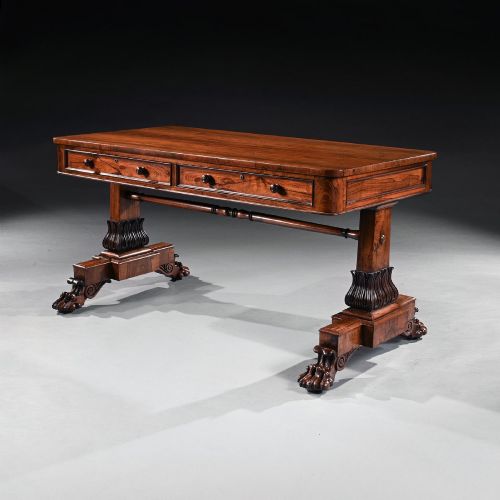
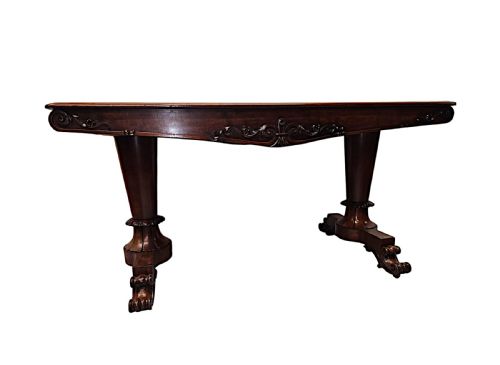
Regency Pedestal Writing Table
A regency pedestal writing table brings architectural proportion and figured timber to a study, offering a stable central workspace grounded by pedestals.
Regency Pedestal Writing Table
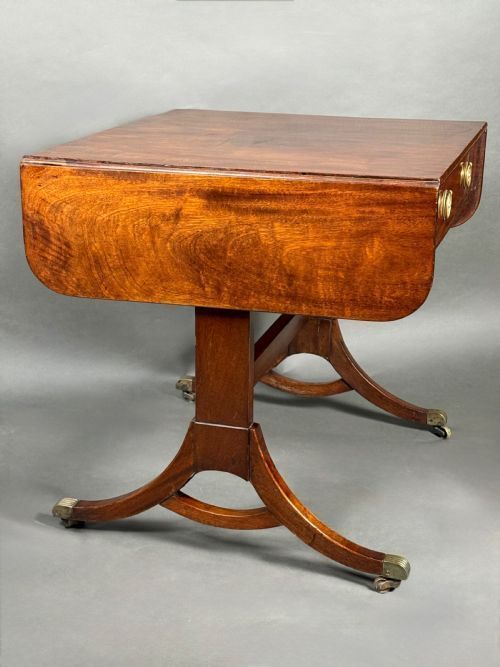
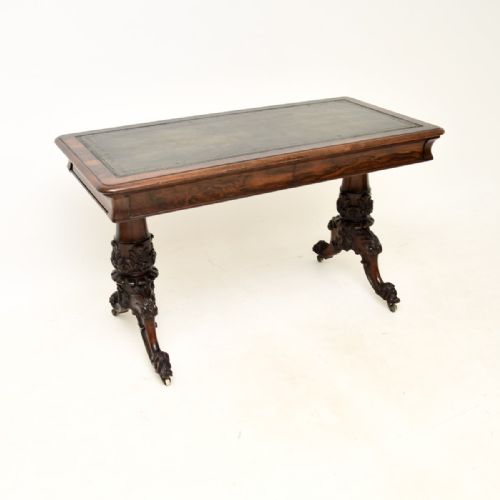
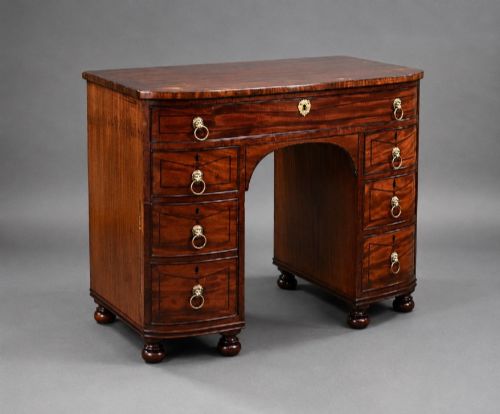
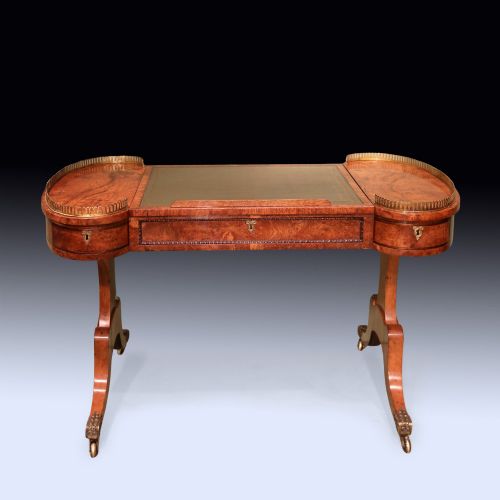
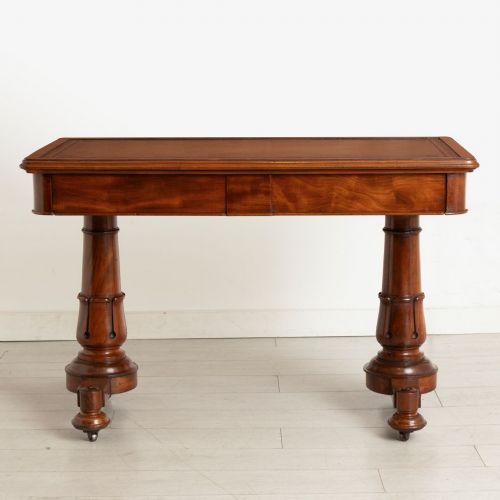
A regency pedestal writing table is a substantial form designed for the library or study, appearing in periods from the Georgian era through to the early Victorian years. These pieces often feature leather-inset tops above twin pedestals or a central column, accompanied by sofa tables and drum tables in the broader groupings.
The materials span rich timbers like mahogany, rosewood, burr oak, and goncalo Alves, frequently accented with brass details. You will encounter examples from the Regency, George IV, and William IV periods, reflecting the heavy influence of classical design.
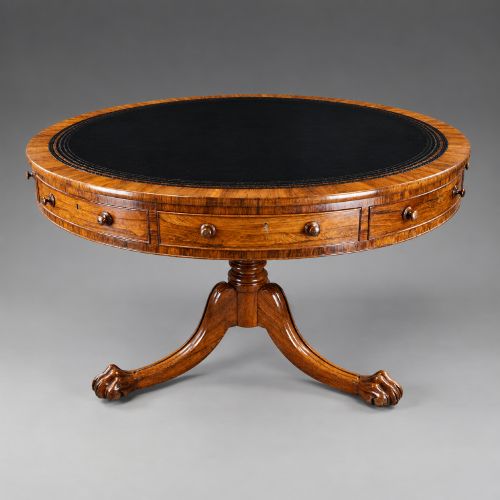
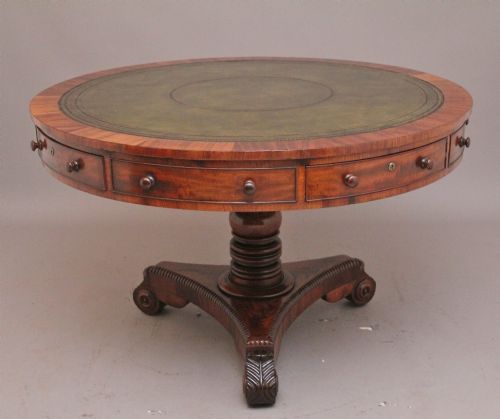
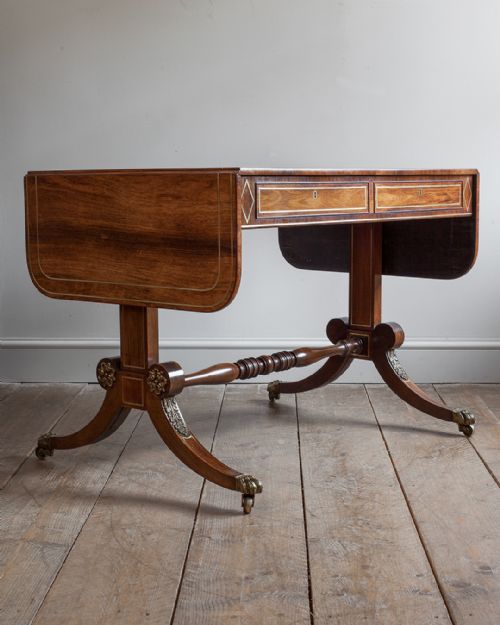
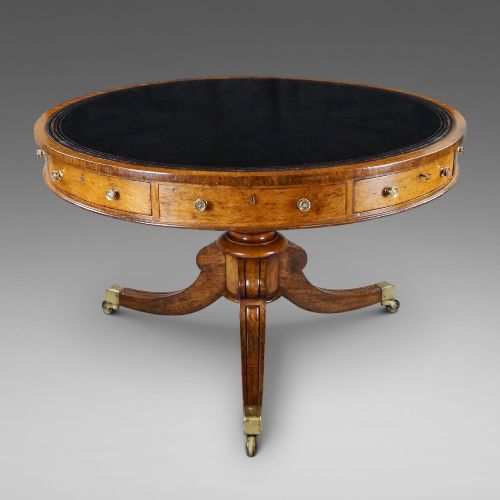
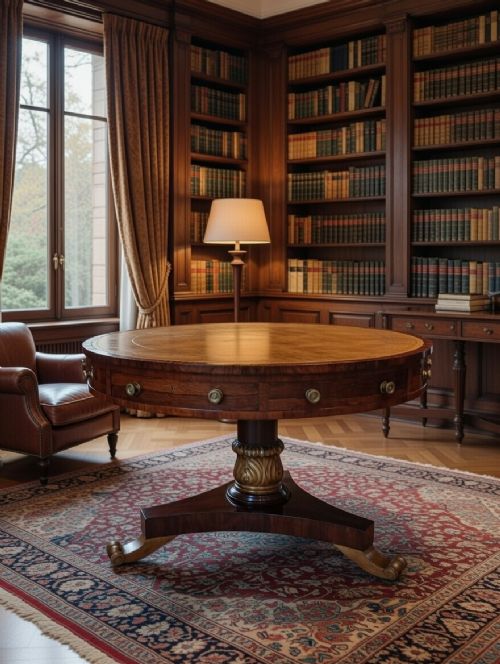
Forms vary from double-pedestal library tables to rotating drum tables and drop-leaf sofa tables. The construction prioritises utility combined with formal elegance, serving as the focal point of a room.
How they were made
Cabinetmakers utilised dense native and exotic hardwoods such as mahogany and rosewood, often selecting figured veneers for top surfaces and drawer fronts. Solid oak and mahogany formed the internal drawer linings and structural carcases.
Details were rendered through brass inlay, ebony stringing, and hand-carved elements like lion paw feet. Leather tops were typically tooled and gilt-embossed to provide a smooth writing surface.
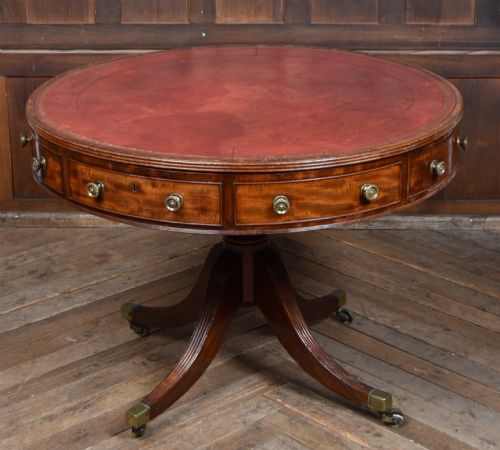
Rotating drum tables let you reach your stationery without ever leaving your seat.
What varies in quality
Quality rests in the choice of timber figure, the crispness of carved wooden details, and the integrity of the secondary woods used underneath. Finer pieces demonstrate superior timber selection for matching grain patterns across large expanses.
The refinement of brass mounts and the execution of mechanical elements, such as rotating drum mechanisms or smoothly operating drawers, distinguish standard cabinet work from superior productions.
Williams and Gibton·Gillows of Lancaster
The Regency Pedestal Writing Table Glossary
- Pedestal
- A structural support base holding the weight of the table top. These often take the form of columns, columns on plinths, or twin pedestals.
- Drum table
- A circular library table containing a frieze of drawers around its circumference. It usually rotates upon a central pillar and platform base.
- Sofa table
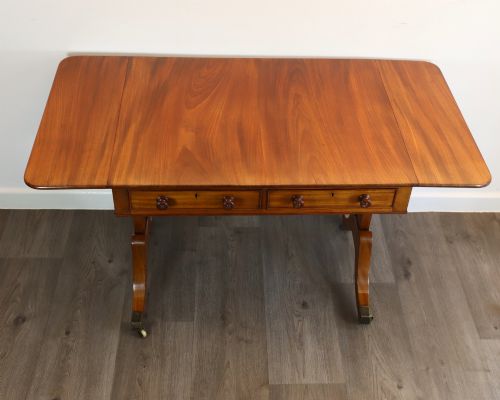
- A rectangular drop-leaf table designed to stand in front of a sofa. They typically feature two short drawers and dual pillar supports.
- Stringing
- Thin inlay lines of contrasting wood or metal set into the surface of a piece. Ebony stringing was common on mahogany surfaces during the Regency period.
- Goncalo Alves
- A dense exotic hardwood with distinctive contrasting grain patterns. It was occasionally utilised for high-status library tables.
Regency Pedestal Writing Table: Frequently Asked Questions
Where should I place a library table?
A library table functions best as a freestanding centrepiece in a room rather than pushed against a wall, allowing access from all sides.
Because these pieces are finished on all four sides, they command floor space in studies, libraries, or spacious reception rooms.
How do I care for leather writing surfaces?
Leather inserts require occasional treatment with specialist leather balms to maintain flexibility and prevent cracking over time.
Avoid placing damp items directly onto the surface and keep them away from direct heat sources to protect the underlying timber and hide.
What is the difference between a sofa table and a library table?
Sofa tables are smaller, rectangular, and feature drop leaves on either side, originally intended to sit near seating furniture.
Library tables are larger, fixed-top writing surfaces meant for central room placement, often incorporating pedestals and multiple drawers.
How do I distinguish George IV from William IV furniture?
George IV pieces generally retain a lighter, refined neoclassical grace with delicate brass inlay and restrained carving.
William IV furniture tends towards heavier, bolder proportions with massive scrollwork, heavier pedestal bases, and rich rosewood veneers.