
Regency Open Bookshelf
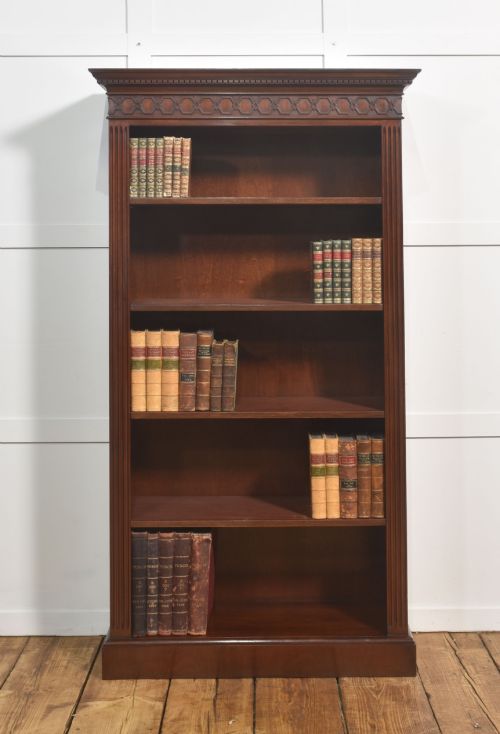
A regency open bookshelf brings low, clean lines and rich timber into a room, offering accessible display for a working library.
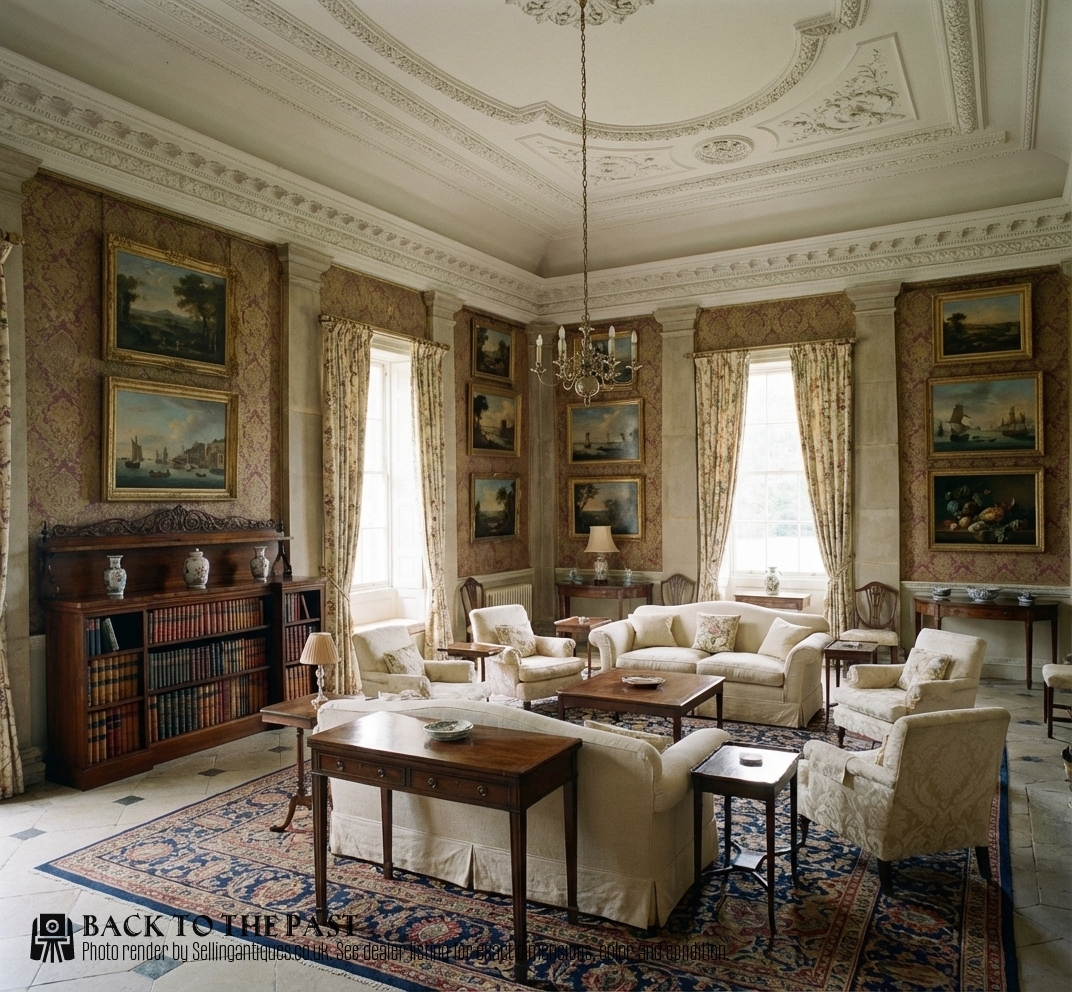
Regency Open Bookshelf
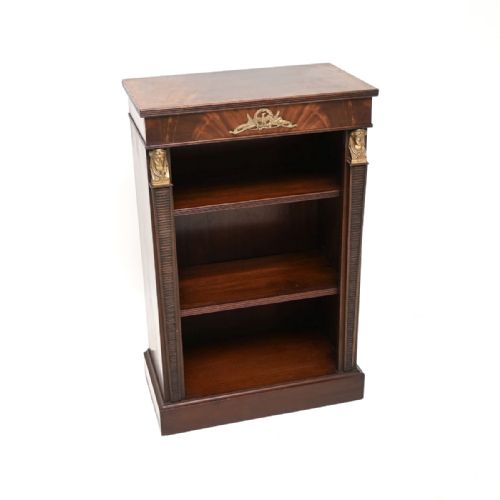
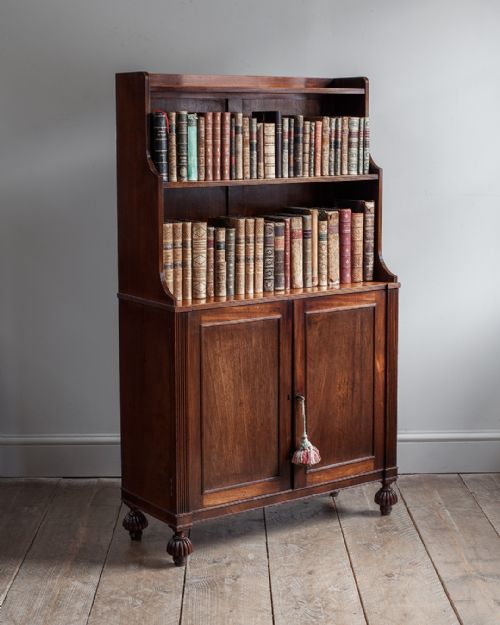
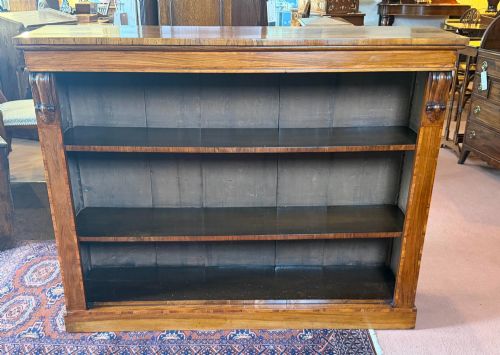
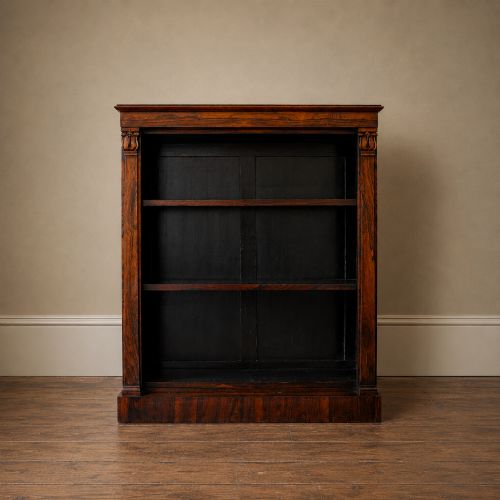
A regency open bookshelf is defined by its low profile and unglazed front, designed to keep volumes within arm's reach rather than behind locked glass doors. These pieces appear across several distinct eras in the record, spanning the nineteenth century alongside later revivals from the twentieth century.
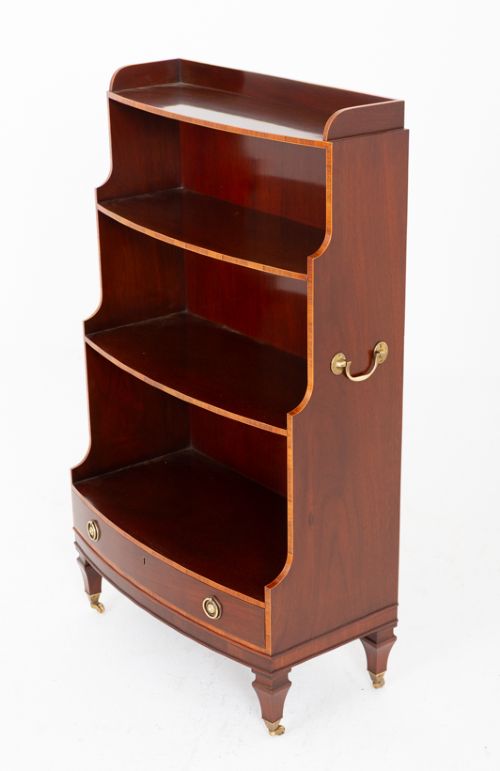
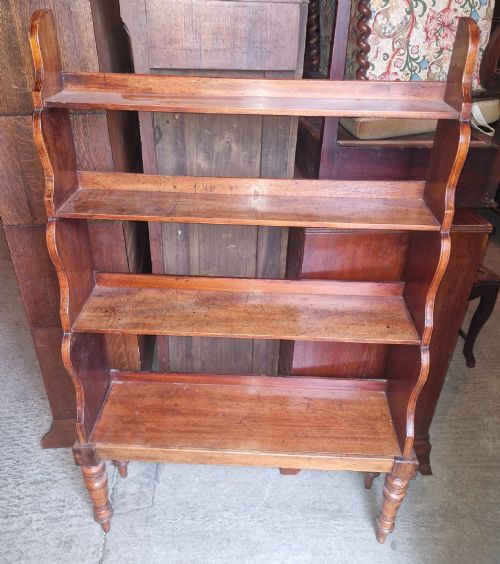
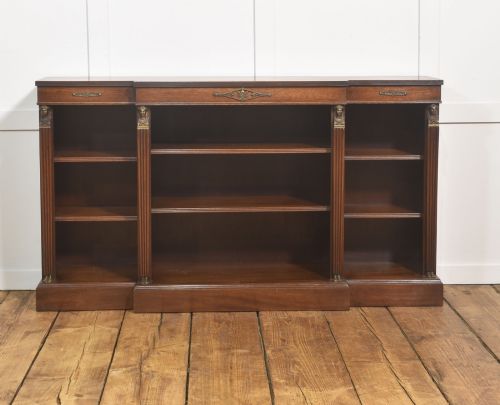
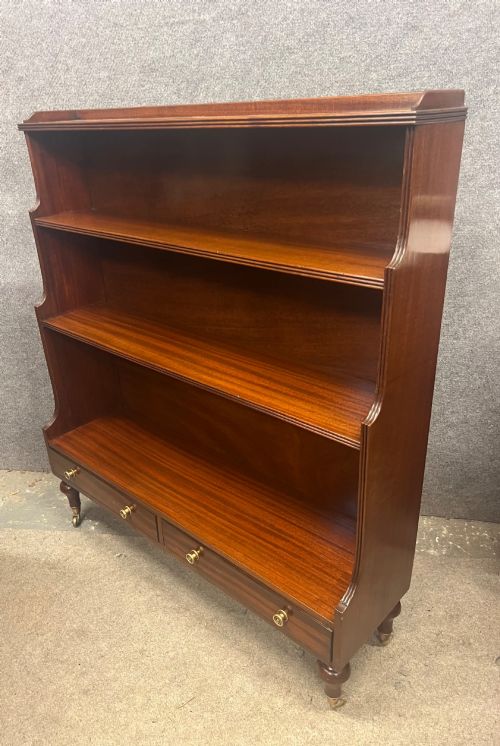
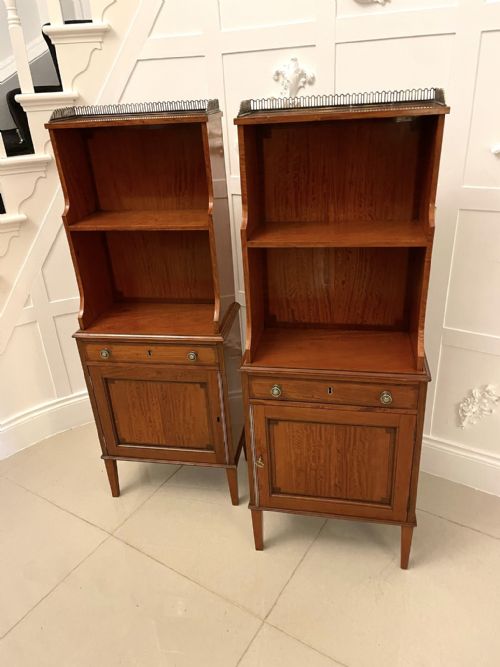
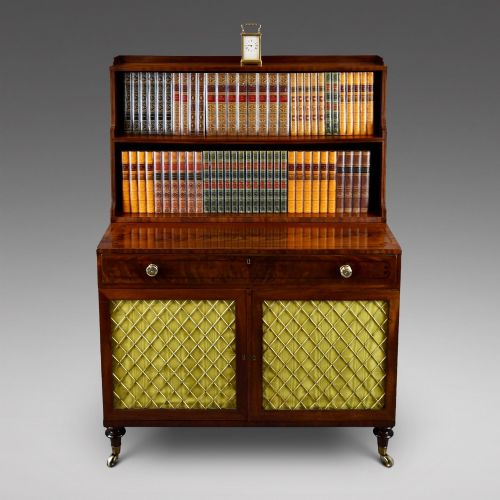
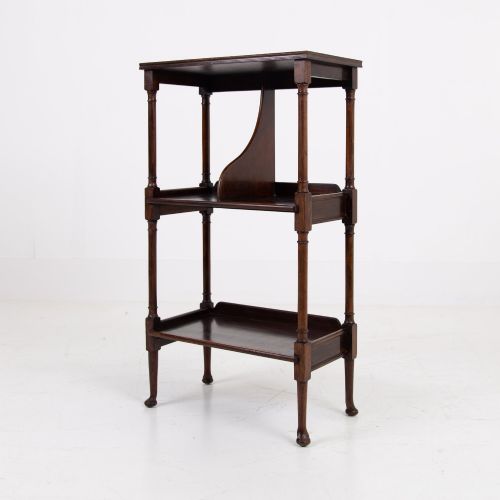
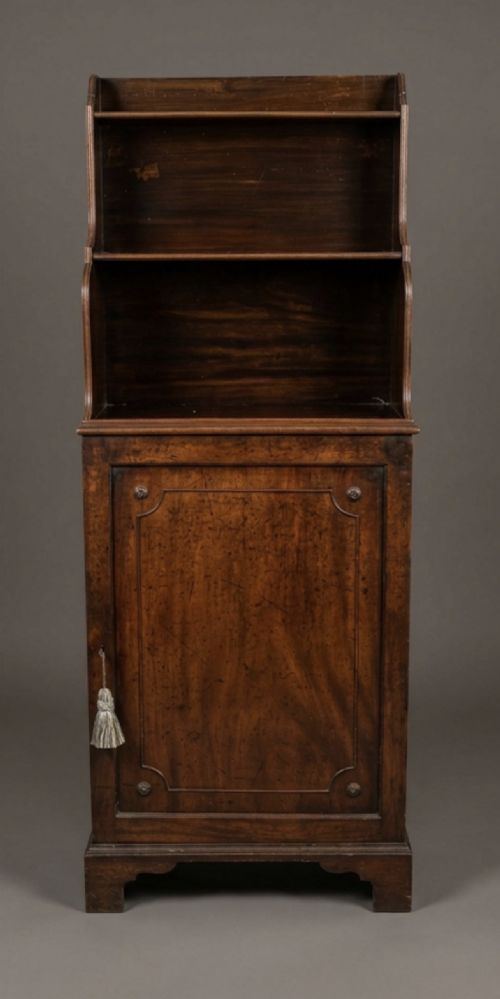
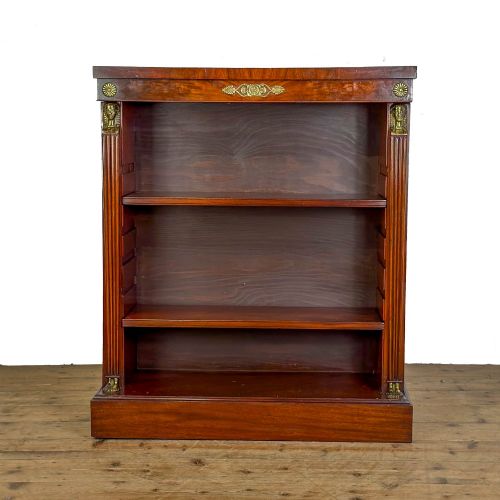
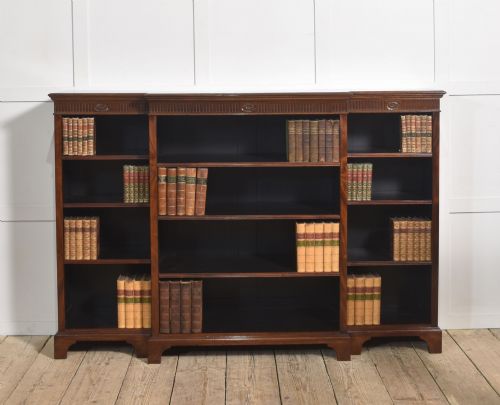
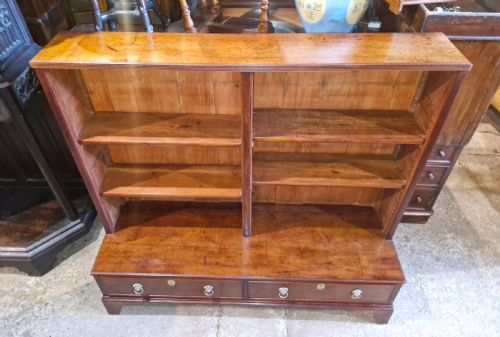
The most common form met here is the mahogany open bookcase, often constructed with freestanding proportions or configured as a waterfall shape where tiers step back progressively. Alongside standard bookcases, related forms include dwarf bookcases, breakfront library pieces, and occasional whatnots.
Materials and Construction
Makers relied principally upon mahogany and rosewood, selecting dense timbers with strong grain patterns, sometimes augmented by satinwood, walnut, or pine for secondary framing. Timber was chosen for durability and finished to highlight natural figure, particularly in flame mahogany veneers.
Metal mounts in brass and ormolu frequently accent the structural lines, appearing on column capitals, gallery rails, and foot sabots. Adjustable shelf mechanisms allow internal heights to alter according to book sizes, showing practical intent behind the decorative joinery.
Some waterfall bookcases double as impromptu display units for small ceramic collections.
Distinctions in Execution
The distinction between standard utility items and exceptional pieces rests upon timber selection and the refinement of subsidiary details. Fine examples employ highly figured veneers like flame mahogany or rosewood across broad expanses, framed by precise mouldings.
Integration of brass hardware, well-proportioned tiered staging in waterfall models, and the inclusion of original adjustable shelving mechanics elevate a piece. Cabinetwork that retains harmonious proportions without heavy restoration represents the upper tier of the range.
Gillows
The Regency Open Bookshelf Glossary
- Waterfall bookcase
- A shelving unit where each successive tier steps back from the one below it, creating a cascading profile. This form is frequently seen in mahogany.
- Breakfront
- A cabinet or bookcase whose central section projects forward from the flanking wings. This architectural arrangement adds depth to large library furniture.
- Dwarf bookcase
- A low open bookshelf designed to sit beneath dado height, keeping the upper wall space clear. These items provide stable display surfaces on top.
- Ormolu
- Gilded bronze used for decorative mounts and accents on furniture. It provides bright metallic contrast against dark rosewood and mahogany surfaces.
- Whatnot
- A multi-tiered stand or open shelving unit used for displaying small objects and books. They appear in both freestanding and wall-mounted formats.
Regency Open Bookshelf: Frequently Asked Questions
How do I date a regency bookcase?
Dating relies on examining timber species, joinery techniques, and stylistic markers such as neoclassical or egyptian revival motifs. Original nineteenth-century pieces share traits with later revivals.
Makers from the regency period often employed solid mahogany and rosewood with heavy brass accents, while twentieth-century revivals mirror those classical proportions closely.
Where should I place a low bookcase?
Low open bookshelves work well beneath windows or against living room walls where tall cabinetry would block light or overwhelm the proportions. Their flat tops also serve as display surfaces.
Freestanding models allow books to remain reachable from seating areas, maintaining an open and airy feel within a study or sitting room.
What are waterfall bookshelves?
Waterfall bookshelves feature open shelves that step back progressively from bottom to top, creating a terraced profile reminiscent of a cascade. This layout emphasises decorative display.
These pieces typically appear in mahogany or satinwood, offering compact storage that accommodates smaller volumes on the upper ledges.