



Rosewood Breakfront Shelving
Rosewood breakfront shelving brings stately architectural presence and rich timber figure to a room, offering grand proportions and enduring utility for serious book collections.
Rosewood Breakfront Shelving
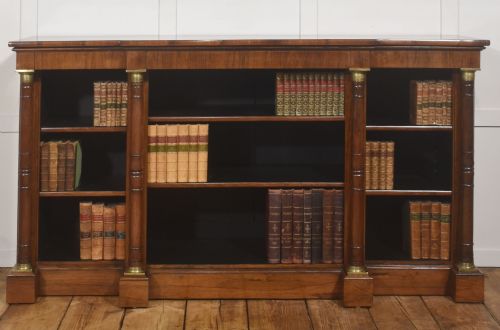
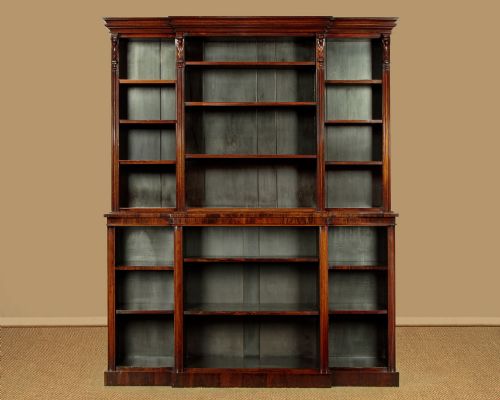
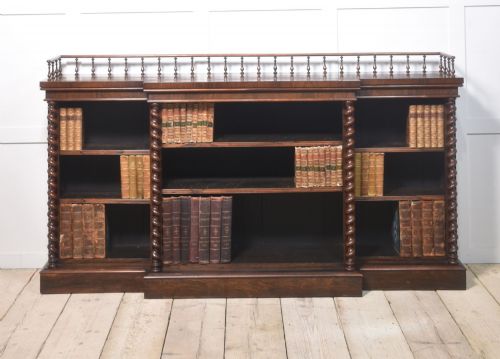
When you search for rosewood breakfront shelving, you encounter large bookcases and side cabinets characterised by a recessed or projecting central section, creating a stepped facade. These pieces predominantly date from the nineteenth century, spanning Regency, Victorian, and later Revival periods.
The form functions primarily as an open bookcase or low cabinet, occasionally incorporating side cabinet elements. Examples range from expansive nineteenth century bookcases to restrained twentieth century revivals.
Makers designed these substantial units to anchor principal reception rooms and libraries, balancing display space with architectural gravity. The inventory shows pieces set upon marble, accented with giltwood, and fitted with leather dummy books.
Construction and Materials
Cabinetmakers utilised dense rosewood timber for its deep colour and pronounced grain, frequently applying it as veneers over stable secondary woods. Workshops enhanced these surfaces with parcel gilt detailing to highlight architectural moulding and relief carvings.
Fine examples incorporate brass mounts, inset glass panels, and marble tops that provide a contrasting, cool surface to the warm timber. Artisans integrated specialist touches such as leather dummy books into cabinet interiors and shelving bays.
Rosewood Breakfront Shelving Retail Price Guide 2026
Typical asking prices for rosewood breakfront shelving among the pieces listed under this phrase on Sellingantiques today, from the lower quarter to the upper quarter. They describe what is for sale here now, not the wider market.
Some nineteenth century bookcases come equipped with leather dummy books, proving that antique bibliophiles occasionally enjoyed a very handsome practical joke.
Distinguishing Quality
Superior examples demonstrate crisp execution in the breakfront proportions and meticulous matching of rosewood veneers across the facade. The depth of the timber figuring and the integration of secondary materials like parcel gilt and brass elevate a piece beyond standard production.
The refinement of the architectural detailing, from the turn of the nineteenth century Regency models to later revival interpretations, dictates the aesthetic standing of the cabinet. Finer construction balances the heavy mass of the timber with harmonious column work and balanced shelving tiers.
The Rosewood Breakfront Shelving Glossary
- Breakfront
- A cabinet facade featuring a central section that projects forward or recedes from the flanking wings. This architectural device creates shadow and depth across large library pieces.
- Parcel Gilt
- Partial gilding applied to specific carved details or mouldings on a piece. It highlights structural lines against the dark background of rosewood.
- Regency
- An English design period spanning the early nineteenth century defined by classical restraint and archaeological influence. Pieces from this era often display clean architectural lines and refined proportions.
- Dummy Books
- Decorative book spines mounted on leather or wood to conceal storage compartments or fill empty shelves. They add a scholarly finish to nineteenth century library furniture.
Rosewood Breakfront Shelving: Frequently Asked Questions
What is a breakfront bookcase?
A breakfront bookcase is a large storage unit where the central cabinet section steps forward or backward from the rest of the facade. This architectural layout breaks up the long linear run of shelving.
Cabinetmakers utilised this design to add depth and formal presence to libraries and principal reception rooms.
How do I date rosewood furniture?
Dating relies on examining the timber preparation, joinery methods, and stylistic cues present in the piece. Nineteenth century examples typically show dense rosewood veneers over heavier secondary timbers.
Later revival pieces from the twentieth century often adopt earlier Regency forms while maintaining distinct construction signatures of their own era.
Where should I place these bookcases?
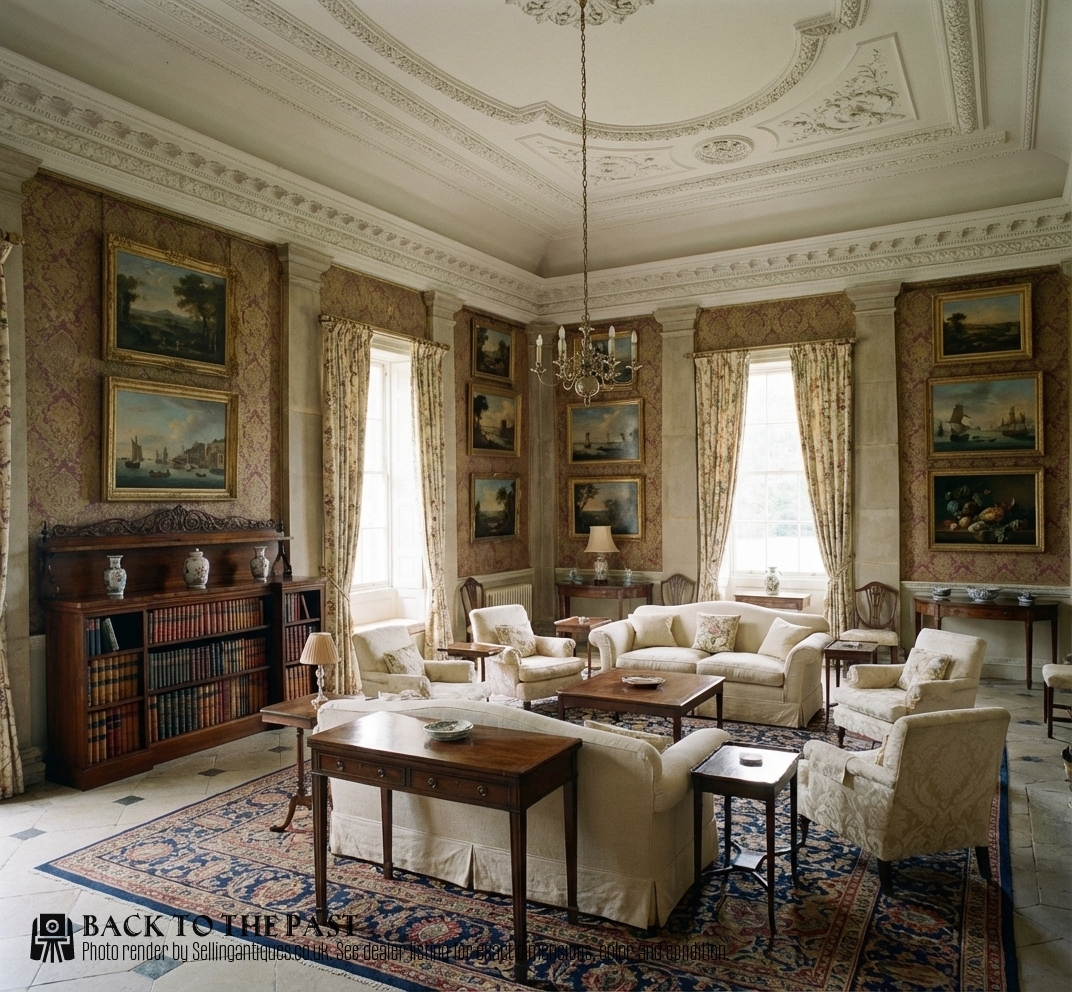
These substantial bookcases demand prominent placement against a primary wall in a library, study, or drawing room. Their deep timber tones and architectural proportions anchor large spaces effectively.
Ensure adequate clearance for the projecting breakfront sections and protect the marble tops and rosewood surfaces from direct sunlight.
What are dummy books?
Dummy books consist of decorative leather spines attached to panels or doors to simulate a fully stocked bookshelf. They were employed by cabinetmakers to conceal internal compartments or side cabinets.
This clever feature maintains the scholarly appearance of an open library while offering secure storage space within.