


Regency Needlework Picture
These regency needlework picture items offer exquisite textile art and framed embroidery capturing early nineteenth-century domestic skill.
Regency Needlework Picture
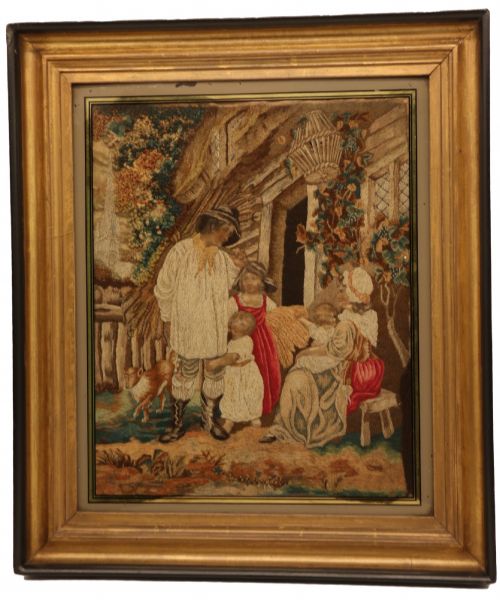
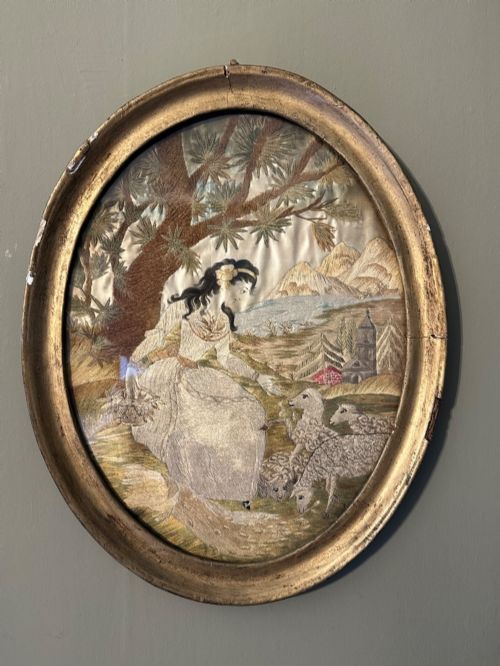
A regency needlework picture represents textile art and framed wall pieces originating from the Georgian and nineteenth-century periods. These works frequently depict figurative scenes, gardens, alphabets, or storytelling narratives.
Buyers on this page are most likely to encounter framed pictures, silkwork panels, and embroidered samplers. The forms range from oval woolwork compositions to pairs of long stitch silk works.
The objects combine domestic needlecraft with decorative framing, often retaining their original giltwood or black glass surrounds. English and Scottish origins predominate across the available examples.
Materials and Construction
Framing forms an integral part of the construction, employing giltwood, gold leaf, and verre églomisé or mezzotint black glass. These protective surrounds often date directly to the period of creation.
Distinguishing Quality
The refinement of the stitchwork and the complexity of the pictorial composition separate superior examples from simpler ones. Detail in silk embroidery and painted elements dictates visual impact.
The preservation of original materials, particularly the survival of contemporary giltwood frames and verre églomisé glass, elevates the standing of a piece.
The Regency Needlework Picture Glossary
- Verre églomisé
- A process of applying gold or metal leaf to glass and etching a design into it. This technique creates a decorative, reflective border around the textile.
- Sampler
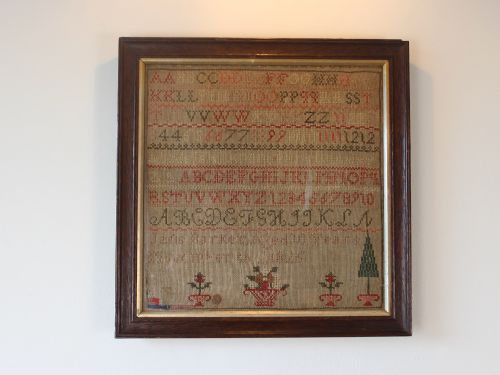
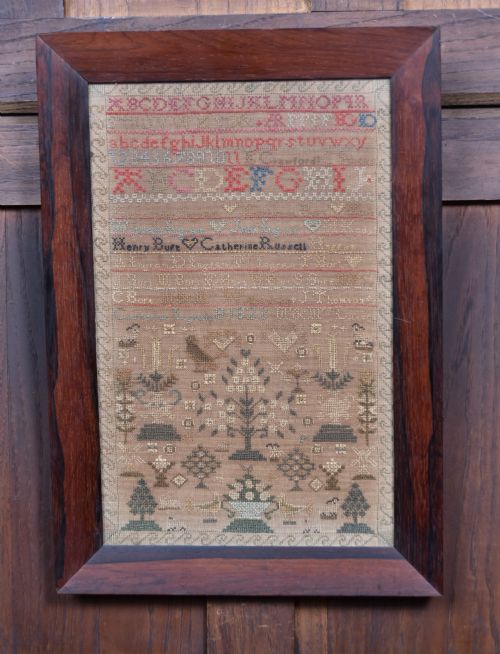
- A piece of cloth featuring rows of alphabets, numerals, or stitches. These were worked by makers to demonstrate proficiency in needlecraft.
- Silkwork
- Embroidery executed primarily in silk threads. It often yields a glossy finish and allows for fine pictorial shading.
- Woolwork
- Needlework created using wool yarns. This material provides a heavier texture and a more matte appearance than silk.
Regency Needlework Picture: Frequently Asked Questions
How should I hang my needlework picture?
Protect the textile by placing it away from direct sunlight and high humidity. Natural light can fade delicate silk and wool threads over time.
Ensure the original frame supports the weight securely, using appropriate fixings on a stable wall surface.
What is the difference between a sampler and a picture?
A sampler primarily showcases rows of alphabets, numbers, and various stitch types as a demonstration of skill. These often include dates and the maker's name.
A picture depicts a specific pictorial scene, such as a garden, a figure, or a narrative story, framed for wall display.
Are these pieces usually framed in period surrounds?
Many examples retain their original giltwood or black glass frames from the early nineteenth century. These housings complement the aesthetic of the textile.
Surviving original frames add considerable character, though some pieces may have been reframed during their history.
What subjects do these embroideries typically feature?
The subjects range from alphabets and poetic verses on samplers to figurative scenes in gardens. Literary and fairy tale narratives also appear.
Landscape elements and hand-painted silk details frequently accompany the stitched portions to complete the composition.