




Regency Music Stool
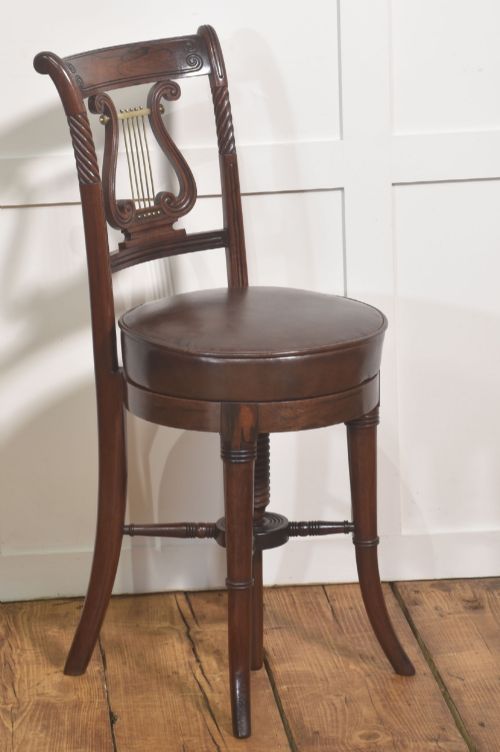
A regency music stool is a functional seat designed for the piano or harp, combining domestic utility with the refined style of the early nineteenth century.

Regency Music Stool
A regency music stool serves musicians and performers at the keyboard or harp, taking forms such as revolving piano stools, adjustable chairs, and square-top seats. These pieces belong to the nineteenth century, with specific examples spanning the Georgian era, the William IV period, and later Victorian revivals.
The objects listed on this page include revolving piano stools, music chairs, dressing chairs, and X-framed seats. Buyers most frequently encounter mahogany and rosewood variants featuring adjustable mechanisms for height and rotation during performance.
Originating in periods associated with Regency, Grand Regency, and Empire styles, these stools reflect the domestic musical pursuits of the household. They function equally well today as accent seating or dressing chairs within a period interior.
Distinctions in quality
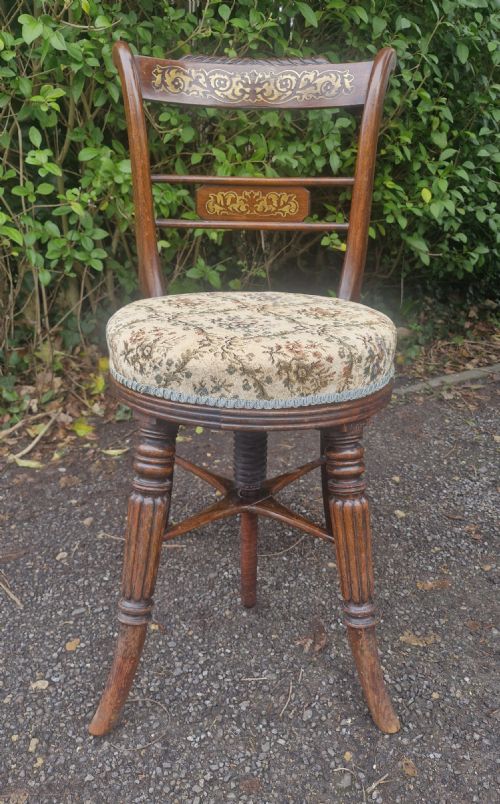
Quality rests in the precision of the timber selection and the complexity of the cabinetmaker's work, such as intricate brass inlay or finely turned legs. Finer examples display superior grain figures in rosewood or mahogany and retain smooth, original mechanical parts for height adjustment.
The integrity of the frame and the retention of original upholstery materials separate standard utility seating from pieces produced by notable makers like Gillows. Superior construction ensures that swivel tops and screw mechanisms operate without lateral play.
Some nineteenth-century harpists required specialised asymmetric chairs designed to accommodate the large frame of the instrument without knocking the player's elbow.
Gillows
The Regency Music Stool Glossary
- Revolving piano stool
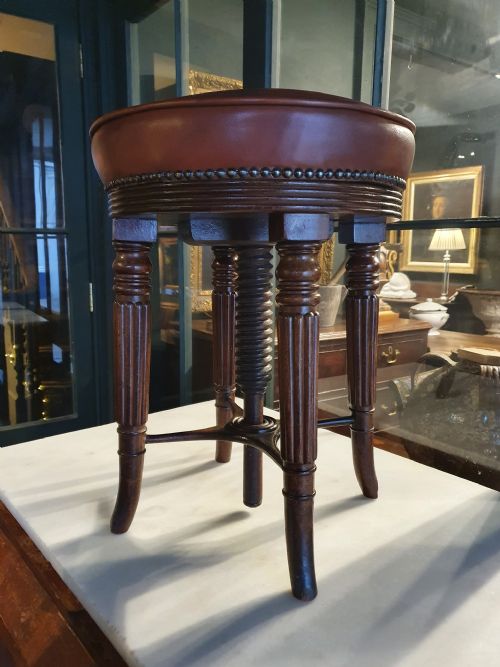
- A seat with a mechanism allowing the top to spin, enabling the player to turn towards sheet music or other instruments. This form often relies on a central wooden or metal screw thread.
- X-framed stool
- A seating form featuring intersecting diagonal supports forming an X shape beneath the seat. This design echoes classical Roman furniture revival styles popular in the nineteenth century.
- Adjustable screw top
- A mechanism allowing the seat height to be raised or lowered by turning the upholstered top clockwise or anticlockwise on a threaded spindle.
- Simulated rosewood
- A painted or grained finish applied to a secondary timber to imitate the rich dark figuring of genuine rosewood. Cabinetmakers utilised this technique to achieve a high-status appearance at a lower cost.
- Brass inlay
- Technique involving the insertion of thin brass strips or decorative motifs into routed channels within the wooden surface. This ornamentation defines many fine pieces from the Regency period.
Regency Music Stool: Frequently Asked Questions
How do I adjust the height on these stools?
Many examples feature a screw-top mechanism where turning the upholstered seat raises or lowers it along a central wooden or iron spindle. Other models utilise nineteenth-century mechanical ratchets or pins hidden beneath the seat frame.
Ensure the mechanism is free of obstruction before turning, and support the weight of the top as you adjust it to protect the internal thread from wear.
Are these stools comfortable for daily piano practice?
The comfort depends largely on the padding and the presence of original or restored upholstery using fabric, leather, or velvet. Most were designed for upright posture during recitals rather than deep lounging.
Revolving seats allow freedom of movement, which many musicians find practical during extended periods at the keyboard or harp.
How can I tell a Regency stool from a later Victorian copy?
Regency and early nineteenth-century pieces typically exhibit native or imported timbers like solid mahogany and rosewood, with hand-cut joints and traditional polish. Later Victorian and Edwardian Sheraton Revival pieces often display machine tooling or different secondary woods beneath the frame.
Examining the underside and the wear patterns on the screw mechanism helps determine the true age of the piece.
Where should I place a music stool in a modern home?
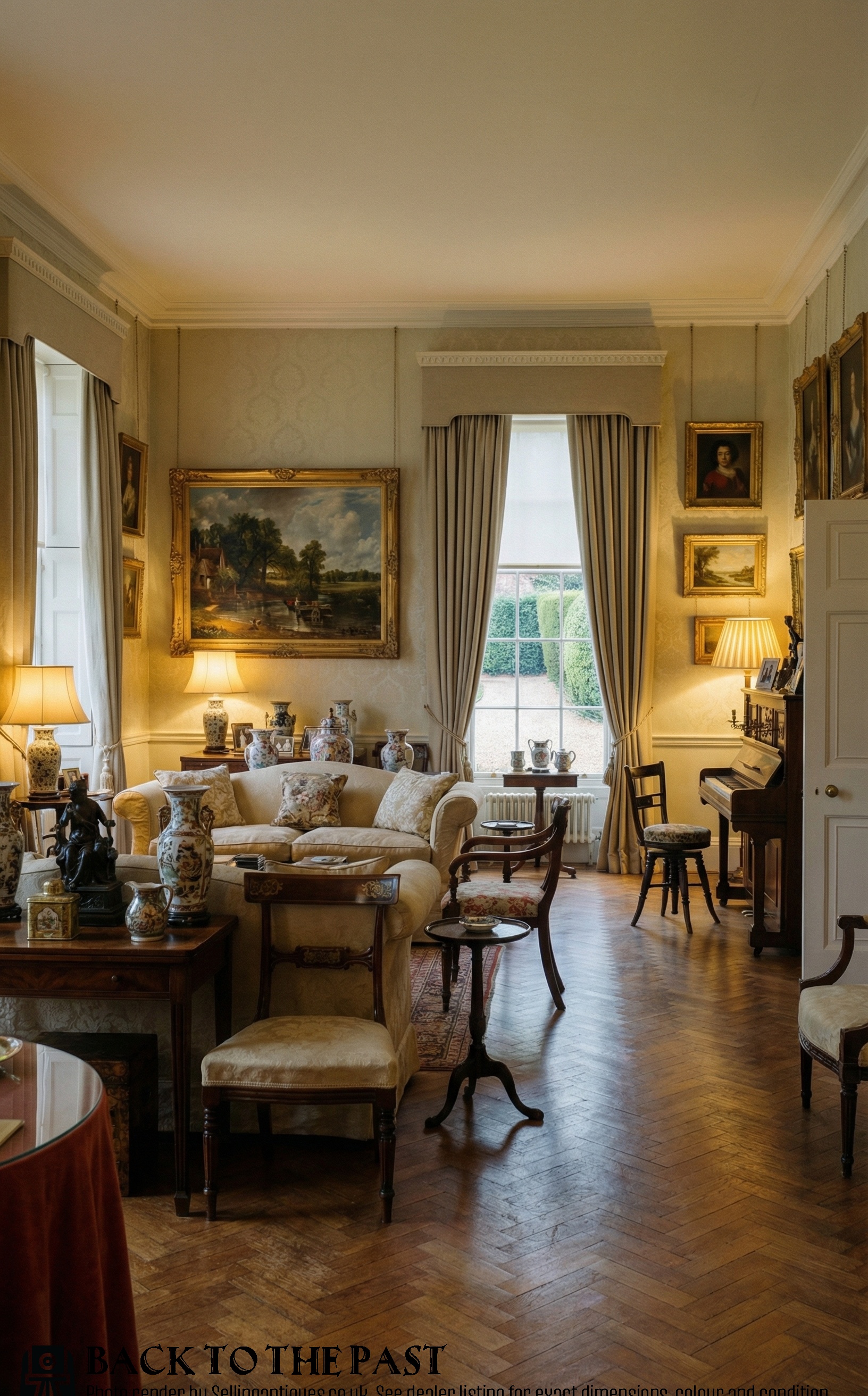
These compact seats function well as piano stools, dressing table chairs, or occasional accent seating in a living room or hallway. Their small footprint makes them adaptable to tight spaces where a standard chair would prove too bulky.
Keep them away from direct heat sources and strong sunlight to protect the polished wood surfaces and delicate upholstery fabrics.