


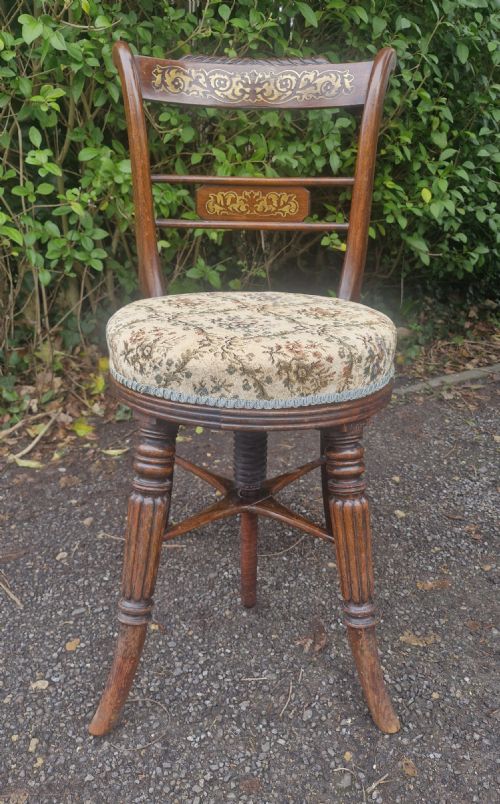
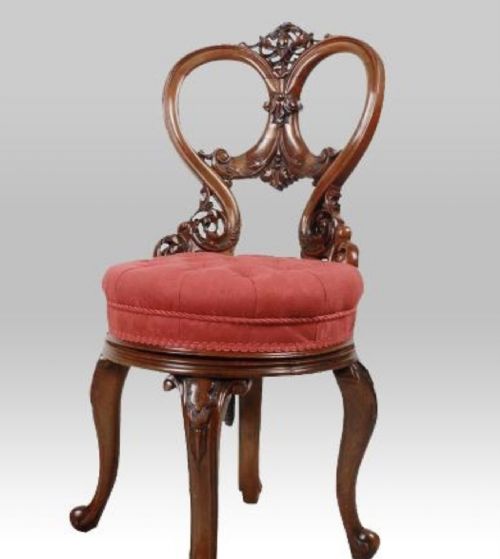


Rosewood Music Chair
A rosewood music chair is a practical and decorative seat designed for musicians, offering the adjustability and support needed for the piano or harp.

Rosewood Music Chair
A rosewood music chair provides a sturdy and adjustable seat for players of the piano, harp, and other instruments. These pieces appear across the Regency, Georgian, William IV, and Victorian periods, reflecting shifting domestic tastes in musical entertainment.
The most common formats on this page are revolving piano stools, rise and fall seats, and specialised harpist chairs. They combine functional mechanics with the rich grain of rosewood to suit nineteenth-century drawing rooms and music rooms.
Makers designed these seats to accommodate the posture required for sustained practice and performance. Whether configured as a simple stool or an elaborately detailed chair with adjustable height mechanisms, each form prioritises mechanical reliability alongside aesthetic appeal.
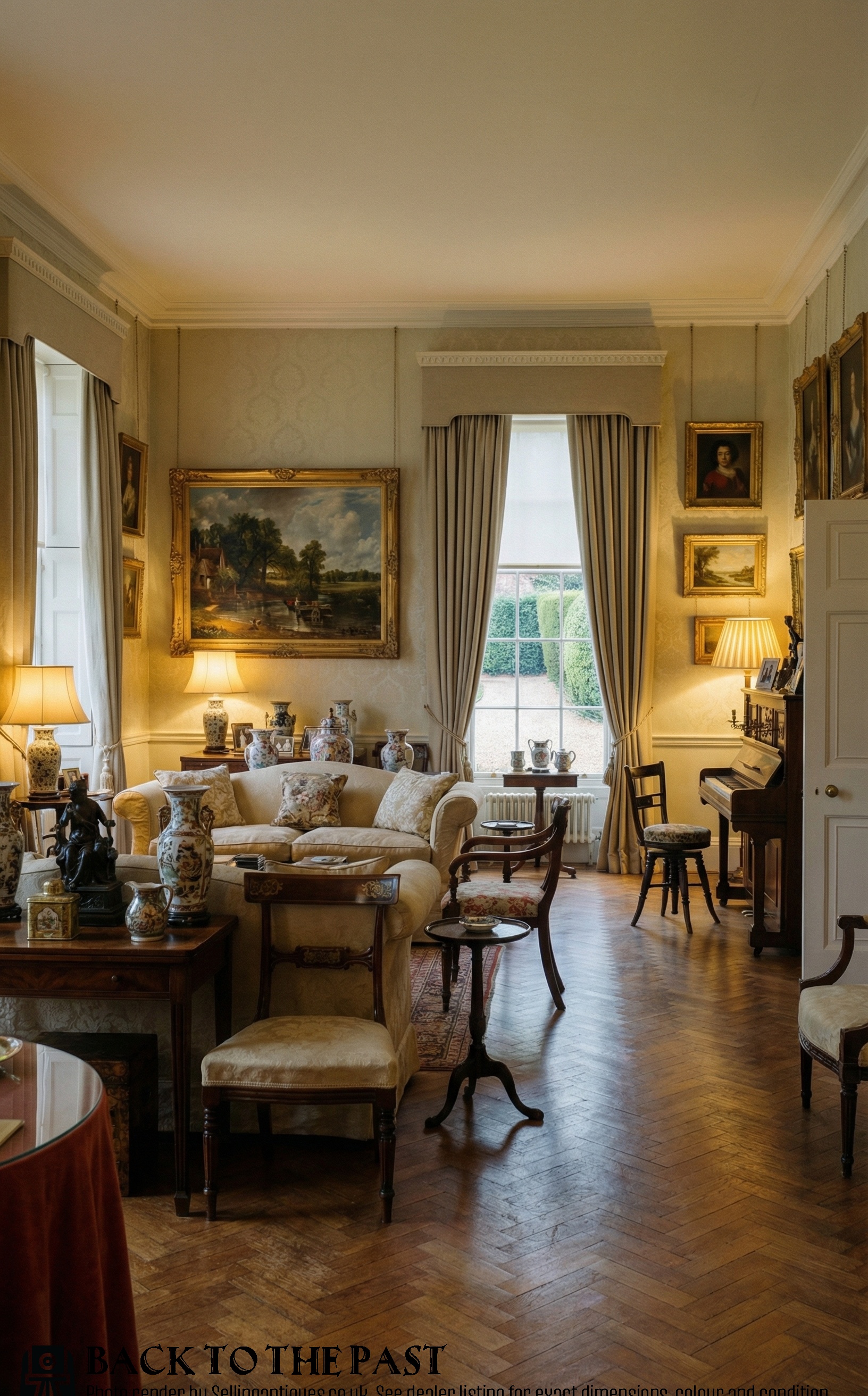
Assessing quality and craftsmanship
Quality reveals itself in the precision of the adjusting mechanism and the smoothness of the revolving action. Superior examples maintain stability at every height setting without wobble in the central screw or column.
The choice of timber grain and the crispness of any boxwood inlay distinguish finer pieces from standard production. Artisans who invested time in selecting richly figured rosewood and applying refined upholstery details produced pieces of enduring mechanical and visual merit.
Listings feature rosewood music chairs spanning the Regency, Georgian, William IV, and Victorian periods, utilising materials like brass, velvet, and boxwood inlay.
The Rosewood Music Chair Glossary
- Rosewood
- A dense, dark timber prized for its prominent grain patterns and rich natural colour. It forms the structural and visual foundation of these musical seats.
- Rise and fall
- A mechanical system allowing the seat height to be adjusted up or down. This function was essential for accommodating different musicians at the piano or harp.
- Revolving
- A design feature enabling the top of the stool to turn through a full circle. This allowed performers to shift position easily while seated at their instruments.
- Boxwood inlay
- Contrasting pale wood inserted into the darker rosewood surface in geometric or floral patterns. It serves to highlight the borders and structural lines of the furniture.
- Harpist chair
- A specialised seat designed without arms or with a lowered side to accommodate the posture of a harp player. These forms often incorporate adjustable backs or revolving seats.
Rosewood Music Chair: Frequently Asked Questions
What is a rosewood music chair?
A rosewood music chair is a period seating option built specifically for musicians practising at instruments like the piano or harp. They typically feature adjustable mechanisms to alter the height for the player.
Constructed from dense rosewood timber, these seats often include revolving tops or rise and fall screws alongside upholstered pads in velvet, silk, or tapestry.
How do adjustable mechanisms work?
Adjustable music chairs generally utilise a central wooden or brass screw mechanism hidden beneath the seat. Turning the seat itself raises or lowers the platform relative to the base.
Other variations use rise and fall ratchets or levers to alter the height quickly. The precision of this engineering determines how smoothly the seat operates.
Were these chairs only used for music?
While primarily designed for musicians performing on the piano or harp, their adjustable height made them versatile for other tasks. They frequently served as dressing table stools or desk chairs in nineteenth-century homes.
The revolving action and comfortable upholstery suited any domestic space where flexibility of movement and seating height proved useful.
How do I identify the period?
Dating relies on observing the decorative styles, turning methods, and hardware associated with specific eras like Regency, William IV, or Victorian. Regency examples often feature brass inlay and sabre legs, while later Victorian pieces show heavier carving and varied upholstery.
Comparing the complexity of the rise and fall mechanism alongside the timber grain also helps place the piece within the nineteenth century.
How do I care for rosewood furniture?
Rosewood benefits from stable indoor humidity and protection from direct sunlight to prevent the timber from fading or drying out. Regular dusting with a soft, dry cloth preserves the polished finish without building up residue.
Upholstered sections require gentle brushing or specialist textile cleaning depending on whether the fabric is silk, velvet, or tapestry.