


19th Century Piano Chair
A 19th century piano chair is a height-adjustable seat designed for keyboard players, combining sturdy timber frames with swivel or screw mechanisms that you want for precise posture at the keys.

19th Century Piano Chair
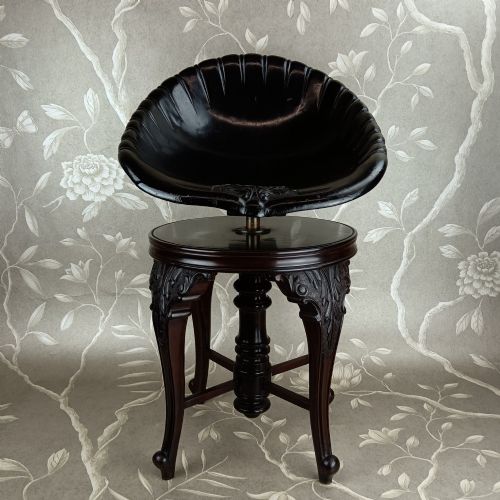
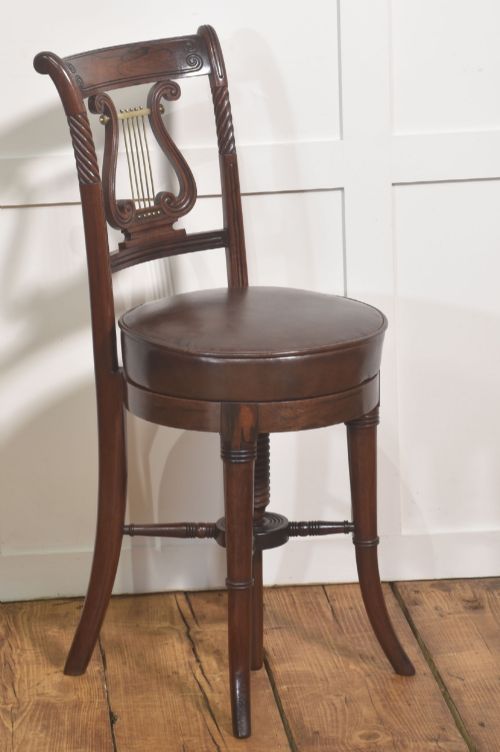
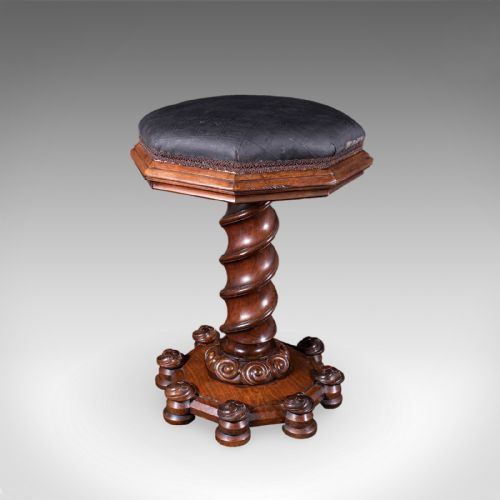
A 19th century piano chair encompasses revolving music stools, adjustable dressing chairs and square top piano stools originating from the Regency, William IV and Victorian periods. The pieces appearing here often feature height-adjustment mechanisms, ranging from simple screw-top designs to more complex patent risers.
Makers and workshops of the era produced these seats in forms such as round revolving stools, square music stools with upholstered pads, and low-backed chairs designed for harpists or organists. Timber choices span rosewood, mahogany, walnut and papier-mâché, reflecting the shifting domestic tastes across the decades.
Buyers seeking a 19th century piano chair generally encounter mahogany and rosewood examples from the Victorian and William IV eras. These range from plain functional music seats to decorative pieces with brass inlay and gilt paint in the Empire style.
How they were made
Makers constructed the primary frames of these chairs using dense hardwoods like mahogany, rosewood and walnut, which provided the structural rigidity required for mechanical adjustment. Joinery techniques included tight tenons and sturdy turnings to support the daily strain of revolving or screw-raising tops.
Upholstery materials such as velvet, leather and general fabric were mounted over padding on the seats, whilst brass components appeared both as structural screw threads and decorative inlay. Papier-mâché served for specialised bodies, finished with lacquer and paint to create ornate Victorian surfaces.
Organists needed sturdy walnut risers to survive vigorous Sunday hymn accompaniments without losing their footing.
What varies in quality
The sophistication of the mechanical adjustment mechanism determines much of the standing of an individual piece, separating simple fixed-height seats from smoothly operating patent risers. Heavier gauge brass hardware and precise screw threads indicate a higher grade of manufacture from workshops that specialised in functional music furniture.
Timber selection and secondary detailing also drive distinction, with figured rosewood or finely inlaid mahogany showing superior craftsmanship compared to plain utility stock. The integrity of the original turning, carving and gilt painted finish further distinguishes standard production items from pieces bearing maker attributions.
Jennens and Bettridge·Holland and Son
The 19th Century Piano Chair Glossary
- Adjustable screw top
- A seat mechanism that raises or lowers when turned on a central threaded spindle. This allowed musicians to set their exact playing height.
- Patent music chair
- A seat featuring a proprietary mechanical system protected by a period patent. These often included complex swivel or height-adjustment devices.
- Padouk
- A dense tropical timber with a reddish hue used in colonial furniture production. It provided exceptional strength for specialised seating.
- Revolving piano stool
- A circular seat mounted on a central pivot that turns freely. It enabled keyboard players to shift position easily during performance.
- Papier-mâché
- A composite material formed from paper pulp mixed with glue and resin, pressed into moulds. It was hardened and painted for ornamental Victorian furniture bodies.
19th Century Piano Chair: Frequently Asked Questions
How do I adjust the height on these chairs?
Most of these pieces utilise a central wooden or metal screw mechanism hidden beneath the upholstered pad. Turning the seat clockwise or anti-clockwise raises or lowers the top.
Some later examples incorporate patent levers or metal ratchets to alter the seating position quickly without continuous rotation.
Were these seats only used for pianos?
While designed primarily for keyboard instruments like pianos, organs and harps, many examples served multiple domestic purposes. Their compact proportions and adjustable heights made them suitable for dressing tables and writing desks.
Makers often catalogued similar forms as music stools, dressing chairs or general accent seating depending on the current interior fashion.
How do I date a William IV piano stool?
William IV pieces typically date from the 1830s and display robust classical proportions influenced by earlier Regency designs. Look for heavy rosewood or mahogany timbers, bold lobed legs and carved scrolling details.
Unlike delicate Sheraton forms, William IV frames favour substantial pedestals with tripartite or quadrupartite platform bases.
Can I use a revolving stool daily?
These chairs were built to withstand regular use by musicians, so sturdy frames handle normal seating well. However, the central screw threads and swivel joints require careful handling to prevent wear over time.
Periodic checks of the mechanical parts help maintain smooth operation without placing undue stress on the antique timber joints.