



Regency Miniature Chest Drawers
Regency miniature chest drawers bring cabinet-maker precision to small proportions, offering collectors exquisite tabletop storage from the Georgian and Regency periods.
Regency Miniature Chest Drawers
When you search for regency miniature chest drawers, you encounter finely scaled pieces of furniture often produced during the Georgian and Regency eras. These items served various domestic purposes, from master craftsmen's showcase pieces to specialised collectors cabinets.
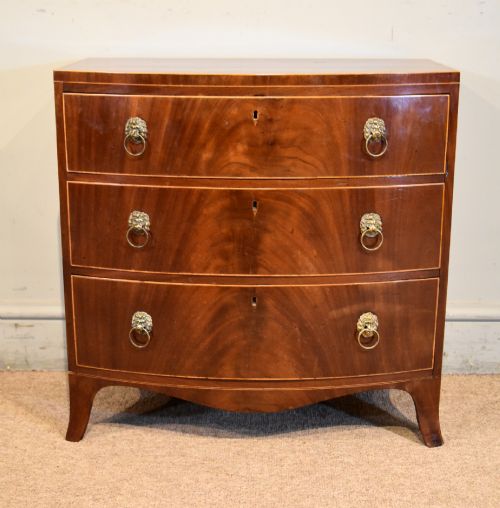
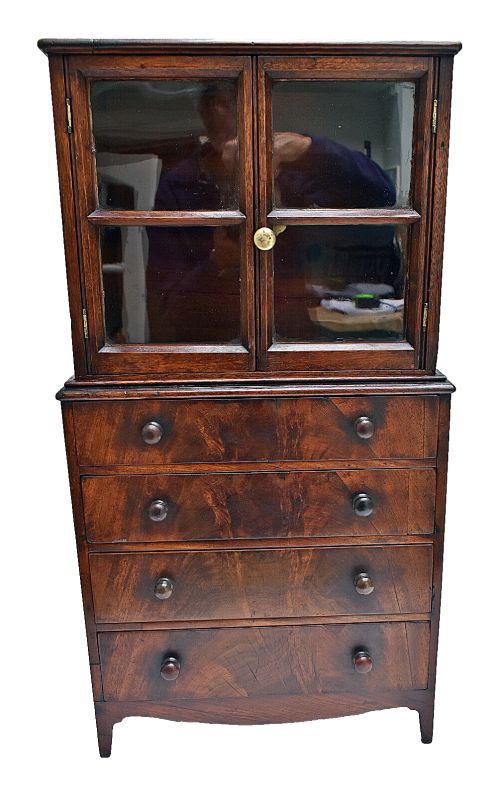
The pieces on this page span the late eighteenth and nineteenth centuries, featuring classic forms such as bow-fronted chests and Wellington cabinets. Most examples follow traditional proportions faithfully despite their reduced scale.
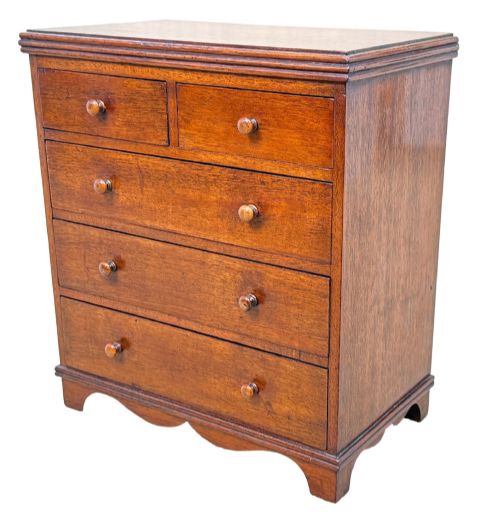
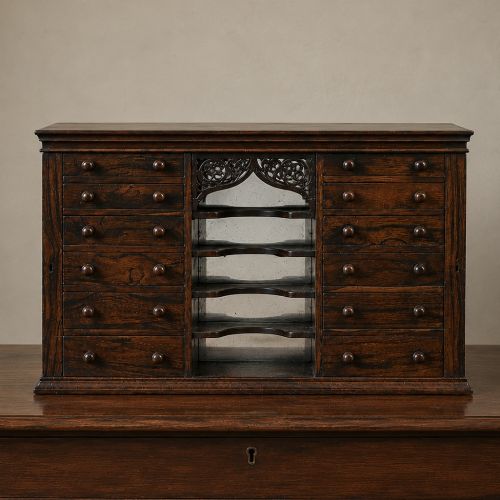
Object types vary from simple three-drawer configurations to more complex table cabinets with glazed tops and mirrored elements. Mahogany and rosewood dominate the surviving examples, reflecting the favoured timbers of the period.
Construction and materials
Cabinet-makers constructed these small chests using dense hardwoods like mahogany, rosewood, burr oak, and burr yew. These timbers provided the stable base required for tight joinery and delicate scaling.
Detailing often included contrasting inlay such as boxwood stringing, alongside functional additions like brass handles, bone escutcheons, and small working keys. Penwork decoration and glazed upper sections also appear on specialised table cabinets.
Surviving examples demonstrate the same dovetail construction and drawer linings found in full-sized case furniture of the period. This meticulous approach ensured stability in pieces exposed to frequent handling.
Regency Miniature Chest Drawers Retail Price Guide 2026
Typical asking prices for regency miniature chest drawers among the pieces listed under this phrase on Sellingantiques today, from the lower quarter to the upper quarter. They describe what is for sale here now, not the wider market.
The listings span the nineteenth and late eighteenth centuries, uniting mahogany, rosewood, burr oak, and boxwood in various cabinet forms.
Factors of quality
The standard of timber selection sets the baseline for quality, with richly figured veneers like burr oak, amboyna, and rosewood marking out superior examples. Plain mahogany pieces rely entirely on crisp proportions and clean lines for their appeal.
Execution of secondary details, such as hand-cut dovetails, matching drawer linings, and original brass hardware, separates utilitarian items from masterwork specimens. The finesse of decorative additions like penwork or stringing further elevates a piece.
Proportion remains critical in miniature furniture; pieces that successfully mimic full-scale architectural rules demonstrate superior workshop training compared to clumsy, compressed designs.
The Regency Miniature Chest Drawers Glossary
- Bow front
- A convex curved front on a chest of drawers that swells outward in the centre. This shape gained immense popularity during the Regency and late Georgian periods.
- Apprentice piece
- A fine item of furniture created by a craftsman to demonstrate skill for guild membership or master status. These pieces show exceptional attention to detail at a reduced scale.
- Wellington chest
- A tall, narrow chest of drawers secured by a vertical locking bar on one side. This locking mechanism hinged to cover the drawer edges.
- Stringing
- Thin inlay of a contrasting wood used to outline drawers and borders. It provides delicate linear decoration on cabinet surfaces.
- Penwork
- Decorative surface ornamentation applied using ink to create intricate motifs and patterns. It appears on specialised table cabinets from the late eighteenth century.
Regency Miniature Chest Drawers: Frequently Asked Questions
What were miniature chests used for?
These small chests served multiple purposes in period homes, functioning as salesman samples, master craftsmanship submissions, or bespoke storage for precious items.
Collectors often used them to house small specimens, coins, or jewellery on tabletops and dressing surfaces.
How do I date a miniature chest?
Dating relies on identifying timber choices, construction techniques, and stylistic markers such as bracket feet, ogee feet, or bow fronts.
Georgian and Regency pieces typically exhibit hand-cut dovetails and specific secondary woods that align with the listed manufacturing periods.
How should I clean wood surfaces?
Maintenance requires gentle dusting with a dry, soft cloth to protect fragile veneer edges and historical wax finishes.
Harsh chemical polishes must be avoided to preserve the natural patina developed over centuries of handling.
What timber is most common?
Mahogany appears most frequently across these listings, reflecting its dominance in British cabinet-making during the eighteenth and nineteenth centuries.
Exotic alternatives like rosewood, amboyna, and burr yew also emerge on more decorative examples.