

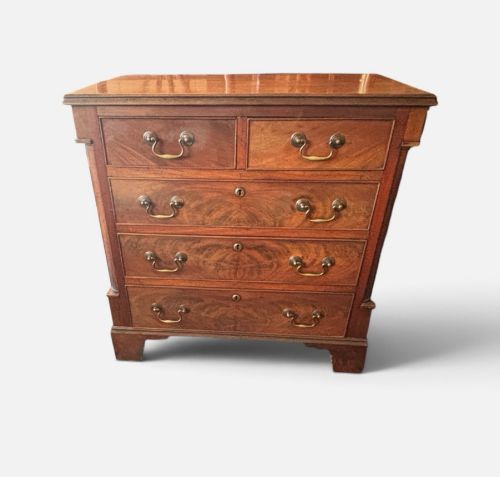
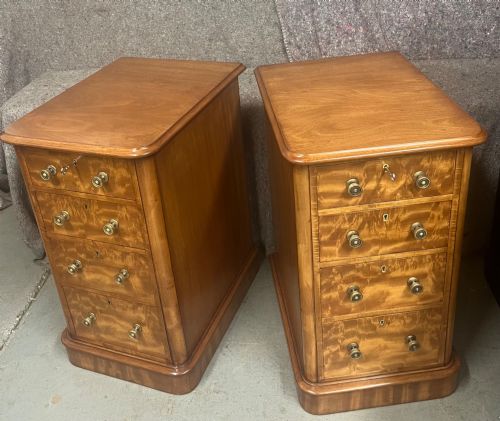
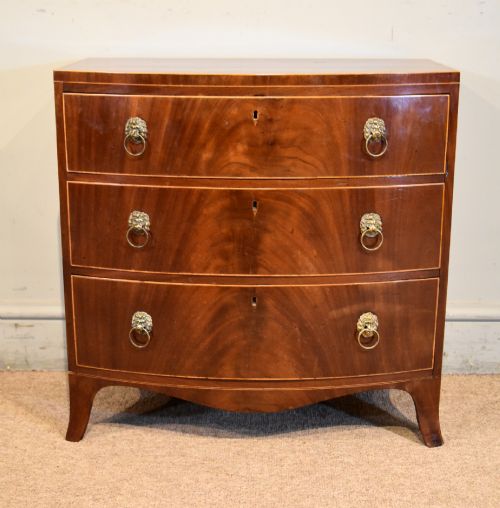
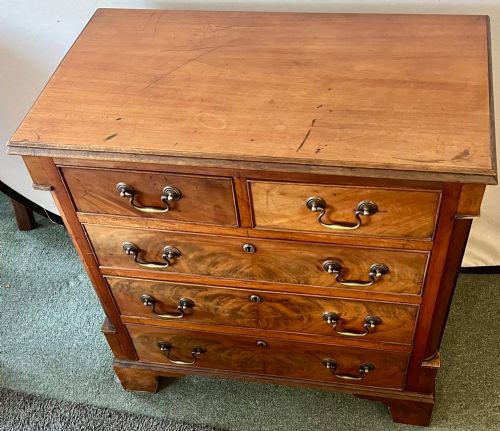
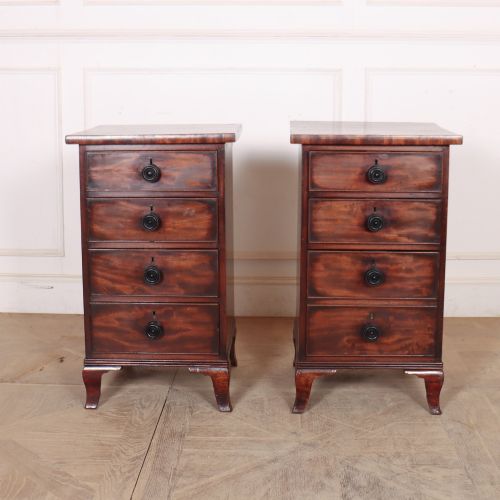
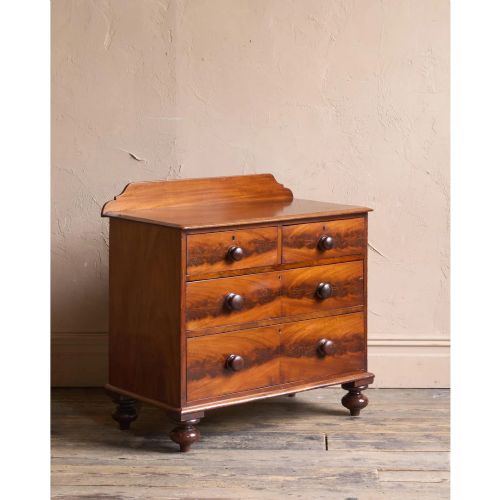
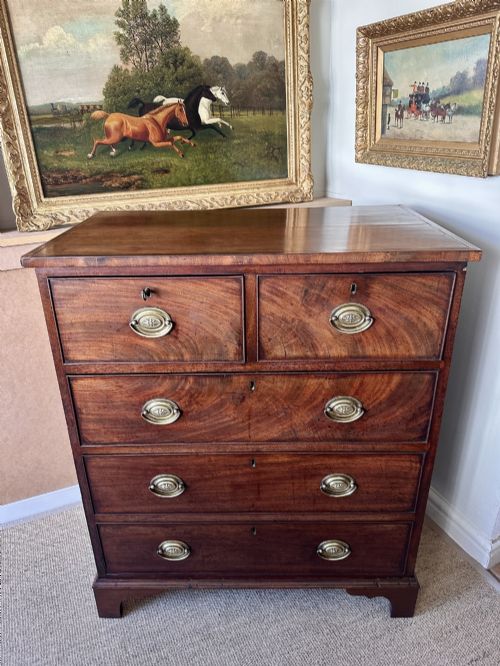
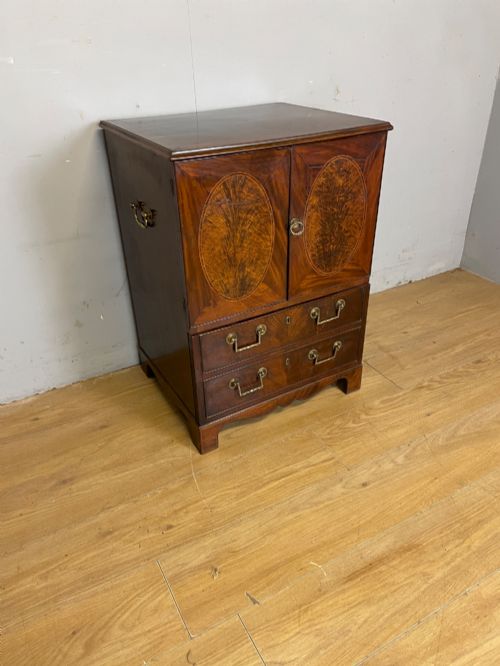
Small Flame Mahogany Chest
A small flame mahogany chest brings compact proportion and striking grain to a room without dominating the floor space.
Small Flame Mahogany Chest
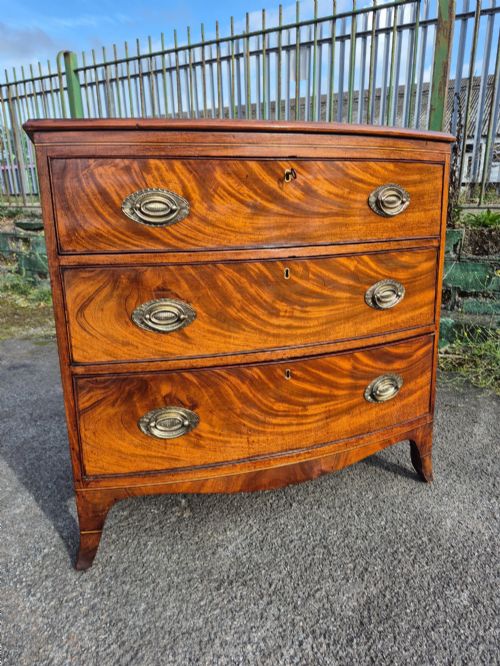
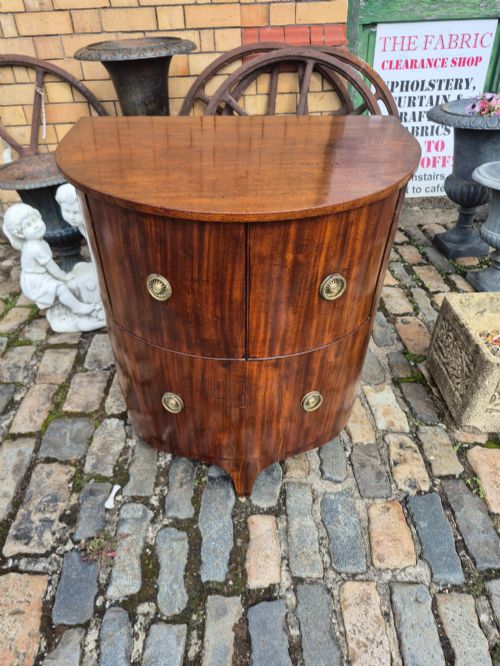
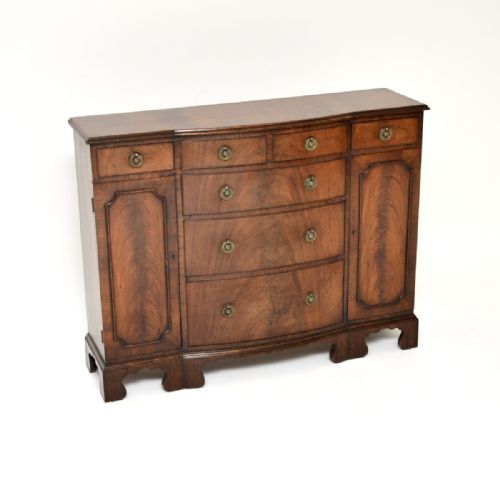
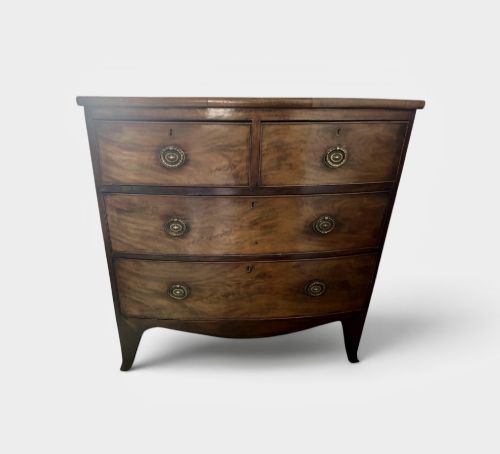
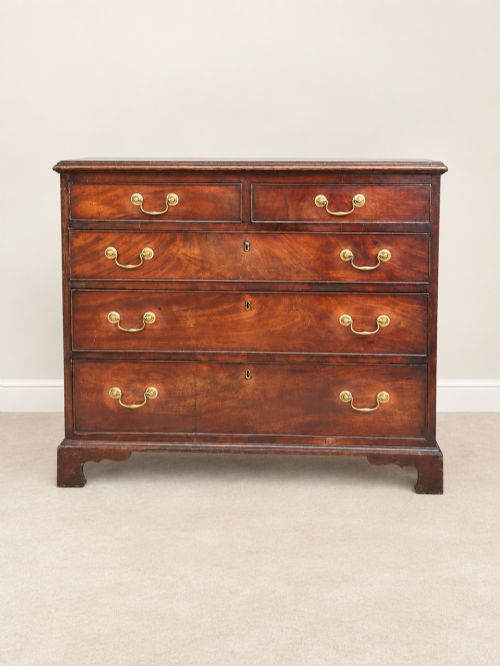
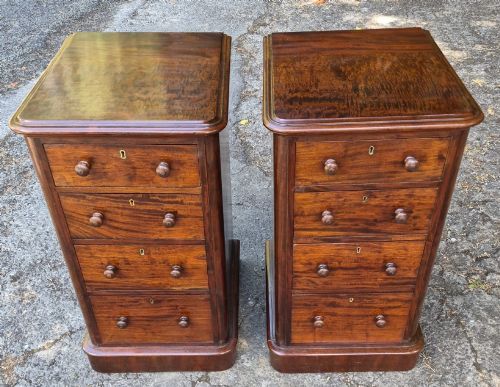
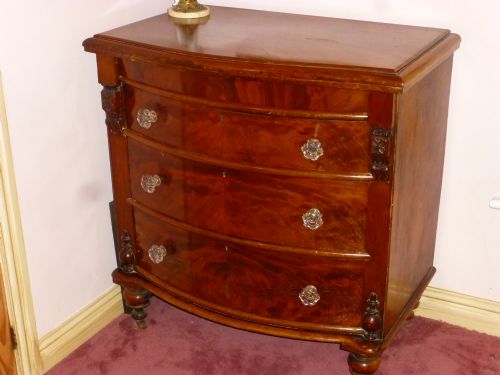
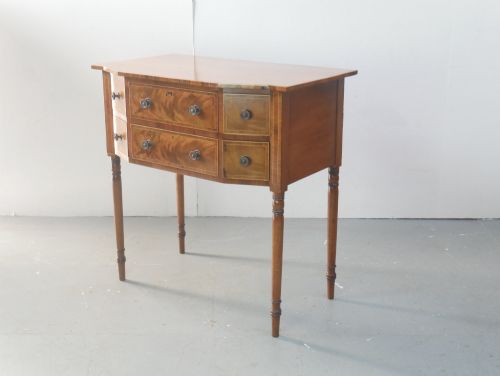
A small flame mahogany chest is a compact piece of case furniture, typically found in forms such as chests of drawers, bow front chests, bedside chests, miniature chests, and side cabinets. These pieces span the 18th century, Georgian, Regency, Victorian, Edwardian, and later periods, reflecting diverse stylistic interpretations across these eras.
Buyers seeking this phrase most frequently encounter bow front chests and bedside chests constructed from mahogany and flame mahogany veneer, often displaying the characteristic figuring of the timber. Miniature chests and apprentice pieces also appear, demonstrating the same cabinetry skills on a smaller scale.
The practical function of these chests remains grounded in storage and display, whether utilised as bedside tables, compact sideboards, or fitted dressing chests. Their diminutive scale makes them adaptable to contemporary domestic interiors where space is at a premium.
Distinctions in quality and execution
The visual impact of the flame mahogany veneer largely drives the distinction between average and exceptional pieces, particularly where the book-matching or symmetrical placement of the grain is handled with care. The depth of the timber's figuring and the precision of any boxwood inlay set finer examples apart.
Structural refinement shows in the execution of the bow front, the smoothness of the drawer action, and the integration of secondary timbers like oak for drawer linings. Pieces featuring fitted interiors, secret drawers, or original brass hardware demonstrate a higher level of original craftsmanship.
Small Flame Mahogany Chest Retail Price Guide 2026
Typical asking prices for small flame mahogany chest among the pieces listed under this phrase on Sellingantiques today, from the lower quarter to the upper quarter. They describe what is for sale here now, not the wider market.
Listings feature mahogany, brass, boxwood, glass, inlay, and oak across Georgian, Regency, Victorian, and Edwardian periods.
The Small Flame Mahogany Chest Glossary
- Flame mahogany veneer
- A thin slice of mahogany timber cut from the fork of the tree, producing a distinctive flame-like or rippling pattern. This veneer is applied to primary surfaces like drawer fronts for decorative effect.
- Bow front
- A convex, outwardly curved front elevation typical of many Regency and Georgian chests. This shape requires advanced woodworking skill to construct accurately.
- Miniature furniture
- Small-scale pieces made either as masterworks by apprentices, travelling salesman samples, or specialised cabinet work. They replicate full-size furniture in every structural detail.
- Inlay
- A technique where pieces of contrasting wood, such as boxwood, are inserted into recesses cut into the primary mahogany surface to create decorative borders or motifs.
- Secret drawer
- A concealed compartment built into the carcase or frieze of a chest, accessed through a hidden mechanism or by removing an adjacent drawer.
Small Flame Mahogany Chest: Frequently Asked Questions
How do I tell a Georgian chest from a Victorian one?
Georgian chests often feature cleaner architectural lines, subtle boxwood inlay, and proportions associated with 18th-century design. Regency examples frequently introduce bow fronts and figured veneers.
Victorian pieces tend to be heavier in construction and proportions, utilising mahogany and mahogany veneer with different handle styles and interior framing.
Where can I use a bedside chest?
Bedside chests fit easily beside standard bed heights, offering surface space for a lamp and enclosed storage within the drawers. Their compact dimensions prevent them from overwhelming the bedroom layout.
They also function effectively as small lamp stands or side cabinets in hallways and reception rooms.
What are miniature chests used for?
Miniature chests serve as decorative tabletop display pieces rather than heavy-duty storage. Historically, they demonstrated a craftsman's skill or functioned as apprentice pieces.
Today, they allow collectors to appreciate fine mahogany veneering and cabinet construction in a concentrated format.