
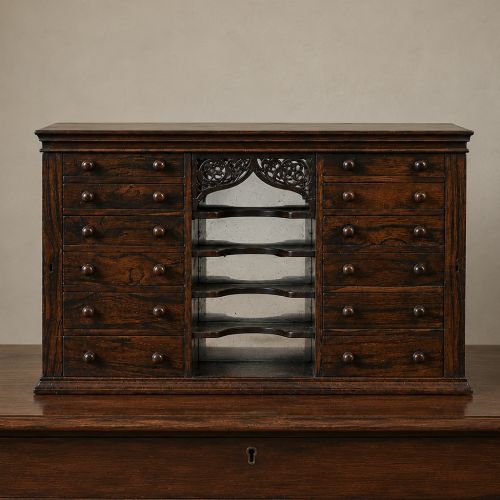


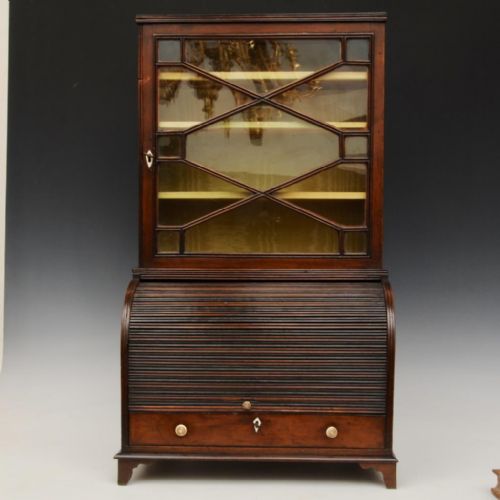


Regency Miniature Cabinet
These regency miniature cabinet pieces are compact display items built for collectors, offering the presence of larger furniture in miniature scale.
Regency Miniature Cabinet
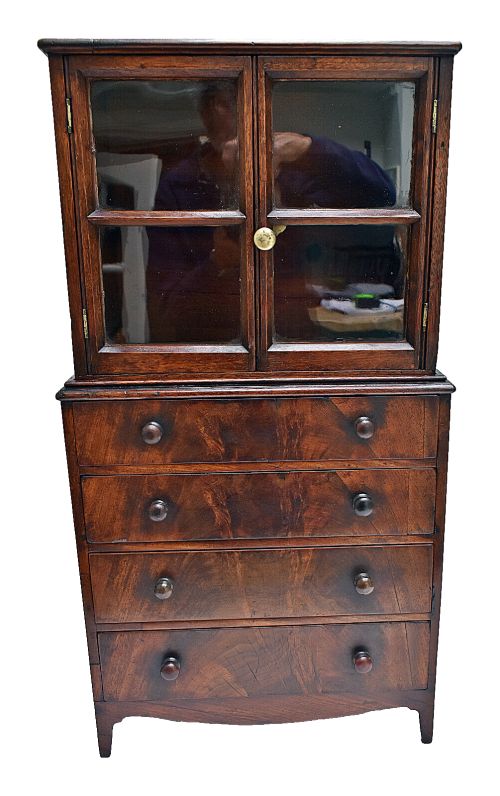
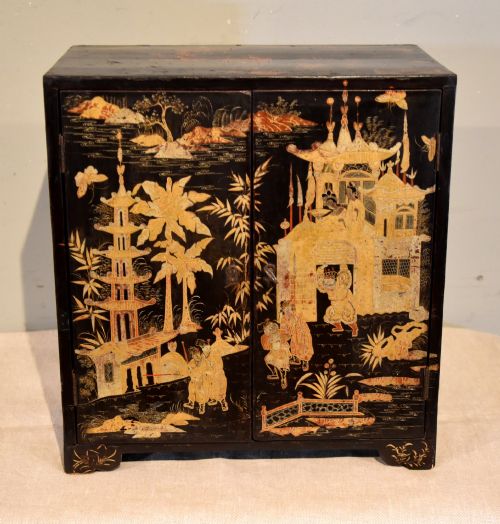
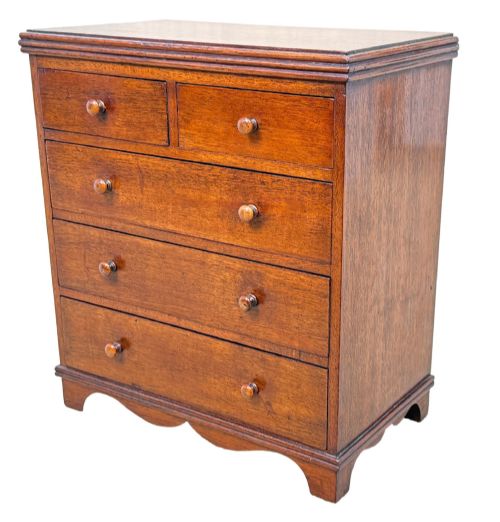
When you search for a regency miniature cabinet, you encounter tabletop forms, collectors cabinets, table cabinets, and miniature chests of drawers originating from the Georgian, Regency, and nineteenth century periods. These items encompass mahogany, rosewood, amboyna, and penwork table cabinets alongside miniature bookcases and bowed chests.
The pieces you are most likely to meet on this page are mahogany and rosewood chests of drawers or table cabinets from the Regency and Georgian eras. They reflect the domestic scale and cabinetmaking standards of their time, functioning as practical containers or decorative furnishings.
How they were made
Cabinetmakers constructed these miniature forms using dense timbers such as mahogany, rosewood, and amboyna, often incorporating secondary woods like oak or boxwood. Surfaces frequently display polished veneers and fine boxwood stringing, matched to the scale of the object.
Detailing includes brass hardware, mirrored glass, and intricate penwork or mother of pearl inlay. Construction follows traditional joinery methods adapted for small proportions, utilising solid timber and veneer over structural carcases.
Listings feature woods such as mahogany, rosewood, amboyna, oak, and boxwood across Georgian and nineteenth-century periods.
What varies in quality
The refinement of the timber selection and the precision of the veneer work distinguish the finer examples from simpler pieces. Rich grain figures in rosewood or amboyna, combined with crisp boxwood stringing, elevate the visual impact.
The execution of small-scale elements, such as fitted drawers, brass mounts, and inlaid penwork or mother of pearl, determines the sophistication of the cabinet. Proportion and the integrity of the original surfaces carry significant weight in assessing the standard of manufacture.
The Regency Miniature Cabinet Glossary
- Regency
- A stylistic period spanning the late eighteenth and early nineteenth centuries, characterised by classical restraint and rich timber veneers.
- Bowfront
- A curved furniture front that swells outward in the centre, frequently seen on miniature chests of drawers from the Georgian period.
- Penwork
- A decorative technique using ink applied to wood surfaces to create intricate black-line drawings, often featuring Chinoiserie motifs.
- Wellington chest
- A tall, narrow chest of drawers secured by a locking side flap, adapted in miniature form.
Regency Miniature Cabinet: Frequently Asked Questions
What is a regency miniature cabinet?
A regency miniature cabinet is a small-scale piece of furniture, such as a table cabinet, collector's chest, or miniature drawer set, produced during the Georgian and Regency eras.
These pieces were typically used to store small valuables, specimens, or personal items, mirroring the design of full-sized furniture in a compact format.
Where were miniature cabinets placed?
These cabinets were designed for tabletops, desks, or dressers, serving as functional storage within domestic interiors or study spaces.
Their compact size allowed them to be easily moved and displayed on top of larger case furniture.
What materials are common?
Mahogany and rosewood are the predominant woods seen in these listings, often supplemented by boxwood stringing, brass hardware, and mirror glass.
More decorative examples incorporate amboyna, mother of pearl inlay, or penwork details.