


Mahogany Apprentice Furniture
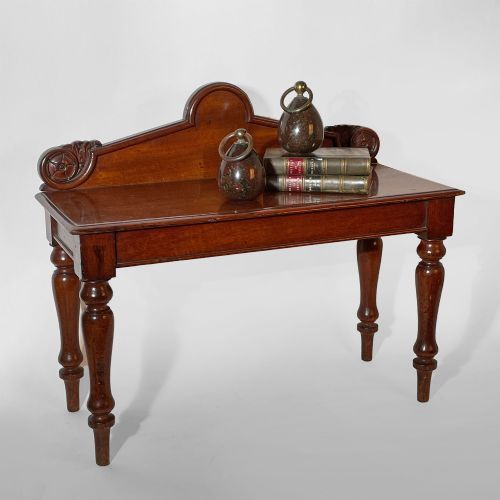
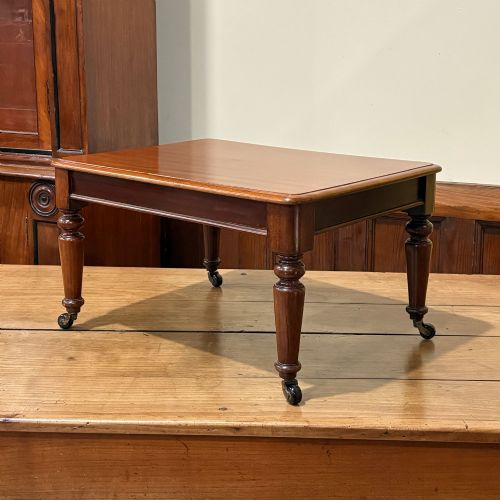
Mahogany apprentice furniture comprises small scale pieces of cabinetmaking created to demonstrate skill or serve as workshop samples.
Mahogany Apprentice Furniture
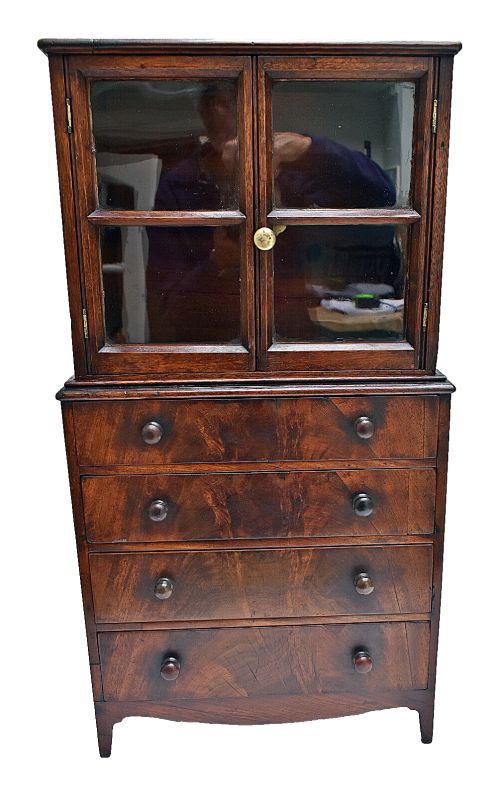
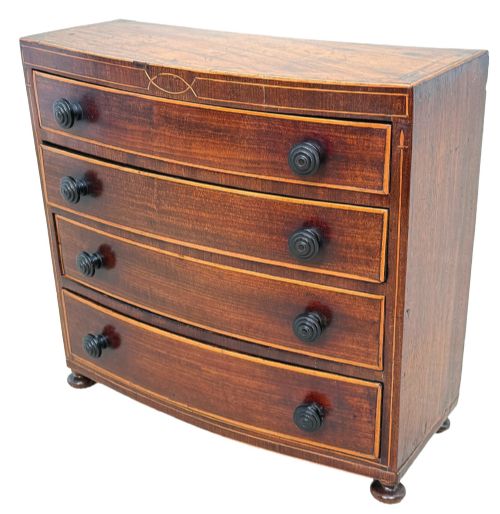
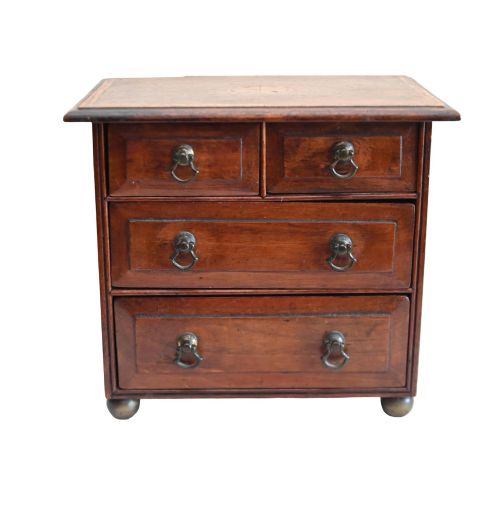
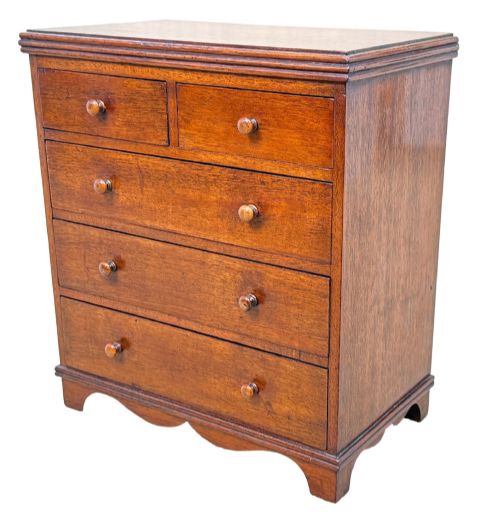
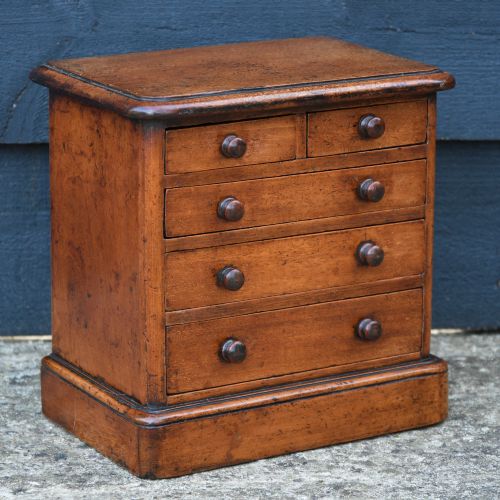
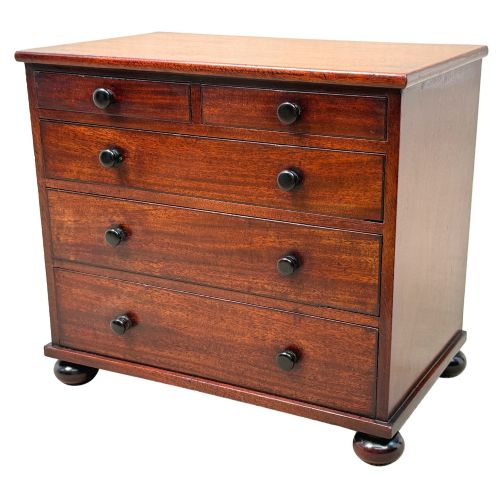
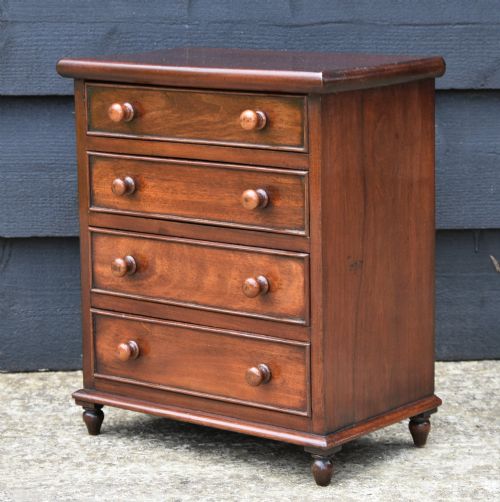
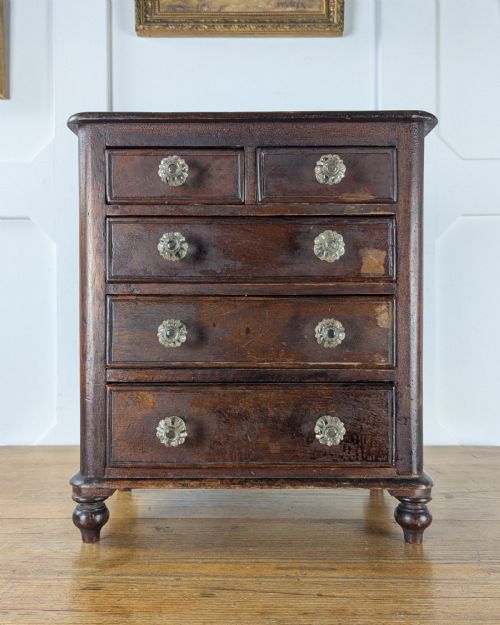
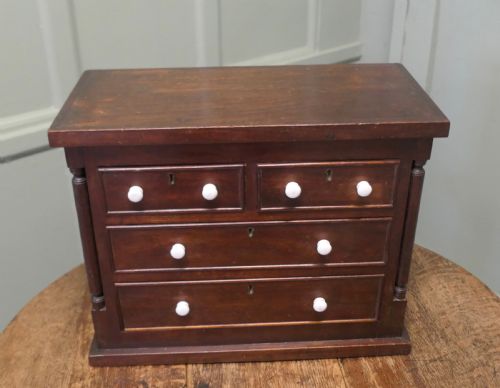
Mahogany apprentice furniture represents scaled down versions of full size household items designed to show mastery of joinery and proportion. When exploring mahogany apprentice furniture, buyers encounter miniature chests of drawers, tables, and bureaux spanning the Georgian, Regency, and Victorian periods.
Originating across different eras, these pieces reflect the changing cabinetmaking tastes from the eighteenth century into the twentieth century. The inventory on this page demonstrates styles ranging from straightforward nineteenth century utility to decorative Georgian revival models.
Materials and construction
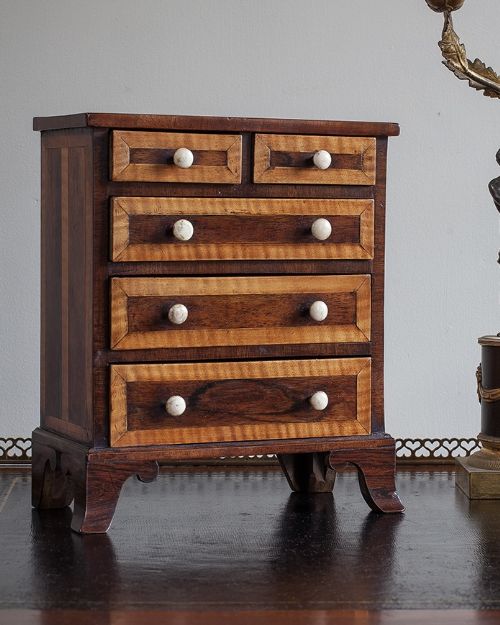
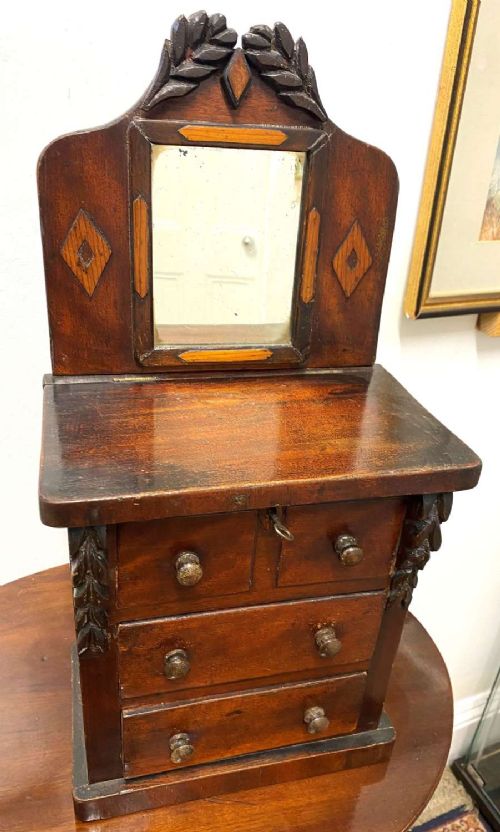
Makers utilised mahogany as the primary timber, occasionally accentuating pieces with boxwood, satinwood, or bone inlay. Secondary materials such as glass and brass appear on handles, key escutcheons, and glazed upper sections.
Mahogany Apprentice Furniture Retail Price Guide 2026
Typical asking prices for mahogany apprentice furniture among the pieces listed under this phrase on Sellingantiques today, from the lower quarter to the upper quarter. They describe what is for sale here now, not the wider market.
Some miniature chests come equipped with keys so small they require steady fingers and infinite patience just to turn.
Distinctions in quality
Finer examples distinguish themselves through the selection of timber with rich grain patterns and deep patination. Proportions remain faithful to larger prototypes, showing rigorous attention to scale in mouldings and drawer dividers.
Superior craftsmanship shows in the tightness of joints and the crispness of turned components like feet and table pedestals. Subtle additions, such as mother of pearl inlay or intact original keys, separate standard workshop items from exceptional cabinetmaker samples.
The Mahogany Apprentice Furniture Glossary
- Apprentice piece
- A small scale furniture item created by a trainee to prove technical proficiency before gaining master status. These objects display the full range of cabinetmaking skills in miniature.
- Bowfront
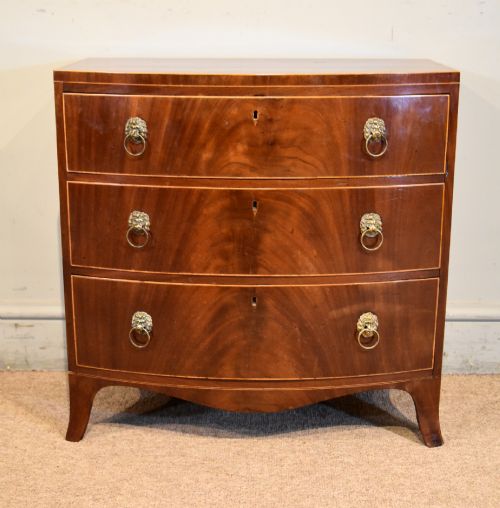
- A curved front facade curving outwards towards the centre, frequently seen on miniature chests of drawers. This design requires advanced woodworking skill to shape accurately.
- French polishing
- A wood finishing technique that applies numerous coats of shellac dissolved in alcohol using a rubber pad. This method produces a high gloss surface highlighting the mahogany grain.
- Tripod table
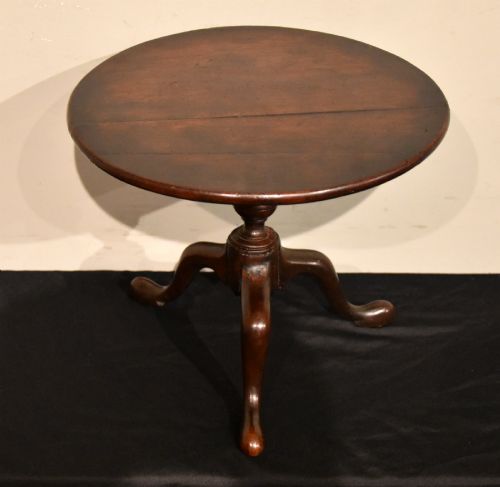
- A small occasional table supported by a central pillar resting on three legs. Miniature versions replicate full size tea and breakfast tables from the Georgian period.
- Escutcheon
- A protective plate surrounding a keyhole, usually fashioned from brass. On miniature furniture, these provide functional security and decorative contrast to the dark timber.
Mahogany Apprentice Furniture: Frequently Asked Questions
What is apprentice furniture?
Apprentice furniture consists of small scale cabinets and tables made by trainees to demonstrate their technical proficiency. These pieces served as proof of skill or as portable salesman samples.
Craftsmen built them using the same timber and joinery methods as full size furniture. Consequently, they provide an accurate record of period design on a reduced scale.
How were these miniature pieces used?
Cabinetmakers used these items to show prospective clients the quality of work they could produce for full size commissions. They also served as masterworks submitted to craft guilds.
In domestic settings, owners placed them on larger surfaces to store small valuables, documents, or jewellery. Their decorative presence made them popular display objects in period parlours.
How do I identify the period?
Dating relies on observing the stylistic markers of the woodwork, such as the curved lines of Regency bowfronts or the clean geometry of Georgian design. Timber choice and hardware details like brass pulls also indicate the era of manufacture.
Construction methods inside the drawers offer further clues, as machine cut elements point to later Victorian or Edwardian production. Hand cut dovetails generally indicate earlier eighteenth or early nineteenth century origins.
Where should I place these in a home?
Miniature chests and tables fit well on top of sideboards, desks, or mantelpieces where their fine details remain visible. Their compact footprint allows them to occupy small spaces without overwhelming a room.
Placing them away from direct sunlight and heat sources protects the polished mahogany surface and prevents the timber from drying out.