



Regency Metal Candle Holders
Regency metal candle holders bring sculptural elegance to a room, combining cast brass and patinated bronze to illuminate interiors.
Regency Metal Candle Holders
When you search for regency metal candle holders, you encounter a selection of lighting forms spanning the Regency period through to the Victorian era and the 1930s. The listings on this page consist predominantly of pairs of candlesticks and multi-arm candelabra manufactured from metals such as brass, bronze, and copper.
The objects take various shapes, from classical campana sconces and square bases to figural compositions depicting trees, animals, and human figures. Alongside standard table lights, the evidence includes chamber sticks, pricket candlesticks, and telescopic examples which demonstrate the versatility of metalwork from these periods.
Assessing quality in metal lighting
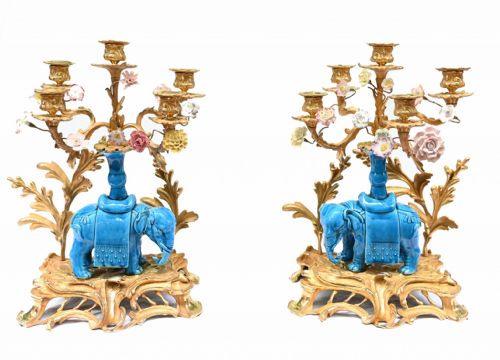
The combination of materials also dictates quality, particularly where patinated bronze is paired with finely fire-gilded ormolu mounts. Heavier gauge metalwork and well-balanced proportions indicate superior manufacture, whereas simpler cast brass items represent a more utilitarian standard of production.
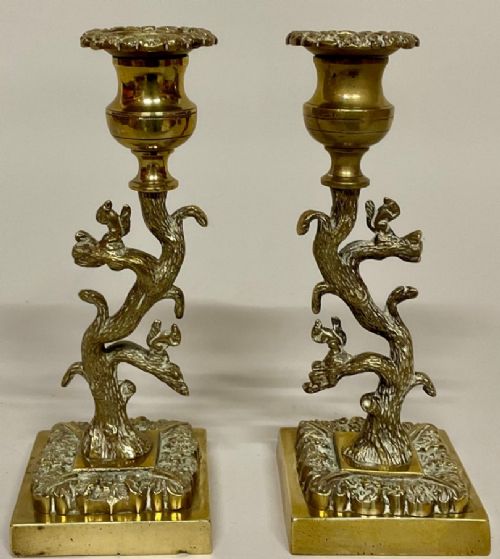
Among the creatures keeping watch from the branches of a gilt bronze candlestick are small squirrels.
The Regency Metal Candle Holders Glossary
- Ormolu
- A method of applying finely ground high-carat gold to a bronze object using a mercury amalgam. This technique creates a rich, durable golden finish characteristic of high-status decorative metalwork.
- Patinated bronze
- Bronze that has been treated with chemical solutions to darken the surface and create a controlled oxide layer. This finish protects the metal and provides a subdued background for gilt highlights.
- Campana sconce
- A candle cup shaped like an inverted bell, derived from classical Roman architecture. It forms the upper receptacle that holds the candle in place.
- Pricket candlestick
- A lighting device featuring an upright metal spike in the centre of the drip pan rather than a socket. The base of the candle is pushed down onto this sharp point to secure it.
- Telescopic candlestick
- An adjustable lighting stand containing an inner sliding shaft held by friction or a key. This allows the height of the candle to be altered as needed.
Regency Metal Candle Holders: Frequently Asked Questions
What is a regency metal candle holder?
These pieces are functional lighting devices cast from metals like brass and bronze during the early nineteenth century and related periods. They were designed to hold wax or tallow candles securely on tables, mantelpieces, and chambers.
Today, they serve as decorative objects that bring period character and warm metallic tones into domestic interiors. Collectors value them for their sculptural forms and the quality of their metalwork.
How do I distinguish bronze from brass?
Brass is an alloy of copper and zinc with a bright golden colour, whereas bronze is an alloy of copper and tin that typically has a deeper, more reddish-brown hue. Many period pieces combine both metals for aesthetic contrast.
Furthermore, bronze items frequently feature applied patination to darken the surface, while brass is often polished to a bright finish. Examining the weight and the underlying colour beneath any wear helps identify the primary metal.
Were these holders used for dining?
Multi-arm candelabra and pairs of tall candlesticks were commonly placed on dining tables and sideboards to provide illumination during evening meals. Smaller chamber sticks were carried by hand to light the way through dark hallways to bedrooms.
Their substantial weight and stable bases ensured they remained secure during use. They formed an essential part of domestic lighting before the introduction of gas and electricity.
How do I clean antique metal candle holders?
Dusting with a soft, dry cloth is usually sufficient for regular maintenance, preserving the original patina built up over decades. Aggressive chemical cleaning or metal polishes should be avoided on patinated bronze and ormolu, as they can strip the historic surface finish.
For plain brass pieces, gentle cleaning with a mild soap solution and a non-abrasive cloth removes grime without damaging the metal. Expert conservation is recommended if the surface shows heavy corrosion or structural instability.