
Pair of Regency Candlesticks
A pair of regency candlesticks brings formal neoclassical balance and warm metal tones to a room, offering functional lighting through twin decorative objects.
Pair of Regency Candlesticks
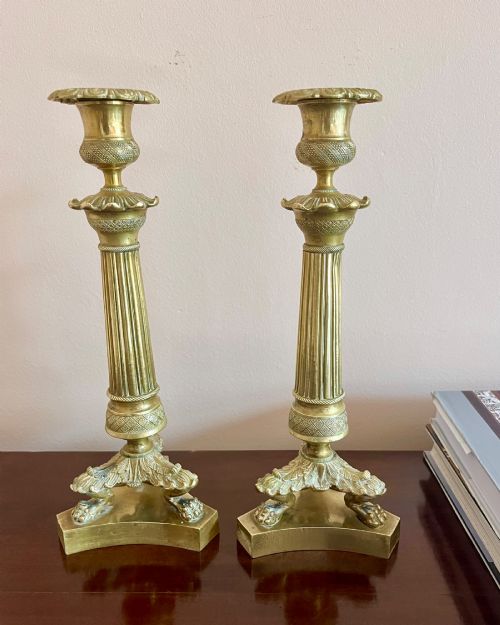
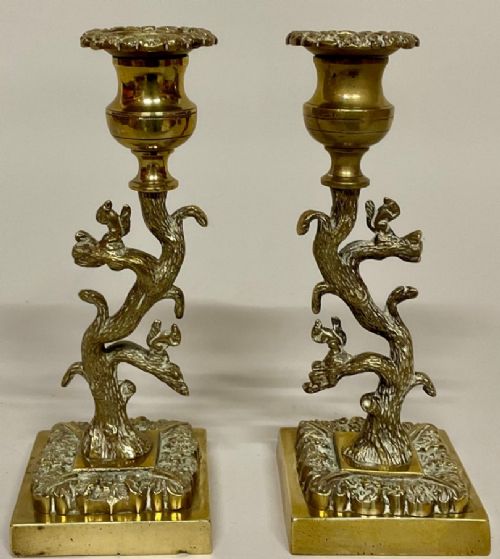
A pair of regency candlesticks comprises symmetrical lighting devices designed during the early nineteenth century, aligning with Georgian and neoclassical aesthetic movements. These pieces often feature turned columns, campana sconces, and square or plinth bases meant to rest evenly on mantelpieces or dining tables.
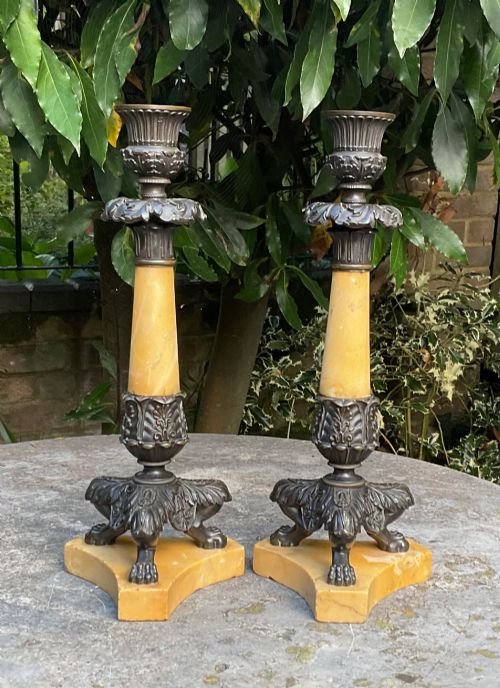
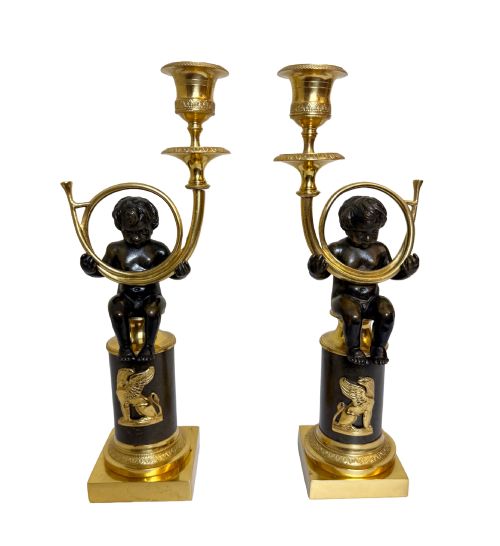
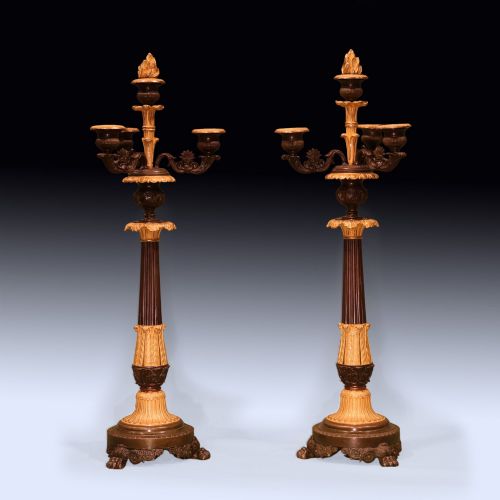
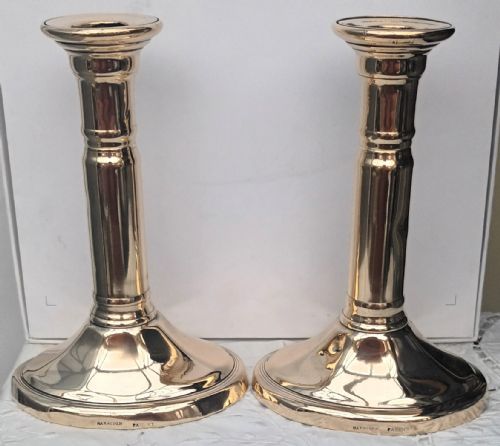
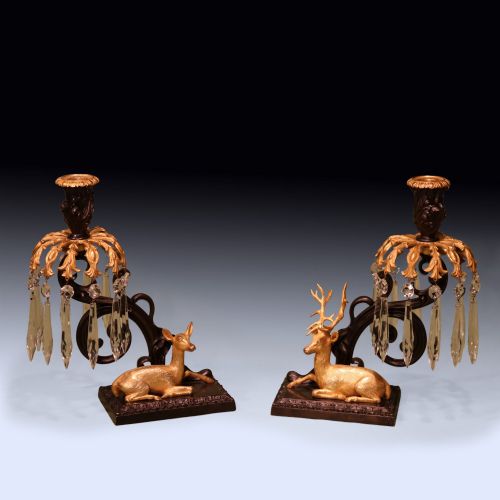
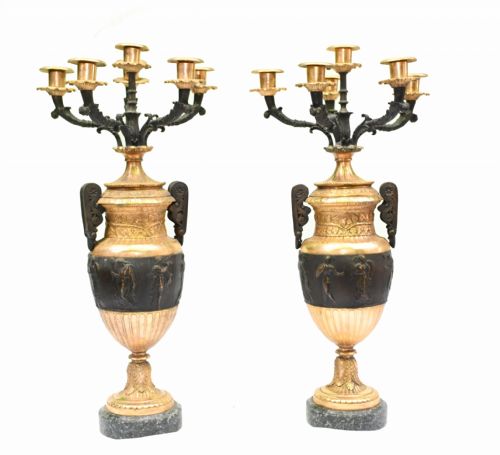
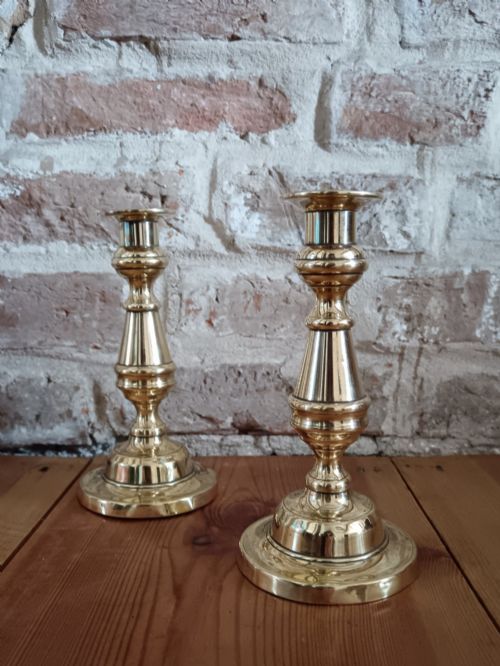
The most frequent examples encountered on this page combine brass construction with period form, alongside heavier bronze and ormolu variants featuring sculptural motifs. Surviving pairs frequently span the broader Georgian and early nineteenth century spectrum, reflecting the formal restraint and decorative ambition of the era.
What varies in quality
The degree of crispness in cast ornamentation separates standard production from superior examples, particularly where floral chasing or figural detailing appears on the bronze surfaces. Sharp definition in the acanthus leaves, cherubs, or animal figures indicates skilled hand-finishing after the initial casting process.
Proportion and weight distribution contribute significantly to the perceived standard of a pair, with heavier gauge metals and balanced bases providing greater physical presence. The retention of matching components and original surface patination further distinguishes higher grade survivors from heavily polished or altered specimens.
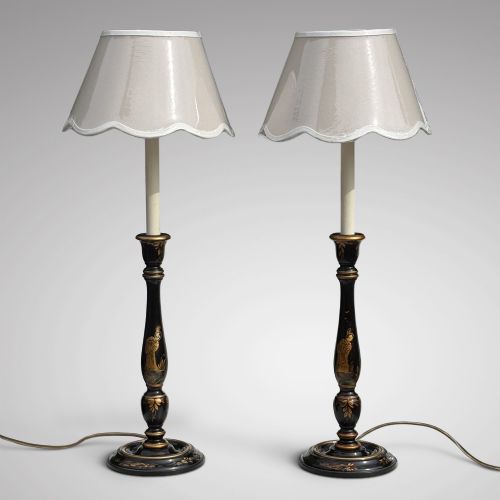
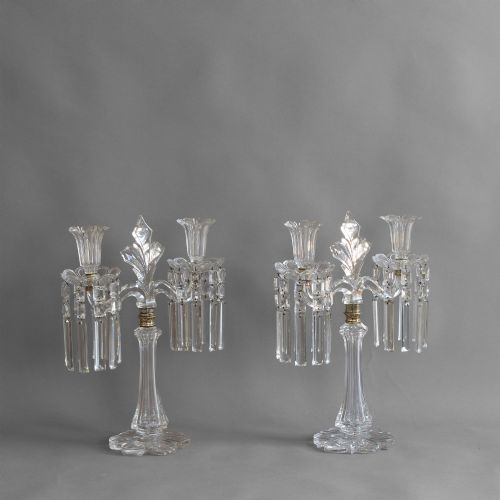
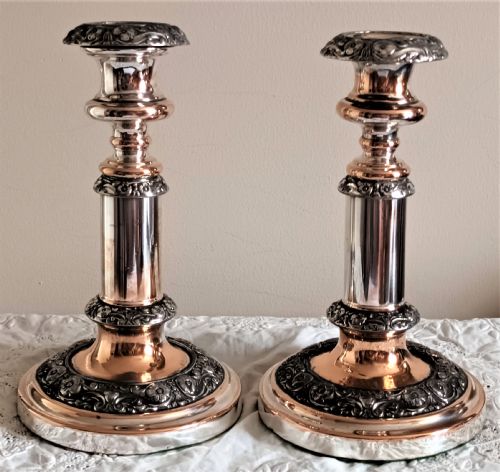
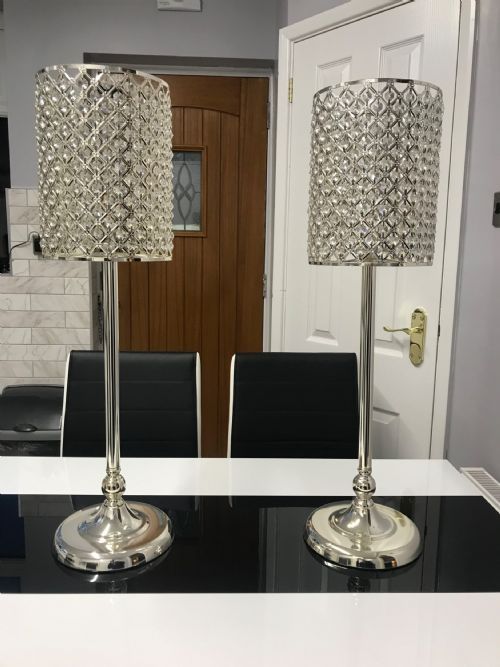
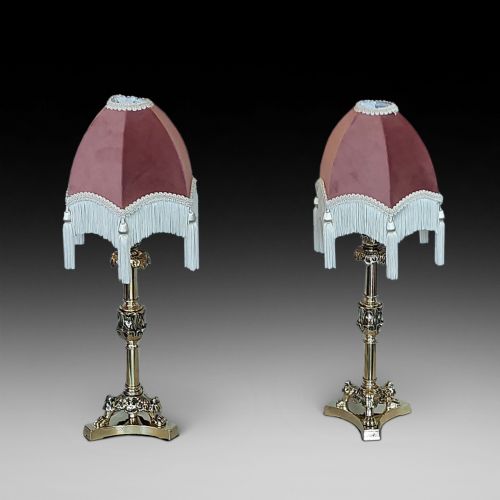
Listings feature brass, bronze, and silver-plated materials alongside marble bases spanning the Georgian, Regency, and Victorian periods.
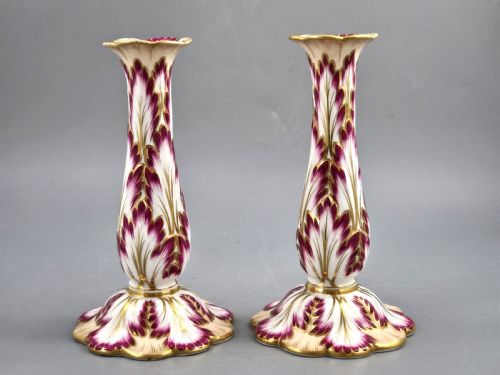
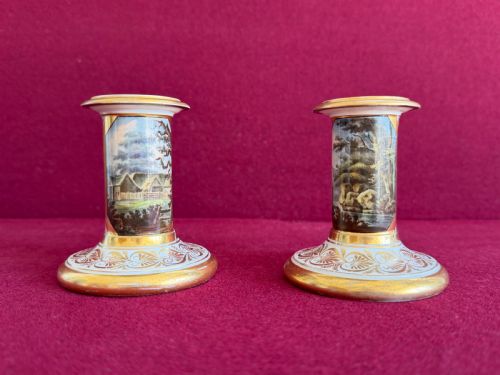
Ridgway·Barr Flight And Barr
The Pair of Regency Candlesticks Glossary
- Ormolu
- Finely ground high-carat gold applied to a bronze base through a mercury amalgamation technique. This method yields a bright, durable finish characteristic of luxury neoclassical decorative objects.
- Campana
- A bell-shaped socket or sconce found at the top of a candlestick designed to hold the base of a taper. The profile mimics ancient Roman wine vessels.
- Telescopic
- Adjustable in height through an inner sliding shaft held by friction or a side screw. This mechanism allowed users to alter the illumination level for reading or dining.
- Pricket
- A sharp vertical spike fitted inside the drip pan to secure large church candles rather than a socket. These are typically found on heavier altar-style candlesticks.
- Old Sheffield Plate
- A composite material formed by fusing a thin sheet of silver to a thicker copper base under heat and pressure. The edges often reveal the underlying copper layer through natural wear.
Pair of Regency Candlesticks: Frequently Asked Questions
What is a pair of regency candlesticks?
These items are matched lighting fixtures produced during the British Regency and adjacent Georgian eras, designed to hold wax tapers securely in domestic spaces.
They function as decorative ornaments that display the classical proportions, metal casting techniques, and sculptural motifs popular during the early nineteenth century.
How were they used historically?
Households placed these objects on dining tables, mantelpieces, and sideboards to provide portable illumination before the widespread adoption of gas and electric lighting.
Servants carried chamber versions with wide drip pans to light hallways, while taller brass or bronze pairs remained stationary in principal rooms.
How do you style them in a modern interior?
Placing a matched pair upon a sideboard or mantelpiece introduces symmetrical focal points that anchor a room's decorative scheme with period character.
They integrate successfully into both traditional and contemporary settings when paired with simple taper candles that complement the metal tone.
How do you distinguish Regency from Victorian styles?
Regency designs favour restrained neoclassical lines, strict symmetry, and classical motifs like acanthus leaves, dolphins, and columns derived from ancient architecture.
Victorian pieces often introduce heavier ornamentation, eclectic revival styles, and more complex floral chasing that departs from earlier linear austerity.