


Regency Mahogany Washstand
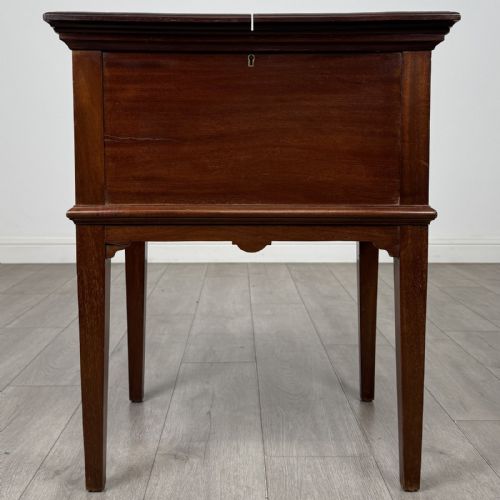
A regency mahogany washstand brings compact architectural elegance and polished timber grain to a bedroom or corner space.
Regency Mahogany Washstand
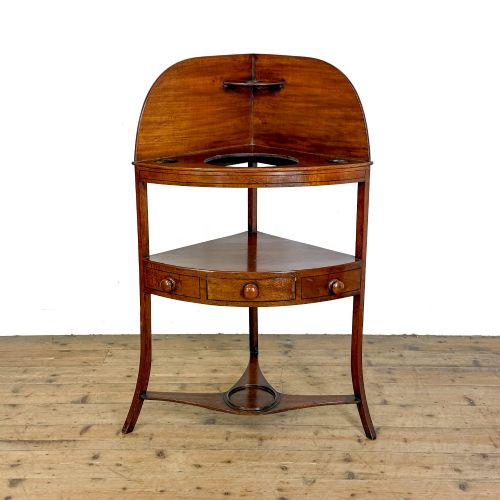
A regency mahogany washstand combines practical morning utility with the clean architectural lines characteristic of the early nineteenth century. Buyers searching for a regency mahogany washstand will encounter freestanding tables alongside ingenious corner stands designed to fit neatly into domestic spaces.
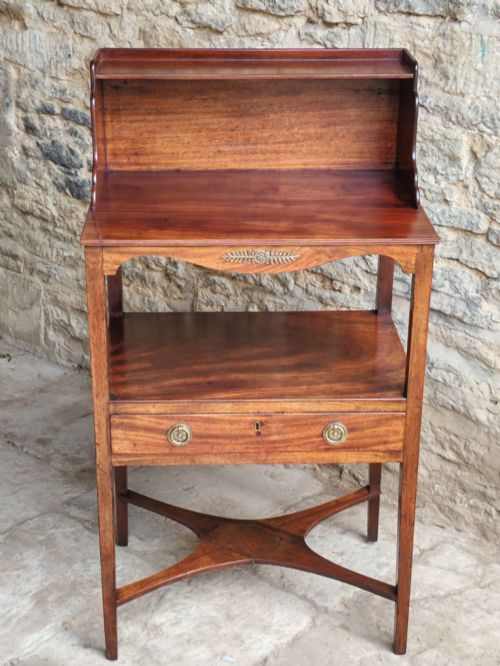
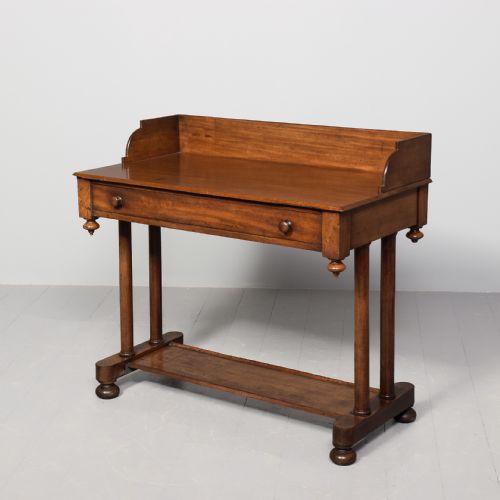
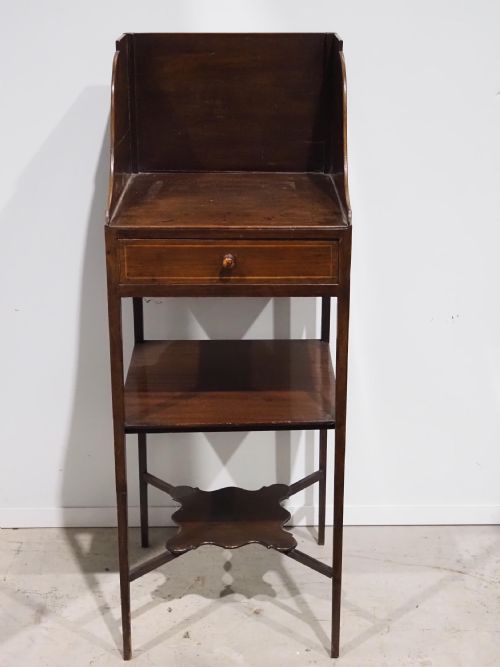
Many examples double as dressing tables or bedside cupboards, featuring gallery backs, tiering, and fitted compartments originally intended for basins and jugs. The surviving pieces range from simple provincial bedside tables to sophisticated architectural forms with flame veneer and boxwood stringing.
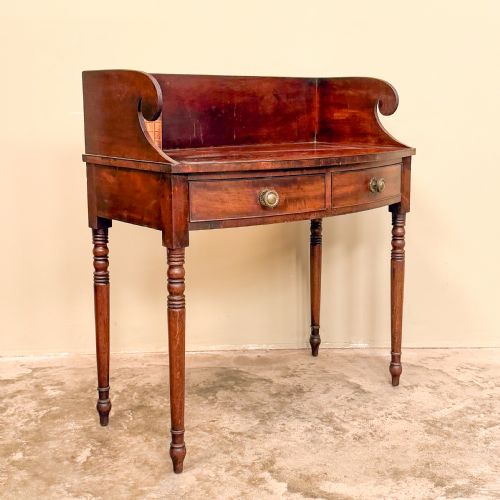
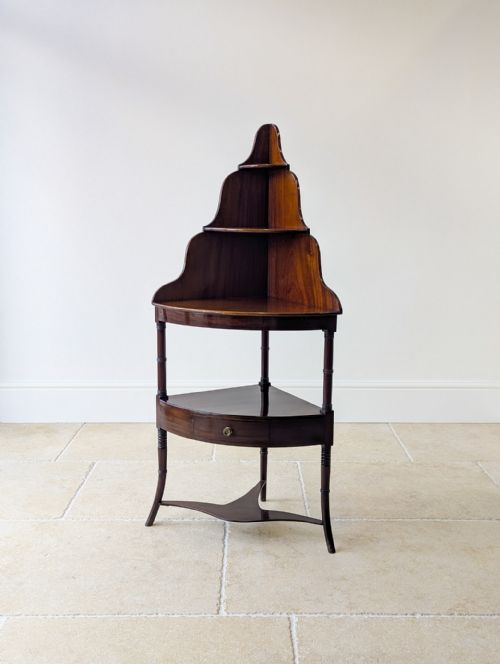
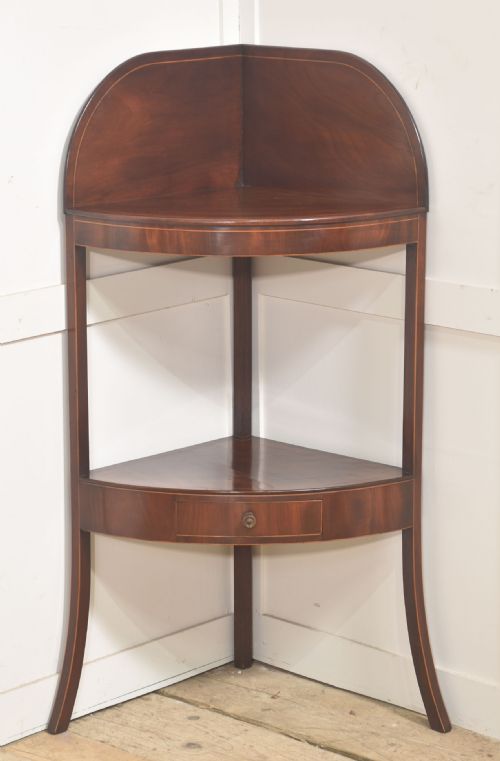
The selection on this page demonstrates how these pieces bridge the gap between utilitarian bedroom furniture and polished reception room items. Corner stands and bow-front variants dominate the offerings, showing the clever spatial economy favoured by cabinet makers of the period.
Materials and Construction
Cabinet makers relied primarily on solid mahogany and flame mahogany veneer, often accented with boxwood stringing to define edges and panels. Structural elements like drawer linings and internal framing frequently incorporate secondary timbers such as pine.
Selected high-end pieces integrate brass hardware, glazed ceramic bowls, and heavy marble tops to resist water and provide a durable working surface. Joinery techniques from the period ensured rigidity in tall corner tiers and frequent drawer use.
Several washstands double as secret dressing units complete with hidden mirrors and ceramic bowls waiting for morning tea.
Assessing Quality and Execution
Quality rests heavily on the selection of timber, visible in the depth of grain and the symmetrical placement of flame mahogany veneer across drawer fronts. Superior execution appears in crisp boxwood stringing, tight dovetail joinery, and intact structural galleries designed to contain basins.
Makers such as Gillows distinguished their output through refined classical proportions, stamped signatures, and meticulous secondary timber selection. Lesser pieces show simpler provincial turning and plain mahogany without decorative stringing or figured veneers.
Gillows Lancaster
The Regency Mahogany Washstand Glossary
- Gallery
- A raised wooden border running along the back and sides of a table top to prevent items from sliding off. These galleries often feature three-quarter surrounds on dressing and wash tables.
- Stringing
- Thin inlaid lines of a contrasting wood, such as boxwood, used to outline drawers and borders. This decorative technique highlights the linear geometry of the furniture.
- Flame mahogany
- A veneer cut from the branch junction of the mahogany tree, producing a dramatic feather-like flame pattern. It was reserved for the most prominent display surfaces.
- Bow front
- A convexly curved front surface popular on cabinets and washstands during the Georgian and Regency eras. This shape softens room angles and adds visual depth.
- Bidet
- A low basin stand or stool designed for personal hygiene, sometimes disguised within a mahogany frame. These pieces share similar turned legs and cabinetry with standard washstands.
Regency Mahogany Washstand: Frequently Asked Questions
What was a regency mahogany washstand used for?
These pieces served as dedicated bedroom stations for morning washing and grooming before plumbed bathrooms existed. They held ceramic basins, water jugs, soap, and powders within specialised top tiers and enclosed cupboards.
Over time, many owners adapted them as bedside tables, lamp stands, or decorative corner consoles in living spaces.
How do I identify a genuine period piece?
Examine the timber selection, construction methods, and secondary woods like pine used inside drawer linings. Period pieces exhibit hand-cut dovetails, aged patination on the mahogany, and authentic brass hardware rather than modern substitutes.
Look for architectural clues such as three-quarter galleries and boxwood stringing typical of early nineteenth-century cabinet making.
Where should I place a corner washstand?
Corner washstands were specifically engineered to utilise awkward angles and dead space in bedrooms or hallways. Their curved or angled backs allow them to lock neatly into ninety-degree room corners.
They function well today as lamp tables, plant stands, or occasional display surfaces in compact rooms.
Did washstands come with marble tops?
Some washstands incorporated marble tops to provide a waterproof surface that resisted splashing from water jugs and basins. These were often paired with hidden mirrors and ceramic accessories.
Wooden tops remained common, protected by varnished finishes and removable glazed bowls.