







Georgian Washstand Desk
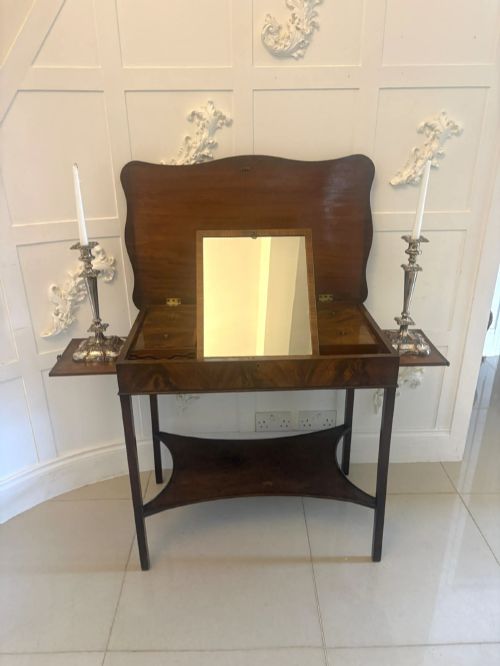
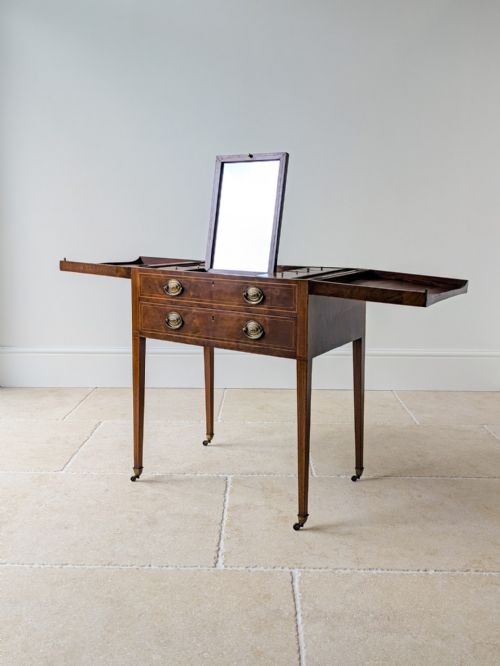
These georgian washstand desk pieces offer clever dual-purpose furniture crafted to handle morning ablutions and correspondence alike.
Georgian Washstand Desk
A georgian washstand desk brings together the practical requirements of the bedroom and the study within a single timber frame. Pieces answering to this description span periods from the eighteenth century into the nineteenth, often crossing between dressing tables, washstands, and kneehole desks.
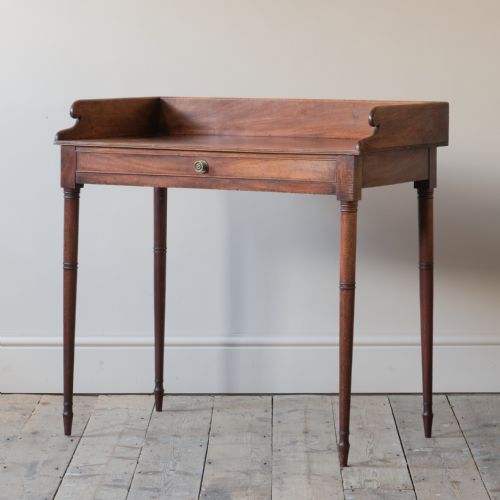
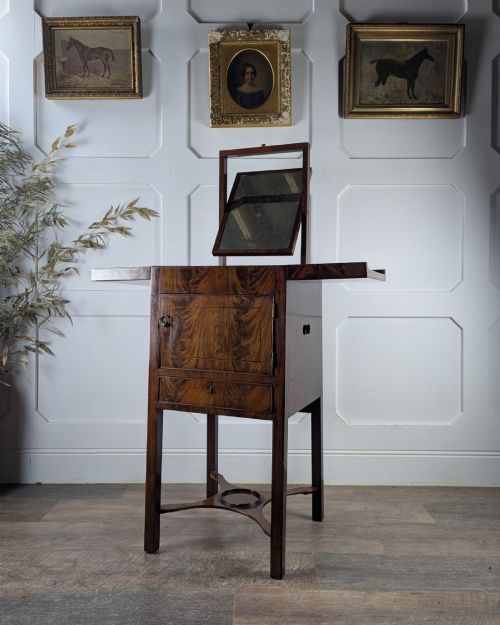
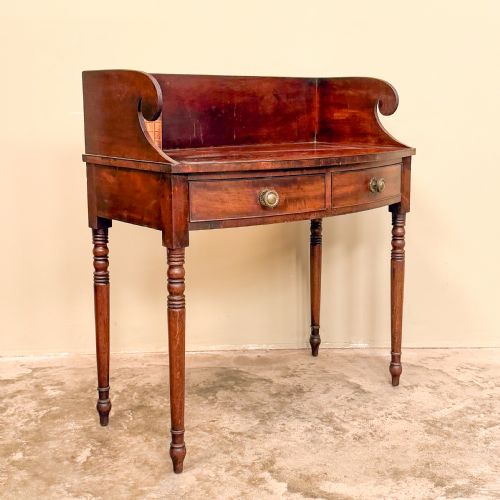
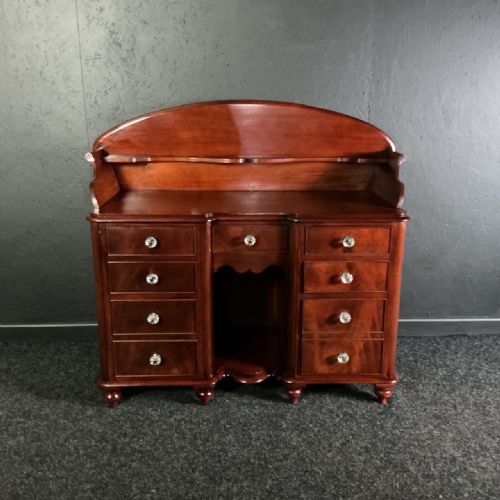
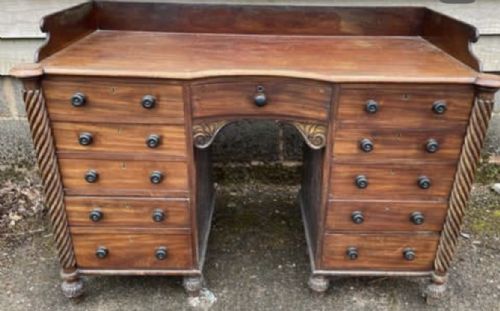
The most common forms on this page include mahogany side tables, fold-away washstands, and gentleman's dressing chests equipped with mirrors or gallery surrounds. Makers built these items to serve private chambers, utilising compact footprints suited to domestic routines.
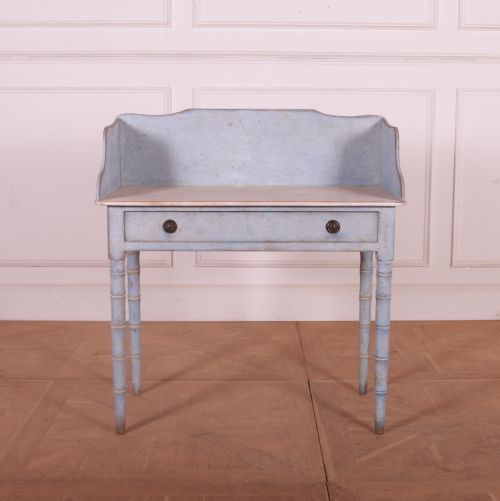
Design vocabulary shifts across the selection from plain Georgian lines to Regency concave-front layouts and William IV proportions. Elements such as tray backs, upstand rails, and multiple drawers define the functional character of these survivals.
Materials and construction
Mahogany and Cuban mahogany form the primary structural timbers across the selection, prized for dense grain and durability in daily use. Secondary woods like pine appear in carcass construction and drawer linings, while painted finishes feature on country examples.
Hardware details incorporate brass fittings, such as drop handles and key escutcheons, alongside inset glass mirrors on dressing attachments. Joinery methods rely on traditional drawer construction and frame assemblies designed to support basins and writing surfaces.
The listings on this page span the eighteenth and nineteenth centuries, featuring mahogany, painted pine, and brass hardware across dressing tables and washstands.
Evaluating quality and execution
Quality reveals itself in the selection of timber veneers and the crispness of cabinet-maker mouldings around drawers and galleries. Superior examples display thoughtful integration of folding mechanisms or fitted interiors rather than purely utilitarian assembly.
The degree of original survival, from brass handles to the stability of tray back upstands, separates standard utility pieces from items retaining finer finish. Proportion and balance in concave or kneehole fronts further distinguish workshop output.
Gillows
The Georgian Washstand Desk Glossary
- Gallery surround
- A raised wooden border running along the back and sides of a tabletop to prevent items from sliding off. This feature is common on pieces designed for washing or grooming.
- Kneehole dressing table
- A compact desk or dressing table featuring a central recess for the user's knees, flanked by pedestals of small drawers. These provide organised storage for personal items.
- Cuban mahogany
- A dense, richly figured hardwood imported from the Caribbean, utilised extensively in high-end cabinet making during the Georgian and Regency periods. Its heavy weight and deep colour mark superior furniture.
- Tray back
- A slightly raised edge or gallery formed from the solid timber of the tabletop or added separately. It protects walls and floors from water splashes during washing.
Georgian Washstand Desk: Frequently Asked Questions
What is a georgian washstand desk?
These items combine the functions of a bedroom washstand, a dressing table, and a writing desk into one piece of furniture.
They emerged to serve domestic needs in private chambers where space efficiency and multi-purpose utility were paramount.
How were these tables used?
Owners used them for morning grooming, washing, and attending to correspondence in bedrooms or dressing rooms.
Fold-away tops and integrated mirrors allowed the furniture to conceal washing basins when not in use.
How do I distinguish Georgian from Regency pieces?
Georgian pieces generally display straighter lines, simpler bracket feet, and restrained classical proportions.
Regency examples often introduce concave fronts, bolder brass mounts, and heavier classical influences reflecting early nineteenth-century taste.
Where should I place one at home?
They suit hallways, bedrooms, or studies as accent pieces offering useful surface area and drawer storage.
Their compact depths make them particularly practical for narrow circulation spaces.