


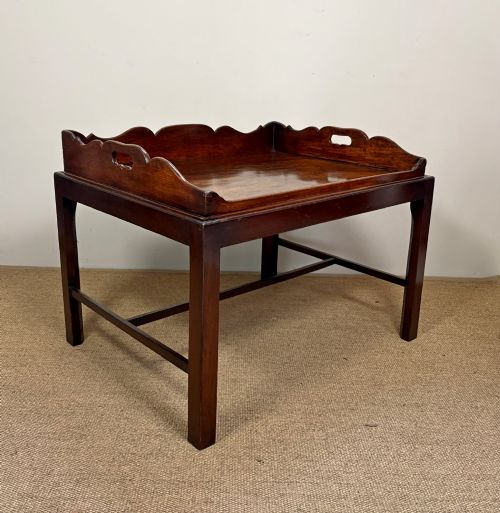
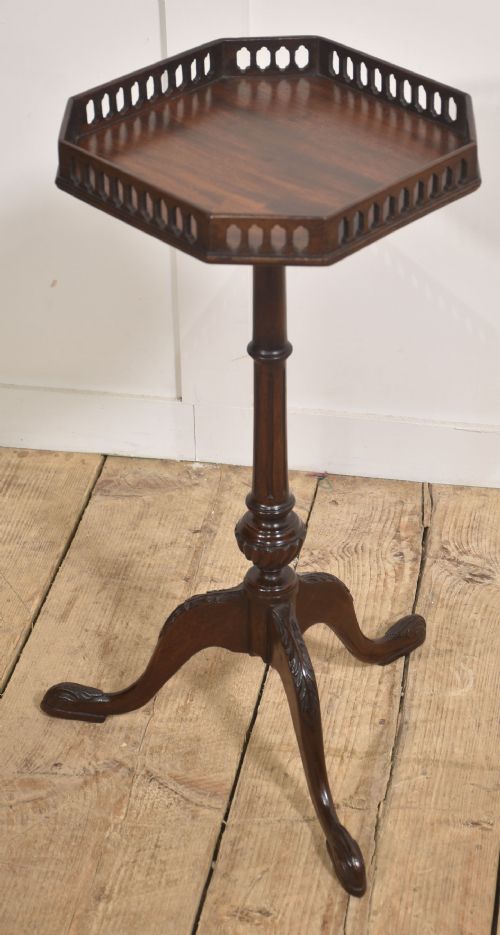
Georgian Gallery Top Table
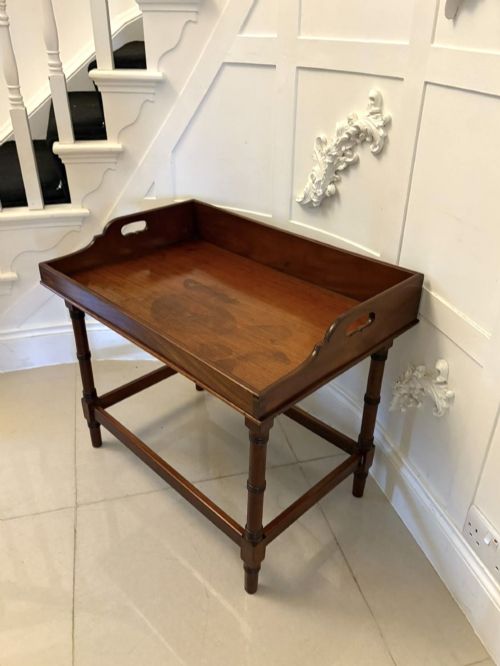
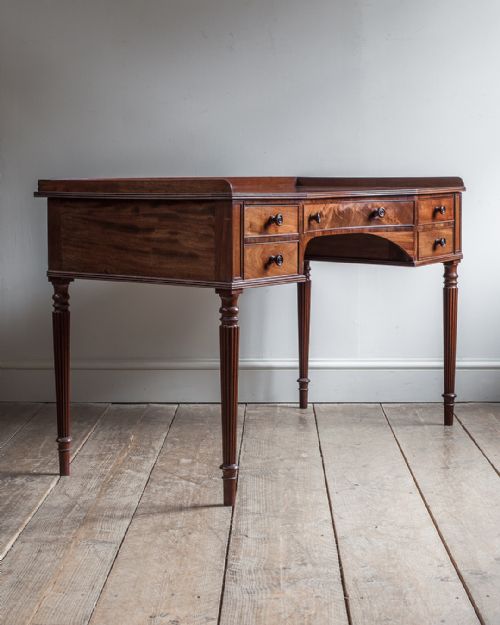
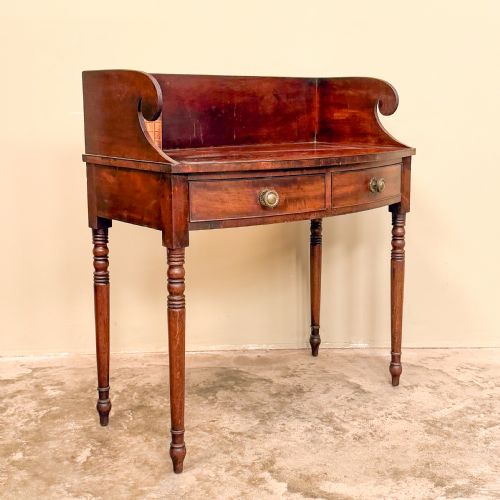
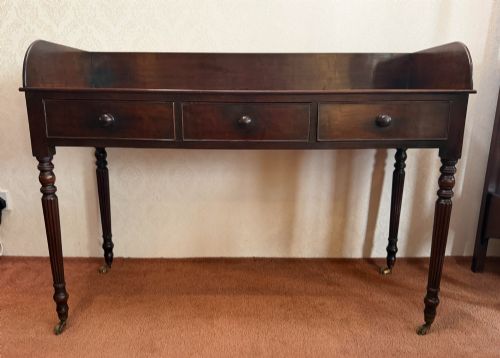
These georgian gallery top table examples bring refined raised rims and rich timber to a room, offering both practical surface area and historic character.
Georgian Gallery Top Table
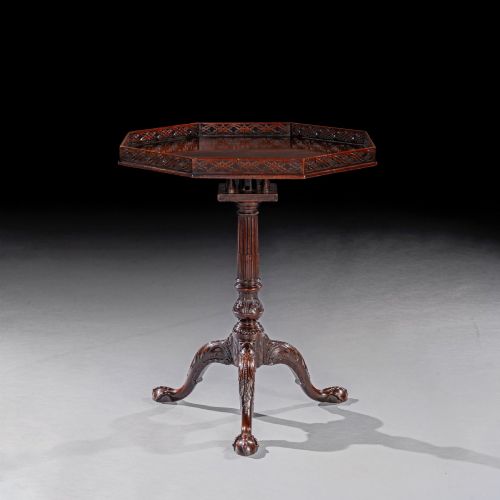
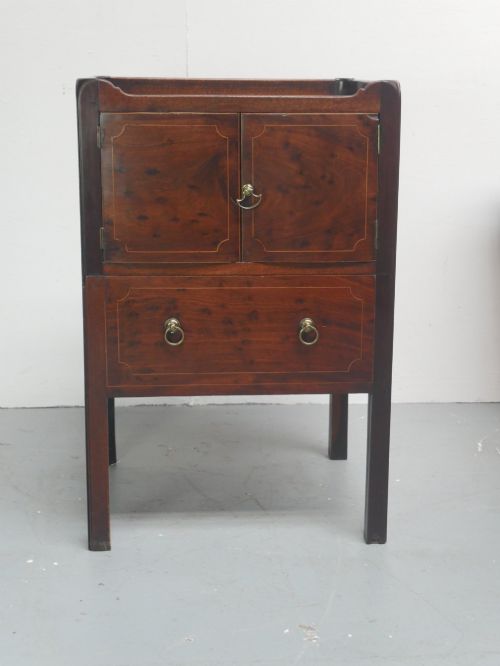
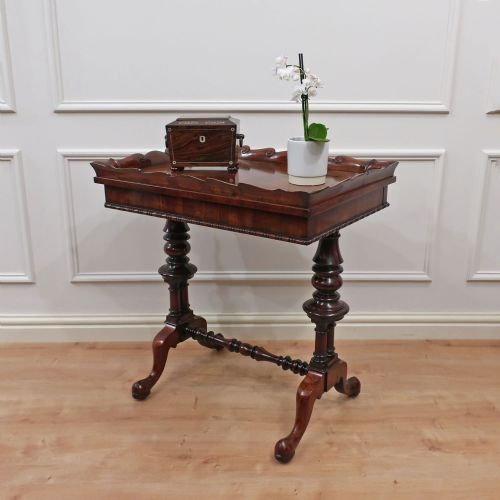
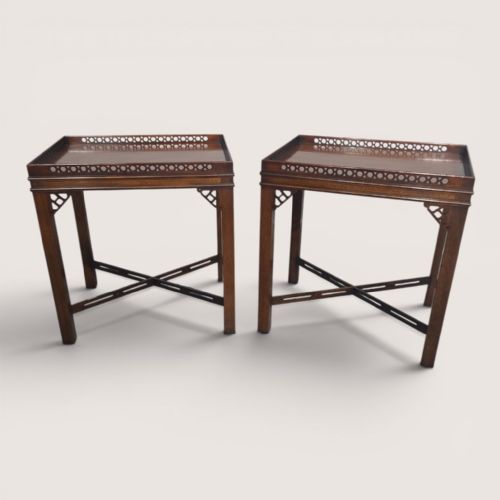
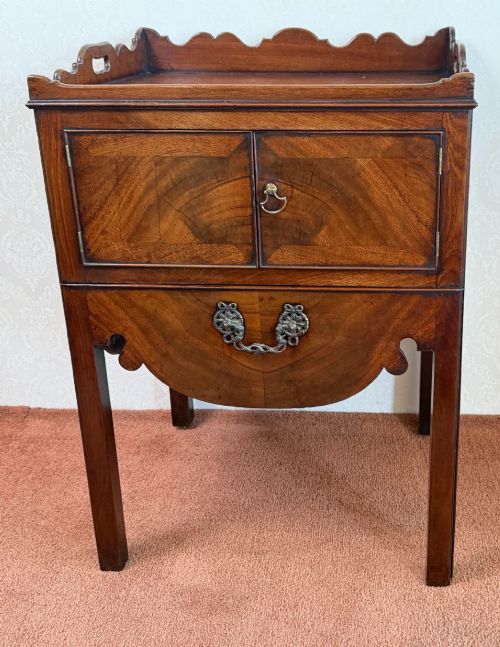
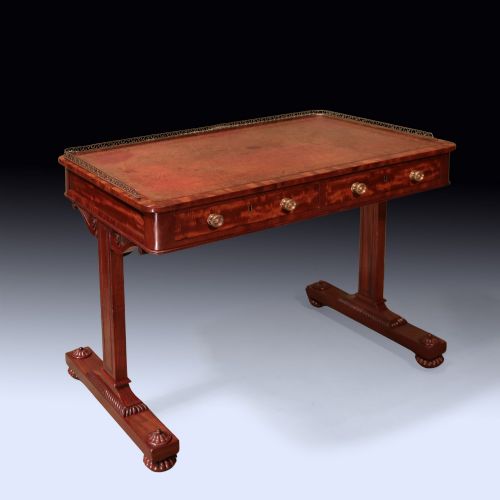
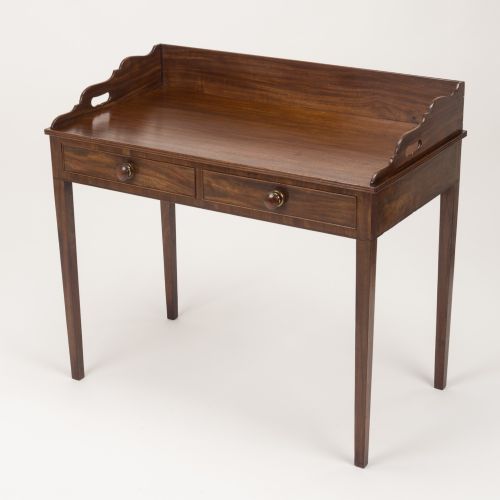
A georgian gallery top table typically presents a raised wooden or pierced brass rim designed to keep small items secure on the surface. You will frequently find this form expressed through side tables, bedside cabinets, and occasional tables originating across the eighteenth and nineteenth centuries.
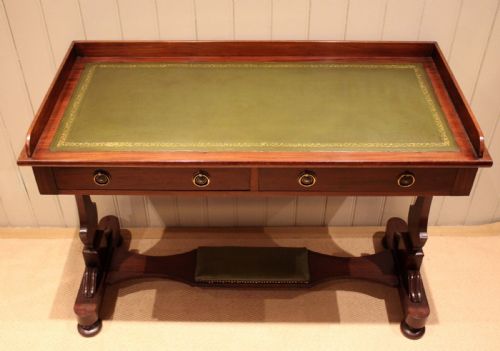
The selection ranges from authentic Georgian and Regency pieces to later revival iterations from the early twentieth century. Makers of these periods favoured versatile formats, resulting in diverse uses as urn stands, writing desks, and butlers trays on stands.
Mahogany dominates the selection, frequently paired with secondary timbers and subtle boxwood inlay. Buyers searching this phrase look for that distinct raised perimeter edge combined with traditional proportions and timber patination.
Materials and construction methods
Cabinetmakers relied heavily upon solid mahogany and figured veneers, often selecting walnut or satinwood for contrasting details and borders. Boxwood inlay adds delicate linear definition to table tops and friezes on select pieces.
Structural integrity relies on traditional joinery, with tripod bases, reeded legs, and brass hardware providing both support and decoration. Trays often incorporate dovetailed corners and bracket mounts to secure the raised gallery edges cleanly.
Current listings demonstrate that mahogany is the primary timber used for these tables, accompanied by occasional examples in walnut, rosewood, and satinwood.
Assessing quality and craftsmanship
Quality reveals itself in the crispness of the gallery edge and the selection of timber figures for the top surface. Superior examples demonstrate meticulous hand-cut joinery and retain their original brass fittings without modern replacements.
Proportion and balance distinguish finer workshop pieces from standard utility items. The integration of the gallery into the main tabletop shows the maker's skill, particularly where pierced brass or shaped wood surrounds meet the corners.
Gillows
The Georgian Gallery Top Table Glossary
- Gallery top
- A raised wooden or metal rim running around the edge of a table top to prevent objects from rolling off. This feature is characteristic of serving tables, tray tables, and bedside cabinets.
- Tripod base
- A central pillar support resting on three carved legs, commonly found on smaller occasional and wine tables. This construction allows the table to stand stable on uneven historical floorboards.
- Boxwood inlay
- Narrow strips of pale yellow boxwood inserted into grooves in darker wood surfaces to create geometric borders or decorative motifs. It provides a sharp visual contrast against mahogany.
- Reeded legs
- Vertical rounded parallel mouldings carved directly into the surface of table legs, popular during the Regency period. They offer a softer texture than fluted or plain square legs.
- Commode
- A low enclosed cabinet with doors or drawers, frequently utilised in bedrooms during the Georgian period. Many examples feature gallery tops designed to hold washing basins or night utensils.
Georgian Gallery Top Table: Frequently Asked Questions
What is a georgian gallery top table used for?
These tables served various domestic purposes, from holding tea services and urns to functioning as bedside cabinets or writing surfaces. The raised rim made them particularly useful for keeping rolling items secure.
Today, they function well as compact side tables in living rooms or as distinctive bedside surfaces where their raised edges prevent items from sliding off.
How do I date a gallery top table?
Dating relies on examining the timber species, construction joints, leg styles, and secondary woods used in the interior framing. Eighteenth-century pieces typically show hand-cut dovetails and solid mahogany boards, while later revivals often display standardised machine-made elements.
Looking closely at the patina, wear patterns, and the method used to attach the gallery edge helps separate original period items from twentieth-century reproductions.
Are all gallery tops made of wood?
While the majority feature shaped wooden galleries integrated directly into the tabletop, some examples incorporate pierced brass galleries fixed to the perimeter. These brass surrounds are particularly common on tripod base tables from the Georgian and Regency periods.
Both timber and brass variations served the practical purpose of containment, though brass versions often add a lighter decorative contrast to dark mahogany tops.