





Regency Mahogany Table Clock
A regency mahogany table clock is a precise timekeeper housed in rich timber, designed to sit prominently on a bracket or surface.
Regency Mahogany Table Clock
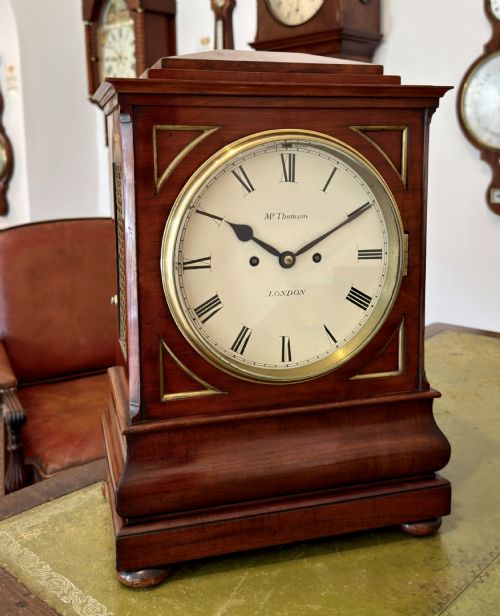
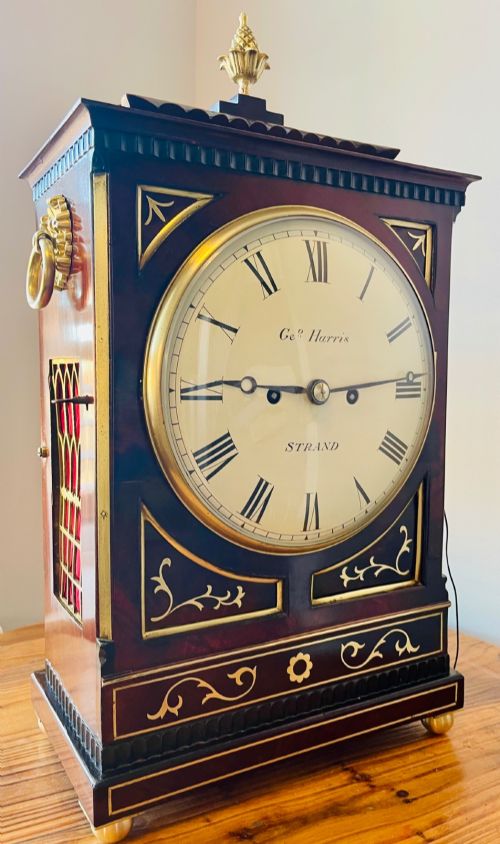
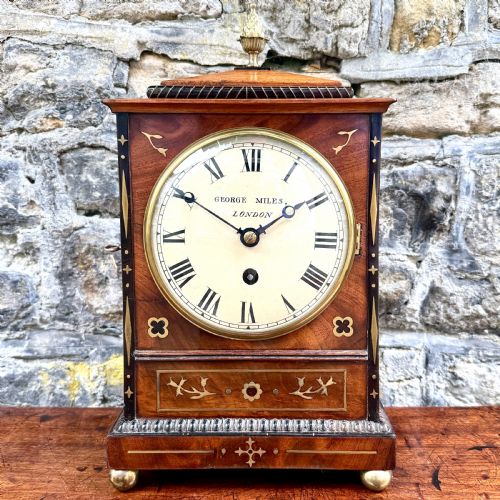
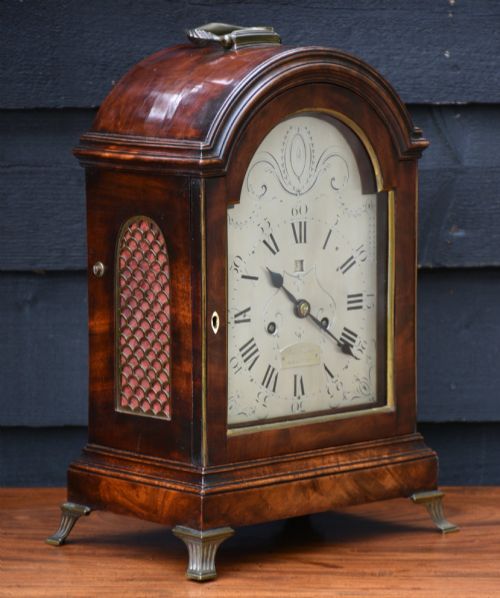
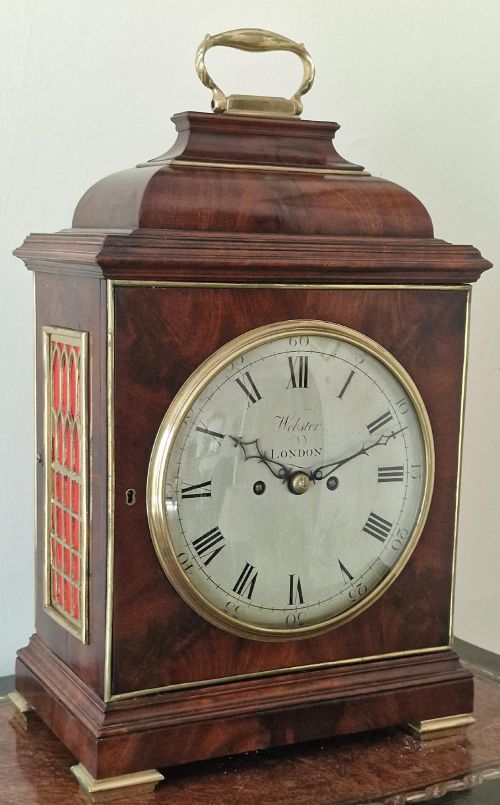
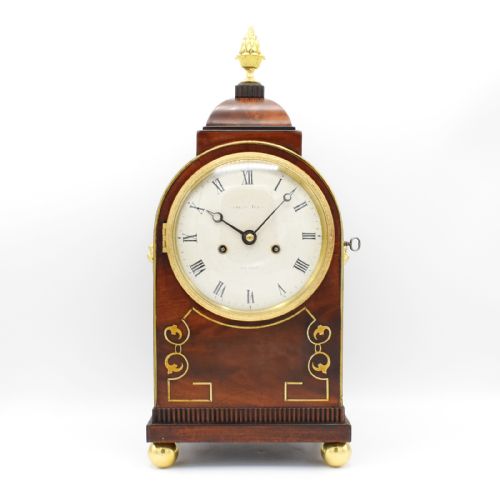
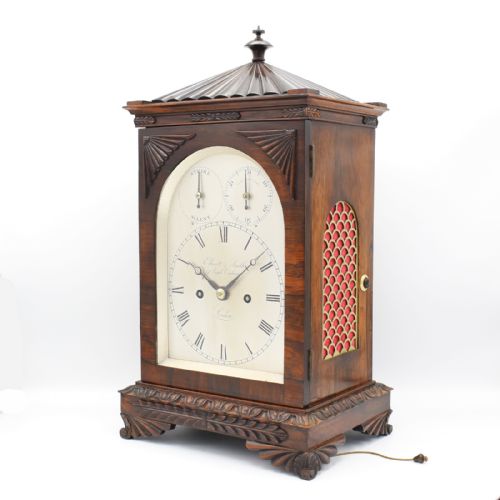
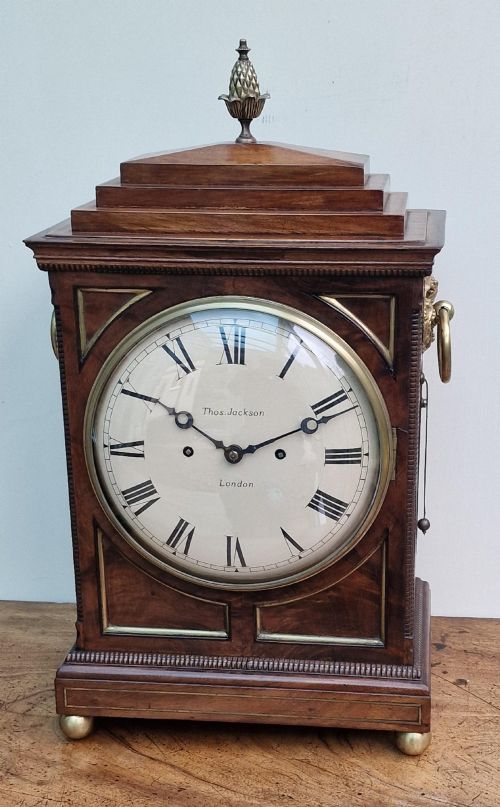
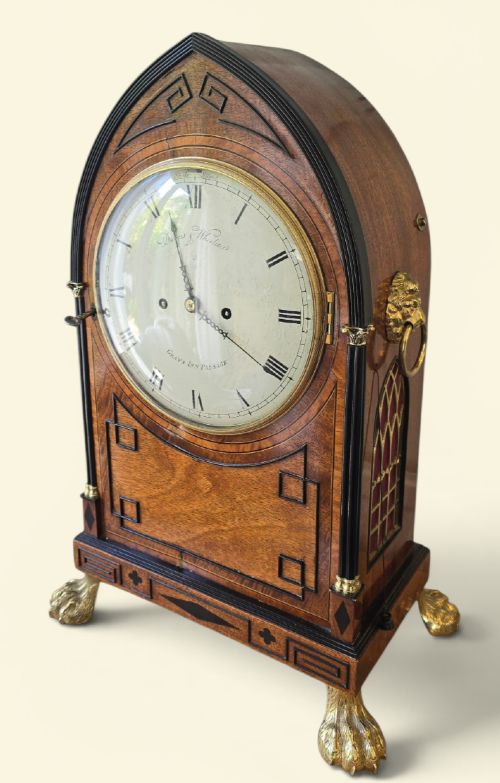
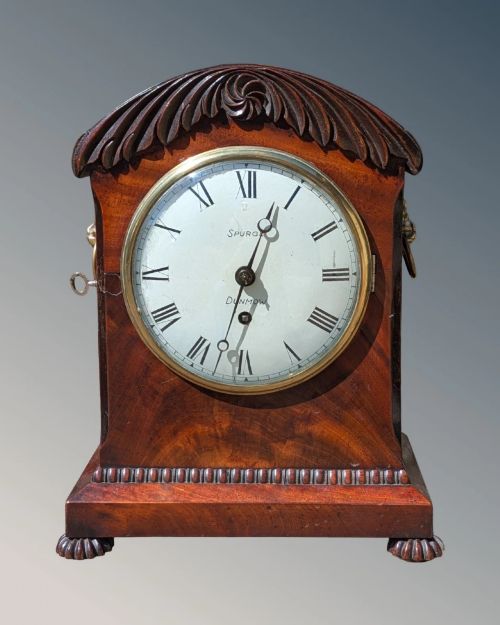
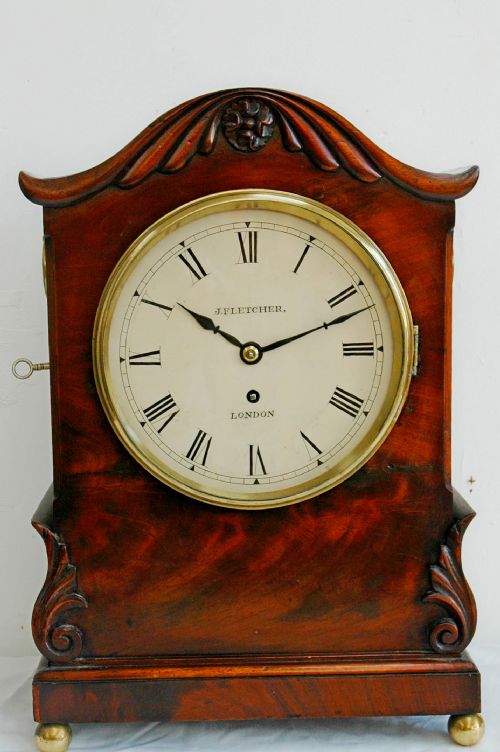
When you search for a regency mahogany table clock, you encounter timepieces predominantly from the Regency, Georgian, and wider nineteenth-century periods. These objects take the form of mantel clocks, library clocks, and bracket clocks with distinct silhouettes including pad tops, lancet tops, chamfer tops, and balloon cases.
The pieces on this page originate from both London workshops and provincial makers across England, ranging from simple timepieces to complex striking and repeating mechanisms. You are most likely to meet mahogany-cased examples featuring brass inlay, silvered dials, and glass viewing panels designed for domestic interiors.
Judging Quality
The distinction between a standard piece and a superior one rests on the crispness of the case carving, the precision of the brass inlay, and the reputation of the maker inscribed on the dial. Provincial clocks often display simpler vernacular charm, whereas signed London pieces from notable makers demonstrate higher refinement in movement complexity and cabinetwork.
Proportions also dictate standard; larger, architectural cases with specialised top designs such as pagoda or lancet shapes require greater joinery skill than plain rectangular mantel boxes.
Listings feature mahogany, brass, glass, enamel, ebony, silk, silvered metal, and rosewood across various nineteenth-century styles.
Thomson of London·Webster, London·Barwise, London·Charles Pratt London·Ellicott & Smith·Thomas Jackson, London·George Orpwood·Bush of London·Desbois & Wheeler·L. Vick of Stroud·Spurge Dunmow·Cording of London·Thomas Moss·Wilkinson Leicester·Barrett London·J Kingerley Manchester·Paul Philip Barraud·Thomas Connold of Alysham·Hyde of Salisbury·Hampson & Son·Taylor of London·Leplastrier of London·J. Condliff Liverpool·George Yonge
The Regency Mahogany Table Clock Glossary
- Fusee
- A conical pulley used in clock movements to maintain even power as the mainspring unwinds. This device ensures consistent timekeeping across the duration of the wind.
- Bracket Clock
- A portable clock traditionally placed upon a matching wall bracket or table surface. Many feature carrying handles and glazed side panels.
- Silvered Metal
- A brass dial plate treated with a silver solution to create a bright, reflective surface for engraved numerals. These dials provide high legibility under indoor lighting.
- Lancet Top
- A pointed, gothic arch shape forming the upper profile of certain clock cases. This architectural silhouette gained popularity during the Georgian and Regency periods.
- Pad Top
- A raised, domed central section finishing the top of a wooden clock case. It offers a smooth curved profile above the main body of the timber.
Regency Mahogany Table Clock: Frequently Asked Questions
What is a fusee movement?
A fusee movement uses a conical pulley and cord or chain to regulate the pull of the mainspring.
This clever mechanical arrangement ensures that the force delivered to the gear train remains constant from a full wind down to the last hour.
Where were these clocks placed?
These clocks were designed to sit on mantelpieces, desks, library tables, or dedicated wall brackets.
Their portability allowed owners to move them between rooms depending on where timekeeping was needed most.
How do I identify a Regency clock?
Regency clocks typically feature dark mahogany timber, brass inlay, and geometric or classical proportions reflecting early nineteenth-century design.
Look for maker signatures on the dial and distinctive case silhouettes like pad tops or lancet arches.
What does striking and repeating mean?
A striking clock sounds the hours automatically using a bell or gong within the timber case.
A repeating mechanism allows the owner to pull a cord or lever to make the clock restrike the last hour on demand.