
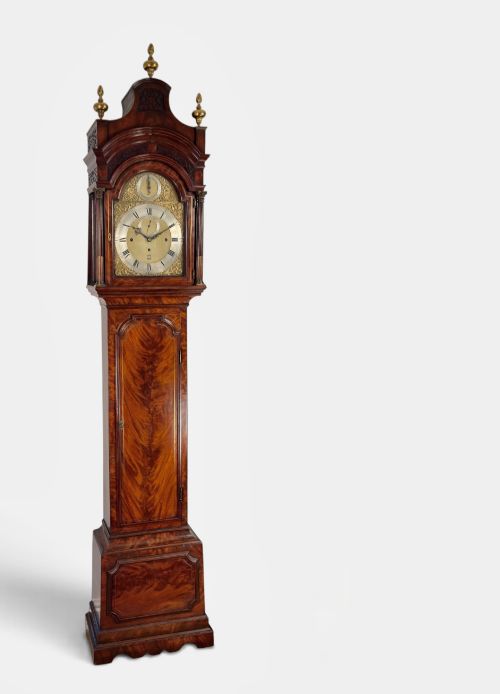
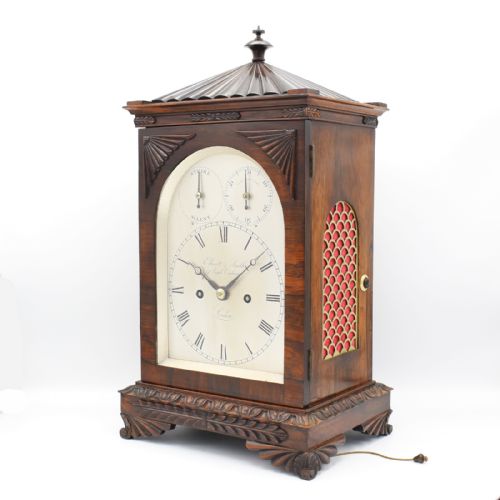
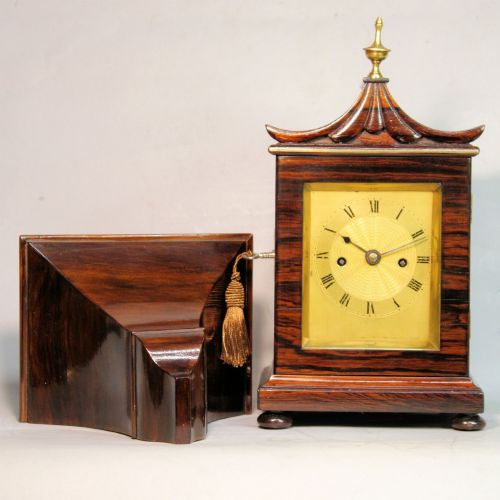


Pagoda Top Clock
A pagoda top clock brings unmistakable architectural silhouette and cabinet-making skill into a room.

Pagoda Top Clock
A pagoda top clock is a striking timekeeper distinguished by its tiered, swept-eave superstructure, echoing traditional East Asian rooflines. The selection ranges from towering floor-standing longcase examples to compact mantel and bracket clocks designed for tabletops or walls.
The aesthetic bridges British cabinet-making and Eastern design motifs, drawing heavily upon Georgian and Victorian interpretations of Chinoiserie. These pieces serve as both functional horology and commanding focal points within a traditional interior scheme.
How they were made
Cabinet-makers constructed the architectural cases using dense timbers such as mahogany, rosewood, and walnut, frequently applying intricate lacquer finishes to achieve the characteristic glossy oriental sheen. Specialised joinery was essential to build the multi-tiered pagoda hoods without compromising the structural integrity required to house heavy brass clock movements.
Movements relied on complex mechanical systems, including fusee drives and quarter-striking mechanisms, fitted behind glazed brass bezels. Dial plates integrated engraved brass, silvered chapter rings, and finely pierced hands driven by pendulum or spring power.
Pagoda Top Clock Retail Price Guide 2026
Typical asking prices for pagoda top clock among the pieces listed under this phrase on Sellingantiques today, from the lower quarter to the upper quarter. They describe what is for sale here now, not the wider market.
What varies in quality
The distinction between standard and exceptional pieces rests upon the crispness of the cabinet work and the fidelity of the pagoda tiered roof proportions. Subtle details in the carving, the depth of the lacquer decoration, and the integration of the hood with the main trunk dictate the visual harmony of the piece.
Movement sophistication and maker reputation elevate certain examples significantly above others. Master horologists signed their brass dials, ensuring that the internal mechanical execution matched the sculptural ambition of the exterior woodwork.
John Ellicott·Thomas Mudge·Anthony Marsh·Chater And Son·Thomas Bawcutt
The Pagoda Top Clock Glossary
- Fusee
- A conical pulley used in clockwork to maintain an even pull as the mainspring unwinds. This device ensures more accurate timekeeping throughout the duration of the wind.
- Chinoiserie
- The European imitation and interpretation of Chinese and other East Asian artistic traditions. It appears here in the painted lacquer scenes adorning clock cases.
- Longcase clock
- A tall, floor-standing weight-driven timekeeper enclosed in a wooden case with a pendulum swinging inside the trunk. These are frequently referred to colloquially as grandfather clocks.
- Bracket clock
- A portable spring-driven clock originally designed to sit on a wall bracket or desk. Many feature ornate carrying handles and glazed side panels.
Pagoda Top Clock: Frequently Asked Questions
Where should I place a pagoda top clock?
These pieces demand adequate vertical clearance and a stable surface, making them well-suited to spacious hallways, studies, or dedicated living areas.
Ensure the chosen location protects the delicate lacquer or polished timber surfaces from direct sunlight and dramatic temperature fluctuations.
How do I wind a fusee movement?
Winding requires a dedicated key inserted into the dial aperture, turned gently until the spring reaches tension.
Care must be taken not to overwind older mechanisms, stopping immediately upon meeting resistance to preserve the historic gearing.
Are these clocks suitable for daily timekeeping?
Many examples remain in working order and keep reliable time when properly maintained and serviced by a professional horologist.
Regular setting and occasional professional oiling ensure the centuries-old brass gears continue to function smoothly.
How do I identify the period of a clock?
Dating relies on stylistic clues in the case design, the materials used, and signatures engraved upon the brass dial plates.
Georgian and Victorian iterations display distinct cabinet-making proportions and decorative treatments unique to their respective decades.