
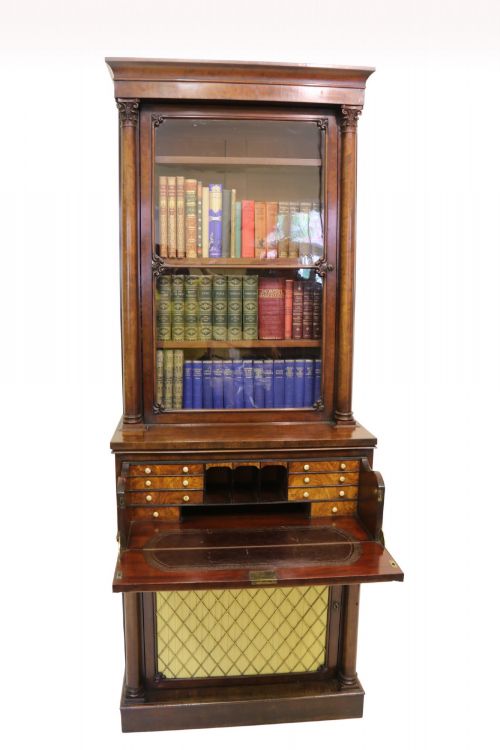
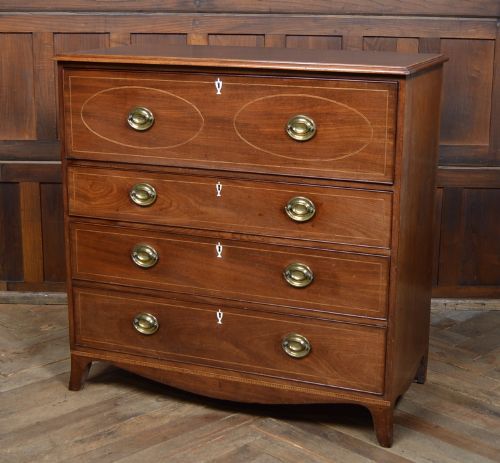


Regency Mahogany Secretaire Desk
A regency mahogany secretaire desk brings together elegant cabinetmaking and practical writing space in one piece.
Regency Mahogany Secretaire Desk
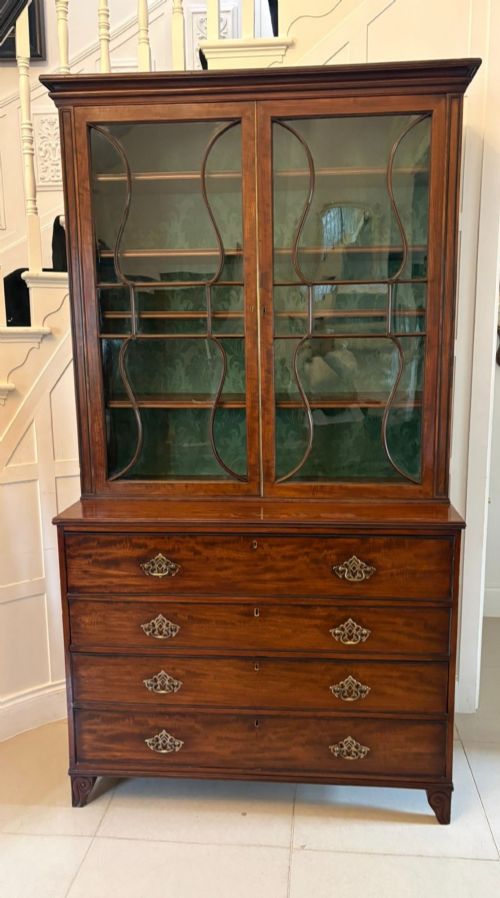
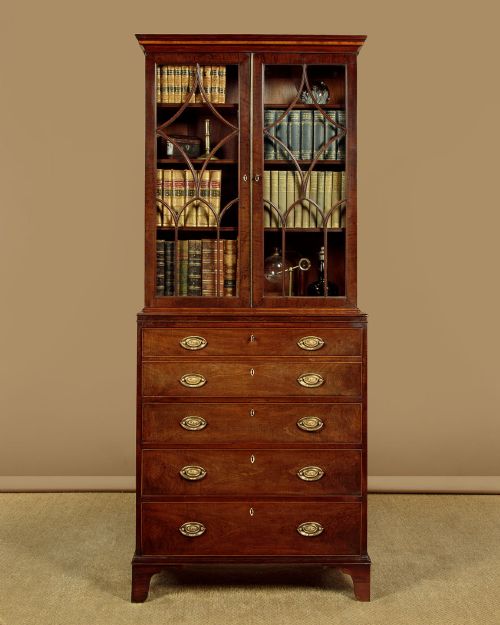
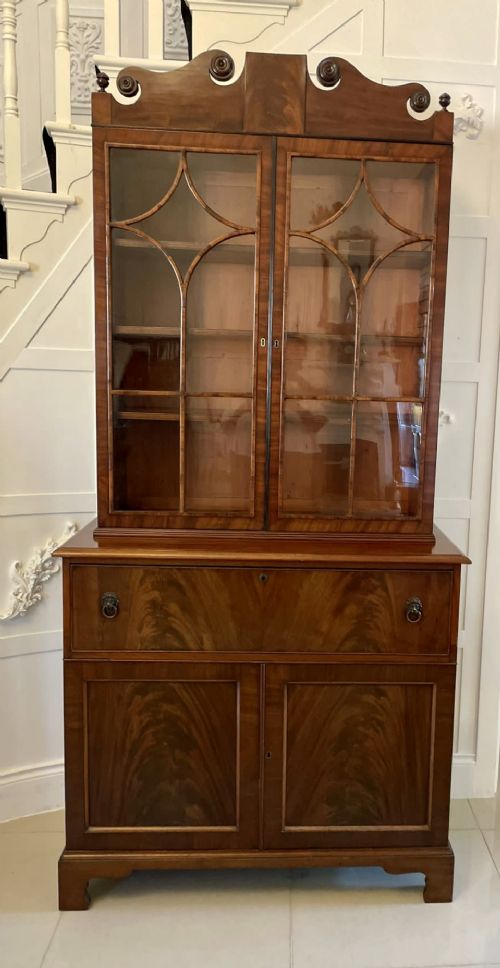
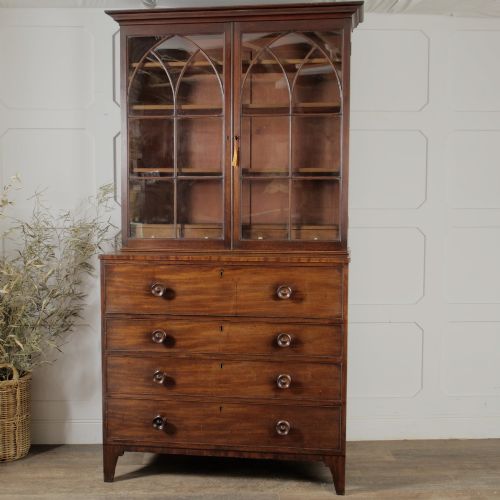
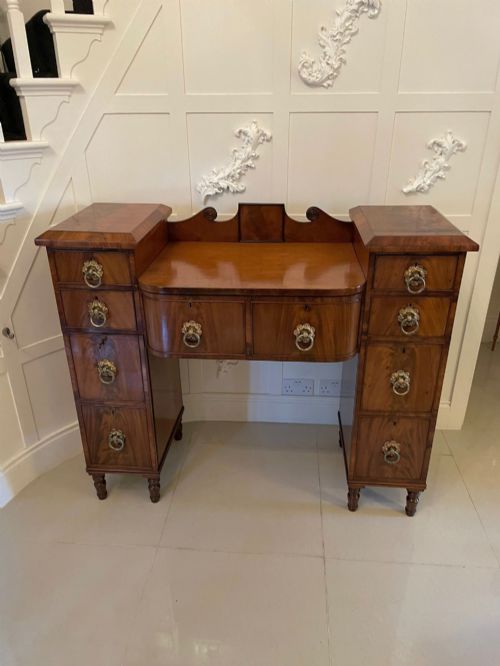
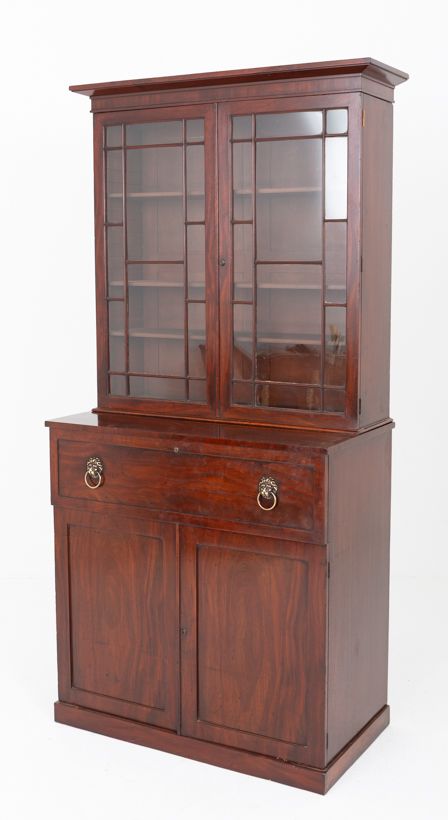
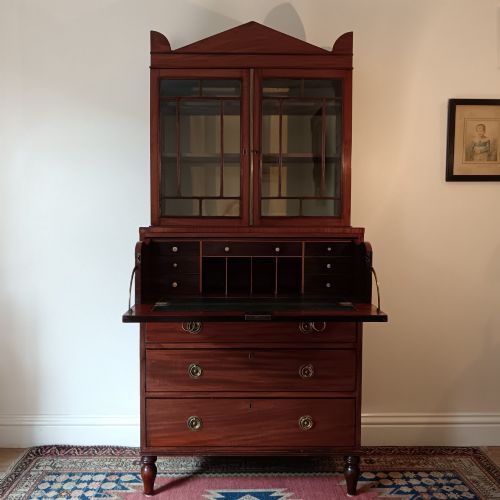
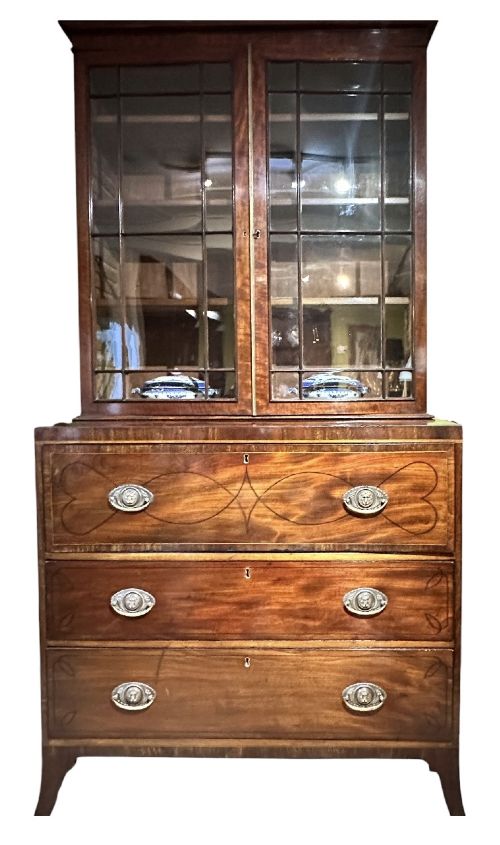
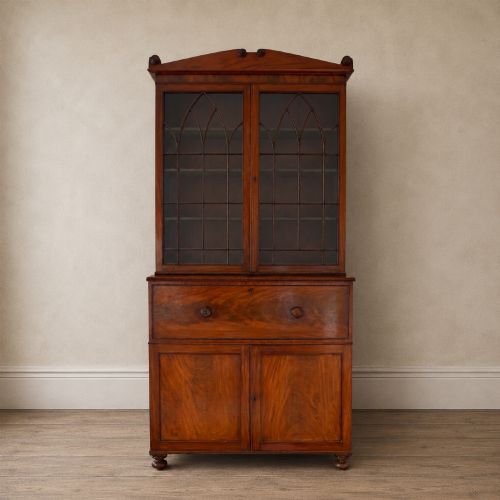
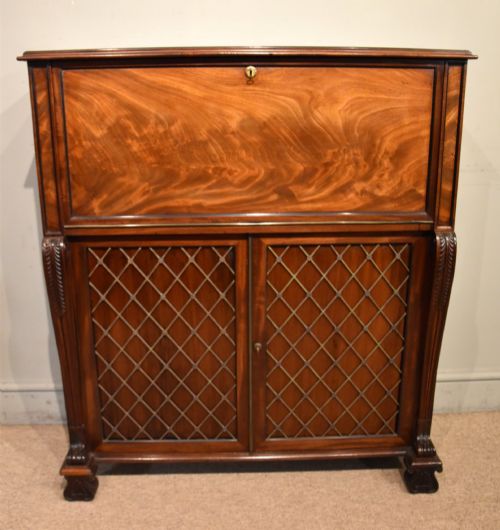
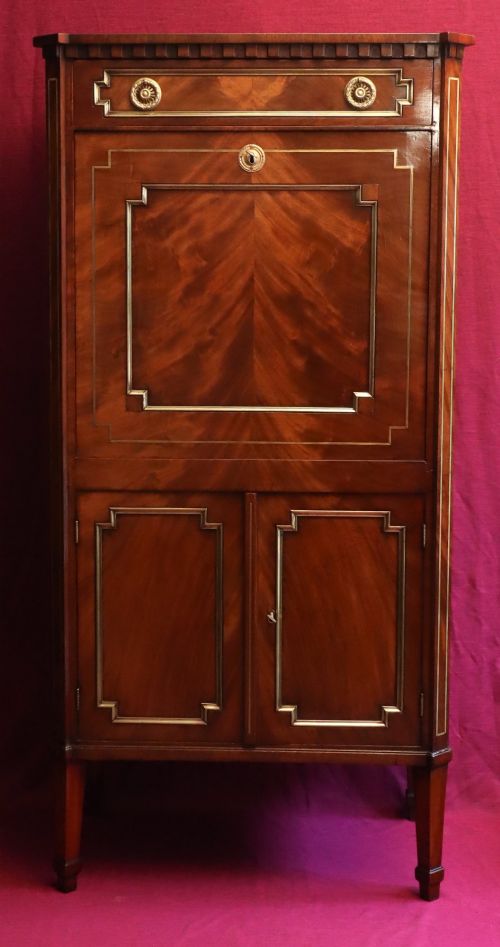
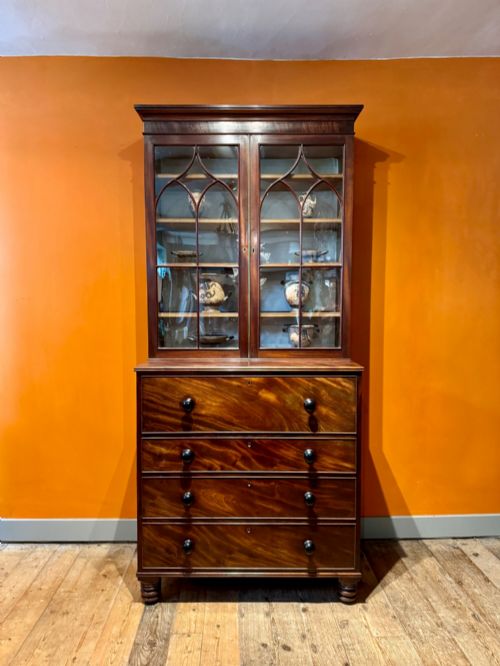
A regency mahogany secretaire desk combines a drawer that folds down for writing with lower drawers or a bookcase top. You will most frequently encounter taller bookcase variants alongside compact chests fitted with fall-front drawers from the nineteenth century.
The objects stem predominantly from the Regency, George III, George IV, and William IV periods, often taking the form of secretaire bookcases or chest of drawers combinations. These items served upper-class homes for correspondence and administrative tasks.
Makers utilised select timber figures to impress visitors, turning a utilitarian office piece into a formal reception room furniture item. The integration of glazed doors or fitted interior pigeonholes remains central to the form.
Construction and materials
Craftsmen selected solid mahogany and flame mahogany veneer over secondary timbers such as oak, applying brass handles and hinges for operational hardware. Glass panes appear within the upper bookcase doors.
Writing surfaces frequently integrate leather or baize inserts inside the drop-front drawer. Bone details occasionally accent the small drawers and pigeonholes hidden within the fitted interior.
Secret spring-loaded catches inside the fitted interior often required sliding a false drawer divider to unlock the hidden document compartments.
Judging the standard
Quality rests upon the selection of timber figures, where matched flame mahogany veneer demonstrates superior skill compared to plain stock. The intricacy of the internal pigeonholes and small drawers alters the tier of the piece.
Joinery execution in the drawer linings and stability in the fall-front mechanism divide standard workshop output from exceptional cabinet work.
George Oakley·Gillows of Lancaster·WILLIAM TROTTER Edinburgh
The Regency Mahogany Secretaire Desk Glossary
- Secretaire
- A writing cabinet containing a drawer that drops down to form a desk surface. It often conceals pigeonholes and small compartments.
- Flame mahogany
- A cut of mahogany timber displaying a distinctive rippled pattern resembling flickering flames. Cabinetmakers placed these veneers symmetrically across drawer fronts.
- Escritoire
- An alternative term for a writing desk or cabinet. This French word appears frequently in nineteenth-century inventory records.
- Baize
- A coarse woolen material resembling felt. It lines the pull-out or drop-front writing surfaces.
- Glazed doors
- Glass-paned cabinet doors fitted to the upper bookcase sections. They permitted the display of bound book collections.
Regency Mahogany Secretaire Desk: Frequently Asked Questions
What is a secretaire desk?
A secretaire desk contains a disguised drawer with a front that folds down to reveal a writing surface and internal compartments.
This design allowed owners to keep correspondence private while maintaining the clean exterior appearance of a chest or bookcase.
How do I spot flame mahogany?
Flame mahogany exhibits a dramatic, wave-like grain pattern created by cutting across the branch junctions of the tree.
Cabinetmakers arranged these figured veneers carefully to create symmetrical designs on the main display surfaces.
Were these desks used for books?
Many examples incorporate glazed upper doors to house library collections alongside the lower writing drawer.
Owners kept their volumes behind glass while using the drop-front desk for daily letter writing and accounts.
What wood lines the drawers?
Secondary timbers such as oak frequently appear inside the carcass construction and drawer sides of these pieces.
Craftsmen used sturdier regional timbers out of sight to support the heavier mahogany exterior veneers.
How do I date these desks?
Stylistic markers like brass hardware, leg shapes, and veneer patterns help place pieces within the Georgian and Regency eras.
Proportions shifted from geometric early forms toward more decorative treatments during the nineteenth century.