


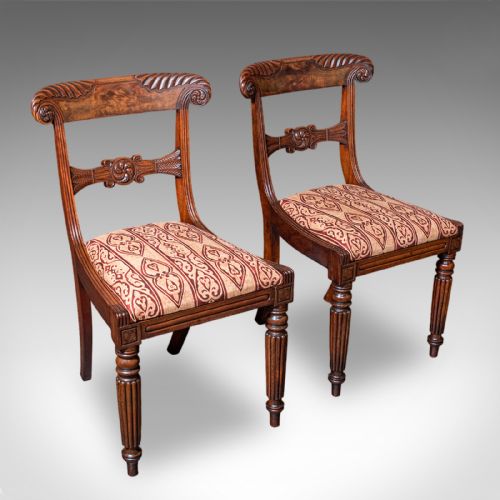
Regency Mahogany Seat
A regency mahogany seat brings together dense tropical timber and precise cabinet-making from the early nineteenth century.
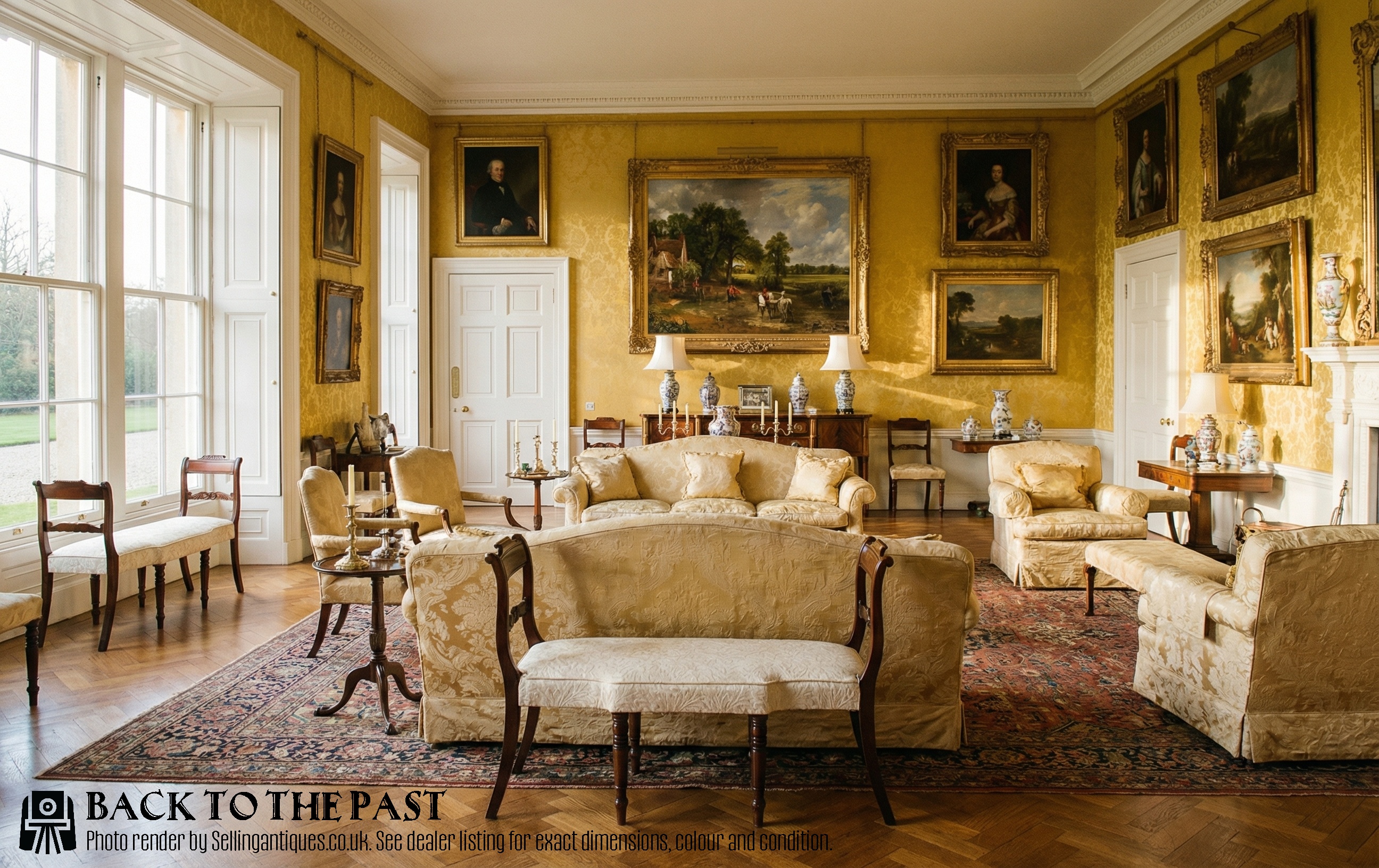
Regency Mahogany Seat
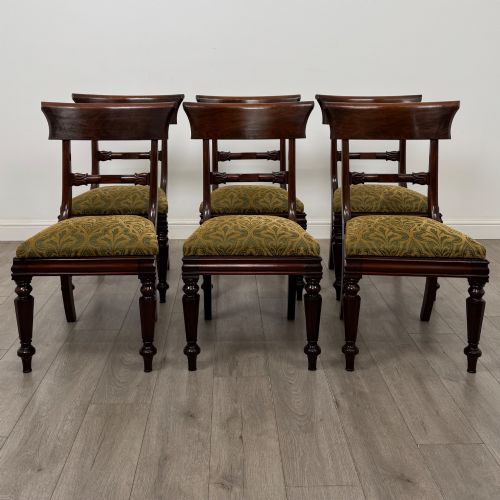
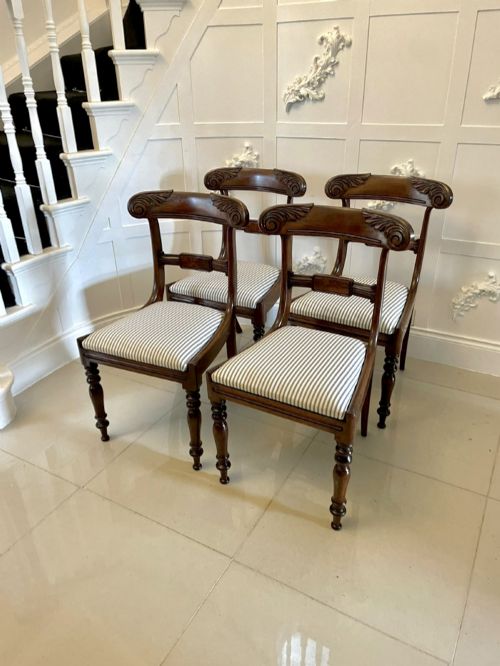
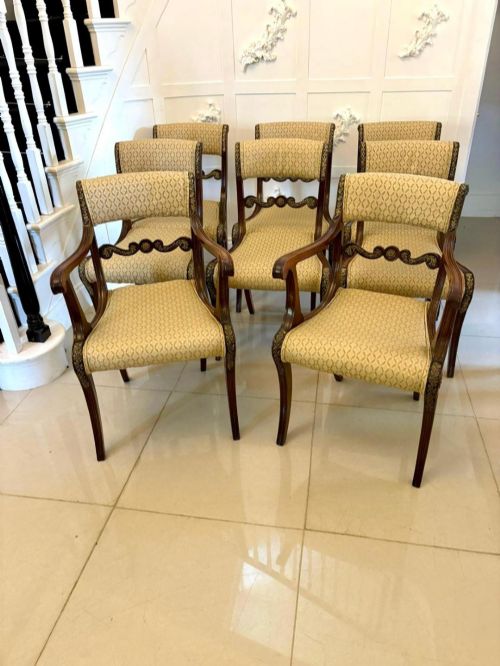
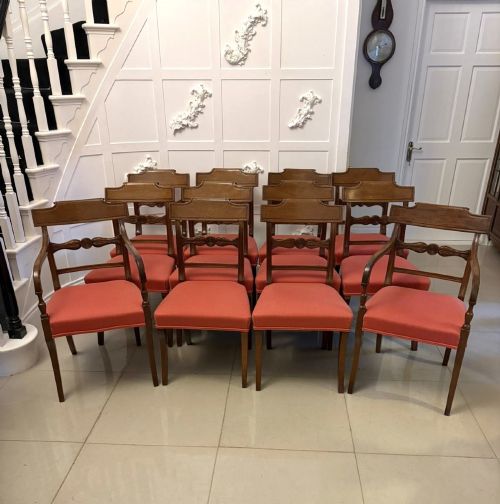
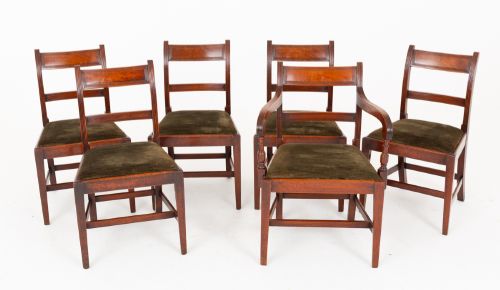
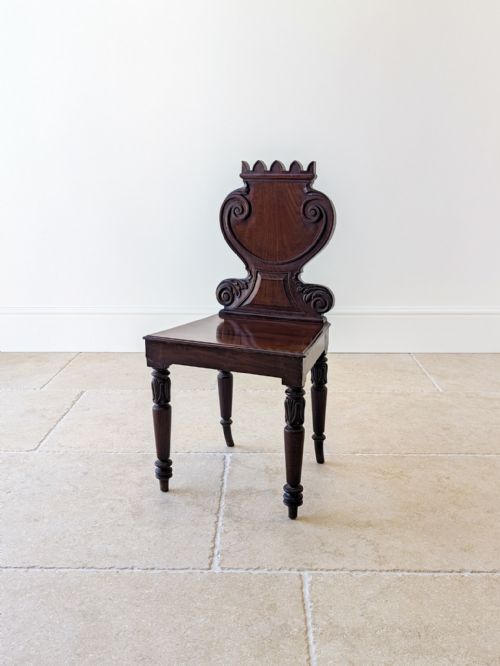
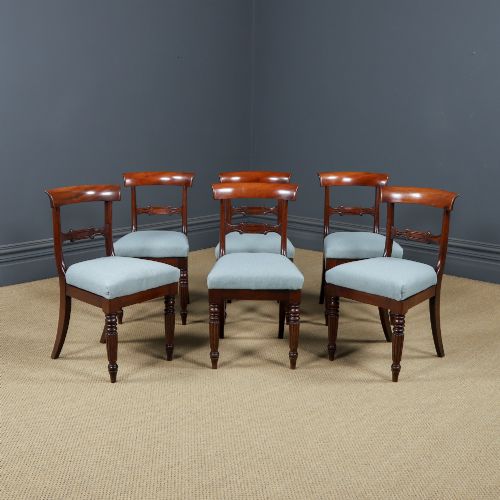
A regency mahogany seat encompasses various forms designed for early nineteenth-century interiors, ranging from single dining chairs and library armchairs to long window benches and hall seats. The most frequently encountered pieces on this page are dining chairs, often found in matching sets of four, six, or eight, alongside occasional carvers and library chairs.
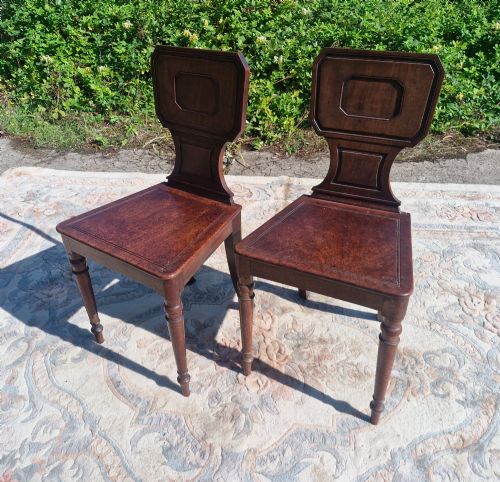
Makers of the period also produced specialised seating such as bergères, desk chairs, and recamier-style day beds, utilising dense dark hardwoods. Window seats and hall benches occasionally appear with roll-end supports or brass inlay, serving formal entrance halls and reception rooms.
Materials and Construction
Cabinet-makers relied primarily on solid and veneered mahogany, a dense tropical timber valued for its stability, deep grain patterns, and rich colour. Secondary woods like beech or ash often formed internal framing, while primary display surfaces utilised figured mahogany boards.
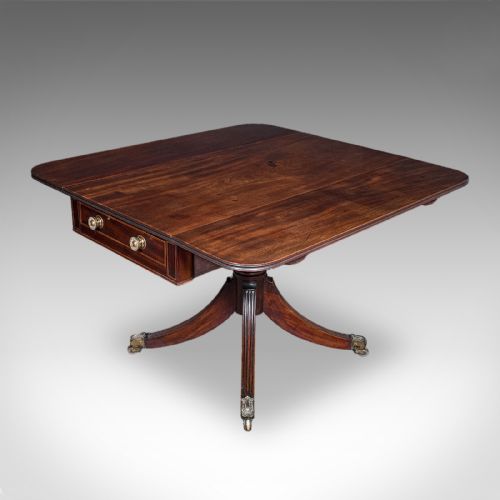
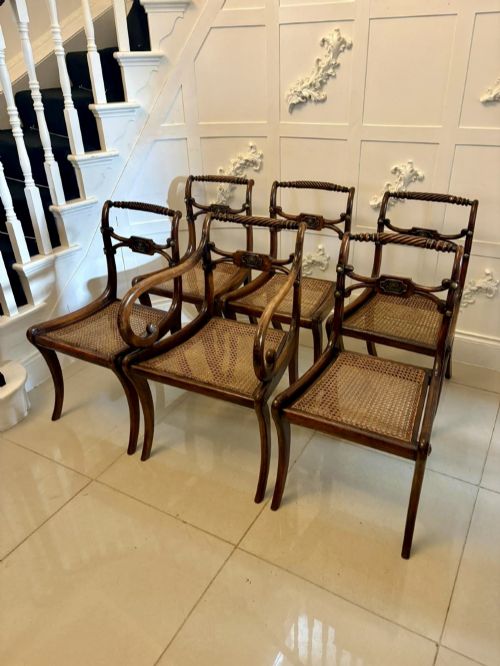
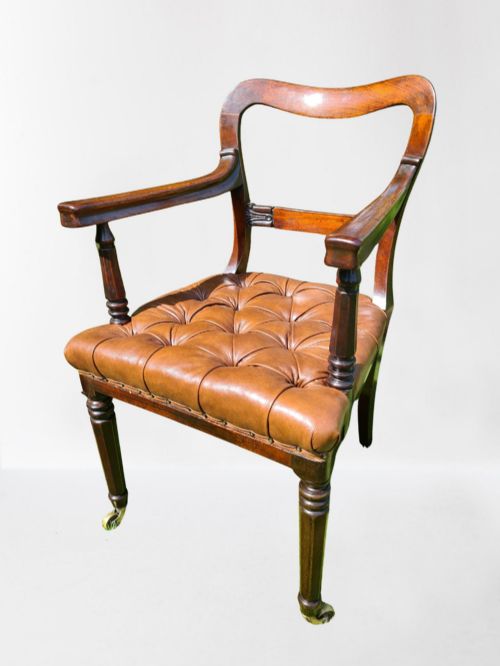
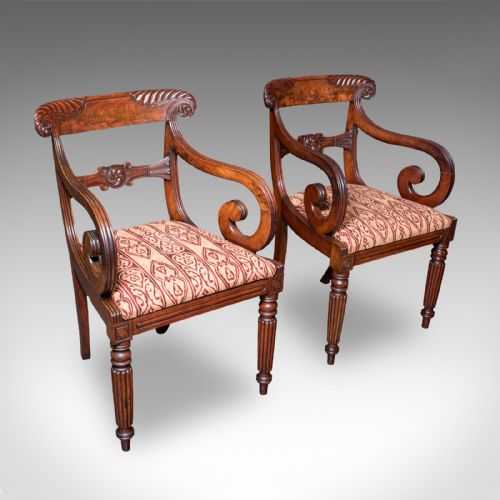
Construction techniques included strong mortise and tenon joints, turned and reeded legs, and saber leg configurations carved directly from solid stock. Seating surfaces frequently incorporated cane work, drop-in frames upholstered in fabric or leather, and intricate brass inlay or stringing set flush into the timber.
Materials documented across the inventory include solid mahogany, woven cane, brass inlay, and various upholstery fabrics.
Assessing Craftsmanship and Distinction
Quality in these pieces depends on the selection of timber figures, the crispness of carved details such as reeding or scroll arms, and the structural integrity of the frame. Superior examples demonstrate careful matching of mahogany grain across multiple chairs in a dining set and seamless joints that endure centuries of use.
Workshop origin significantly influences distinction, with pieces attributed to recognised makers or exhibiting exhibition-grade finishing commanding greater attention. The presence of original surfaces, undamaged cane work, and sophisticated brass or ebony inlay further separate standard utility furniture from high-status commissions.
Gillows·Marsh and Tatham
The Regency Mahogany Seat Glossary
- Carver
- An armchair, usually designed en suite with a set of smaller dining chairs to sit at the head of a table.
- Sabre leg
- A concave, outwardly curving leg tapering towards the foot, characteristic of the Regency style.
- Bergère
- An enclosed upholstered armchair with exposed wooden framing around the back and sides.
- Reeding
- Parallel convex mouldings carved into wood, commonly found on the legs and arm supports of this period.
- Cane
- Woven split rattan material utilised for lightweight, resilient seat and back panels.
Regency Mahogany Seat: Frequently Asked Questions
How do I identify a true Regency chair?
Look for structural markers characteristic of the early nineteenth century, including saber legs, reeded frames, and classical proportions inspired by Greek and Roman designs. Mahogany timber from this era typically displays a deep, warm patina developed over decades of exposure.
Examine the joinery beneath the seat rails and check for traditional hand-cut joints rather than modern mechanical fasteners. Sets often retain subtle tool marks and variations that confirm individual hand assembly.
What is the difference between a carver and a side chair?
Side chairs are built without armrests to allow multiple seats to fit compactly around a dining table or line a hallway wall. Carvers feature integrated armrests and were traditionally reserved for the head and foot of the dining table.
In most historical dining sets, a small number of carvers accompanied a larger group of side chairs, sharing identical leg profiles and backrest designs.
Were cane seats common during the Regency period?
Cane seating enjoyed widespread popularity during the early nineteenth century because woven rattan offered a light, resilient surface that complemented the slender lines of Regency furniture. Many surviving dining chairs and window seats retain their original or period-replaced cane panels.
Cane seats were frequently paired with loose squab cushions upholstered in fabric or leather to provide additional comfort during long dining sessions.
How should I care for antique mahogany seating?
Maintain antique mahogany by keeping pieces away from direct heat sources and fluctuating humidity, which can dry out the timber and cause wood shrinkage or veneer lifting. Regular dusting with a soft, dry cloth preserves the finish without requiring heavy chemical polishes.
Treat leather, fabric, and cane elements gently according to their specific material needs, avoiding excessive moisture on woven plant fibres and traditional upholstery stuffing.