
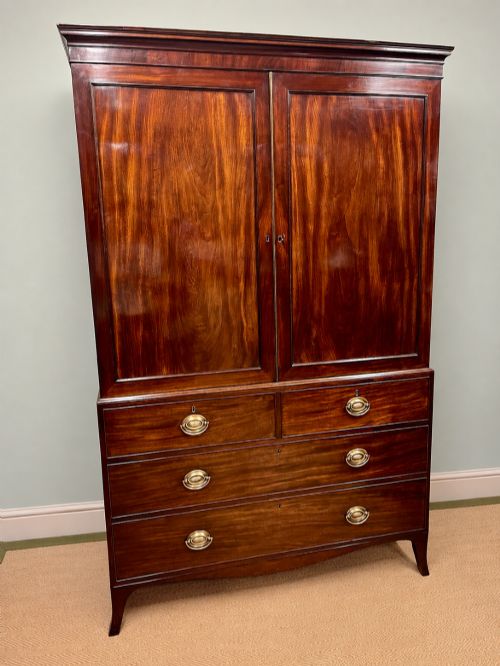
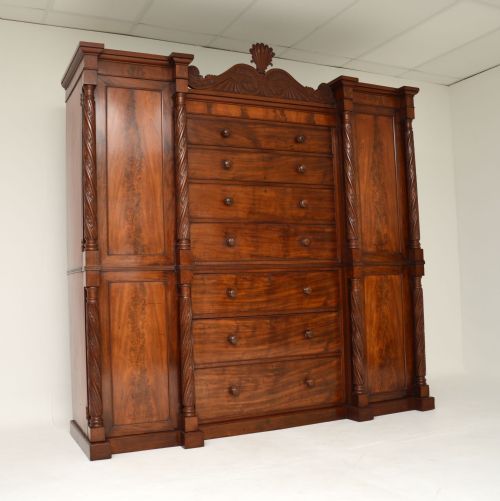
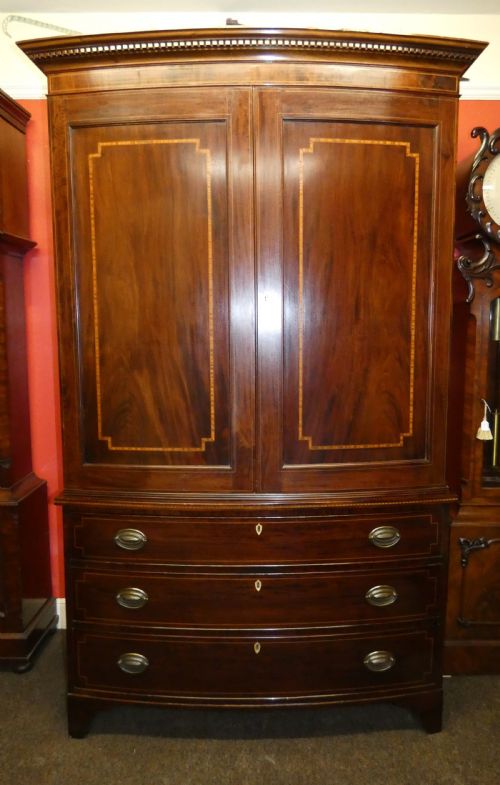
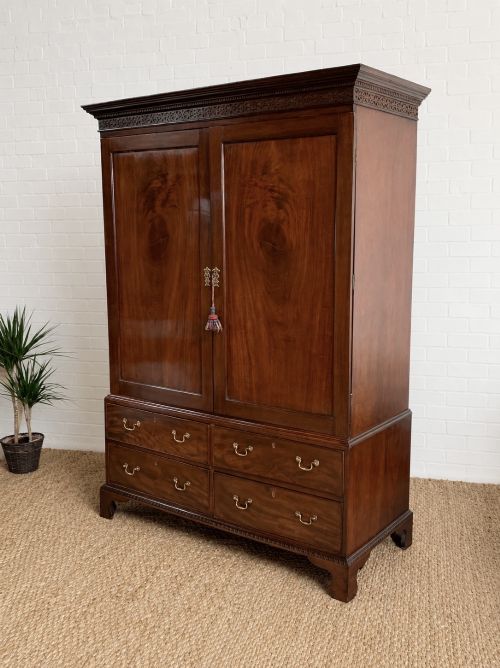
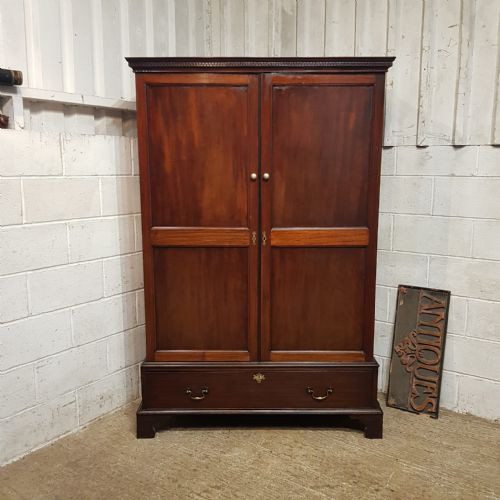


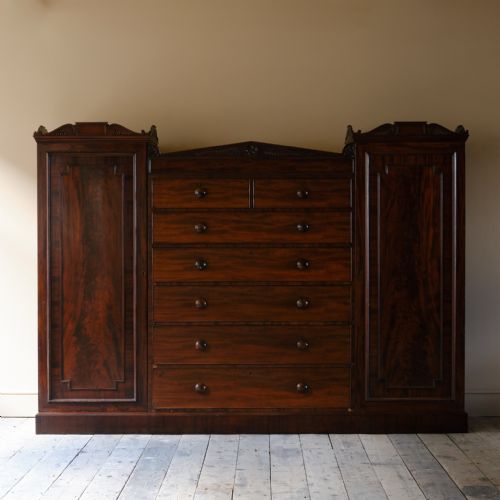


Regency Mahogany Linen Press
A regency mahogany linen press is a substantial bedroom storage piece offering sliding trays above drawers, valued for rich timber and architectural proportion.
Understanding the Regency Mahogany Linen Press
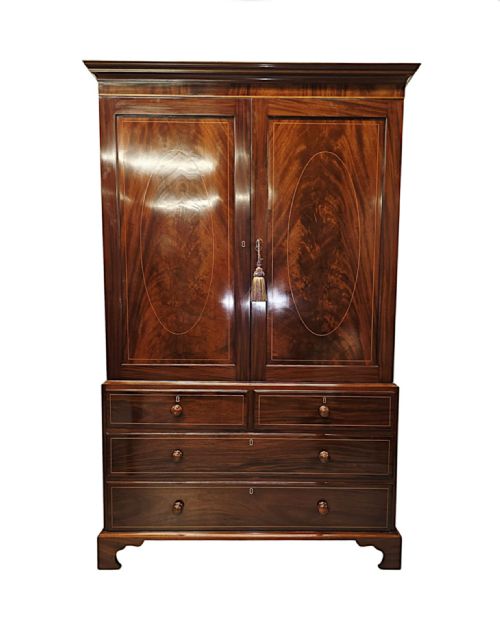
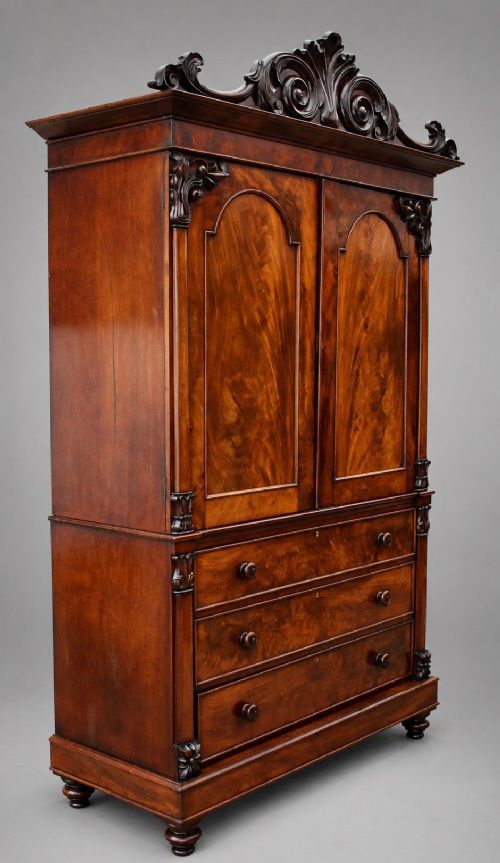
A regency mahogany linen press combines upper doors enclosing sliding shelves with a chest of drawers base. The pieces span Regency, George IV, William IV, and broader 19th Century and Georgian periods.
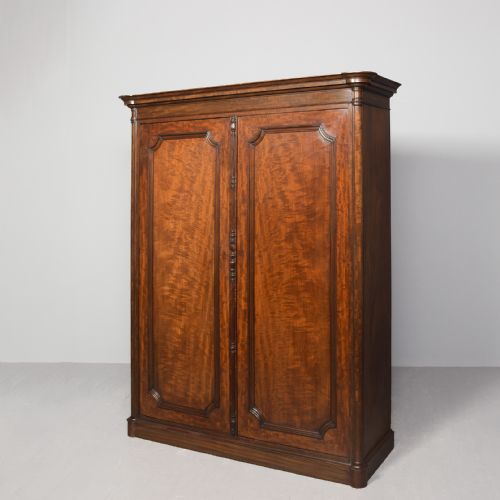
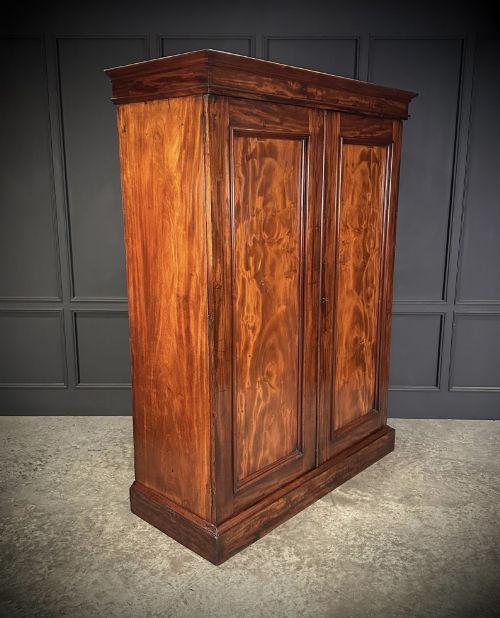
Most examples present as traditional two-door cupboards or wider breakfront wardrobes, sometimes appearing in lower dwarf proportions or narrow tall formats.
Origins include regional variations such as Jersey and Channel Island pieces alongside standard English cabinet work.
Judging Quality and Proportion
Superior examples display carefully matched flame mahogany veneers that mirror across the doors, creating symmetrical visual patterns. The choice of timber grain depth separates standard utilitarian presses from pieces made for finer homes.
Proportion governs the architectural success of the cabinet, where dwarf or low formats maintain balanced cornice details and properly fitted internal sliding trays.
Retail Price Guide 2026
Typical UK retail prices for regency mahogany linen press, calculated from the Sellingantiques database of over a million retail prices indexed since 2003. This retail price guide relies exclusively on Sellingantiques data; no external sources or auction records are used, so the figures do not describe the wider market.
Channel Island cabinetmakers occasionally added secret compartments behind the linen press drawers for family valuables.
Gillows
The Regency Mahogany Linen Press Glossary
- Linen Press
- A tall two-door cabinet housing internal sliding trays for folded textiles above a base of lower drawers. Originally designed to keep linens flat and clean before modern hanging wardrobes became standard.
- Flame Mahogany
- A distinctive veneer cut where branches join the main tree trunk, producing a rippling, flamelike grain pattern. Cabinetmakers reserved this timber for prominent exterior doors.
- Dwarf Press
- A shorter version of the standard tall linen press, standing lower to the ground while retaining the upper cupboard and lower drawer configuration. These shorter pieces suit rooms with restricted ceiling height.
- Breakfront
- A cabinet front where the central section projects forward from the flanking outer sections. This architectural arrangement adds depth and shadow to large wardrobes and presses.
Frequently Asked Questions
What is inside a linen press?
The upper section contains wooden sliding trays or shelves originally intended for stacked sheets and tablecloths. Modern owners often remove these shelves to convert the interior into a hanging wardrobe.
The lower section consists of a chest of drawers, typically arranged with two smaller drawers over two larger ones, providing versatile storage for folded garments.
How do I date a Regency press?
Dating relies on architectural details, timber choices, and secondary woods like oak or pine used in drawer linings. Regency and George IV examples generally display classical restraint with classical cornice mouldings and brass hardware.
Pieces labeled as Georgian or 19th Century often share these stylistic traits, while specific construction methods inside the drawers help narrow the decade of manufacture.
Are low presses rare?
Low or dwarf linen presses appear less frequently in the historical record than standard tall cabinets. Their reduced height makes them practical for contemporary bedrooms with lower ceilings.
Despite their smaller proportions, they maintain the functional split between upper cupboard storage and lower chest of drawers capacity.
Can I use this as a wardrobe?
Many buyers adapt the upper cupboard space for hanging clothes by inserting a rail where the original sliding trays rested. This modification allows the piece to function as a modern wardrobe while preserving the antique exterior.
Unmodified presses retain their sliding shelves, which work well for storing sweaters, linens, and folded garments.