

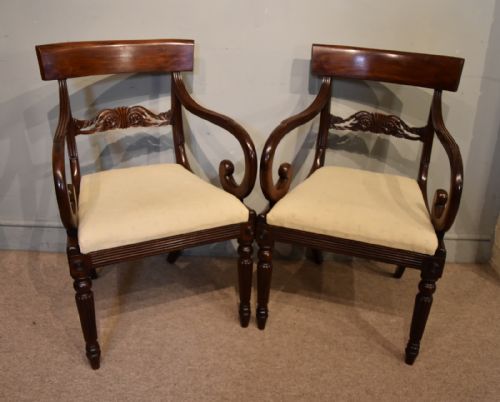
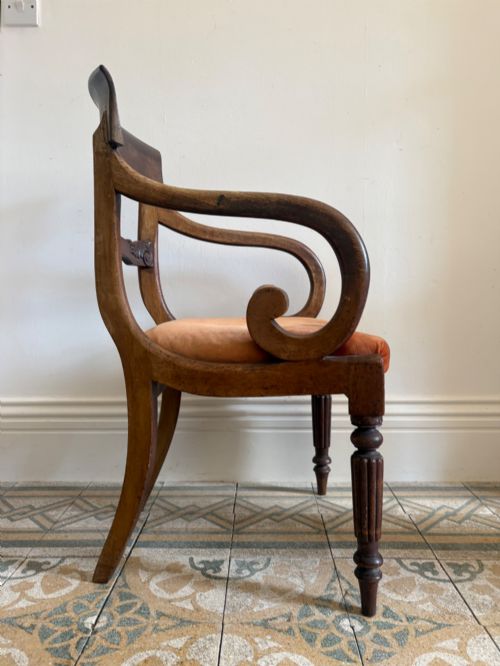


Regency Mahogany Elbow Chairs
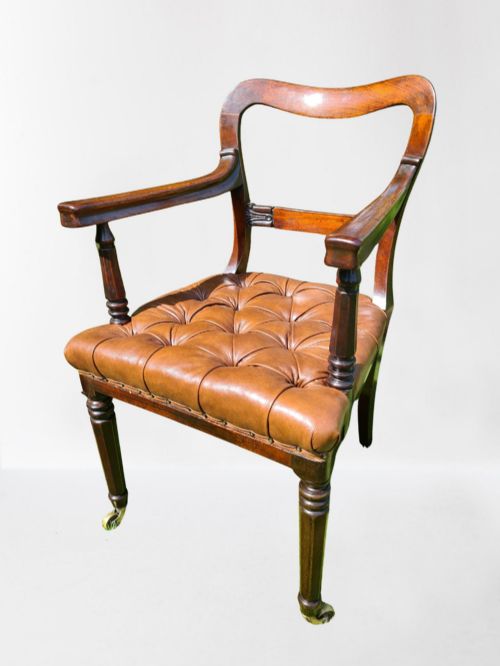
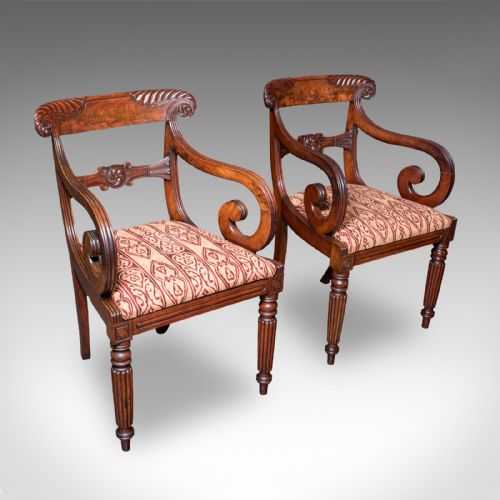
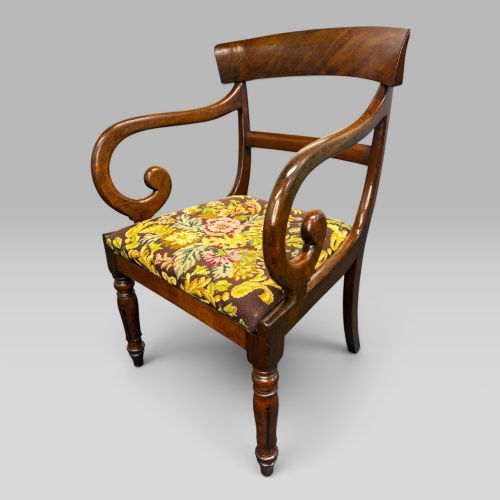
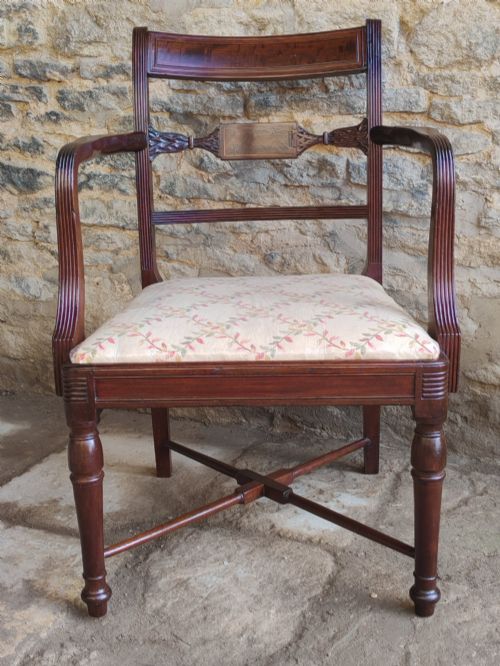
Regency mahogany elbow chairs combine architectural line with dense timber, offering sturdy support for the dining table or study.
Regency Mahogany Elbow Chairs
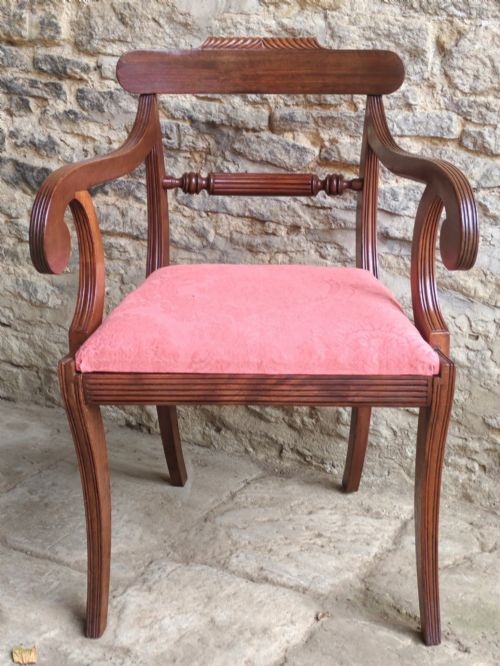
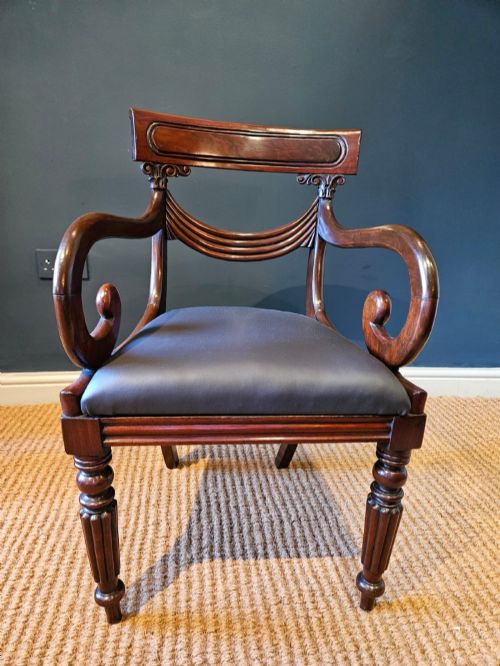
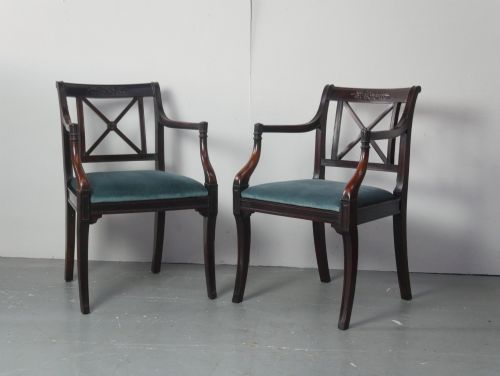
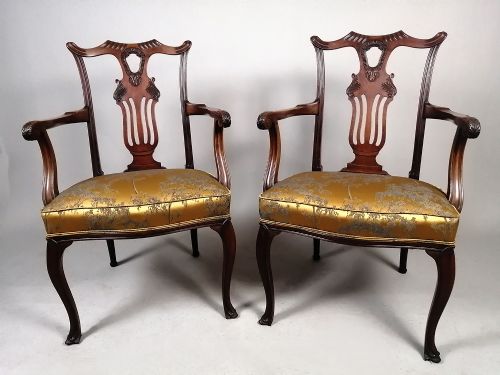
Regency mahogany elbow chairs are seating forms designed with armrests for dining, desk use, or general parlour placement. The selection spans the Regency period proper alongside Georgian antecedents and later revivals from the nineteenth and early twentieth centuries.
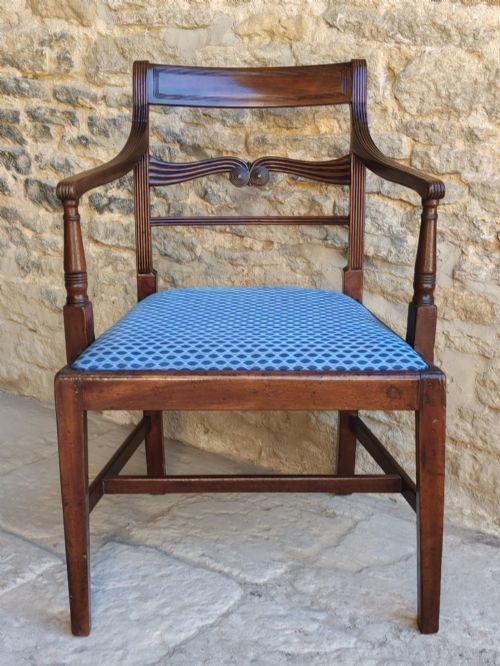
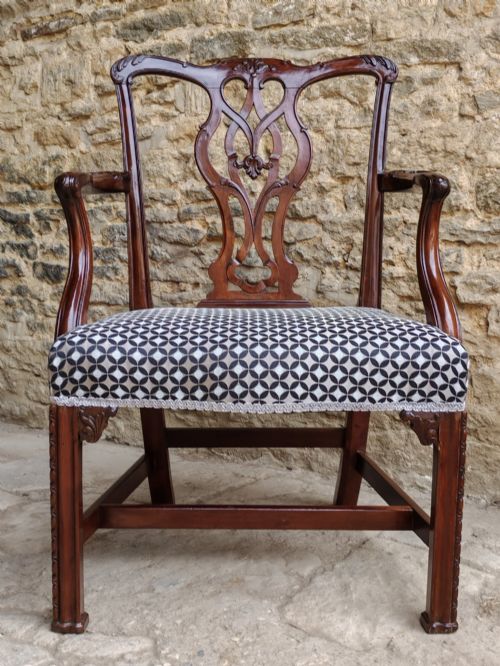
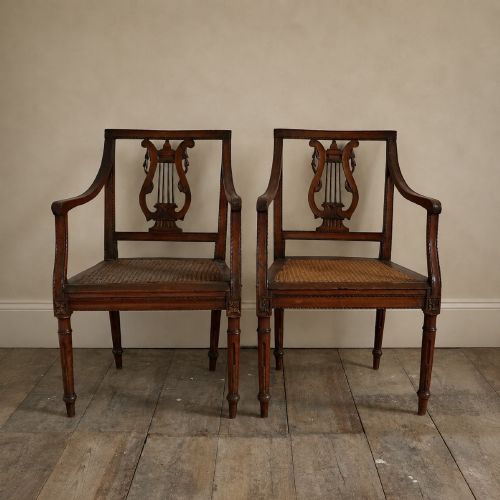
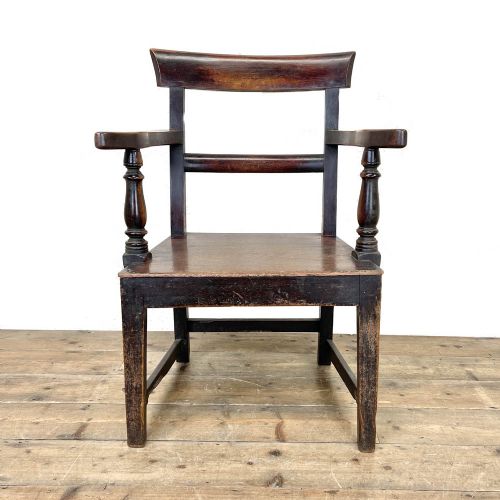
Most examples appear as carvers or armchairs featuring characteristic back designs such as ropebacks, bar-backs, and lyre backs. Buyers regularly encounter pairs or larger sets intended for formal dining rooms and libraries.
Materials and construction
Makers relied on dense mahogany timber, sometimes accented with brass inlay, to build rigid frames that supported carved details and scroll arms. Seats utilise traditional drops-in or fixed pads covered in velvet, leather, fabric, cane, or tapestry upholstery.
Joinery techniques combined traditional pegging with shaped sabre legs or turned front supports to distribute weight evenly across the elbow chair frame.
Regency Mahogany Elbow Chairs Retail Price Guide 2026
Typical asking prices for regency mahogany elbow chairs among the pieces listed under this phrase on Sellingantiques today, from the lower quarter to the upper quarter. They describe what is for sale here now, not the wider market.
Judging the work
Quality rests in the crispness of the timber carving and the architectural balance of the arms and back rail. Better examples demonstrate superior timber selection with rich grain patterns and tight, enduring structural joints.
Secondary elements like original brass inlay, undamaged cane panels, or well-executed scroll arms elevate an armchair above standard production pieces.
The Regency Mahogany Elbow Chairs Glossary
- Carver
- An armchair designed to match a set of single dining chairs, typically placed at the table ends. These pieces feature integrated elbow supports.
- Sabre leg
- A curving, outward-splaying leg profile common on Regency seating. This form provides structural stability while maintaining a light visual line.
- Lyre back
- A chair back shaped in the form of a classical stringed musical instrument. It appears frequently in late Georgian and Regency seating design.
- Ropeback
- A chair back featuring carved horizontal rails that resemble twisted rope. This detail characterises specific regional interpretations of Regency style.
- Drop-in seat
- A removable upholstered frame that drops into a rebated opening in the chair rails. This construction method simplifies recovering the upholstery.
Regency Mahogany Elbow Chairs: Frequently Asked Questions
Where should I place these elbow chairs?
These elbow chairs suit dining tables, libraries, and bedrooms as occasional seating.
Their substantial arms and supportive backs make them practical for everyday desk work or reading corners.
How do I identify a true Regency period chair?
Examine the timber quality, construction methods, and stylistic markers like sabre legs or brass inlay.
True period examples date from the early nineteenth century, though revival pieces from the Victorian era also appear.
Are these chairs comfortable for daily use?
Comfort depends largely on the upholstery depth and the ergonomic curve of the back rail.
Many feature padded seats in leather, velvet, or fabric that provide adequate support for prolonged sitting.
Can I buy these chairs as unmatched singles?
While many listings offer matched pairs or sets, individual carvers appear frequently for desk use.
Singular armchairs function well as standalone statement pieces in studies or hallways.